干旱区地理 ›› 2025, Vol. 48 ›› Issue (10): 1841-1854.doi: 10.12118/j.issn.1000-6060.2025.098 cstr: 32274.14.ALG2025098
孟望生1( ), 刘玮霖1, 刘华桢2()
收稿日期:2025-02-27
修回日期:2025-03-19
出版日期:2025-10-25
发布日期:2025-10-27
通讯作者:
刘华桢(1997-),女,博士研究生,主要从事区域与城市经济学等方面研究. E-mail: lhz7305@163.com作者简介:孟望生(1985-),男,教授,博士,主要从事区域与城市经济学等方面研究. E-mail: mengwangsheng@163.com
基金资助:
MENG Wangsheng1(), LIU Weilin1, LIU Huazhen2()
Received:2025-02-27
Revised:2025-03-19
Published:2025-10-25
Online:2025-10-27
摘要:
聚焦水循环视角测度的包容性绿色发展效率水平是判断黄河流域生态保护和高质量发展的重要依据。从包容性绿色发展内涵出发,结合流域内水资源短缺现实特征,创新性地将水循环纳入包容性绿色发展效率测度指标体系;采用超效率SBM模型构建并测度流域内77个城市2013—2022年的包容性绿色发展效率并对其时空演化特征进行分析;最后结合既有研究梳理包容性绿色发展效率影响因素的同时,采用时空地理加权回归模型分析其影响效应的时空演化特征。结果表明:(1) 黄河流域包容性绿色发展效率总体上呈逐年上升趋势,且这种趋势在“黄河流域生态保护和高质量发展”国家重大战略提出后表现得更为明显。(2) 流域内不同地区层面包容性绿色发展效率时空变化趋势呈现出明显差异。(3) 流域内包容性绿色发展效率在空间分布上存在正空间自相关性,呈现出以省会等发达城市为核心的高效率值成片集聚分布特征,但这种自相关性呈逐渐减弱的趋势。(4) 黄河流域包容性绿色发展效率的影响因素主要集中于城市发展、自然地理、制度环境和社会发展4个方面,且它们对包容性绿色发展效率影响效应的时空变化特征各不相同。
孟望生, 刘玮霖, 刘华桢. 水循环视角下黄河流域城市包容性绿色发展效率测度与分析[J]. 干旱区地理, 2025, 48(10): 1841-1854.
MENG Wangsheng, LIU Weilin, LIU Huazhen. Measurement and analysis of inclusive green development efficiency in the Yellow River Basin cities from the perspective of water cycle[J]. Arid Land Geography, 2025, 48(10): 1841-1854.
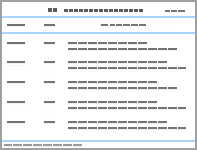
表1
黄河流域城市区域划分情况"
| 区域 | 包含城市 |
|---|---|
| 上游 | 白银市、定西市、嘉峪关市、金昌市、酒泉市、兰州市、平凉市、庆阳市、天水市、武威市、西宁市、张掖市 |
| 中游 | 安康市、安阳市、巴彦淖尔市、包头市、宝鸡市、大同市、鄂尔多斯市、汉中市、鹤壁市、呼和浩特市、焦作市、晋城市、晋中市、开封市、临汾市、洛阳市、漯河市、吕梁市、南阳市、平顶山市、濮阳市、三门峡市、商洛市、商丘市、石嘴山市、朔州市、太原市、铜川市、渭南市、乌海市、乌兰察布市、吴忠市、西安市、咸阳市、忻州市、新乡市、信阳市、许昌市、延安市、阳泉市、银川市、榆林市、运城市、长治市、郑州市、中卫市、周口市、驻马店市、固原市、晋中市 |
| 下游 | 滨州市、德州市、东营市、菏泽市、济南市、济宁市、聊城市、临沂市、青岛市、日照市、泰安市、威海市、潍坊市、烟台市、枣庄市、淄博市 |
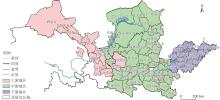
图1
黄河流域城市区域划分情况 注:基于自然资源部标准地图服务网站审图号为GS(2023)2767号的标准地图制作,底图边界无修改。下同。"
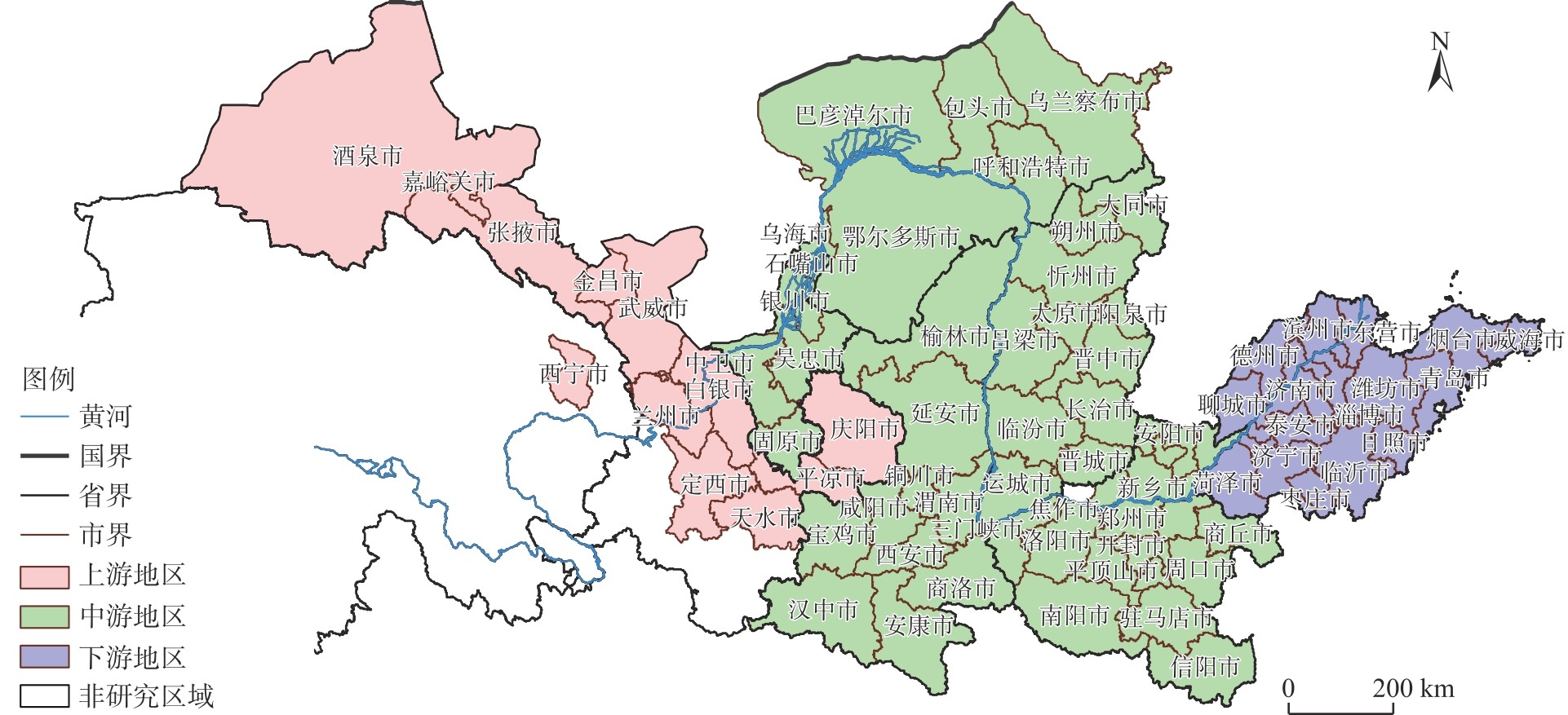
表2
包容性绿色发展效率测度指标说明"
| 类别 | 指标 | 衡量方式 |
|---|---|---|
| 投入 | 资本 | 固定资产投资/104元 |
| 劳动 | 城镇从业人员数/104人 | |
| 能源 | 全社会用电量/10 MWh | |
| 水资源 | 城市供水总量/104 m3 | |
| 期望产出 | 经济产出 | 实际生产总值/104元 |
| 社会福利 | 社会福利指数(运用RAGA-PPC模型将每万人医疗床位、中小学师生比、养老保险覆盖率综合成社会福利指数) | |
| 水资源重复利用 | 城市用水重复利用率/% | |
| 非期望产出(环境 污染) | 空气污染 | 空气污染指数(运用RAGA-PPC模型将空气质量体系指标群中各子指标值(PM2.5、PM10、SO2、NO2、CO、O3)与CO2值综合成空气污染指数) |
| 水污染 | 污水排放量/104 t | |
| 非期望产出(社会 不公) | 城乡居民收入 差距 | 城镇居民可支配收入/农村居民可支配收入 |
| 失业 | 失业率/% |
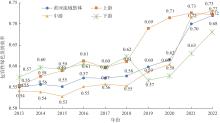
图2
2013—2022年黄河流域包容性绿色发展效率趋势"
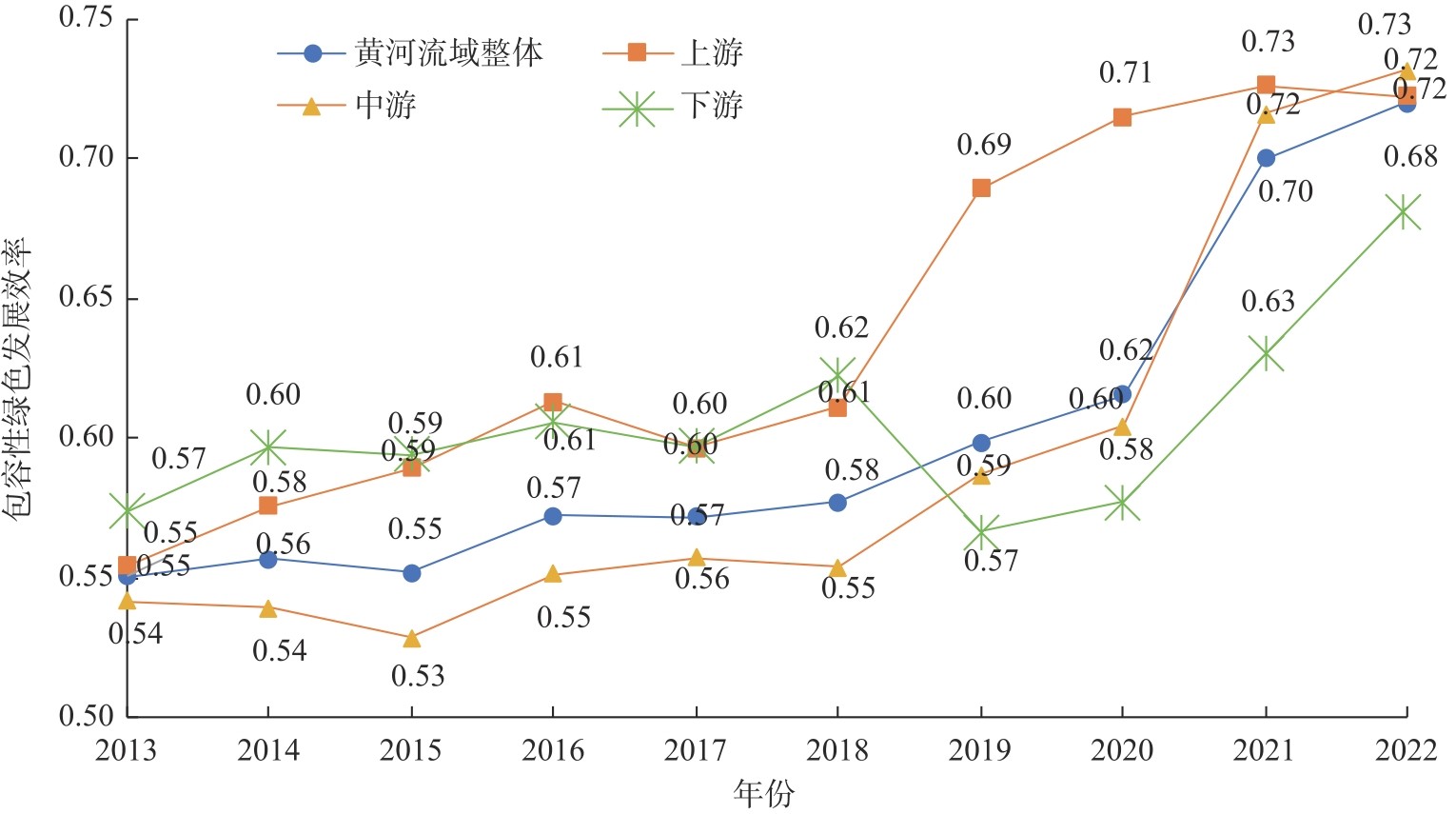
图3
黄河流域包容性绿色发展效率核密度"
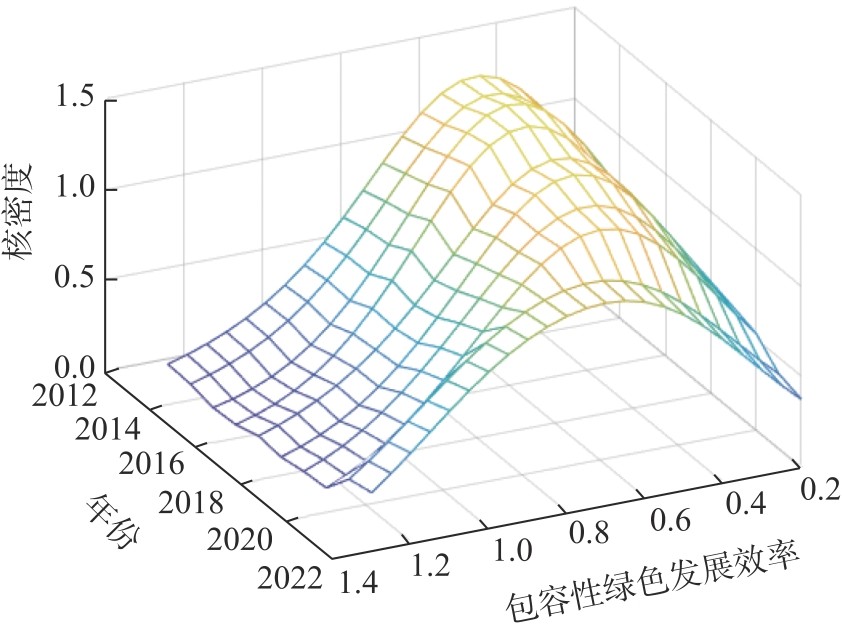
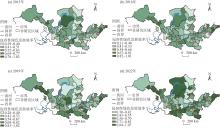
图4
2013—2022年黄河流域包容性绿色发展效率空间分布"
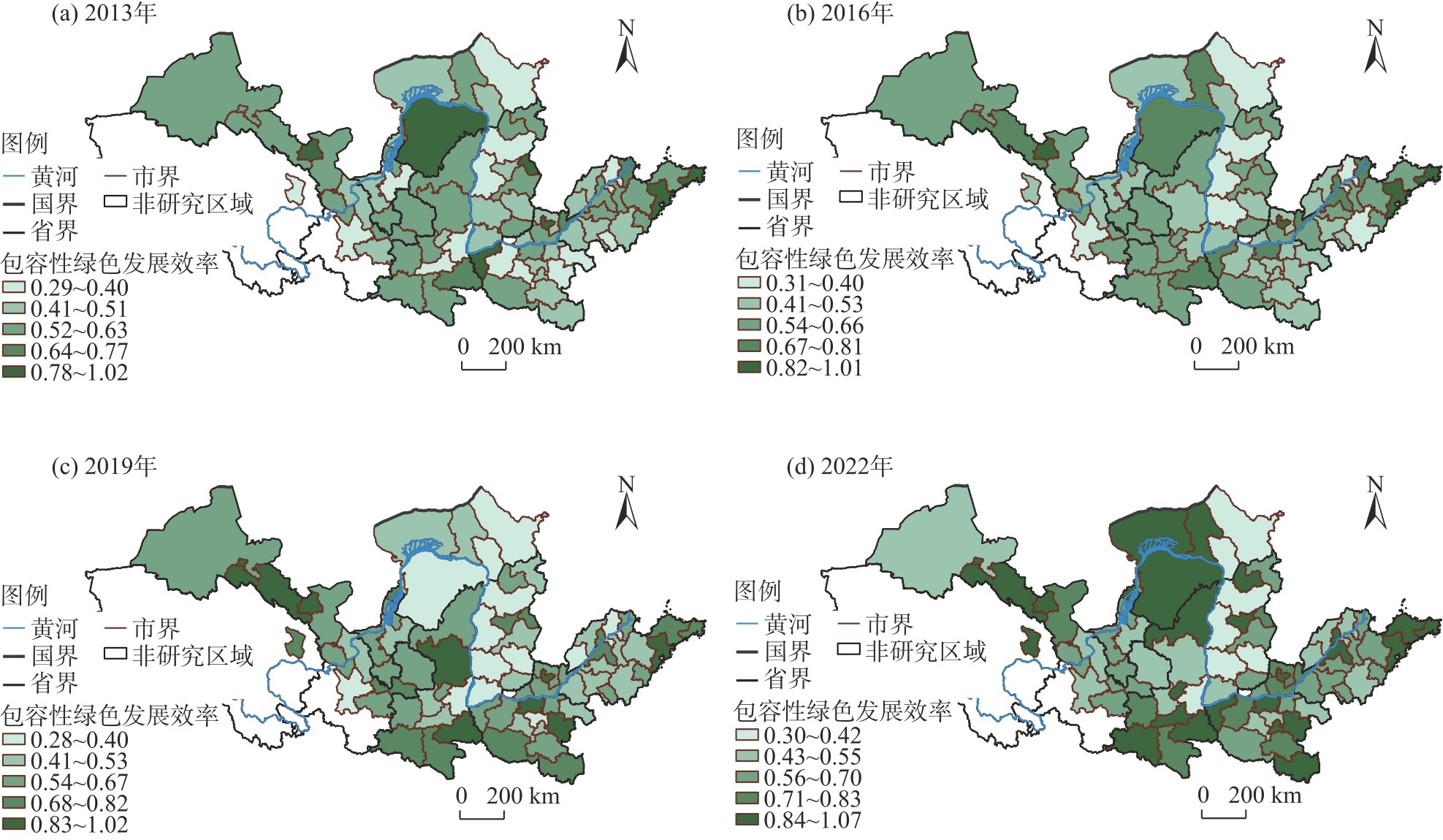
表3
黄河流域城市全局Moran's I测度结果"
| 年份 | 全局莫 兰指数 | 期望莫 兰指数 | 莫兰指数 标准差 | Z统计量 | P值 |
|---|---|---|---|---|---|
| 2013 | 0.235 | -0.013 | 0.069 | 3.597 | 0.000 |
| 2014 | 0.241 | -0.013 | 0.069 | 3.692 | 0.000 |
| 2015 | 0.274 | -0.013 | 0.069 | 4.168 | 0.000 |
| 2016 | 0.254 | -0.013 | 0.069 | 3.876 | 0.000 |
| 2017 | 0.188 | -0.013 | 0.069 | 2.911 | 0.002 |
| 2018 | 0.147 | -0.013 | 0.069 | 2.318 | 0.010 |
| 2019 | 0.115 | -0.013 | 0.069 | 1.866 | 0.031 |
| 2020 | 0.157 | -0.013 | 0.069 | 2.480 | 0.007 |
| 2021 | 0.229 | -0.013 | 0.068 | 3.561 | 0.000 |
| 2022 | 0.075 | -0.013 | 0.068 | 1.285 | 0.099 |
表4
黄河流域包容性绿色发展效率的Dagum基尼系数测度结果"
| 年份 | 总基尼系数 | 地区内基尼系数 | 贡献率/% | |||||
|---|---|---|---|---|---|---|---|---|
| 上游 | 中游 | 下游 | 地区内 | 地区间 | 超变密度 | |||
| 2013 | 0.125 | 0.173 | 0.117 | 0.043 | 46.304 | 37.644 | 16.052 | |
| 2014 | 0.110 | 0.165 | 0.098 | 0.034 | 44.560 | 40.554 | 14.886 | |
| 2015 | 0.103 | 0.165 | 0.089 | 0.037 | 43.891 | 39.996 | 16.113 | |
| 2016 | 0.103 | 0.150 | 0.091 | 0.040 | 44.446 | 39.621 | 15.933 | |
| 2017 | 0.105 | 0.146 | 0.098 | 0.039 | 46.183 | 37.323 | 16.494 | |
| 2018 | 0.101 | 0.140 | 0.094 | 0.047 | 46.660 | 34.390 | 18.951 | |
| 2019 | 0.092 | 0.133 | 0.091 | 0.027 | 48.739 | 30.303 | 20.958 | |
| 2020 | 0.086 | 0.132 | 0.082 | 0.028 | 47.160 | 30.161 | 22.678 | |
| 2021 | 0.077 | 0.132 | 0.070 | 0.029 | 45.988 | 31.097 | 22.914 | |
| 2022 | 0.096 | 0.151 | 0.088 | 0.055 | 46.817 | 26.912 | 26.272 | |
表5
黄河流域城市包容性绿色发展效率主要影响因子描述性统计"
| 影响因子 | 样本量 | 最小值 | 最大值 | 均值 | 标准误差 |
|---|---|---|---|---|---|
| 城市空间形态紧凑度 | 770 | 1.00 | 1.97 | 1.23 | 0.01 |
| 城市多中心结构 | 770 | 0.00 | 0.84 | 0.32 | 0.01 |
| 城市化水平 | 770 | 0.15 | 1.00 | 0.47 | 0.01 |
| 降水量 | 770 | 69.90 | 1552.51 | 681.74 | 9.12 |
| 气温 | 770 | 4.21 | 21.92 | 12.71 | 0.13 |
| 风速 | 770 | 5.40 | 15.64 | 9.33 | 0.06 |
| 环境规制 | 770 | 3.00 | 139.00 | 49.01 | 0.69 |
| 政府财政支持 | 770 | 0.07 | 0.92 | 0.21 | 0.00 |
| 产业结构 | 770 | 0.23 | 2.19 | 0.82 | 0.01 |
| 对外开放度 | 770 | 0.00 | 0.73 | 0.11 | 0.01 |
| 技术进步 | 770 | 1.79 | 11.36 | 7.28 | 0.06 |
表6
GTWR模型解释变量方差膨胀因子(VIF)"
| 变量名 | 城市空间形 态紧凑度 | 城市多中 心结构 | 城市化水平 | 降水量 | 气温 | 风速 | 环境规制 | 政府财 政支持 | 产业结构 | 对外开放度 | 技术进步 |
|---|---|---|---|---|---|---|---|---|---|---|---|
| VIF | 1.083 | 1.448 | 1.866 | 1.672 | 1.750 | 1.508 | 1.147 | 2.124 | 1.754 | 1.589 | 2.643 |
表7
回归模型拟合优度与结果比较"
| 模型 | OLS模型 | GTWR模型 |
|---|---|---|
| 残差平方和(RSS) | 29.019 | 28.807 |
| 拟合优度(R2) | 0.013 | 0.021 |
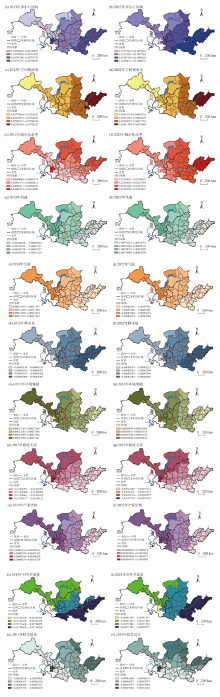
图5
2013年和2022年黄河流域城市包容性绿色发展效率GTWR模型回归系数空间分布"

| [1] | 王修华, 彭德荣, 李万利. 以新质生产力发展推进中国式现代化——第二届“中国式现代化经济发展前沿论坛”研讨会综述[J]. 中国农村经济, 2024(10): 174-184. |
| [Wang Xiuhua, Peng Derong, Li Wanli. Advancing Chinese modernization through the development of new quality productive forces: A summary of the 2nd frontier forum on Chinese modernization and economic development[J]. Chinese Rural Economy, 2024(10): 174-184.] | |
| [2] |
周小亮, 吴武林, 廖达颖. 我国区域包容性绿色增长测度与差异研究[J]. 科技进步与对策, 2018, 35(6): 42-49.
doi: 10.6049/kjjbydc.2017060419 |
| [Zhou Xiaoliang, Wu Wulin, Liao Daying. Research on the measurement and difference of regional inclusive green growth in China[J]. Science & Technology Progress and Policy, 2018, 35(6): 42-49.] | |
| [3] | 周小亮, 吴武林. 中国包容性绿色增长的测度及分析[J]. 数量经济技术经济研究, 2018, 35(8): 3-20. |
| [Zhou Xiaoliang, Wu Wulin. The measurement and analysis of the inclusive green growth in China[J]. Journal of Quantitative & Technological Economics, 2018, 35(8): 3-20.] | |
| [4] | 吴武林, 罗世华, 刘祥官. 长江经济带包容性绿色发展的测度评价、动态分布与收敛趋势[J]. 江西财经大学学报, 2022(6): 13-28. |
| [Wu Wulin, Luo Shihua, Liu Xiangguan. Measurement evaluation, dynamic distribution and convergent tendency of the inclusive green development in the Yangtze River Economic Belt[J]. Journal of Jiangxi University of Finance and Economics, 2022(6): 13-28.] | |
| [5] | 王宇昕, 余兴厚, 黄玲. 长江经济带市域包容性绿色增长的空间格局分布与演变特征[J]. 技术经济, 2019, 38(6): 80-89. |
| [Wang Yuxin, Yu Xinghou, Huang Ling. Spatial pattern distribution and evolution characteristics of inclusive green growth in urban areas of Yangtze River Economic Belt[J]. Journal of Technology Economics, 2019, 38(6): 80-89.] | |
| [6] | 李清, 贾庆洲, 汪福庆. 中国包容性绿色发展协同演进及空间收敛性分析[J]. 生态经济, 2024, 40(10): 156-164. |
| [Li Qing, Jia Qingzhou, Wang Fuqing. Analysis of inclusive green growth, synergy evolution, and spatial convergence in China[J]. Ecological Economy, 2024, 40(10): 156-164.] | |
| [7] | 周锐波, 吴云峰, 宋佳晞. 共生共荣: 工业智能化发展与包容性绿色增长[J]. 中国人口·资源与环境, 2024, 34(5): 162-174. |
| [Zhou Ruibo, Wu Yunfeng, Song Jiaxi. Symbiosis and co-prosperity: Industrial intelligence development and inclusive green growth[J]. China Population, Resources and Environment, 2024, 34(5): 162-174.] | |
| [8] | 李波, 徐奥辉, 甘天琦. 信息基础设施赋能包容性绿色增长的效应与机制[J]. 统计与决策, 2024, 40(16): 73-78. |
| [Li Bo, Xu Aohui, Gan Tianqi. Effects and mechanisms of information infrastructure empowering inclusive green growth[J]. Statistics & Decision, 2024, 40(16): 73-78.] | |
| [9] | 李华, 董艳玲. 中国经济高质量发展水平及差异探源——基于包容性绿色全要素生产率视角的考察[J]. 财经研究, 2021, 47(8): 4-18. |
| [Li Hua, Dong Yanling. China's high-quality economic development level and the source of differences: Based on the inclusive green TFP perspective[J]. Journal of Finance and Economics, 2021, 47(8): 4-18.] | |
| [10] | 孟望生. 黄河流域地级市经济绿色增长效率的测度[J]. 统计与决策, 2022, 38(1): 113-117. |
| [Meng Wangsheng. Measurement of economic green growth efficiency in prefecture-level cities of the Yellow River Basin[J]. Statistics & Decision, 2022, 38(1): 113-117.] | |
| [11] | 谷魁英, 孙慧. 中国城市包容性绿色增长指数测度与分析[J]. 统计与决策, 2022, 38(8): 100-104. |
| [Gu Kuiying, Sun Hui. Measurement and analysis of inclusive green growth index in cities of China[J]. Statistics & Decision, 2022, 38(8): 100-104.] | |
| [12] |
曹姗姗, 何昭丽, 徐力璇, 等. 区域旅游发展对水资源绿色效率的影响及其时空分异[J]. 经济地理, 2023, 43(7): 215-224.
doi: 10.15957/j.cnki.jjdl.2023.07.021 |
|
[Cao Shanshan, He Zhaoli, Xu Lixuan, et al. The impact of tourism development on green efficiency of water resources in China and its spatiotemporal differentiation[J]. Economic Geography, 2023, 43(7): 215-224.]
doi: 10.15957/j.cnki.jjdl.2023.07.021 |
|
| [13] |
赵林, 高晓彤, 刘焱序, 等. 中国包容性绿色效率空间关联网络结构演变特征分析[J]. 经济地理, 2021, 41(9): 69-78, 90.
doi: 10.15957/j.cnki.jjdl.2021.09.008 |
|
[Zhao Lin, Gao Xiaotong, Liu Yanxu, et al. Evolution characteristics of spatial correlation network of inclusive green efficiency in China[J]. Economic Geography, 2021, 41(9): 69-78, 90.]
doi: 10.15957/j.cnki.jjdl.2021.09.008 |
|
| [14] |
吴雨阳, 曹煜玲, 朱悦, 等. 中国包容性绿色发展的空间关联网络与区域分异及收敛性研究[J]. 自然资源学报, 2025, 40(2): 436-458.
doi: 10.31497/zrzyxb.20250210 |
|
[Wu Yuyang, Cao Yuling, Zhu Yue, et al. Spatial correlation network, regional differentiation and convergence of inclusive green development in China[J]. Journal of Natural Resources, 2025, 40(2): 436-458.]
doi: 10.31497/zrzyxb.20250210 |
|
| [15] | 吴洋宏, 林栋, 周小亮. 调整财政支出结构推进中国式现代化: 基于包容性绿色增长目标的理论模型与实证检验[J]. 中国环境管理, 2025, 17(1): 40-53. |
| [Wu Yanghong, Lin Dong, Zhou Xiaoliang. Adjusting fiscal expenditure structure to advance Chinese modernization: A theoretical model and empirical analysis based on inclusive green growth goals[J]. Chinese Journal of Environmental Management, 2025, 17(1): 40-53.] | |
| [16] | 马玉林, 马运鹏. 数字经济对城市包容性绿色增长的影响研究[J/OL]. 科研管理. [2025-03-25]. http://kns.cnki.net/kcms/detail/11.1567.G3.20250107.0909.002.html. |
| [Ma Yulin, Ma Yunpeng. The effects of digital economy on urban inclusive green growth[J/OL]. Science Research Management. [2025-03-25]. http://kns.cnki.net/kcms/detail/11.1567.G3.20250107.0909.002.html.] | |
| [17] | 邓淇中, 秦燕丝, 何晓慧. 长江经济带包容性绿色发展时空异质特征及影响因素识别[J]. 中南林业科技大学学报(社会科学版), 2021, 15(6): 1-9. |
| [Deng Qizhong, Qin Yansi, He Xiaohui. Recognition of the spatio-temporal heterogeneity characteristics and influencing factors about inclusive green development in the Yangtze River Economic Belt[J]. Journal of Central South University of Forestry & Technology (Social Science Edition), 2021, 15(6): 1-9.] | |
| [18] |
岳立, 薛丹. 黄河流域沿线城市绿色发展效率时空演变及其影响因素[J]. 资源科学, 2020, 42(12): 2274-2284.
doi: 10.18402/resci.2020.12.02 |
|
[Yue Li, Xue Dan. Spatiotemporal change of urban green development efficiency in the Yellow River Basin and influencing factors[J]. Resources Science, 2020, 42(12): 2274-2284.]
doi: 10.18402/resci.2020.12.02 |
|
| [19] |
柴国荣, 李佳音, 付文昊. 黄河流域城市群生态安全能级: 区域差异、动态演化及提升路径[J]. 经济地理, 2025, 45(2): 69-79.
doi: 10.15957/j.cnki.jjdl.2025.02.007 |
|
[Chai Guorong, Li Jiayin, Fu Wenhao. Ecological security level of urban agglomerations in the Yellow River Basin: Regional difference, dynamic evolution and improvement path[J]. Economic Geography, 2025, 45(2): 69-79.]
doi: 10.15957/j.cnki.jjdl.2025.02.007 |
|
| [20] | 李新越, 班凤梅, 毕旭, 等. 黄河流域减污降碳协同效应的时空特征及影响因素分析[J]. 环境科学研究, 2024, 37(12): 2610-2621. |
| [Li Xinyue, Ban Fengmei, Bi Xu, et al. Spatio-temporal characteristics and influencing factors of the synergistic effects of pollution and carbon emission reduction in the Yellow River Basin[J]. Research of Environmental Sciences, 2024, 37(12): 2610-2621.] | |
| [21] |
岳立, 任婉瑜. 黄河流域城市能源综合效率时空分异与影响因素研究[J]. 地理科学, 2024, 44(4): 630-639.
doi: 10.13249/j.cnki.sgs.20220667 |
| [Yue Li, Ren Wanyu. Spatio-temporal distribution and influencing factors of urban comprehensive energy efficiency in the Yellow River Basin[J]. Geographical Science, 2024, 44(4): 630-639.] | |
| [22] | Tone K. A slacks-based measure of super-efficiency in data envelopment analysis[J]. European Journal of Operational Research, 2002, 143(1): 32-41. |
| [23] | Huang B, Wu B, Barry M. Geographically and temporally weighted regression for modeling spatio-temporal variation in house prices[J]. International Journal of Geographical Information Science, 2010, 24(3): 383-401. |
| [24] |
王浩, 牛存稳, 赵勇. 流域“自然-社会”二元水循环与水资源研究[J]. 地理学报, 2023, 78(7): 1599-1607.
doi: 10.11821/dlxb202307002 |
|
[Wang Hao, Niu Cunwen, Zhao Yong. Natural-artificial dualistic water cycle in river basins and water resources research[J]. Acta Geographica Sinica, 2023, 78(7): 1599-1607.]
doi: 10.11821/dlxb202307002 |
|
| [25] |
孟望生, 刘华桢, 张扬. 黄河流域七大城市群绿色发展效率测度及特征分析[J]. 干旱区地理, 2023, 46(5): 846-856.
doi: 10.12118/j.issn.1000-6060.2022.401 |
|
[Meng Wangsheng, Liu Huazhen, Zhang Yang. Measurement and characterization of green development efficiency in seven urban agglomerations in the Yellow River Basin[J]. Arid Land Geography, 2023, 46(5): 846-856.]
doi: 10.12118/j.issn.1000-6060.2022.401 |
|
| [26] | 徐辉, 武彦青. 可持续发展目标下全球包容性绿色增长指数测度研究[J/OL]. 经济地理. [2025-02-25]. http://kns.cnki.net/kcms/detail/43.1126.k.20241022.0925.002.html. |
| [Xu Hui, Wu Yanqing. Study of the measurement of the global inclusive green growth index under the sustainable development goals[J/OL]. Economic Geography. [2025-02-25]. http://kns.cnki.net/kcms/detail/43.1126.k.20241022.0925.002.html.] | |
| [27] | 吴洋宏, 周小亮. 推动高质量发展的《资本论》逻辑基础与拓展分析——基于包容性绿色增长视角[J]. 当代经济管理, 2022, 44(7): 17-23. |
| [Wu Yanghong, Zhou Xiaoliang. Logical basis and expansion analysis of capital to promote high-quality development: From the perspective of inclusive green growth[J]. Contemporary Economic Management, 2022, 44(7): 17-23.] | |
| [28] | 周小亮. 包容性绿色发展: 理论阐释与制度支撑体系[J]. 学术月刊, 2020, 52(11): 41-54. |
| [Zhou Xiaoliang. Inclusive green development: Theoretical interpretation and institutional support system[J]. Academic Monthly, 2020, 52(11): 41-54.] | |
| [29] | 史献芝, 王新建. 包容性绿色发展: 构建人类命运共同体的着力点[J]. 理论探讨, 2018(5): 52-58. |
| [Shi Xianzhi, Wang Xinjian. Inclusive green development: The pivot for building a community of human destiny[J]. Theoretical Investigation, 2018(5): 52-58.] | |
| [30] |
张昊, 韩增林, 乔国荣, 等. 黄河流域城市间旅游经济联系格局及影响因素研究[J]. 干旱区地理, 2023, 46(8): 1344-1354.
doi: 10.12118/j.issn.1000-6060.2022.570 |
|
[Zhang Hao, Han Zenglin, Qiao Guorong, et al. Patterns and influencing factors of tourism economic linkages between cities in the Yellow River Basin[J]. Arid Land Geography, 2023, 46(8): 1344-1354.]
doi: 10.12118/j.issn.1000-6060.2022.570 |
|
| [31] |
张明斗, 任衍婷, 周亮. 黄河流域城市生态韧性时空演变特征及影响因素分析[J]. 干旱区地理, 2024, 47(3): 445-454.
doi: 10.12118/j.issn.1000-6060.2023.381 |
|
[Zhang Mingdou, Ren Yanting, Zhou Liang. Spatiotemporal evolution characteristics and influencing factors of urban ecological resilience in the Yellow River Basin[J]. Arid Land Geography, 2024, 47(3): 445-454.]
doi: 10.12118/j.issn.1000-6060.2023.381 |
|
| [32] | 方颖, 白秀叶. 城市空间形态、公共服务空间均等化与居民满意度[J]. 经济学(季刊), 2022, 22(4): 1405-1424. |
| [Fang Ying, Bai Xiuye. Urban geometric shape, spatial equalization of public service and residents' satisfaction[J]. China Economic Quarterly, 2022, 22(4): 1405-1424.] | |
| [33] | 申婧, 文清, 张敏, 等. 考虑河长代际责任的城市内河生态可持续治理机制研究[J/OL]. 中国环境科学. [2025-02-25]. https://doi.org/10.19674/j.cnki.issn1000-6923.20241030.001. |
| [Shen Jing, Wen Qing, Zhang Min, et al. Research on the mechanism of ecologically sustainable governance of urban inland rivers with consideration of river chiefs' inter-generational responsibility[J/OL]. China Environmental Science. [2025-02-25]. https://doi.org/10.19674/j.cnki.is-sn1000-6923.20241030.001.] |
| [1] | 杨安乐, 蒋晓辉, 陈星弛, 张琳, 许芳冰. 煤炭开采对陕北三大煤田水资源影响的定量研究[J]. 干旱区地理, 2025, 48(9): 1521-1530. |
| [2] | 彭文英, 赵爽, 单子溢, 陈泽宇. 黄河流域新质生产力生态化水平测度与障碍因子[J]. 干旱区地理, 2025, 48(9): 1648-1659. |
| [3] | 田小波. 黄河流域城市旅游业高质量发展水平测度与空间格局特征[J]. 干旱区地理, 2025, 48(9): 1660-1671. |
| [4] | 李慧, 姚西龙. 水足迹视角下黄河流域可再生能源制氢节水潜力研究[J]. 干旱区地理, 2025, 48(8): 1353-1362. |
| [5] | 仲嘉维, 郑军, 张明月. 农业社会化服务如何影响粮食生态效率——以黄河流域71个地级市为例[J]. 干旱区地理, 2025, 48(8): 1385-1395. |
| [6] | 程鹏, 彭海洋, 侯丁榕, 孙明东, 宋晓伟. 黄河流域农业灰水足迹强度空间格局及演进趋势[J]. 干旱区地理, 2025, 48(7): 1185-1197. |
| [7] | 徐铭璟, 段宝玲, 冯强, 吕萌. 生态系统服务及其权衡/协同关系多情景模拟——以黄河流域山西段为例[J]. 干旱区地理, 2025, 48(7): 1206-1219. |
| [8] | 任诗琦, 王永瑜. 黄河流域地级市绿色发展水平测度与空间收敛性研究[J]. 干旱区地理, 2025, 48(6): 1031-1042. |
| [9] | 魏建飞, 袁悠燃, 李强, 董佩佩, 刘玖榕. 黄河流域国土空间效率时空变化及障碍因子分析[J]. 干旱区地理, 2025, 48(6): 1055-1066. |
| [10] | 聂寒玉, 张颜辉, 李慧, 郑姚闽. 黄河流域旅游生态韧性发展水平的时空演化及多尺度障碍因子分析[J]. 干旱区地理, 2025, 48(6): 1089-1102. |
| [11] | 谢宇, 薛选登. 数字经济赋能绿色发展福利——基于黄河流域资源型城市的经验证据[J]. 干旱区地理, 2025, 48(6): 1127-1139. |
| [12] | 王瑞芳, 吕宝奇, 张文静. 黄河流域植被动态及其对气候变化的响应——基于气候干湿分区尺度[J]. 干旱区地理, 2025, 48(6): 973-984. |
| [13] | 程兰花, 杨显明, 吴昕燕. 黄河流域城市紧凑度对碳排放绩效的影响[J]. 干旱区地理, 2025, 48(5): 838-853. |
| [14] | 李梦冉, 徐小任, 王梁, 段健, 史舒琪, 任丹丹. 黄河流域农业碳排放时空变化特征及影响因素分析[J]. 干旱区地理, 2025, 48(5): 854-865. |
| [15] | 崔盼盼, 张丽君, 秦耀辰, 夏四友. 黄河流域市域可持续发展状态评价及其驱动因素分析[J]. 干旱区地理, 2025, 48(5): 916-929. |
|
||

