干旱区地理 ›› 2026, Vol. 49 ›› Issue (3): 462-473.doi: 10.12118/j.issn.1000-6060.2025.373 cstr: 32274.14.ALG2025373
王生霞( ), 武芯如()
收稿日期:2025-06-30
修回日期:2025-09-06
出版日期:2026-03-25
发布日期:2026-03-24
通讯作者:
武芯如(2002-),女,硕士研究生,主要从事旅游管理研究. E-mail: 19893162684@163.com作者简介:王生霞(1983-),女,博士,副教授,主要从事旅游地理研究. E-mail: wangshx@lzufe.edu.cn
基金资助:
WANG Shengxia(), WU Xinru()
Received:2025-06-30
Revised:2025-09-06
Published:2026-03-25
Online:2026-03-24
摘要:
厘清数字经济与旅游经济韧性的协同演化机理,为实现区域产业结构优化与韧性提升提供了重要路径,对于推动区域高质量发展具有重要意义。基于2011—2022年中国西北5省区的面板数据,综合运用熵值法、哈肯模型及地理探测器方法,系统分析数字经济与旅游经济韧性2系统的协同关系与驱动机制。结果表明:(1)复合系统协同水平总体呈上升趋势,数字经济作为序参量主导协同演化进程,但旅游经济韧性对其存在微弱拖拽效应(控制参量=0.146)。(2)数字经济与旅游经济韧性的协同度在时序上经历“萌芽(2011—2016年)-攀升(2017—2020年)-巩固(2021—2022年)”3阶段,空间上形成“陕西省领先、甘肃省与新疆维吾尔自治区居中、宁夏回族自治区与青海省滞后”的梯度格局。(3)外部驱动因子中,交通条件与金融发展水平为核心驱动力,政府支持与产业结构在特定时期作用显著。据此,中国西北地区应加强数字基础设施建设、推动“交通-金融”双轮驱动,并实施差异化政策以提升区域协同发展水平。
王生霞, 武芯如. 中国西北地区数字经济与旅游经济韧性的协同演化[J]. 干旱区地理, 2026, 49(3): 462-473.
WANG Shengxia, WU Xinru. Synergistic evolution of digital economy and tourism economic resilience in northwest China[J]. Arid Land Geography, 2026, 49(3): 462-473.
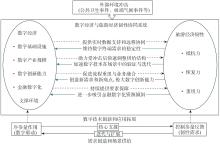
图1
数字经济与旅游经济韧性的互动机理"
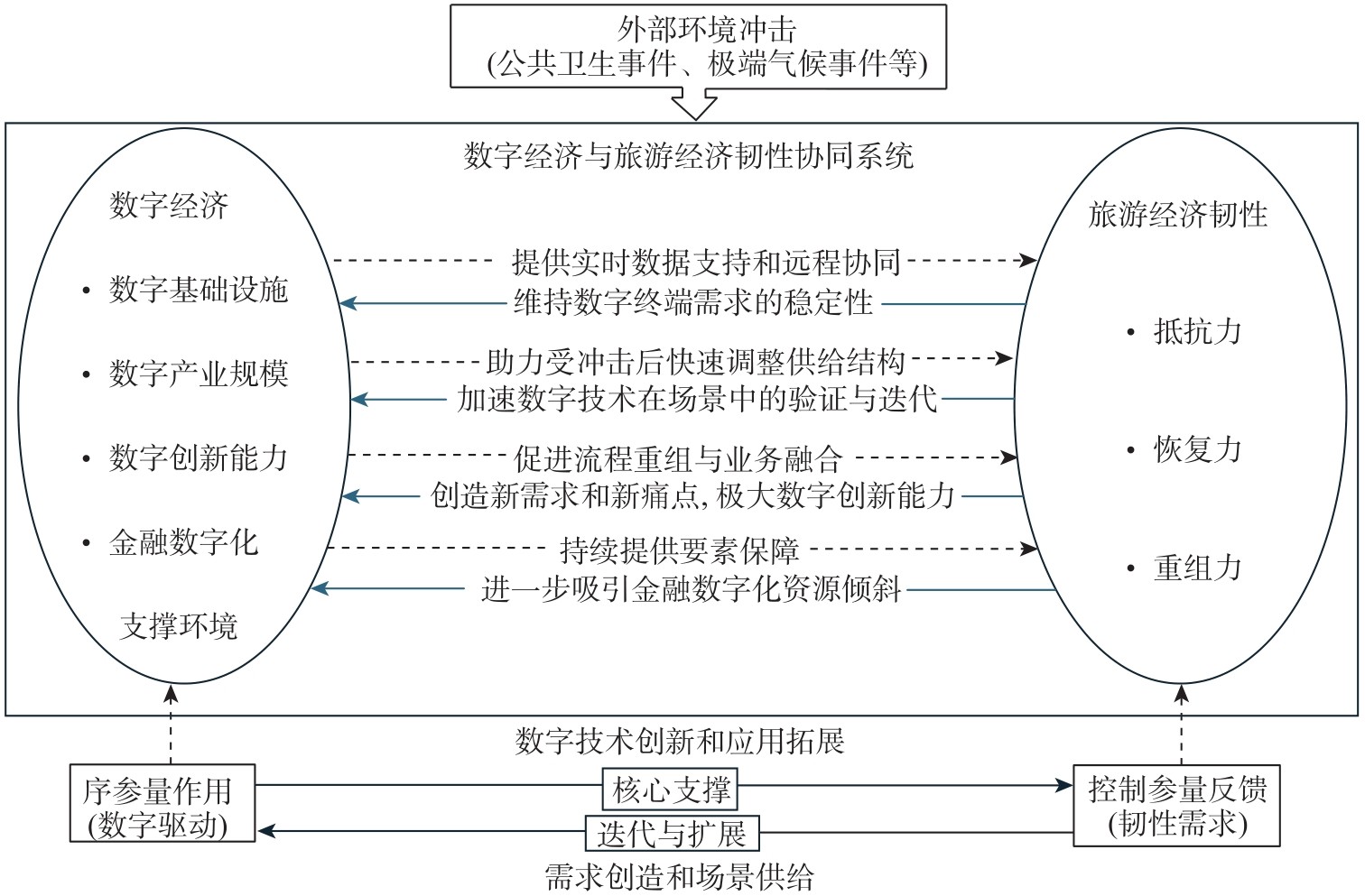

表1
旅游经济韧性评价指标体系"
| 评价目标 | 准则层 | 一级指标 | 二级指标 | 遴选依据 | 指标内涵 | 权重 |
|---|---|---|---|---|---|---|
| 旅游经济韧性(R) | 抵抗力 | 旅游资源 丰富度 | A级旅游景区总数(X1) | 生延超等[ | 核心吸引物存量,表征抵抗冲击的资源基础 | 0.053 |
| 产业结构 稳定性 | 第三产业增加值占GDP比 值(X2) | 生延超等[ | 经济结构多元化水平,增强系统抗风险能力 | 0.043 | ||
| 人均GDP(X3) | 生延超等[ | 区域经济实力,反映应对危机的支撑能力 | 0.068 | |||
| 旅游经济 收入 | 国内旅游总收入(X4) | 蔡超岳等[ | 经济产出规模,体现系统缓冲与抵抗能力 | 0.058 | ||
| 国内旅游总人数(X5) | 蔡超岳等[ | 市场需求规模,反映市场稳定性与抗冲击能力 | 0.057 | |||
| 恢复力 | 污染治理 | 生活垃圾无害化处理率(X6) | 蔡超岳等[ | 环境压力消纳能力,支持系统短期恢复 | 0.051 | |
| 城市污水日处理能力(X7) | 该指标是衡量环境管理水平的通用核心指标 | 污染处理设施能力,保障环境恢复与承载 | 0.053 | |||
| 绿化水平 | 人均公园绿地面积(X8) | 蔡超岳等[ | 生态休闲空间供给,促进环境与服务恢复 | 0.045 | ||
| 绿地覆盖率(X9) | 蔡超岳等[ | 生态本底条件,辅助生态环境恢复调节 | 0.042 | |||
| 旅游接待设施 | 星级饭店数量(X10) | 王佩佩等[ | 高标准服务供给能力,支撑市场服务恢复 | 0.059 | ||
| 旅行社数量(X11) | 王佩佩等[ | 市场组织化程度,增强系统恢复弹性 | 0.060 | |||
| 旅游投入 | 旅游固定资产投资增长 率(X12) | 反映投资恢复 活力 | 驱动产业更新与恢复的资本再投入能力 | 0.093 | ||
| 旅游业从业者人数(X13) | 蔡超岳等[ | 保障服务供给的人力资源储备规模 | 0.070 | |||
| 重组力 | 旅游专业院校 | 旅游院校数量(X14) | 蔡超岳等[ | 提供长期智力支持与知识创新的人才培养 能力 | 0.083 | |
| 旅游人才储备情况 | 旅游院校招生数(X15) | 蔡超岳等[ | 未来专业人才队伍的潜在供给与创新潜力 | 0.071 | ||
| 创新驱动能力 | 高新技术企业占全省企业 比重(X16) | 衡量一个地区的创新主体活跃度和产业高技术化水平 | 高新技术溢出效应能驱动旅游商业模式的根本性创新与重组。 | 0.042 | ||
| 开放与竞争力 | 入境旅游收入占旅游总收 入比重(X17) | 衡量旅游业国际化水平和市场竞争力 | 客源市场结构的多元化与国际化程度,增强系统在全球环境波动中的适应性与竞争力。 | 0.052 |
表2
数字经济评价指标体系"
| 评价目标 | 基准层 | 一级指标 | 二级指标 | 遴选依据 | 指标内涵 | 权重 |
|---|---|---|---|---|---|---|
| 数字经济(D) | 数字基础设施 | 移动电话用户数 | 移动电话年末用户数(Y1) | 何红等[ | 移动网络用户覆盖规模与终端普及度 | 0.092 |
| 宽带互联网基础 | 互联网宽带接入端口(Y2) | 何红等[ | 固定宽带网络的物理容量与接入能力 | 0.088 | ||
| 数字产业发展 | 电商产业发展 | 邮政业务收入(Y3) | 马丽君等[ | 数字交易带动的实物商品流通市场规模 | 0.154 | |
| 电信产业发展 | 电信业务收入(Y4) | 衡量数字基础服务产业规模的核心产出指标 | 电信服务业的直接经济产出与市场规模 | 0.175 | ||
| 信息产业基础 | 信息传输、计算机服务和软件业从业人员数(Y5) | 马丽君等[ | 核心数字产业的劳动力与人才储备规模 | 0.166 | ||
| 数字创新环境 | 数字创新要素 支撑 | R&D经费支出(Y6) | 马丽君等[ | 社会对科技创新活动的资金投入力度 | 0.148 | |
| 教育经费支出(Y7) | 马丽君等[ | 对人力资本培育的长期投入与积累 | 0.081 | |||
| 金融数字化支撑环境 | 覆盖广度 | 数字普惠金融覆盖广度指数(Y8) | 马丽君等[ | 数字金融服务触达用户的范围与可获得性 | 0.036 | |
| 使用深度 | 数字普惠金融使用深度指数(Y9) | 马丽君等[ | 数字金融服务的使用频率与业务深度 | 0.035 | ||
| 数字化程度 | 数字普惠金融数字化程度指数(Y10) | 马丽君等[ | 技术对金融服务模式的重塑与创新程度 | 0.025 |
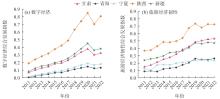
图2
2011—2022年中国西北地区数字经济与旅游经济韧性综合发展指数 注:宁夏、新疆分别为宁夏回族自治区、新疆维吾尔自治区的简称。下同。"
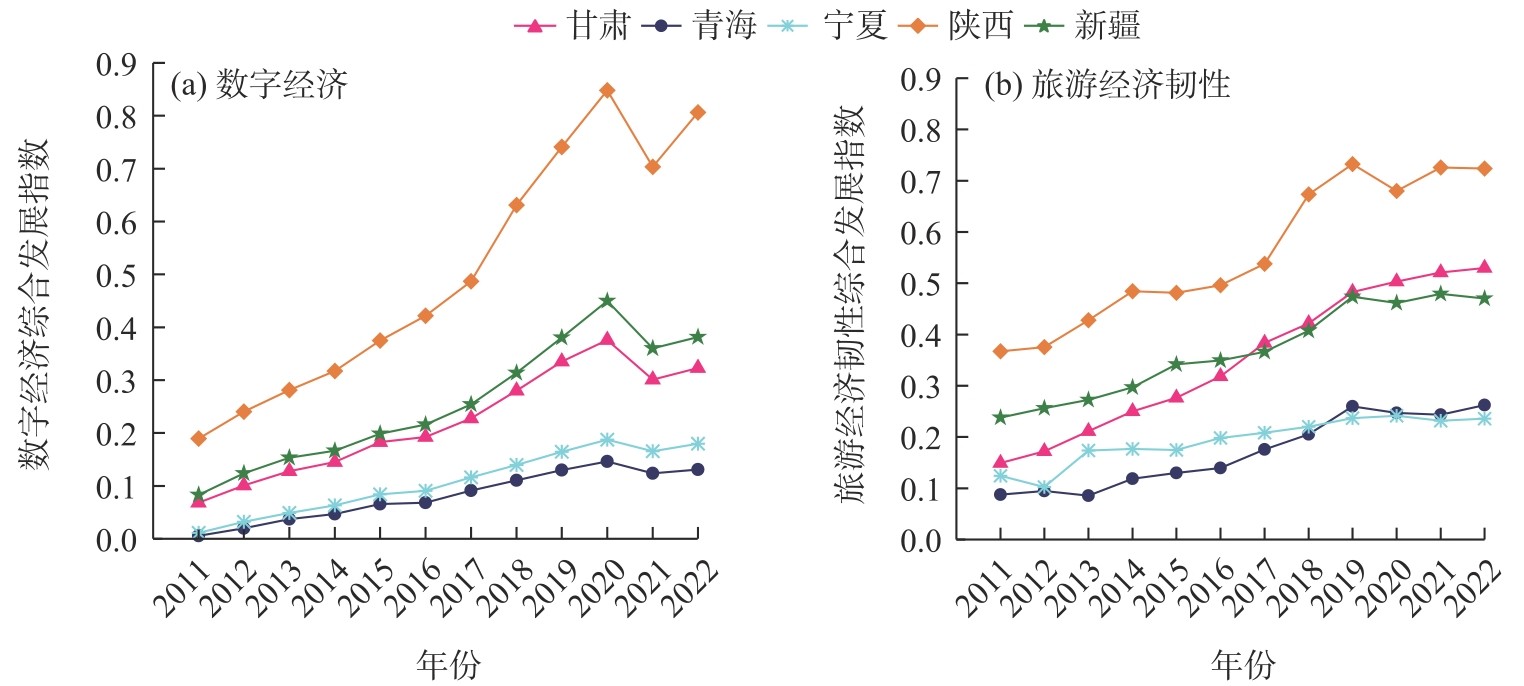
表3
哈肯模型回归结果"
| 假设序参量 | 运动方程 | 控制参量 | 结论 |
|---|---|---|---|
| q1=R q2=D | 不满足绝热近似假设,即原假设不成立 | ||
| q1=D q2=R | 满足绝热近似假设,即原假设成立 |
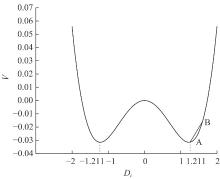
图3
势函数曲线 注:V为势函数;Dt为t时刻的数字经济;B为曲线上任意一点;A为稳定点。"
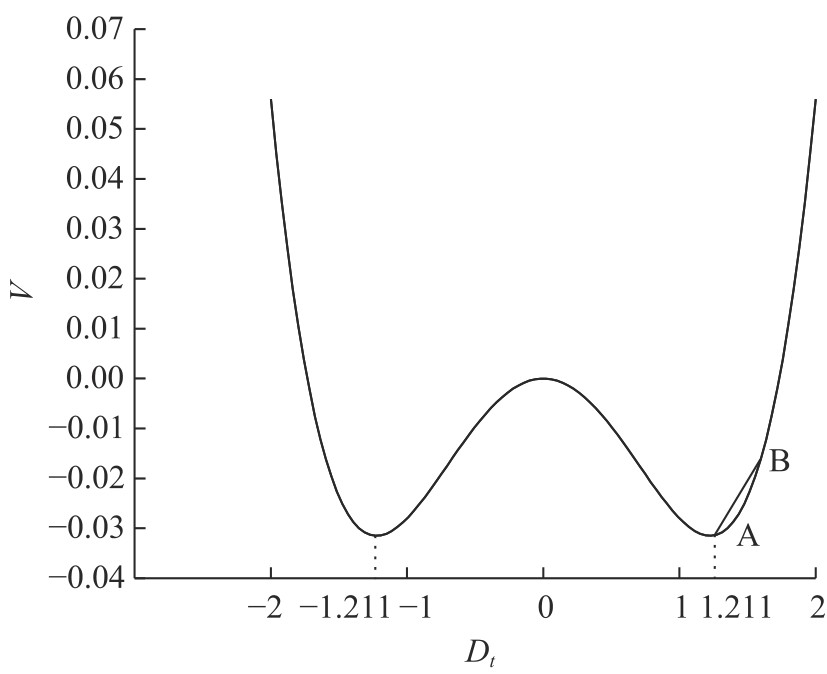
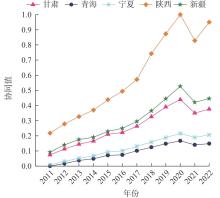
图4
2011—2022年中国西北地区数字经济与旅游经济韧性协同水平"
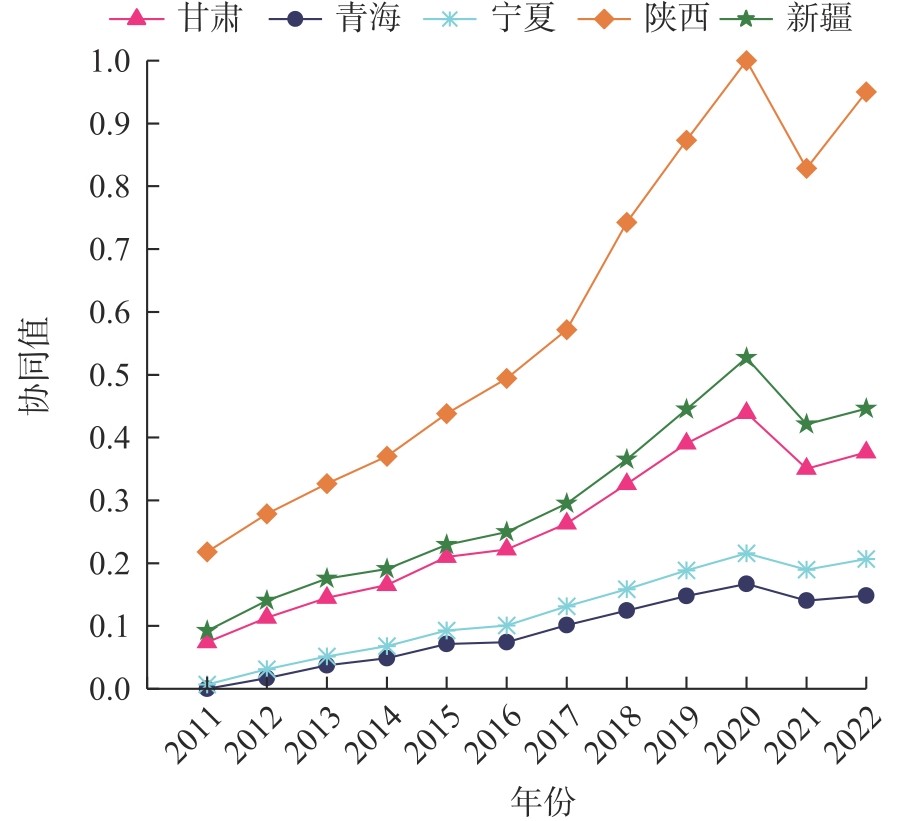
图5
中国西北地区数字经济与旅游经济韧性协同类型划分 注:基于自然资源部标准地图服务网站审图号为GS(2023)2767号的标准地图制作,底图边界无修改。"
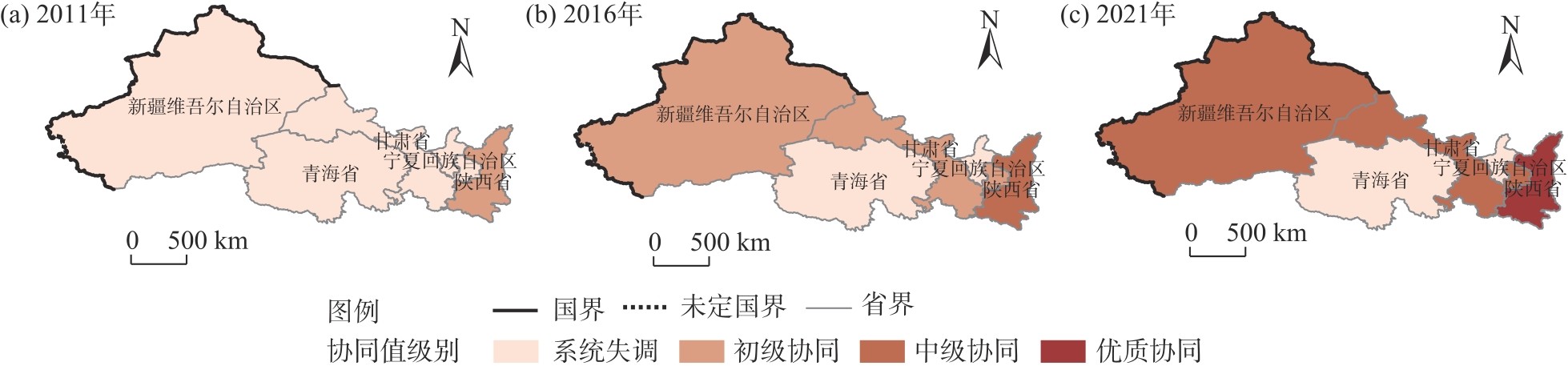
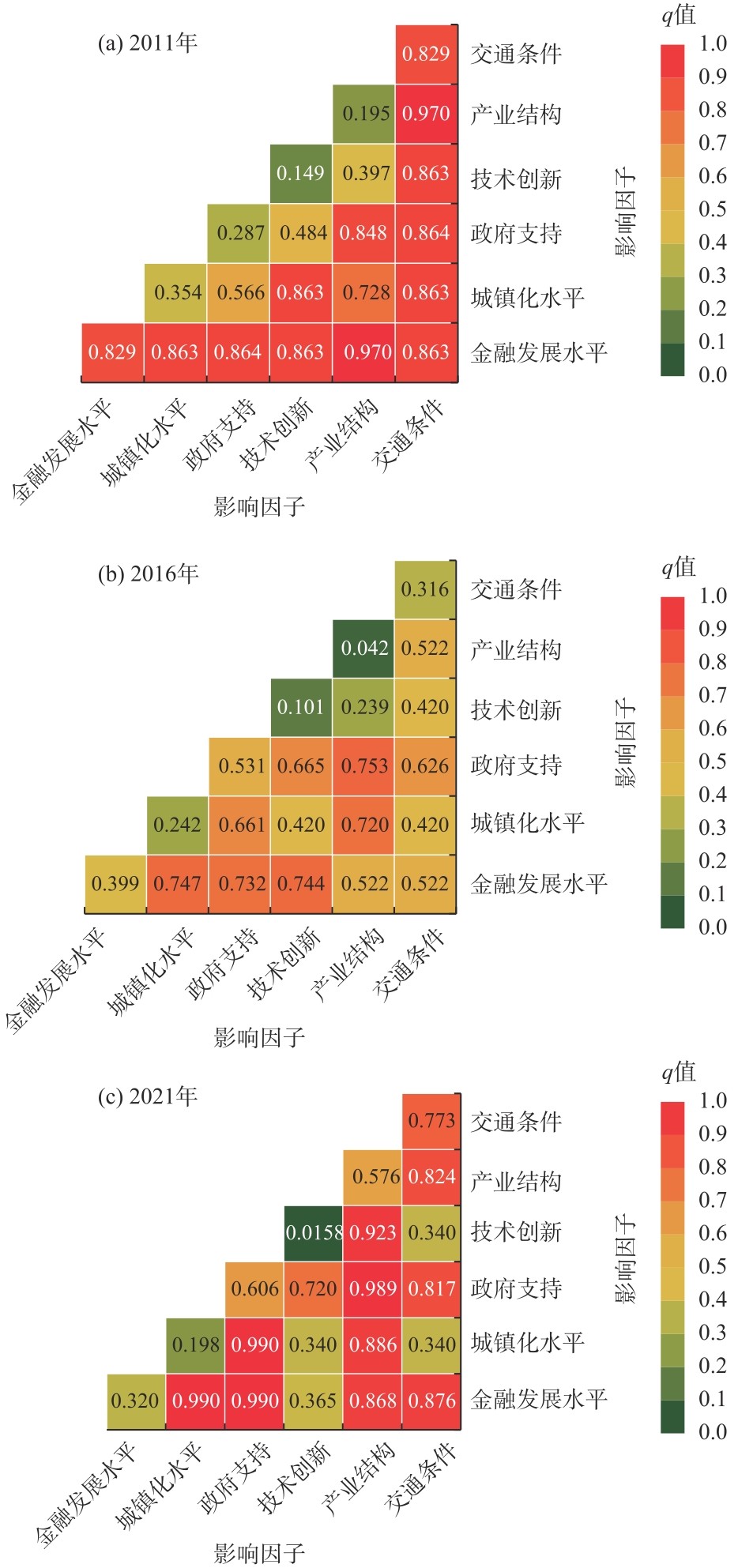
图6
中国西北地区数字经济与旅游经济韧性耦合协调度影响因素交互探测结果 注:q为自变量对因变量解释度。"
| [1] | 何宇, 陈珍珍, 张建华. 人工智能技术应用与全球价值链竞争[J]. 中国工业经济, 2021, 39(10): 117-135. |
| [He Yu, Chen Zhenzhen, Zhang Jianhua. The application of artificial intelligence technology and global value chains competition[J]. China Industrial Economics, 2021, 39(10): 117-135.] | |
| [2] | 宋洋. 数字经济赋能高质量发展的作用机制研究——基于人力资本的理论框架[J]. 贵州社会科学, 2023, 402(10): 109-116. |
| [Song Yang. Research on the mechanism of digital economy empowering high-quality development: A theoretical framework based on human capital[J]. Guizhou Social Sciences, 2023, 402(10): 109-116.] | |
| [3] |
生延超, 谭左思, 李倩, 等. 数字经济能否促进黄河流域旅游经济韧性提升?[J]. 干旱区地理, 2023, 46(10): 1704-1713.
doi: 10.12118/j.issn.1000-6060.2023.090 |
|
[Sheng Yanchao, Tan Zuosi, Li Qian, et al. Can the digital economy promote the resilience of the tourism economy in the Yellow River Basin?[J]. Arid Land Geography, 2023, 46(10): 1704-1713.]
doi: 10.12118/j.issn.1000-6060.2023.090 |
|
| [4] | 明庆忠, 彭天娇, 史鹏飞. 数字经济赋能旅游产业韧性的作用机制研究——基于产业结构和产业集聚的调节效应[J]. 旅游论坛, 2024, 17(10): 43-54. |
| [Ming Qingzhong, Peng Tianjiao, Shi Pengfei. Study on the mechanism of digital economy empowering tourism industry resilience: Based on the moderating effects of industrial structure and industrial agglomeration[J]. Tourism Forum, 2024, 17(10): 43-54.] | |
| [5] | 周敏. 数字经济对旅游经济韧性的影响机制研究[D]. 重庆: 重庆交通大学, 2024. |
| [Zhou Min. Research on the influence mechanism of digital economy on tourism economic resilience[D]. Chongqing: Chongqing Jiaotong University, 2024.] | |
| [6] |
Martin R, Sunley P, Tyler P. Local growth evolutions: Recession, resilience and recovery[J]. Cambridge Journal of Regions, Economy and Society, 2015, 8(2): 141-148.
doi: 10.1093/cjres/rsv012 |
| [7] |
Holling C S. Resilienceandstability ofecological systems[J]. Annual Review of Ecology and Systematics, 1973, 4(1): 1-23.
doi: 10.1146/ecolsys.1973.4.issue-1 |
| [8] | 李连刚, 张平宇, 谭俊涛, 等. 韧性概念演变与区域经济韧性研究进展[J]. 人文地理, 2019, 34(2): 1-7. |
| [Li Liangang, Zhang Pingyu, Tan Juntao, et al. Review on the evolution of resilience concept and research progress on regional economic resilience[J]. Human Geography, 2019, 34(2): 1-7.] | |
| [9] |
杨莎莎, 黄丽露, 段至诚, 等. 中国城市群旅游经济韧性的动态变化及障碍因子分析[J]. 自然资源学报, 2024, 39(6): 1262-1277.
doi: 10.31497/zrzyxb.20240602 |
|
[Yang Shasha, Huang Lilu, Duan Zhicheng, et al. Spatiotemporal dynamic changes and obstacle factor analysis of tourism economic resilience in Chinese urban agglomerations[J]. Journal of Natural Resources, 2024, 39(6): 1262-1277.]
doi: 10.31497/zrzyxb.20240602 |
|
| [10] | 王佩佩, 克甝. 数字新基建与旅游经济韧性耦合协调的时空演化[J]. 技术经济与管理研究, 2025, 46(6): 54-60. |
| [Wang Peipei, Ke Han. The temporal and spatial evolution of the coupling and coordination between digital new infrastructure construction and the resilience of the tourism economy[J]. Journal of Technical Economics & Management, 2025, 46(6): 54-60.] | |
| [11] | 蔡超岳, 唐健雄, 何庆. 中国旅游经济韧性与旅游发展质量的关系研究[J]. 湖南师范大学自然科学学报, 2024, 47(1): 42-53. |
| [Cai Chaoyue, Tang Jianxiong, He Qing. Research on the relationship between tourism economic resilience and tourism developmentquality in China[J]. Journal of Natural Science of Hunan Normal University, 2024, 47(1): 42-53.] | |
| [12] |
Cutters L, Derakhshan S. Temporal and spatial change in disaster resilience in US counties[J]. Environmental Hazards, 2020, 19(1): 10-29.
doi: 10.1080/17477891.2018.1511405 |
| [13] |
Jopp R, Delacy T, Mair J, et al. Using a regional tourism adaptation framework to determine climate change adaptation options for Victoria’s surfcoast[J]. Asia Pacific Journal of Tourism Research, 2013, 18(12): 144-164.
doi: 10.1080/10941665.2012.688515 |
| [14] |
Orchiston C, Prayag G, Brown C. Organizational resilience in the tourism sector[J]. Annals of Tourism Research, 2016, 56(1): 145-148.
doi: 10.1016/j.annals.2015.11.002 |
| [15] |
Adamsk M, Choe J, Mostafanezhad M, et al. (Post-) pandemic tourism resiliency: Southeast Asian lives and livelihoods in limbo[J]. Tourism Geographies, 2021, 23(4): 915-936.
doi: 10.1080/14616688.2021.1916584 |
| [16] |
Ntounis N, Parker C, Skinner H, et al. Tourism and hospitality industry resilience during the COVID-19 pandemic: Evidence from England[J]. Current Issues in Tourism, 2022, 25(1): 46-59.
doi: 10.1080/13683500.2021.1883556 |
| [17] | 王兆峰, 张先甜. 黄河流域旅游经济系统韧性的时空差异特征及其影响因素[J]. 地理与地理信息科学, 2023, 39(3): 112-121. |
| [Wang Zhaofeng, Zhang Xiantian. Spatio-temporal differences and influencing factors of resilience of tourism economic system in the Yellow River Basin[J]. Geography and Geo-Information Science, 2023, 39(3): 112-121.] | |
| [18] | 乔伟桐, 高楠, 新成. 黄河流域旅游产业韧性的时空分异特征及门槛效应分析[J]. 统计与决策, 2023, 39(2): 58-63. |
| [Qiao Weitong, Gao Nan, Xin Cheng. Analysis of spatio-temporal differentiation characteristics and threshold effect of tourism industry resilience in the Yellow River Basin[J]. Statistics & Decision, 2023, 39(2): 58-63.] | |
| [19] |
狄乾斌, 陈科其, 陈小龙, 等. 疫情冲击下北京市旅游业经济韧性测度及其影响因素[J]. 经济地理, 2023, 43(1): 133-140.
doi: 10.15957/j.cnki.jjdl.2023.01.015 |
| [Di Ganbin, Chen Keqi, Chen Xiaolong, et al. The economic resilience measurement of Beijing’s tourism industry and its influencing factors under the impact of the COVID-19 pandemic[J]. Economic Geography, 2023, 43(1): 133-140.] | |
| [20] | 夏运煌, 姚建盛, 黄毅, 等. 数字经济对长三角中心城市旅游经济韧性的影响研究[J]. 旅游论坛, 2025, 18(1): 32-48. |
| [Xia Yunhuang, Yao Jiansheng, Huang Yi, et al. Research on the impact of digital economy on the resilience of urban tourism economy in central cities of the Yangtze River Delta[J]. Tourism Forum, 2025, 18(1): 32-48.] | |
| [21] | 贺小荣, 贾丹玉, 石彩霞. 长江经济带数字基础设施建设对旅游经济韧性的影响[J]. 商学研究, 2024, 31(6): 16-26. |
| [He Xiaorong, Jia Danyu, Shi Caixia. The impact of digital infrastructure construction in the Yangtze River Economic Belt on the resilience of tourism economy[J]. Commercial Science Research, 2024, 31(6): 16-26.] | |
| [22] |
Luthe T, Wyss R. Assessing and planning resilience in tourism[J]. Tourism Management, 2014, 44: 161-163.
doi: 10.1016/j.tourman.2014.03.011 |
| [23] | 张少华, 陈治. 数字经济与区域经济增长的机制识别与异质性研究[J]. 统计与信息论坛, 2021, 36(11): 14-27. |
| [Zhang Shaohua, Chen Zhi. Research on the mechanism identification and heterogeneity of digital economy and regional economic growth[J]. Journal of Statistics and Information, 2021, 36(11): 14-27.] | |
| [24] |
朱静敏, 卢小丽. 数字经济提升旅游经济韧性的作用机制及空间效应[J]. 地理科学进展, 2024, 43(10): 2004-2020.
doi: 10.18306/dlkxjz.2024.10.008 |
|
[Zhu Jingmin, Lu Xiaoli. Mechanism of impact and spatial effect of digital economy in enhancing tourism economic resilience[J]. Progress in Geography, 2024, 43(10): 2004-2020.]
doi: 10.18306/dlkxjz.2024.10.008 |
|
| [25] |
王金伟, 王启翔, 冯凌. 中国数字经济与旅游业高质量发展的协调格局及驱动机制[J]. 地理科学, 2024, 44(1): 130-139.
doi: 10.13249/j.cnki.sgs.20221571 |
| [Wang Jinwei, Wang Qixiang, Feng Ling. Coordination pattern and driving mechanism of digital economy and high-quality tourism development in China[J]. Geographical Science, 2024, 44(1): 130-139.] | |
| [26] | 何红, 拓守恒. 数字经济驱动旅游产业高质量发展的作用机理与耦合协调关系——基于西北五省的实证[J]. 统计与决策, 2023, 39(20): 78-83. |
| [He Hong, Tuo Shouheng. The mechanism and coupling coordination relationship of digital economy eriving the high-quality development of tourism industry: An empirical study based on five northwest provinces[J]. Statistics & Decision, 2023, 39(20): 78-83.] | |
| [27] |
马丽君, 敖烨. 数字经济对旅游业高质量发展的影响及空间溢出效应[J]. 地理科学进展, 2023, 42(12): 2296-2308.
doi: 10.18306/dlkxjz.2023.12.002 |
|
[Ma Lijun, Ao Ye. Influence and spatial spillover effects of the digital economy on the high-quality development of the tourism industry[J]. Progress in Geography, 2023, 42(12): 2296-2308.]
doi: 10.18306/dlkxjz.2023.12.002 |
|
| [28] | 方世巧, 赖俊武, 滕容梅. 数字经济与旅游业高质量发展的耦合协调关系及互动效应研究——以西部民族地区为例[J]. 资源开发与市场, 2023, 39(11): 1489-1497. |
| [Fang Shiqiao, Lai Junwu, Teng Rongmei. Study on the coupling and coordination relationship and interactive effect between digital economy and high-quality development of tourism: Taking the western ethnic regions as an example[J]. Resource Development & Market, 2023, 39(11): 1489-1497.] | |
| [29] | 管杜娟, 何欣, 苏理梅. 数字经济对城市韧性的影响机制研究——以安徽省为例[J]. 新疆财经大学学报, 2025, 26(2): 46-55. |
| [Guan Dujuan, He Xin, Su Limei. A study of influence mechanism of digital economy on urban resilience: Take Anhui Province in China as an example[J]. Journal of Xinjiang University of Finance & Economics, 2025, 26(2): 46-55.] | |
| [30] | 杨发鹏, 张雪唱, 李宗阳. 城市旅游“三生”竞争力空间分异——以西北五省为例[J]. 干旱区地理, 2019, 42(3): 664-672. |
| [Yang Fapeng, Zhang Xuechang, Li Zongyang. Spatial differentiation of the “production-life-ecology” competitiveness in urban tourism: A case study of five provinces in northwest China[J]. Arid Land Geography, 2019, 42(3): 664-672.] | |
| [31] |
曹开军, 商宁, 王秘秘. 中国西北五省乡村旅游重点村时空分布格局与可达性分析[J]. 干旱区地理, 2023, 46(7): 1196-1205.
doi: 10.12118/j.issn.1000-6060.2022.531 |
|
[Cao Kaijun, Shang Ning, Wang Mimi. Spatial distribution pattern and accessibility of key rural tourism villages in the five northwestern provinces of China[J]. Arid Land Geography, 2023, 46(7): 1196-1205.]
doi: 10.12118/j.issn.1000-6060.2022.531 |
|
| [32] |
何玉梅, 赵欣灏. 新型数字基础设施能够推动产业结构升级吗——来自中国272个地级市的经验证据[J]. 科技进步与对策, 2021, 38(17): 79-86.
doi: 10.6049/kjjbydc.2020120317 |
| [He Yumei, Zhao Xinhao. Does the new digital infrastructure contribute to the upgrading of industrial structure: Evidence from 272 cities in China[J]. Science & Technology Progress and Policy, 2021, 38(17): 79-86.] | |
| [33] | 张万里, 宣旸. 产业智能化对产业结构升级的空间溢出效应: 劳动力结构和收入分配不平等的调节作用[J]. 经济管理, 2020, 42(10): 77-101. |
| [Zhang Wanli, Xuan Yang. The spatial effect of industrial intelligence on industrial structure upgrading: The role of labor structure and income inequality[J]. Economic Management Journal, 2020, 42(10): 77-101.] | |
| [34] |
欧进锋, 许抄军, 刘雨骐. 基于“五大发展理念”的经济高质量发展水平测度——广东省21个地级市的实证分析[J]. 经济地理, 2020, 40(6): 77-86.
doi: 10.15957/j.cnki.jjdl.2020.06.009 |
|
[Ou Jinfeng, Xu Chaojun, Liu Yuqi. The measurement of high-quality economic development level based from five development concepts: Empirical analysis of 21 prefecture-level cities in Guangdong Province[J]. Economic Geography, 2020, 40(6): 77-86.]
doi: 10.15957/j.cnki.jjdl.2020.06.009 |
|
| [35] |
周霞, 王佳. 中国省域经济韧性与生态效率测度及其协同演化分析[J]. 干旱区地理, 2024, 47(2): 319-331.
doi: 10.12118/j.issn.1000-6060.2023.178 |
| [Zhou Xia, Wang Jia. Measurement and synergistic evolution analysis of economic resilience and eco-efficiency of provincial regions in China[J]. Arid Land Geography, 2024, 47(2): 319-331.] | |
| [36] |
王劲峰, 徐成东. 地理探测器: 原理与展望[J]. 地理学报, 2017, 72(1): 116-134.
doi: 10.11821/dlxb201701010 |
|
[Wang Jinfeng, Xu Chengdong. Geodetector: Principle and prospective[J]. Acta Geographica Sinica, 2017, 72(1): 116-134.]
doi: 10.11821/dlxb201701010 |
|
| [37] |
王思楠, 吴英杰, 王宏宙, 等. 基于地理探测器的鄂尔多斯干旱时空变化驱动因素分析[J]. 干旱区研究, 2024, 41(12): 1981-1991.
doi: 10.13866/j.azr.2024.12.01 |
|
[Wang Sinan, Wu Yingjie, Wang Hongzhou, et al. Spatial and temporal drivers of drought analysis using the geodetector in Ordos[J]. Arid Zone Research, 2024, 41(12): 1981-1991.]
doi: 10.13866/j.azr.2024.12.01 |
| [1] | 李晓柯, 陈强强. 数字经济对甘肃省城乡收入差距的影响机制与空间效应[J]. 干旱区地理, 2026, 49(1): 198-210. |
| [2] | 高帅, 张务伟. 中国新质生产力与新型城镇化的协同演化研究[J]. 干旱区地理, 2025, 48(8): 1445-1456. |
| [3] | 许静, 杨斌. 甘肃省新型城镇化与生态安全耦合协同及其驱动因素非平稳性[J]. 干旱区地理, 2025, 48(8): 1432-1444. |
| [4] | 谢宇, 薛选登. 数字经济赋能绿色发展福利——基于黄河流域资源型城市的经验证据[J]. 干旱区地理, 2025, 48(6): 1127-1139. |
| [5] | 汪左, 聂家静, 王梦雪, 魏子然, 李虎, 尤元红. 新疆植被固碳时空特征及驱动因素分析[J]. 干旱区地理, 2025, 48(12): 2197-2209. |
| [6] | 朱瑷嫒, 殷颂葵, 刘琼慧. 中国西北地区农业生态效率时空分异及影响因素研究[J]. 干旱区地理, 2024, 47(7): 1210-1219. |
| [7] | 周霞, 王佳. 中国省域经济韧性与生态效率测度及其协同演化分析[J]. 干旱区地理, 2024, 47(2): 319-331. |
| [8] | 吉泽男, 付文婷, 王鹏程, 廖升, 潘铮. 干旱区数字经济与农业绿色发展耦合协调研究——以新疆为例[J]. 干旱区地理, 2024, 47(11): 1981-1990. |
| [9] | 杨晓玲, 丁文魁, 周华, 李岩瑛, 陈海贝. 石羊河流域归一化植被指数变化及其驱动因子分析[J]. 干旱区地理, 2024, 47(10): 1735-1744. |
| [10] | 生延超, 谭左思, 李倩, 许玲玲. 数字经济能否促进黄河流域旅游经济韧性提升?[J]. 干旱区地理, 2023, 46(10): 1704-1713. |
| [11] | 姚旭阳,张明军,张宇,王家鑫,肖涵余. 中国西北地区气候转型的新认识[J]. 干旱区地理, 2022, 45(3): 671-683. |
| [12] | 张军民,荣城,马玉香. 新疆城镇化绿色发展时空分异及驱动因子探究[J]. 干旱区地理, 2022, 45(1): 251-262. |
| [13] | 陈强强, 窦学诚. 甘肃省环境库兹涅茨曲线估计及其驱动因子分析[J]. 干旱区地理, 2011, 34(5): 866-872. |
| [14] | 刘蕾, 夏军, 丰华丽, 占车生, 尹雄锐. 水生态系统服务功能变化的驱动因子分析——以三工河流域为例[J]. 干旱区地理, 2005, 28(3): 347-351. |
| [15] | 张勇, 刘时银, 王建, 韩海东, 谢昌卫. 新疆阿克苏地区耕地变化分析及驱动因子研究[J]. 干旱区地理, 2004, 27(2): 228-233. |
|
||