Arid Land Geography ›› 2026, Vol. 49 ›› Issue (9): 1803-1814.doi: 10.12118/j.issn.1000-6060.2025.697
• Earth Surface Process • Previous Articles Next Articles
CHEN Wanting( ), MA Yujun(), JIANG Chuanli, HAN Chenxiaoyu
Received:2025-10-29
Revised:2025-12-07
Online:2026-09-25
Published:2026-09-07
Contact:
MA Yujun
E-mail:chenwt75@mail2.sysu.edu.cn;mayujun3@mail.sysu.edu.cn
CHEN Wanting, MA Yujun, JIANG Chuanli, HAN Chenxiaoyu. Sources of organic carbon in surface sediments of Lake Qinghai based on Binary model and Bayesian mixing model[J].Arid Land Geography, 2026, 49(9): 1803-1814.
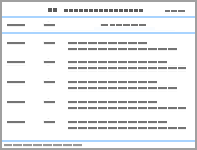
Tab. 1
Comparison of main conclusions on organic carbon sources in Lake Qinghai sediments (ordered by publication year)"
| 序号 | 指标 | 方法 | 主要观点 | 文献 |
|---|---|---|---|---|
| 1 | C/N | 定性 | 内源持续主导 | [ |
| 2 | δ13Corg | 定性 | 陆生高等植物为主要碳源 | [ |
| 3 | C/N | 定性 | 藻类/浮游生物贡献显著 | [ |
| 4 | C/N | 定性 | 内源主导 | [ |
| 5 | δ13Corg | 定量 | 颗粒性有机碳主导 | [ |
| 6 | δ13Corg、正构烷烃碳同位素 | 定性 | 水生植物为主要碳源 | [ |
| 7 | C/N、δ13Corg | 定性 | 藻类和浮游植物为主要来源 | [ |
| 8 | C/N | 定性 | 内源水生生物主导 | [ |
| 9 | C/N | 定性 | 内源水生植物主导 | [ |
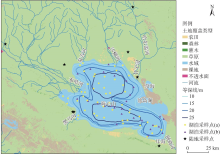
Fig. 1
Spatial distribution of different sample points in Lake Qinghai and its surrounding areas"

Tab. 2
Sources and year information of data used in this study"
| 样品类型 | 数据类型 | 采集年份 | 发表年份 | 文献 |
|---|---|---|---|---|
| 湖泊沉积物 | TOC、TN | - | 2012 | [ |
| 湖泊沉积物 | TOC、TN | 2017 | 2021 | [ |
| 湖泊沉积物 | TOC、TN | 2012 | 2014 | [ |
| 湖泊沉积物 | δ13Corg | - | 2013 | [ |
| 有机碳端元 | δ13Corg | - | 2013 | [ |
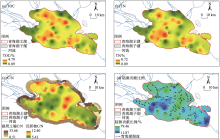
Fig. 2
Spatial distributions of parameters related to Lake Qinghai and its surrounding areas"

Tab. 3
Sensitivity analysis of the impact of end-member C/N value variations on the proportional contribution of terrestrial organic carbon"
| 端元C/N变化 | 陆源有机碳贡献率变化量/% | |
|---|---|---|
| 平均变化量 | 最大变化量 | |
| Re=17±1 | ±0.65 | ±1.35 |
| Re=17±2 | ±1.29 | ±2.98 |
| Re=17±3 | ±1.96 | ±4.97 |
| Ri=5±0.1 | ±0.73 | ±1.41 |
| Ri=5±0.2 | ±1.43 | ±2.84 |
| Ri=5±0.3 | ±2.13 | ±4.30 |
Tab. 4
Calculation results of the contribution of different carbon sources to the organic carbon of the surface sediments in Lake Qinghai"
| 表层沉积物 | 采样区域 | 水深/m | TOC/% | TN/% | C/N | 贡献比例/% | |
|---|---|---|---|---|---|---|---|
| 陆源 | 内源 | ||||||
| QHH-1* | 西北湖区 | 20.1 | 3.5 | 0.42 | 8.33 | 56.7 | 43.3 |
| QHH-2* | 西北湖区 | 26.6 | 4.8 | 0.70 | 6.86 | 38.4 | 61.6 |
| QHH-3* | 北深水区 | 28.0 | 3.4 | 0.32 | 10.63 | 75.0 | 25.0 |
| QHH-4* | 北深水区 | 27.5 | 3.5 | 0.48 | 7.29 | 44.5 | 55.5 |
| QHH-5* | 北深水区 | 26.7 | 4.6 | 0.55 | 8.36 | 57.0 | 43.0 |
| QHH-6* | 东北湖区 | 26.3 | 2.1 | 0.19 | 11.05 | 77.6 | 22.4 |
| QHH-8* | 北深水区 | 27.3 | 2.6 | 0.39 | 6.67 | 35.4 | 64.6 |
| QHH-9* | 北深水区 | 28.0 | 4.1 | 0.53 | 7.74 | 50.1 | 49.9 |
| QHH-10* | 北深水区 | 27.4 | 2.7 | 0.37 | 7.30 | 44.6 | 55.4 |
| QHH-11* | 布哈河口区 | 12.0 | 1.7 | 0.21 | 8.10 | 54.2 | 45.8 |
| QHH-12* | 西南湖区 | 18.6 | 1.6 | 0.20 | 8.00 | 53.1 | 46.9 |
| QHH-13* | 西南湖区 | 24.7 | 2.7 | 0.48 | 5.63 | 15.7 | 84.3 |
| QHH-14* | 湖心区 | 27.8 | 3.3 | 0.50 | 6.60 | 34.3 | 65.7 |
| QHH-15* | 南深水区 | 28.0 | 4.3 | 0.72 | 5.97 | 23.1 | 76.9 |
| QHH-16* | 南深水区 | 27.7 | 3.3 | 0.40 | 8.25 | 55.8 | 44.2 |
| QHH-17* | 南深水区 | 26.6 | 1.4 | 0.14 | 10.00 | 70.8 | 29.2 |
| QHH-18* | 南深水区 | 25.1 | 4.7 | 0.53 | 8.87 | 61.8 | 38.2 |
| QHH-19* | 西南湖区 | 21.9 | 3.5 | 0.56 | 6.25 | 28.3 | 71.7 |
| QHH-20* | 东南湖区 | 24.5 | 1.9 | 0.33 | 5.76 | 18.6 | 81.4 |
| QHH-21* | 东南湖区 | 26.5 | 3.1 | 0.38 | 8.16 | 54.8 | 45.2 |
| QHH-22* | 东南湖区 | 25.2 | 1.9 | 0.28 | 6.79 | 37.3 | 62.7 |
| QHH-23* | 东南湖区 | 27.0 | 3.5 | 0.48 | 7.29 | 44.5 | 55.5 |
| QHH-24* | 南深水区 | 27.5 | 3.9 | 0.56 | 6.96 | 40.0 | 60.0 |
| QHH-25* | 南深水区 | 27.0 | 4.0 | 0.55 | 7.27 | 44.3 | 55.7 |
| QHH-26* | 东南湖区 | 23.5 | 1.8 | 0.22 | 8.18 | 55.1 | 44.9 |
| QHH-27* | 东南湖区 | 26.0 | 3.3 | 0.50 | 6.60 | 34.3 | 65.7 |
| 1#** | 151码头 | 22.0 | 2.6 | 0.25 | 10.54 | 74.5 | 25.5 |
| 3#** | 湖心区 | 25.0 | 2.7 | 0.25 | 11.18 | 78.3 | 21.7 |
| 4#** | 江西沟码头 | 25.0 | 2.71 | 0.25 | 10.92 | 76.8 | 23.2 |
| 5#** | 布哈河口区 | 11.9 | 1.47 | 0.15 | 10.15 | 71.9 | 28.1 |
| 6#** | 布哈河口区 | 9.2 | 2.60 | 0.23 | 11.42 | 79.6 | 20.4 |
| 7#** | 西北湖区 | 24.5 | 2.70 | 0.25 | 10.64 | 75.1 | 24.9 |
| 8#** | 青海湖农场 | 15.0 | 1.77 | 0.17 | 10.25 | 72.6 | 27.4 |
| 9#** | 沙柳河口区 | 10.0 | 1.73 | 0.16 | 11.09 | 77.8 | 22.2 |
| 10#** | 泉吉河口区 | 5.0 | 1.14 | 0.10 | 11.28 | 78.9 | 21.1 |
| 11#** | 黑马河口区 | 8.6 | 0.89 | 0.09 | 9.53 | 67.3 | 32.7 |
| 1*** | 西南湖区 | - | 1.77 | 0.25 | 7.20 | 43.3 | 56.7 |
| 2*** | 南深水区 | - | 2.20 | 0.30 | 7.25 | 44.0 | 56.0 |
| 3*** | 东南湖区 | - | 2.16 | 0.31 | 7.07 | 41.5 | 58.5 |
| 5*** | 东北湖区 | - | 1.03 | 0.19 | 5.40 | 10.5 | 89.5 |
| 6*** | 西北湖区 | - | 2.26 | 0.30 | 7.53 | 47.6 | 52.4 |
| 7*** | 北深水区 | - | 1.38 | 0.21 | 6.71 | 36.1 | 63.9 |
| 8*** | 北深水区 | - | 2.40 | 0.34 | 7.09 | 41.7 | 58.3 |
| 9*** | 东南湖区 | - | 2.11 | 0.31 | 6.84 | 38.2 | 61.8 |
| 10*** | 西南湖区 | - | 1.95 | 0.27 | 7.33 | 45.1 | 54.9 |
| 11*** | 西南湖区 | - | 2.00 | 0.28 | 7.03 | 40.8 | 59.2 |
| 12*** | 南深水区 | - | 1.90 | 0.25 | 7.49 | 47.1 | 52.9 |
| 15*** | 东北湖区 | - | 1.59 | 0.21 | 7.71 | 49.8 | 50.2 |
| 16*** | 西北湖区 | - | 1.90 | 0.23 | 8.11 | 54.3 | 45.7 |
| 17*** | 湖心区 | - | 1.97 | 0.27 | 7.26 | 44.1 | 55.9 |
| 18*** | 布哈河口区 | - | 1.62 | 0.23 | 7.09 | 41.8 | 58.2 |
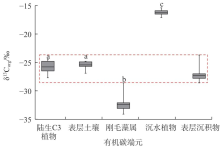
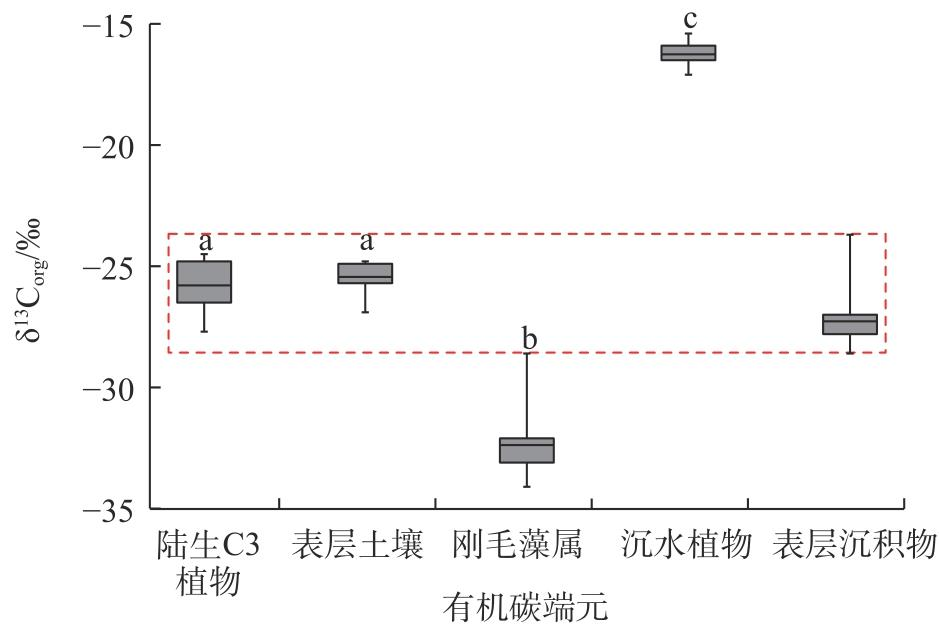
Fig. 3
Distribution characteristics of δ13Corg of organic carbon end-members in Lake Qinghai"
Tab. 5
Modeling results of the contribution of different carbon sources to the organic carbon of the surface sediments in Lake Qinghai"
| 表层沉积物 | 样品水深/m | δ13Corg/‰ | 陆源贡献比例/% | 沉水植物贡献比例/% | 刚毛藻属贡献比例/% | |||||
|---|---|---|---|---|---|---|---|---|---|---|
| 平均值 | 标准差 | 平均值 | 标准差 | 平均值 | 标准差 | |||||
| S01 | 26.5 | -27.5 | 69.2 | 0.205 | 3.5 | 0.046 | 27.3 | 0.186 | ||
| S02 | 26.0 | -28.0 | 65.7 | 0.218 | 3.3 | 0.043 | 31.0 | 0.203 | ||
| S03 | 26.0 | -27.6 | 68.3 | 0.211 | 3.6 | 0.050 | 28.1 | 0.190 | ||
| S04 | 26.0 | -27.6 | 68.3 | 0.203 | 3.6 | 0.047 | 28.1 | 0.185 | ||
| S05 | 26.0 | -27.8 | 67.9 | 0.210 | 3.4 | 0.046 | 28.7 | 0.193 | ||
| S06 | 25.5 | -27.6 | 68.8 | 0.211 | 3.6 | 0.050 | 27.5 | 0.190 | ||
| S07 | 25.0 | -27.4 | 69.9 | 0.199 | 3.6 | 0.047 | 26.5 | 0.179 | ||
| S08 | 25.0 | -27.3 | 70.5 | 0.200 | 3.8 | 0.051 | 25.7 | 0.178 | ||
| S09 | 25.0 | -28.1 | 65.1 | 0.218 | 3.4 | 0.046 | 31.5 | 0.202 | ||
| S10 | 24.0 | -28.6 | 61.3 | 0.223 | 3.2 | 0.042 | 35.4 | 0.207 | ||
| S11 | 24.0 | -27.1 | 71.6 | 0.195 | 3.8 | 0.052 | 24.6 | 0.171 | ||
| S12 | 24.0 | -27.7 | 68.5 | 0.212 | 3.4 | 0.046 | 28.1 | 0.194 | ||
| S13 | 24.0 | -27.6 | 68.1 | 0.214 | 3.7 | 0.049 | 28.2 | 0.194 | ||
| S14 | 24.0 | -26.6 | 74.0 | 0.188 | 4.0 | 0.057 | 22.0 | 0.163 | ||
| S15 | 24.0 | -28.0 | 66.1 | 0.217 | 3.5 | 0.047 | 30.4 | 0.198 | ||
| S16 | 24.0 | -27.8 | 67.6 | 0.212 | 3.4 | 0.046 | 29.0 | 0.195 | ||
| S17 | 24.0 | -27.3 | 69.9 | 0.207 | 3.7 | 0.049 | 26.4 | 0.187 | ||
| S18 | 22.0 | -27.0 | 72.1 | 0.195 | 3.7 | 0.049 | 24.2 | 0.175 | ||
| S19 | 20.4 | -26.8 | 72.7 | 0.198 | 3.9 | 0.054 | 23.4 | 0.173 | ||
| S20 | 18.5 | -27.0 | 72.1 | 0.197 | 3.9 | 0.053 | 24.0 | 0.174 | ||
| S21 | 18.0 | -26.9 | 72.5 | 0.196 | 3.9 | 0.055 | 23.6 | 0.172 | ||
| S22 | 13.8 | -26.1 | 76.5 | 0.180 | 4.2 | 0.062 | 19.3 | 0.149 | ||
| S23 | 11.5 | -26.5 | 74.6 | 0.187 | 4.1 | 0.058 | 21.2 | 0.160 | ||
| S24 | 10.0 | -23.7 | 81.2 | 0.178 | 7.0 | 0.108 | 11.8 | 0.099 | ||
| 1F-1 | 24.7 | -28.2 | 73.0 | 0.112 | 2.8 | 0.024 | 24.2 | 0.097 | ||
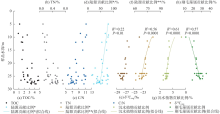
Fig. 4
Variation of relevant parameters about surface sediments with water depth in Lake Qinghai"

| [1] | 沈吉, 张恩楼, 夏威岚. 青海湖近千年来气候环境变化的湖泊沉积记录[J]. 第四纪研究, 2001, 21(6): 508-513. |
| [Shen Ji, Zhang Enlou, Xia Weilan. Records from lake sediments of Qinghai Lake to mirror climate and environmental changes of the past about 1000 years[J]. Quaternary Sciences, 2001, 21(6): 508-513.] | |
| [2] | 刘卫国, 李祥忠, 王政, 等. 西北干旱区湖泊碳同位素与环境变化[J]. 中国科学: 地球科学, 2019, 49(8): 1182-1196. |
|
[Liu Weiguo, Li Xiangzhong, Wang Zheng, et al. Carbon isotope and environmental changes in lakes in arid northwest China[J]. Scientia Sinica Terrae, 2019, 49(8): 1182-1196.]
doi: 10.1360/N072018-00026 |
|
| [3] | 张姚, 吴铎, 张欢, 等. 不同时间尺度青海湖沉积物总有机碳对气候变化的敏感性[J]. 湖泊科学, 2019, 31(5): 1468-1478. |
|
[Zhang Yao, Wu Duo, Zhang Huan, et al. Total organic carbon sensitivity to climate change from Qinghai Lake sediments at different time scales[J]. Journal of Lake Sciences, 2019, 31(5): 1468-1478.]
doi: 10.18307/2019.0513 |
|
| [4] | 张家武, 金明, 陈发虎, 等. 青海湖沉积岩芯记录的青藏高原东北部过去800年以来的降水变化[J]. 科学通报, 2004, 49(1): 10-14. |
|
[Zhang Jiawu, Jin Ming, Chen Fahu, et al. The precipitation changes in the northeastern part of the Tibetan Plateau over the past 800 years recorded by the sedimentary core of Qinghai Lake[J]. Chinese Science Bulletin, 2004, 49(1): 10-14.]
doi: 10.1007/BF02901736 |
|
| [5] |
Henderson A C G, Holmes J A, Zhang J, et al. A carbon- and oxygen-isotope record of recent environmental change from Qinghai Lake, NE Tibetan Plateau[J]. Chinese Science Bulletin, 2003, 48(14): 1463-1468.
doi: 10.1360/02wd0272 |
| [6] |
Lister G S, Kelts K, Zao C K, et al. Lake Qinghai, China: Closed-basin like levels and the oxygen isotope record for Ostracoda since the latest Pleistocene[J]. Palaeogeography, Palaeoclimatology, Palaeoecology, 1991, 84(1-4): 141-162.
doi: 10.1016/0031-0182(91)90041-O |
| [7] |
Yu J Q, Kelts K R. Abrupt changes in climatic conditions across the late-glacial/Holocene transition on the N. E. Tibet-Qinghai Plateau: Evidence from Lake Qinghai, China[J]. Journal of Paleolimnology, 2002, 28(2): 195-206.
doi: 10.1023/A:1021635715857 |
| [8] |
Krishnamurthy R V, Bhattacharya S K, Kusumgar S. Palaeoclimatic changes deduced from 13C/12C and C/N ratios of Karewa Lake sediments, India[J]. Nature, 1986, 323(6084): 150-152.
doi: 10.1038/323150a0 |
| [9] |
Mahesh B S, Warrier A K, Mohan R, et al. Impact of Antarctic climate during the Late Quaternary: Records from Zub Lake sedimentary archives from Schirmacher Hills, east Antarctica[J]. Palaeogeography, Palaeoclimatology, Palaeoecology, 2019, 514(15): 398-406.
doi: 10.1016/j.palaeo.2018.10.029 |
| [10] | 李秀美, 范宝伟, 侯居峙, 等. 青藏高原达则错沉积物有机碳同位素特征及古气候环境意义[J]. 地球科学, 2022, 47(6): 2275-2286. |
| [Li Xiumei, Fan Baowei, Hou Juzhi, et al. Characteristics of organic carbon isotope in sediments of Daze Co, Tibetan Plateau and its paleoclimatic and paleoenvironmental significance[J]. Earth Science, 2022, 47(6): 2275-2286.] | |
| [11] | Chen X, Meng X Q, Song Y X, et al. Spatial patterns of organic and inorganic carbon in Lake Qinghai surficial sediments and carbon burial estimation[J]. Frontiers in Earth Science, 2021, 9(22): 1-11. |
| [12] |
Henderson A C G, Holmes J A. Palaeolimnological evidence for environmental change over the past millennium from Lake Qinghai sediments: A review and future research prospective[J]. Quaternary International, 2009, 194(1): 134-147.
doi: 10.1016/j.quaint.2008.09.008 |
| [13] |
Xu H, Ai L, Tan L C, et al. Stable isotopes in bulk carbonates and organic matter in recent sediments of Qinghai Lake and their climatic implications[J]. Chemical Geology, 2006, 235(3): 262-275.
doi: 10.1016/j.chemgeo.2006.07.005 |
| [14] |
Chen F H, Wu D, Chen J H, et al. Holocene moisture and East Asian summer monsoon evolution in the northeastern Tibetan Plateau recorded by Lake Qinghai and its environs: A review of conflicting proxies[J]. Quaternary Science Reviews, 2016, 154(15): 111-129.
doi: 10.1016/j.quascirev.2016.10.021 |
| [15] | 刘卫国, 王政, 李祥忠. 内源贡献对青海湖碳同位素指标量化的影响[J]. 第四纪研究, 2016, 36(3): 623-629. |
| [Liu Weiguo, Wang Zheng, Li Xiangzhong. The influence of endogenous contributions on the quantification of carbon isotope indicators in Qinghai Lake[J]. Quaternary Sciences, 2016, 36(3): 623-629.] | |
| [16] | 余俊清, 王小燕, 李军, 等. 湖泊沉积有机碳同位素与环境变化的研究进展[J]. 湖泊科学, 2001, 13(1): 72-78. |
|
[Yu Junqing, Wang Xiaoyan, Li Jun, et al. Research progress on organic carbon isotopes in lake sediments and environmental changes[J]. Journal of Lake Sciences, 2001, 13(1): 72-78.]
doi: 10.18307/20010111 |
|
| [17] |
Xu H, Lan J H, Liu B, et al. Modern carbon burial in Lake Qinghai, China[J]. Applied Geochemistry, 2013, 39: 150-155.
doi: 10.1016/j.apgeochem.2013.04.004 |
| [18] | 王求贵. 过去100年青海湖沉积环境记录及人类活动影响[D]. 北京: 中国科学院大学, 2019. |
| [Wang Qiugui. Environmental record in sediments over past hundred years and effect by anthropogenic activities of Lake Qinghai, China[D]. Beijing: University of Chinese Academy of Sciences, 2019.] | |
| [19] | 郭雪莲, 王琪, 史基安, 等. 青海湖沉积物有机碳含量与同位素和粒度特征及其古气候意义[J]. 海洋地质与第四纪地质, 2002, 22(3): 99-103. |
| [Guo Xuelian, Wang Qi, Shi Ji’an, et al. Content of organic carbon, isotope and grain size characteristics in Qinghai Lake sediments and their paleoclimatic significance[J]. Marine Geology & Quaternary Geology, 2002, 22(3): 99-103.] | |
| [20] | 陈曦. 近百年来青海湖沉积物碳埋藏研究[D]. 南昌: 江西师范大学, 2022. |
| [Chen Xi. Carbon burial in sediments of Lake Qinghai over the last century[D]. Nanchang: Jiangxi Normal University, 2022.] | |
| [21] | 钱君龙, 王苏民, 薛滨, 等. 湖泊沉积研究中一种定量估算陆源有机碳的方法[J]. 科学通报, 1997, 42(15): 1655-1658. |
|
[Qian Junlong, Wang Sumin, Xue Bin, et al. A method for quantitatively estimating terrigenous organic carbon in lake sedimentation research[J]. Chinese Science Bulletin, 1997, 42(15): 1655-1658.]
doi: 10.1007/BF02882580 |
|
| [22] |
Moore J W, Semmens B X. Incorporating uncertainty and prior information into stable isotope mixing models[J]. Ecology Letters, 2008, 11(5): 470-480.
doi: 10.1111/j.1461-0248.2008.01163.x pmid: 18294213 |
| [23] | Stock B, Jackson A, Ward E, et al. Analyzing mixing systems using a new generation of Bayesian tracer mixing models[J]. PeerJ, 2018, 6: e5096, doi: 10.7717/peerj.5096. |
| [24] | 王苏民, 窦鸿身. 中国湖泊志[M]. 北京: 科学出版社, 1998: 472-474. |
| [Wang Sumin, Dou Hongshen. Lake flora of China[M]. Beijing: Science Press, 1998: 472-474.] | |
| [25] |
Jin Z D, You C F, Wang Y, et al. Hydrological and solute budgets of Lake Qinghai, the largest lake on the Tibetan Plateau[J]. Quaternary International, 2010, 218(1): 151-156.
doi: 10.1016/j.quaint.2009.11.024 |
| [26] | 张恩楼, 沈吉, 夏威岚, 等. 青海湖沉积物有机碳及其同位素的气候环境信息[J]. 海洋地质与第四纪地质, 2002, 22(2): 105-108. |
| [Zhang Enlou, Shen Ji, Xia Weilan, et al. Climatic and environmental information of organic carbon and its isotope in Qinghai Lake sediments[J]. Marine Geology & Quaternary Geology, 2002, 22(2): 105-108.] | |
| [27] | 陈学民, 朱阳春, 伏小勇, 等. 青海湖表层沉积物营养元素分布特征及相关性分析[J]. 农业环境科学学报, 2012, 31(2): 395-401. |
| [Chen Xuemin, Zhu Yangchun, Fu Xiaoyong, et al. Distribution characteristics and correlation analysis of nutrient elements in surface sediments of Qinghai Lake[J]. Journal of Agro-Environment Science, 2012, 31(2): 395-401.] | |
| [28] | 孟先强. 青海湖表层沉积物总有机碳、总氮和总无机碳含量[DB/OL]. 国家青藏高原科学数据中心. [2021-06-10]. https://data.tpdc.ac.cn/zh-hans/data/b55606ef-e50e-40d4-80e1-a85c5e-4dfb28. |
| [Meng Xianqiang. Contents of total organic carbon, total nitrogen and total inorganic carbon in surface sediments of Qinghai Lake[DB/OL]. National Tibetan Plateau/Third Pole Environment Data Center. [2021-06-10]. https://data.tpdc.ac.cn/zh-hans/data/b55606ef-e50e-40d4-80e1-a85c5e4dfb28.] | |
| [29] |
Ao H Y, Wu C X, Xiong X, et al. Water and sediment quality in Lake Qinghai, China: A revisit after half a century[J]. Environmental Monitoring and Assessment, 2014, 186(4): 2121-2133.
doi: 10.1007/s10661-013-3522-7 |
| [30] |
Liu W G, Li X Z, An Z S, et al. Total organic carbon isotopes: A novel proxy of lake level from Lake Qinghai in the Qinghai-Xizang Plateau, China[J]. Chemical Geology, 2013, 347: 153-160.
doi: 10.1016/j.chemgeo.2013.04.009 |
| [31] | 喻涛. 南海北部表层沉积物不同粒级组分中有机质的来源研究[D]. 厦门: 厦门大学, 2005. |
| [Yu Tao. A study on sources of different grain-sized fractions of organic matter in the surficial sediments from the northern South China Sea[D]. Xiamen: Xiamen University, 2005.] | |
| [32] |
Shen J, Liu X Q, Wang S M, et al. Palaeoclimatic changes in the Qinghai Lake area during the last 18000 years[J]. Quaternary International, 2005, 136(1): 131-140.
doi: 10.1016/j.quaint.2004.11.014 |
| [33] | 姚书春, 李世杰. 巢湖富营养化过程的沉积记录[J]. 沉积学报, 2004, 22(2): 343-347. |
| [Yao Shuchun, Li Shijie. Sedimentary records of eutrophication process in Chaohu Lake[J]. Acta Sedimentologica Sinica, 2004, 22(2): 343-347.] | |
| [34] | 贾国东, 彭平安, 傅家谟. 珠江口近百年来富营养化加剧的沉积记录[J]. 第四纪研究, 2002, 22(2): 158-165. |
| [Jia Guodong, Peng Ping’an, Fu Jiamo. Sedimentary records of intensified eutrophication in the Pearl River estuary in the past 100 years[J]. Quaternary Sciences, 2002, 22(2): 158-165.] | |
| [35] |
Wang X L, Yang H, Xue B, et al. Comparison of spatiotemporal carbon, nitrogen, and phosphorus burial in two plateau lacustrine sediments: Implication for N and P control[J]. Environmental Science and Pollution Research, 2022, 29(7): 9904-9922.
doi: 10.1007/s11356-021-16423-8 |
| [36] | 吕昌伟. 内蒙古高原湖泊碳(氮、磷、硅)的地球化学特征[D]. 呼和浩特: 内蒙古大学, 2008. |
| [Lü Changwei. Geochemical character of carbon (nitrogen, phosphorus, silicon) in lakes of west Inner Mongolia Plateau[D]. Hohhot: Inner Mongolia University, 2008.] | |
| [37] |
Shangguan W, Dai Y J, Liu B Y, et al. A China dataset of soil properties for land surface modeling[J]. Journal of Advances in Modeling Earth Systems, 2013, 5(2): 212-224.
doi: 10.1002/jame.v5.2 |
| [38] | 韩元红, 郝乐伟, 王琪, 等. 盛行风控制下的青海湖水动力特征[J]. 人民黄河, 2016, 38(3): 51-55. |
| [Han Yuanhong, Hao Lewei, Wang Qi, et al. Hydrodynamic characteristics of Qinghai Lake controlled by prevailing winds[J]. Yellow River, 2016, 38(3): 51-55.] | |
| [39] | 中国科学院兰州地质研究所. 青海湖综合考察报告[M]. 北京: 科学出版社, 1979: 1-9, 52-54, 160-165. |
| [Lanzhou Institute of Geology, Chinese Academy of Sciences. Comprehensive investigation report of Qinghai Lake[M]. Beijing: Science Press, 1979: 1-9, 52-54, 160-165.] | |
| [40] | 李雪双, 贺世杰, 金秉福, 等. 环青海湖区域植物稳定碳氮同位素空间分布规律及影响因素研究[J]. 鲁东大学学报(自然科学版), 2018, 34(2): 167-172. |
| [Li Xueshuang, He Shijie, Jin Bingfu, et al. Study on spatial distribution law and influencing factors of stable carbon and nitrogen isotopes in plants around Qinghai Lake[J]. Journal of Ludong University (Natural Science Edition), 2018, 34(2): 167-172.] | |
| [41] |
Hedges J I, Clark W A, Quay P D, et al. Compositions and fluxes of particulate organic material in the Amazon River[J]. Limnology and Oceanography, 1986, 31(4): 717-738.
doi: 10.4319/lo.1986.31.4.0717 |
| [42] |
Meyers P A. Preservation of elemental and isotopic source identification of sedimentary organic matter[J]. Chemical Geology, 1994, 114(3-4): 289-302.
doi: 10.1016/0009-2541(94)90059-0 |
| [43] | 李金铎. 杭州湾表层沉积物有机碳分布、来源及近20年来的变化[J]. 海洋通报, 2024, 43(2): 210-219. |
| [Li Jinduo. Distribution, source and changes of organic carbon in surface sediments of Hangzhou Bay in the past 20 years[J]. Marine Science Bulletin, 2024, 43(2): 210-219.] | |
| [44] | 万国江, 唐德贵, 吴丰昌, 等. 湖泊水-沉积物碳系统研究新进展[J]. 地质地球化学, 1996(2): 1-4. |
| [Wan Guojiang, Tang Degui, Wu Fengchang, et al. New progress in the study of lake water-sediment carbon system[J]. Geology and Geochemistry, 1996(2): 1-4.] | |
| [45] | 姜泉良. 湖泊沉积物中有机碳的沉积、矿化、埋藏及耦合因素分析[D]. 南京: 南京师范大学, 2020. |
| [Jiang Quanliang. Analysis of deposition, mineralization, burial and coupling factors of organic carbon in lake sediments[D]. Nanjing: Nanjing Normal University, 2020.] | |
| [46] |
Wang S L, Nie X D, Li Z W, et al. Quantification of sedimentary organic carbon sources in a land-river-lake continuum combined with multi-fingerprint and un-mixing models[J]. International Journal of Sediment Research, 2024, 39(2): 230-242.
doi: 10.1016/j.ijsrc.2023.12.003 |
| [47] | 赵永松, 单秀娟, 杨涛, 等. 稳定同位素模型在水生生态系统食物网中的研究进展[J]. 渔业科学进展, 2024, 45(1): 1-13. |
| [Zhao Yongsong, Shan Xiujuan, Yang Tao, et al. Research progress of stable isotope models in food webs of aquatic ecosystems[J]. Progress in Fishery Sciences, 2024, 45(1): 1-13.] | |
| [48] | 陈世苹, 白永飞, 韩兴国. 稳定性碳同位素技术在生态学研究中的应用[J]. 植物生态学报, 2002, 26(5): 549-560. |
| [Chen Shiping, Bai Yongfei, Han Xingguo. Application of stable carbon isotope technology in ecological research[J]. Chinese Journal of Plant Ecology, 2002, 26(5): 549-560.] | |
| [49] | Gai H Q, Shi P J, Li Z. Untangling the uncertainties in plant water source partitioning with isotopes[J]. Water Resources Research, 2023, 59(12): e2022WR033849, doi: 10.1029/2022WR033849. |
| [50] |
Sakai Y, Karube Z I, Takeyama T, et al. Seasonal and site-specific variability in terrigenous particulate organic carbon concentration in near-shore waters of Lake Biwa, Japan[J]. Limnology, 2013, 14(2): 167-177.
doi: 10.1007/s10201-012-0394-4 |
| [51] | Lin Q, Liu E F, Zhang E L, et al. Spatial variation of organic carbon sequestration in large lakes and implications for carbon stock quantification[J]. Catena, 2022, 208: 105768, doi: 10.1016/j.catena.2021.105768. |
| [52] |
Gui Z F, Xue B, Yao S C, et al. Organic carbon burial in lake sediments in the middle and lower reaches of the Yangtze River Basin, China[J]. Hydrobiologia, 2013, 710(1): 143-156.
doi: 10.1007/s10750-012-1365-9 |
| [53] | 雒钊. 水库底泥碳沉积特性研究[D]. 北京: 清华大学, 2014. |
| [Luo Zhao. Research on characteristics of carbon deposition in reservoir sediment[D]. Beijing: Tsinghua University, 2014.] | |
| [54] | 刘沙沙. 西藏达则错盐湖碳固定及碳沉积特征[D]. 北京: 中国地质科学院, 2014. |
| [Liu Shasha. Carbon fixation and sinking fluxes in Dagze Co, a deep-water saline lake in north-Xizang, China[D]. Beijing: Chinese Academy of Geological Sciences, 2014.] |
| [1] | CHEN Feng, XIA Shiyao, REN Jiao. Evolutionary process of mineral maturity and provenance tracing of sediments in the Yarlung Zangbo River [J]. Arid Land Geography, 2026, 49(8): 1675-1686. |
| [2] | GONG Yifu, PAN Meihui, LI Na, HAO Zewen, CHEN Yougui, LI Chenlu. Grain size characteristics and environmental significance of different types of dune surface sediments in the Dinggye area, southern Xizang [J]. Arid Land Geography, 2024, 47(4): 588-598. |
| [3] | ZHANG Deng-shan,TIAN Li-hui,LU Rui-jie,TANG Qing-liang,SHI Hao. Grain-size Features of Aeolian Deposits in the Eastern Shore of Qinghai Lake [J]. , 2013, 36(2): 203-211. |
|
||

