干旱区地理 ›› 2026, Vol. 49 ›› Issue (4): 756-768.doi: 10.12118/j.issn.1000-6060.2025.300 cstr: 32274.14.ALG2025300
郝晓燕1,2( ), 李玥蓉1, 吴月1()
收稿日期:2025-05-29
修回日期:2025-07-18
出版日期:2026-04-25
发布日期:2026-04-28
通讯作者:
吴月(2000-),女,硕士研究生,主要从事低碳物流等方面的研究. E-mail: 13191790935@163.com作者简介:郝晓燕(1973-),女,教授,主要从事能源经济评价等方面的研究. E-mail: nmghxy@imut.edu.cn
基金资助:
HAO Xiaoyan1,2(), LI Yuerong1, WU Yue1()
Received:2025-05-29
Revised:2025-07-18
Published:2026-04-25
Online:2026-04-28
摘要:
研究黄河流域能源禀赋差异下的物流业全要素碳生产率(简称碳生产率)对于明晰该区域降碳减排路径具有重要意义。基于能源禀赋度划分黄河流域为能源富集区及一般区,利用超效率SBM模型与ML指数探究黄河流域碳生产率的静态效率值和动态效率指数并通过回归分析明确各影响因素对碳生产率的影响机理。结果表明:(1) 碳生产率呈现区域异质性,能源富集区碳生产率较高且增长较快,技术效率提升显著;能源一般区整体增长但内部效率分化明显。(2) 效率动态特征,能源富集区与能源一般区碳生产率的技术效率与技术进步呈现分化特征,能源富集区技术效率领先能源一般区,能源一般区中四川、宁夏的技术提升较为显著,山东的技术进步动力不足。(3) 驱动机制呈现差异化,能源价格仅在能源富集区呈正面影响,而在能源一般区产生抑制;能源禀赋度仅对能源一般区有正向作用,不同影响因素在不同区域内产生差异性。
郝晓燕, 李玥蓉, 吴月. 黄河流域物流业全要素碳生产率测度及影响因素——基于能源禀赋差异视角[J]. 干旱区地理, 2026, 49(4): 756-768.
HAO Xiaoyan, LI Yuerong, WU Yue. Measurement of total factor carbon productivity of the logistics industry in the Yellow River Basin and its influencing factors: A perspective based on energy endowment differences[J]. Arid Land Geography, 2026, 49(4): 756-768.
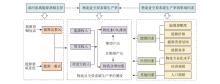
图1
研究机理 注:物流业全要素碳生产率测度见图2;物流业全要素碳生产率影响因素见表1。"
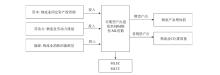
图2
物流业全要素碳生产率指标体系 注:MLEC为效率变化指数;MLTC为技术进步指数。"
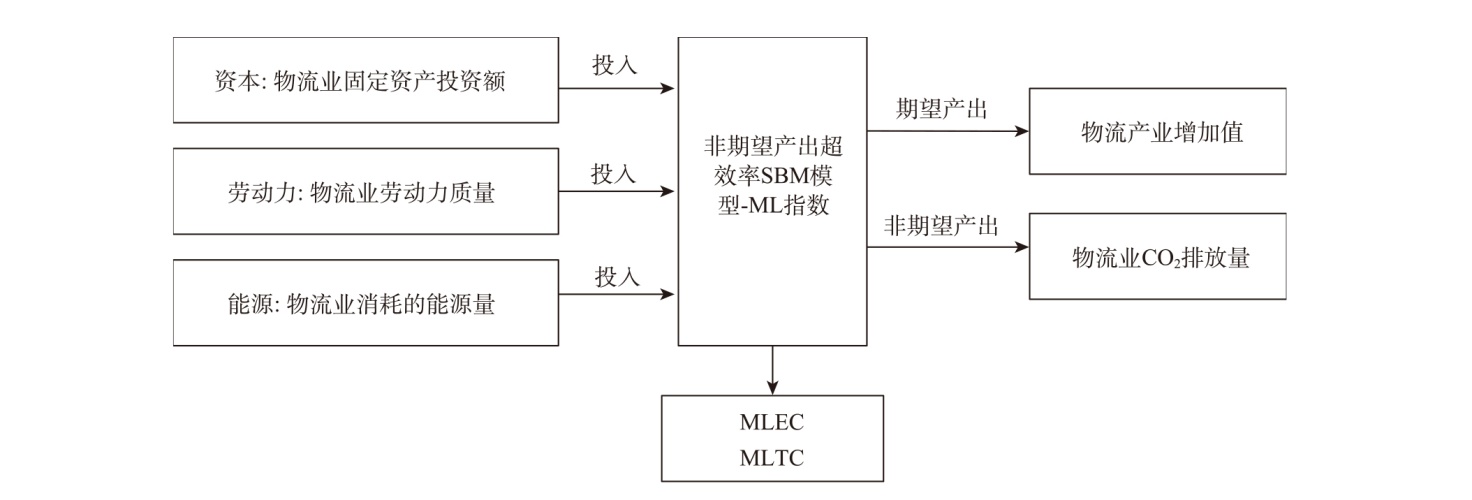

表1
物流业全要素碳生产率影响因素指标体系"
| 一级指标 | 二级指标 | 指标解释 |
|---|---|---|
| 能源因素 | 能源禀赋度 | 煤、石油、天然气的产量折算为标准煤之后占全国的比重 |
| 能源价格 | 燃料、动力类工业生产者购进价格指数代替[ | |
| 能源消费结构 | 能源消费结构主要指物流业各种能源消费的比重,用能源结构系数表示 | |
| 能源效率 | 能源效率用物流业能源消耗量除以物流业增加值表示 | |
| 经济因素 | 物流专业化水平 | 物流专业化水平用物流业增加值除以当年GDP水平表示 |
| 经济规模 | 地区生产总值表示 | |
| 其他 | 人口规模 | 人口规模指各省区的年末人口数 |
图3
2013—2022年黄河流域9省区能源禀赋度"
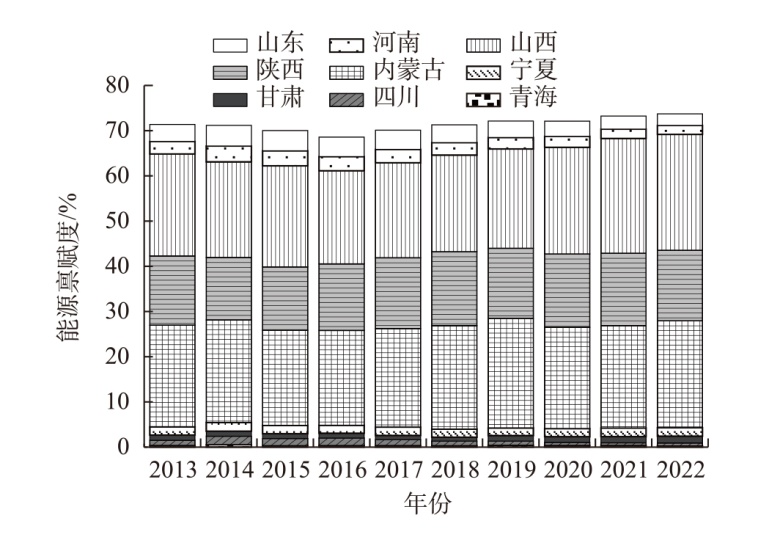
图4
2013—2022年黄河流域9省区物流业碳排放量"
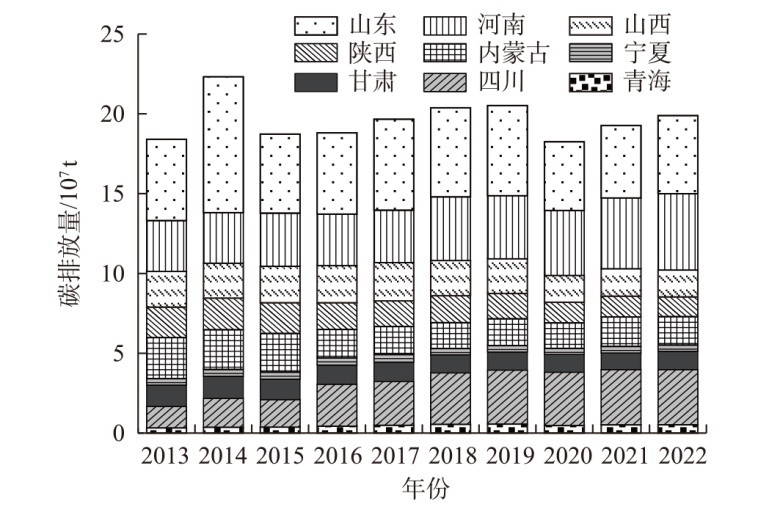
表2
2013—2022年黄河流域9省区物流业全要素碳生产率"
| 年份 | 能源富集区 | 能源一般区 | ||||||||
|---|---|---|---|---|---|---|---|---|---|---|
| 山西 | 内蒙古 | 陕西 | 青海 | 四川 | 甘肃 | 宁夏 | 河南 | 山东 | ||
| 2013 | 0.487 | 0.615 | 0.596 | 0.297 | 1.028 | 0.481 | 1.086 | 0.800 | 0.839 | |
| 2014 | 0.510 | 0.708 | 0.597 | 0.308 | 0.481 | 0.343 | 1.083 | 1.152 | 1.034 | |
| 2015 | 0.584 | 0.718 | 0.611 | 0.336 | 1.004 | 0.441 | 0.822 | 1.048 | 1.053 | |
| 2016 | 0.555 | 0.783 | 0.676 | 0.283 | 0.445 | 0.295 | 0.699 | 1.067 | 1.075 | |
| 2017 | 1.376 | 1.003 | 0.685 | 0.241 | 0.420 | 0.405 | 0.605 | 1.071 | 1.128 | |
| 2018 | 1.107 | 1.108 | 0.568 | 0.236 | 0.380 | 0.401 | 0.550 | 1.070 | 0.861 | |
| 2019 | 1.053 | 1.091 | 0.600 | 0.250 | 0.388 | 0.401 | 0.627 | 1.082 | 1.040 | |
| 2020 | 1.006 | 1.087 | 1.048 | 0.249 | 0.355 | 0.365 | 0.662 | 1.003 | 1.031 | |
| 2021 | 0.826 | 1.141 | 1.005 | 0.234 | 0.304 | 0.346 | 0.575 | 0.770 | 1.103 | |
| 2022 | 0.717 | 1.161 | 1.044 | 0.237 | 0.301 | 0.392 | 0.551 | 0.783 | 1.110 | |
| 均值 | 0.822 | 0.941 | 0.743 | 0.267 | 0.511 | 0.387 | 0.726 | 0.985 | 1.028 | |
图5
2013—2022年物流业全要素碳生产率核密度曲线"
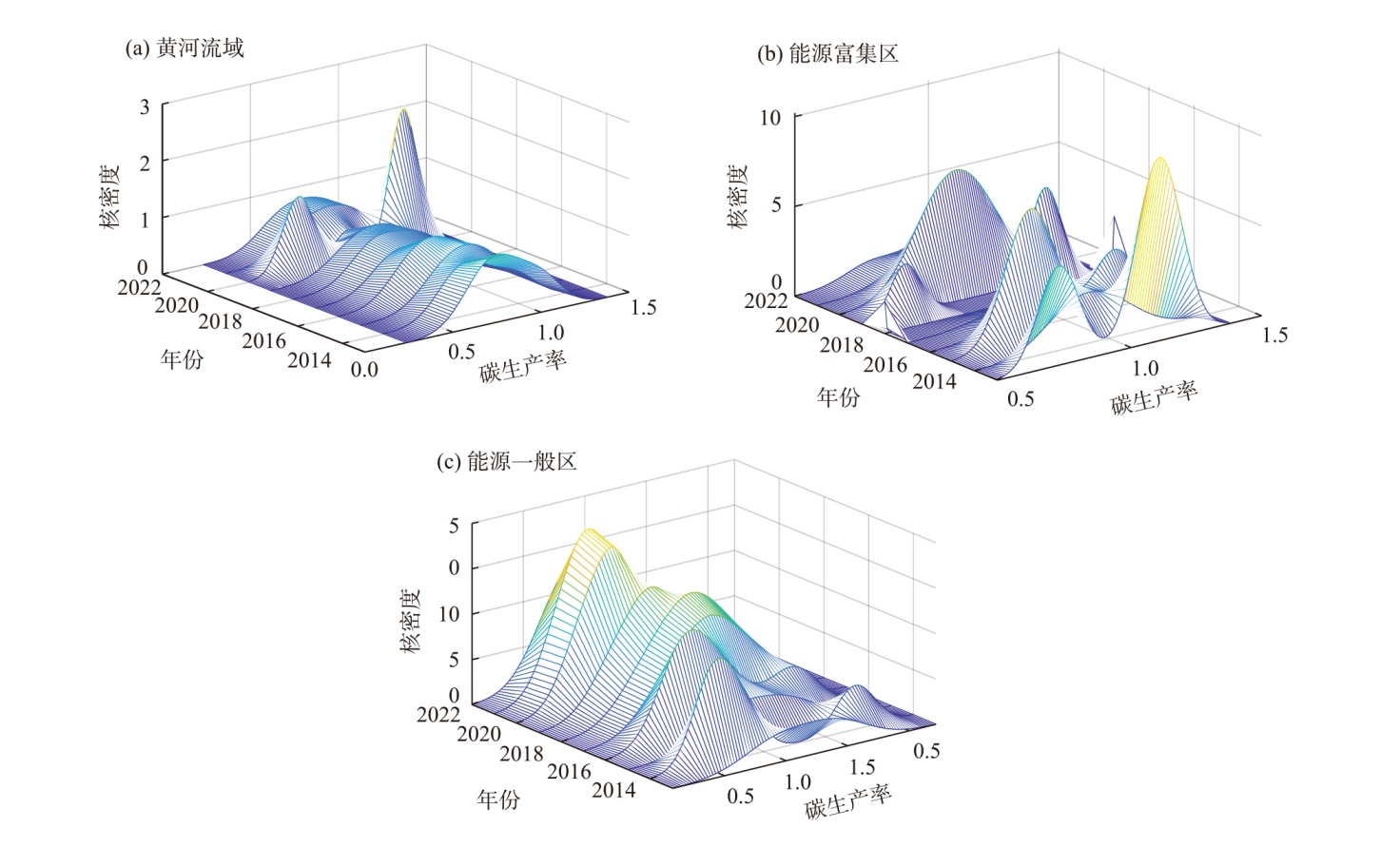
图6
2013—2022年黄河流域9省区物流业全要素碳生产率变化"
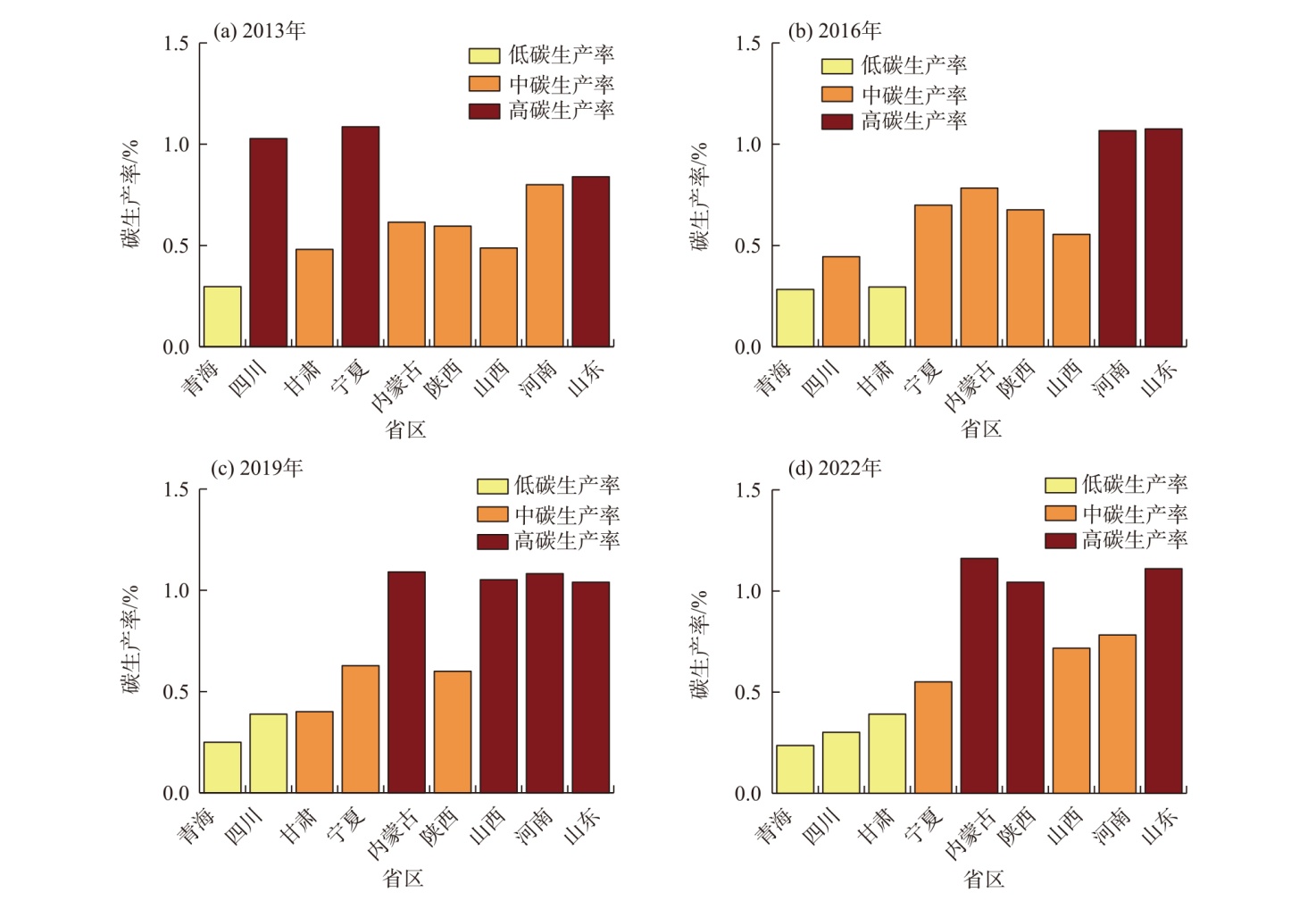
表3
2013—2022年黄河流域9省区物流业全要素碳生产率ML指数"
| 年份 | 能源富集区 | 能源一般区 | ||||||||
|---|---|---|---|---|---|---|---|---|---|---|
| 山西 | 内蒙古 | 陕西 | 青海 | 四川 | 甘肃 | 宁夏 | 河南 | 山东 | ||
| 2013—2014 | 1.063 | 1.103 | 1.050 | 1.037 | 1.063 | 0.698 | 0.978 | 1.444 | 0.996 | |
| 2014—2015 | 1.090 | 1.076 | 0.988 | 1.136 | 2.097 | 1.293 | 0.929 | 0.928 | 1.009 | |
| 2015—2016 | 1.041 | 1.293 | 1.238 | 0.899 | 0.669 | 0.716 | 1.060 | 1.097 | 1.076 | |
| 2016—2017 | 2.472 | 1.342 | 1.272 | 0.957 | 1.035 | 1.491 | 0.957 | 1.019 | 1.092 | |
| 2017—2018 | 0.930 | 1.295 | 1.009 | 1.161 | 1.119 | 1.189 | 1.107 | 1.154 | 0.998 | |
| 2018—2019 | 0.847 | 0.986 | 1.140 | 1.106 | 1.081 | 1.055 | 1.184 | 1.063 | 1.247 | |
| 2019—2020 | 0.974 | 1.006 | 1.742 | 0.947 | 0.887 | 0.871 | 1.059 | 0.904 | 0.981 | |
| 2020—2021 | 1.057 | 1.157 | 1.361 | 1.201 | 1.110 | 1.227 | 1.053 | 1.077 | 1.277 | |
| 2021—2022 | 0.920 | 1.001 | 1.304 | 1.076 | 1.057 | 1.201 | 1.019 | 1.201 | 1.053 | |
| 均值 | 1.155 | 1.140 | 1.234 | 1.058 | 1.124 | 1.082 | 1.039 | 1.098 | 1.081 | |
表4
2013—2022年分区域物流业全要素碳生产率MLEC、MLTC"
| 年份 | 能源富集区 | 能源一般区 | |||
|---|---|---|---|---|---|
| MLEC | MLTC | MLEC | MLTC | ||
| 2013—2014 | 1.067 | 1.007 | 0.981 | 1.174 | |
| 2014—2015 | 1.061 | 0.993 | 1.192 | 1.048 | |
| 2015—2016 | 1.049 | 1.133 | 0.807 | 1.171 | |
| 2016—2017 | 1.591 | 1.100 | 1.015 | 1.078 | |
| 2017—2018 | 0.913 | 1.181 | 0.924 | 1.218 | |
| 2018—2019 | 0.997 | 0.991 | 1.074 | 1.046 | |
| 2019—2020 | 1.232 | 1.009 | 0.966 | 0.974 | |
| 2020—2021 | 0.943 | 1.270 | 0.908 | 1.280 | |
| 2021—2022 | 0.975 | 1.100 | 1.020 | 1.080 | |
| 均值 | 1.092 | 1.087 | 0.987 | 1.119 | |
表5
2013—2022年黄河流域9省区物流业全要素碳生产率MLEC、MLTC均值"
| 指数 | 能源富集区 | 能源一般区 | ||||||||
|---|---|---|---|---|---|---|---|---|---|---|
| 山西 | 内蒙古 | 陕西 | 青海 | 四川 | 甘肃 | 宁夏 | 河南 | 山东 | ||
| MLEC | 1.114 | 1.077 | 1.086 | 0.979 | 0.959 | 1.002 | 0.934 | 1.010 | 1.040 | |
| MLTC | 1.053 | 1.058 | 1.151 | 1.084 | 1.279 | 1.079 | 1.122 | 1.098 | 1.052 | |
表6
物流业全要素碳生产率面板回归结果"
| 解释变量 | 黄河流域整体 | 能源富集区 | 能源一般区 | ||||
|---|---|---|---|---|---|---|---|
| 初始回归 | 初始回归 | 进一步回归 | 初始回归 | 进一步回归 | |||
| 能源禀赋度 | 0.22** | 0.39 | 0.50 | 0.54*** | 0.48*** | ||
| (0.014) | (0.266) | (0.110) | (0.000) | (0.000) | |||
| 能源价格 | 0.02 | 0.75 | 0.74* | -0.65* | -0.44 | ||
| (0.944) | (0.235) | (0.088) | (0.071) | (0.134) | |||
| 能源消费结构 | -0.33 | 0.29 | 0.05 | -1.65** | -0.33 | ||
| (0.383) | (0.687) | (0.903) | (0.006) | (0.551) | |||
| 能源效率 | 0.66*** | 0.65 | 0.11** | 0.52** | 0.02 | ||
| (0.000) | (0.286) | (0.031) | (0.004) | (0.721) | |||
| 物流专业化水平 | -0.56*** | -0.59 | - | -0.45** | - | ||
| (0.000) | (0.330) | (0.010) | |||||
| 经济规模 | -0.76*** | -0.72 | - | -0.09 | - | ||
| (0.000) | (0.497) | (0.590) | |||||
| 人口规模 | 0.83** | -0.16 | - | -0.04 | - | ||
| (0.002) | (0.765) | (0.780) | |||||
| 常数 | -0.86 | 3.36 | -2.84 | 4.88** | 3.58** | ||
| (0.633) | (0.597) | (0.212) | (0.001) | (0.007) | |||
| 总体R2 | 0.4781 | 0.4510 | 0.4119 | 0.8413 | 0.8063 | ||
| 样本观测数 | 86 | 29 3 | 57 6 | ||||
| 组数 | 9 | ||||||
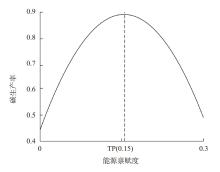
图7
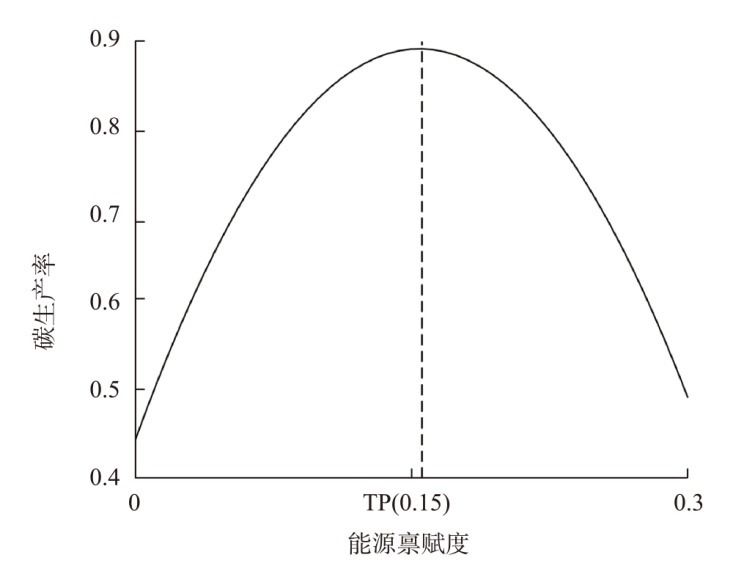
能源禀赋度与碳生产率的倒“U”关系曲线 注:图中虚线代表能源禀赋度的阈值点(TP=0.15)。"
| [1] | Kang X, Chen L, Wang Y, et al. Analysis on the spatial correlation network and driving factors of carbon emissions in China’s logistics industry[J]. Journal of Environmental Management, 2024, 366: 121916, doi: 10.1016/j.jenvman.2024.121916. |
| [2] | 刘帅. 数字物流促进物流业碳排放效率提升的机制与效应[J]. 中国流通经济, 2024, 38(6): 54-65. |
| [Liu Shuai. The mechanism and impact of digital logistics in enhancing the efficiency of carbon emissions in the logistics industry[J]. China Business and Market, 2024, 38(6): 54-65.] | |
| [3] | Sporkmann J, Liu Y, Spinler S. Corrigendum to “carbon emissions from European land transportation: A comprehensive analysis”[J]. Transportation Research Part D: Transport and Environment, 2024, 126: 103992, doi: 10.1016/j.trd.2023.103992. |
| [4] | 陈猛, 谈晓勇. 西部陆海新通道物流业碳排放特征及驱动因素研究[J]. 铁道运输与经济, 2024, 46(12): 100-107. |
| [Chen Meng, Tan Xiaoyong. Carbon emission characteristics and driving factors of logistics industry in new international land-sea trade corridor[J]. Railway Transport and Economy, 2024, 46(12): 100-107.] | |
| [5] | Dong Q Y, Zhou J P, Du Q Y. Analysis of the spatial correlation pattern of logistics carbon emission efficiency and its influencing factors: The case of China[J]. Environmental Science & Pollution Research, 2024, 31(7): 11178-11191. |
| [6] | 王兆峰, 黄冬春. 长江经济带与黄河流域交通碳排放效率的比较及其影响因素[J/OL]. 经济地理. [2025-11-11]. https://link.cnki.net/urlid/43.1126.K.20230831.1703.002. |
| [Wang Zhaofeng, Huang Dongchun. Comparison of transportation carbon emission efficiency and its influencing factors between Yangtze River Economic Belt and Yellow River Basin[J/OL]. Economic Geography. [2025-11-11]. https://link.cnki.net/urlid/43.1126.K.20230831.1703.002. ] | |
| [7] | Liu F, Xu H. Heterogeneity of green TFP in China’s logistics industry under environmental constraints[J]. Complexity, 2020, 2020: 8842560, doi: 10.1155/2020/8842560. |
| [8] |
Tone K. A slacks-based measure of efficiency in data envelopment analysis[J]. European Journal of Operational Research, 2001, 130(3): 498-509.
doi: 10.1016/S0377-2217(99)00407-5 |
| [9] |
Chung Y H, Färe R, Grosskopf S. Productivity and undesirable outputs: A directional distance function approach[J]. Journal of Environmental Management, 1997, 51(3): 229-240.
doi: 10.1006/jema.1997.0146 |
| [10] |
Färe R, Grosskopf S, Pasurka C A. Accounting for air pollution emissions in measures of state manufacturing productivity growth[J]. Journal of Regional Science, 2001, 41(3): 381-409.
doi: 10.1111/jors.2001.41.issue-3 |
| [11] | 王凯, 马月琴, 甘畅, 等. 中国旅游业全要素碳生产率动态演进及其影响因素[J]. 环境科学研究, 2020, 33(10): 2388-2398. |
| [Wang Kai, Ma Yueqin, Gan Chang, et al. Dynamic evolution and influencing factors of total factor carbon productivity in China’s tourism industry[J]. Research of Environmental Sciences, 2020, 33(10): 2388-2398.] | |
| [12] | 吴传清, 邓明亮. 数字经济发展对中国工业碳生产率的影响研究[J]. 中国软科学, 2023(11): 189-200. |
| [Wu Chuanqing, Deng Mingliang. Impact of digital economy development on industrial carbon productivity in China[J]. China Soft Science, 2023(11): 189-200.] | |
| [13] |
Chen J D, Xu C, Song M L, et al. Regional disparities and influencing factors for carbon productivity change in China’s transportation industry[J]. International Journal of Sustainable Transportation, 2019, 14(8): 579-590.
doi: 10.1080/15568318.2019.1587797 |
| [14] |
穆佳薇, 乔保荣, 余国新. 新疆塔里木河流域县域农业低碳生产率时空格局及影响效应研究[J]. 干旱区地理, 2023, 46(6): 968-981.
doi: 10.12118/j.issn.1000-6060.2022.358 |
|
[Mu Jiawei, Qiao Baorong, Yu Guoxin. Spatial and temporal patterns of agricultural low-carbon productivity and its influence effects in the counties of Tarim River Basin, Xinjiang[J]. Arid Land Geography, 2023, 46(6): 968-981.]
doi: 10.12118/j.issn.1000-6060.2022.358 |
|
| [15] | Wang X Z, Wang S, Zhang X X. Heterogeneity and influence factors of carbon productivity: Evidence from Chinese manufacturing enterprises[J]. Journal of Cleaner Production, 2023, 404(10): 136938, doi: 10.1016/j.jclepro.2023.136938. |
| [16] | 于向宇, 李跃, 陈会英, 等. “资源诅咒”视角下环境规制、能源禀赋对区域碳排放的影响[J]. 中国人口·资源与环境, 2019, 29(5): 52-60. |
| [Yu Xiangyu, Li Yue, Chen Huiying, et al. Study on the impact of environmental regulation and energy endowment on regional carbon emissions from the perspective of resource curse[J]. China Population, Resources and Environment, 2019, 29(5): 52-60.] | |
| [17] |
黄鲜华, 边娜, 石欣. 能源禀赋与产业技术进步对碳排放强度的影响效应研究——来自长江经济带的实证[J]. 科技进步与对策, 2018, 35(19): 59-64.
doi: 10.6049/kjjbydc.2018020274 |
| [Huang Xianhua, Bian Na, Shi Xin. The effect of energy endowments and industrial technological advances on carbon intensity: An empirical analysis based on the Yangtze River Economic Belt[J]. Science & Technology Progress and Policy, 2018, 35(19): 59-64.] | |
| [18] | 张翠菊, 张宗益, 覃明锋. 能源禀赋、技术进步与碳排放强度——基于空间计量模型的研究[J]. 系统工程, 2016, 34(11): 47-53. |
| [Zhang Cuiju, Zhang Zongyi, Qin Mingfeng. Research on energy resources, technology advance and carbon emission intensity: Based on spatial panel econometric model[J]. Systems Engineering, 2016, 34(11): 47-53.] | |
| [19] | 丁忠毅, 江蓉. 碳达峰碳中和进程中西部边疆地区的空间优势与战略匹配[J]. 云南师范大学学报(哲学社会科学版), 2022, 54(3): 34-45. |
| [Ding Zhongyi, Jiang Rong. Spatial advantages and strategic alignment of the frontier region of west China in the process of peak carbon dioxide emissions and carbon neutrality[J]. Journal of Yunnan Normal University (Philosophy and Social Sciences Edition), 2022, 54(3): 34-45.] | |
| [20] | 姚顺波, 韩久保. 基于资源丰裕和资源依赖不同视角下的“资源诅咒”问题再检验——以陕西省10个地市面板数据为例[J]. 经济经纬, 2017, 34(5): 14-19. |
| [Yao Shunbo, Han Jiubao. Re-examination of the “resource curse” from different perspectives of resource abundance and resource dependence: A case study based on panel data of 10 cities in Shaanxi Province[J]. Economic Survey, 2017, 34(5): 14-19.] | |
| [21] | Su X, Tan J L. Regional energy transition path and the role of government support and resource endowment in China[J]. Renewable and Sustainable Energy Reviews, 2023, 174: 113150, doi: 10.1016/j.rser.2023.113150. |
| [22] | 申萌, 李凯杰, 曲如晓. 技术进步、经济增长与二氧化碳排放: 理论和经验研究[J]. 世界经济, 2012, 35(7): 83-100. |
| [Shen Meng, Li Kaijie, Qu Ruxiao. Technological progress, economic growth and carbon dioxide emissions: A theoretical and empirical study[J]. The Journal of World Economy, 2012, 35(7): 83-100.] | |
| [23] |
Ding H P, Wang Y, Sheng W J, et al. Measurement and evaluation of carbon emission efficiency in logistics industry: Taking Anhui Province as an example[J]. Polish Journal of Environmental Studies, 2024, 33(6): 6097-6108.
doi: 10.15244/pjoes/185535 |
| [24] |
Tone K. A slacks-based measure of super-efficiency in data envelopment analysis[J]. European Journal of Operational Research, 2002, 143(1): 32-41.
doi: 10.1016/S0377-2217(01)00324-1 |
| [25] |
裴恺程, 穆怀中. 环境规制对物流业绿色发展的影响研究——来自京津冀地区的实证检验[J]. 工业技术经济, 2021, 40(5): 107-114.
doi: 10.3969/j.issn.1004-910X.2021.05.013 |
| [Pei Kaicheng, Mu Huaizhong. Impact of environmental regulation on green development of logistics industry: Empirical test based on Beijing-Tianjin-Hebei region[J]. Journal of Industrial Technological Economics, 2021, 40(5): 107-114.] | |
| [26] | Agan B. Sustainable development through green transition in EU countries: New evidence from panel quantile regression[J]. Journal of Environmental Management, 2024, 365: 121545, doi: 10.1016/j.jenvman.2024.121545. |
| [27] | 张兰怡, 徐艺诺, 翁大维, 等. 经济高质量发展背景下中国省域物流业碳排放时空分异[J]. 环境科学, 2024, 45(9): 5086-5096. |
| [Zhang Lanyi, Xu Yinuo, Weng Dawei, et al. Spatiotemporal differentiation of carbon emissions from logistics industry at provincial scale in China under the background of high-quality economic development[J]. Environmental Science, 2024, 45(9): 5086-5096.] | |
| [28] | 梁毅, 徐超飞, 高子涵. “一带一路”倡议下中国沿线区域物流业碳排放时空演变及驱动因素分析[J]. 环境工程技术学报, 2025, 15(3): 798-810. |
| [Liang Yi, Xu Chaofei, Gao Zihan. Spatial and temporal evolution and driving factors of carbon emissions in regional logistics industry in China under the Belt and Road Initiative[J]. Journal of Environmental Engineering Technology, 2025, 15(3): 798-810.] | |
| [29] | 李跃, 方冉, 韩浩亮, 等. 煤炭资源区域异质性视角下新能源发展的产业转型升级效应研究[J]. 中国煤炭, 2024, 50(8): 34-42. |
| [Li Yue, Fang Ran, Han Haoliang, et al. Research on the industrial transformation and upgrading effect of new energy development from the perspective of regional heterogeneity of coal resources[J]. China Coal, 2024, 50(8): 34-42.] | |
| [30] | 喻小宝, 于永智. 基于SBM-ML-Tobit模型的中国工业碳生产率影响因素研究[J]. 生态经济, 2024, 40(8): 13-19. |
|
[Yu Xiaobao, Yu Yongzhi. Research of factors influencing industrial carbon productivity in China based on the SBM-ML-Tobit model[J]. Ecological Economy, 2024, 40(8): 13-19.]
doi: 10.1016/S0921-8009(01)00275-0 |
|
| [31] | 邵帅, 杨莉莉. 自然资源丰裕、资源产业依赖与中国区域经济增长[J]. 管理世界, 2010(9): 26-44. |
| [Shao Shuai, Yang Lili. The abundance of natural resources, the dependence on the resources industry, and China’s regional economic growth[J]. Management World, 2010(9): 26-44.] | |
| [32] | 薛建春, 丁志斌, 曹凌辰. 黄河流域能源利用效率空间关联网络及其形成机制[J]. 环境工程技术学报, 2025, 15(4): 1398-1408. |
| [Xue Jianchun, Ding Zhibin, Cao Lingchen. Spatial correlation network of energy efficiency in the Yellow River Basin and its formation mechanism[J]. Journal of Environmental Engineering Technology, 2025, 15(4): 1398-1408.] | |
| [33] | 赵艳敏, 王迪. 数字经济发展对全要素能源效率的影响机制研究——以黄河流域73个地级市为例[J]. 软科学, 2024, 38(8): 37-44, 59. |
| [Zhao Yanmin, Wang Di. Influence mechanism of digital economy development on total factor energy efficiency: Taking 73 prefecture-level cities in the Yellow River Basin as examples[J]. Soft Science, 2024, 38(8): 37-44, 59.] | |
| [34] |
李慧, 姚西龙. 水足迹视角下黄河流域可再生能源制氢节水潜力研究[J]. 干旱区地理, 2025, 48(8): 1353-1362.
doi: 10.12118/j.issn.1000-6060.2025.066 |
|
[Li Hui, Yao Xilong. Water-saving potential of hydrogen production from renewable energy in Yellow River Basin from the perspective of water footprint[J]. Arid Land Geography, 2025, 48(8): 1353-1362.]
doi: 10.12118/j.issn.1000-6060.2025.066 |
|
| [35] | 韩冬日, 刁燕霞, 王心娟. 黄河流域减污降碳协同治理效率空间网络关联特征及驱动因素[J]. 环境科学, 2025, 46(6): 3592-3603. |
| [Han Dongri, Diao Yanxia, Wang Xinjuan. Analysis of carbon total factor productivity, economic growth and low-carbon development in the Yellow River Basin[J]. Environmental Science, 2025, 46(6): 3592-3603.] | |
| [36] | 祝福云, 师宇星. 碳全要素生产率、经济增长与低碳发展分析——基于黄河流域58个地级市的证据[J]. 干旱区资源与环境, 2024, 38(1): 52-59. |
| [Zhu Fuyun, Shi Yuxing. Analysis of carbon total factor productivity, economic growth and low-carbon development in the Yellow River Basin[J]. Journal of Arid Land Resources and Environment, 2024, 38(1): 52-59.] | |
| [37] |
宋成镇, 刘庆芳, 马伟, 等. 技术创新对黄河流域地区和长江经济带碳生产率影响路径比较——基于数字金融的中介效应[J]. 资源科学, 2024, 46(3): 450-461.
doi: 10.18402/resci.2024.03.02 |
|
[Song Chengzhen, Liu Qingfang, Ma Wei, et al. Comparison of the impact paths of technological innovation on carbon productivity in the Yellow River Basin and the Yangtze River Economic Belt: Mediation effect based on digital finance[J]. Resources Science, 2024, 46(3): 450-461.]
doi: 10.18402/resci.2024.03.02 |
| [1] | 陈文宣, 陈钰, 王生隆. 黄河流域农业碳排放时空演化特征及其影响因素分析[J]. 干旱区地理, 2026, 49(4): 713-726. |
| [2] | 王伟军, 李娟, 李花. 黄河流域旅游-生态-福祉耦合协调的多尺度时空演化及分异机理[J]. 干旱区地理, 2026, 49(4): 683-696. |
| [3] | 王慧丽, 李妞, 刘英, 刘咏涵. 黄河流域水资源-生态韧性动态耦合与级层障碍解析[J]. 干旱区地理, 2026, 49(3): 569-580. |
| [4] | 周文丽, 武珊珊, 苏鹏. 新质生产力对旅游业高质量发展的影响效应研究——基于黄河流域9省区的实证[J]. 干旱区地理, 2026, 49(2): 224-234. |
| [5] | 陈宇, 岳游松. 黄河流域冰雪旅游目的地可达性及影响因素研究[J]. 干旱区地理, 2026, 49(2): 235-244. |
| [6] | 魏丽蓉, 程占红, 石烨, 张玉尧, 王紫彦, 牛莉芹. 黄河流域旅游生态安全的演化特征和影响因素分析——基于社会网络分析视角[J]. 干旱区地理, 2026, 49(2): 245-254. |
| [7] | 孙国军, 李家瑶, 王子轩. 黄河流域数文旅产业发展水平评价与耦合协调时空特征分析[J]. 干旱区地理, 2026, 49(1): 117-127. |
| [8] | 彭文英, 赵爽, 单子溢, 陈泽宇. 黄河流域新质生产力生态化水平测度与障碍因子[J]. 干旱区地理, 2025, 48(9): 1648-1659. |
| [9] | 田小波. 黄河流域城市旅游业高质量发展水平测度与空间格局特征[J]. 干旱区地理, 2025, 48(9): 1660-1671. |
| [10] | 李慧, 姚西龙. 水足迹视角下黄河流域可再生能源制氢节水潜力研究[J]. 干旱区地理, 2025, 48(8): 1353-1362. |
| [11] | 仲嘉维, 郑军, 张明月. 农业社会化服务如何影响粮食生态效率——以黄河流域71个地级市为例[J]. 干旱区地理, 2025, 48(8): 1385-1395. |
| [12] | 程鹏, 彭海洋, 侯丁榕, 孙明东, 宋晓伟. 黄河流域农业灰水足迹强度空间格局及演进趋势[J]. 干旱区地理, 2025, 48(7): 1185-1197. |
| [13] | 徐铭璟, 段宝玲, 冯强, 吕萌. 生态系统服务及其权衡/协同关系多情景模拟——以黄河流域山西段为例[J]. 干旱区地理, 2025, 48(7): 1206-1219. |
| [14] | 任诗琦, 王永瑜. 黄河流域地级市绿色发展水平测度与空间收敛性研究[J]. 干旱区地理, 2025, 48(6): 1031-1042. |
| [15] | 魏建飞, 袁悠燃, 李强, 董佩佩, 刘玖榕. 黄河流域国土空间效率时空变化及障碍因子分析[J]. 干旱区地理, 2025, 48(6): 1055-1066. |
|
||