干旱区地理 ›› 2026, Vol. 49 ›› Issue (10): 2194-2204.doi: 10.12118/j.issn.1000-6060.2025.764 cstr: 32274.14.ALG2025764
付金存1( ), 崔紫涵2, 姜丽莎2()
收稿日期:2025-11-25
修回日期:2025-12-31
出版日期:2026-10-25
发布日期:2026-10-26
通讯作者:
姜丽莎(1986-),女,博士,副教授,主要从事双碳治理与高质量发展等方面的研究. E-mail: jianglisha@lzufe.edu.cn作者简介:付金存(1986-),男,博士,副教授,主要从事双碳治理与高质量发展等方面的研究. E-mail: 2020054@nmu.edu.cn论文构思:付金存、姜丽莎;数据管理:崔紫涵、姜丽莎;规范分析:崔紫涵;获取资助:付金存;调查研究:付金存、崔紫涵;方法设计:付金存、姜丽莎;项目管理:姜丽莎;提供资源:付金存;监督指导:付金存;验证复核:付金存;可视化:崔紫涵;初稿撰写:崔紫涵;修订编辑:付金存。
基金资助:
FU Jincun1(), CUI Zihan2, JIANG Lisha2()
Received:2025-11-25
Revised:2025-12-31
Published:2026-10-25
Online:2026-10-26
摘要:
数实融合是推动黄河流域制造业绿色转型、构建现代化产业体系的关键抓手。基于2011—2022年黄河流域地级市制造业平衡面板数据,采用非径向SBM-ML指数法测度制造业绿色转型程度,构建耦合协调模型衡量数实融合水平,并运用固定效应模型、机制检验模型与空间杜宾模型系统考察数实融合对制造业绿色转型的影响效应、作用机制与空间特征。结果表明:(1) 数实融合显著提升了黄河流域制造业绿色转型效率,该结论在经过工具变量处理与多项稳健性检验后依然成立。(2) 绿色技术创新与生产结构优化是数实融合赋能制造业绿色转型的2条关键路径。(3) 数实融合的赋能效应存在异质性,对非国有制造业企业、重污染制造业企业及黄河流域上游地区的影响更为突出。(4) 数实融合对黄河流域制造业绿色转型具有显著的本地驱动效应,且制造业绿色转型自身存在空间虹吸效应。研究结果可为黄河流域制定差异化产业政策、构建跨区域协同治理机制、推动制造业绿色低碳转型提供实践参考。
付金存, 崔紫涵, 姜丽莎. 数实融合赋能黄河流域制造业绿色转型的路径研究[J]. 干旱区地理, 2026, 49(10): 2194-2204.
FU Jincun, CUI Zihan, JIANG Lisha. Pathways of digital-real economy integration empowering green transformation of manufacturing industry in the Yellow River Basin[J]. Arid Land Geography, 2026, 49(10): 2194-2204.
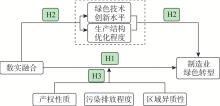
图1
理论框架图"
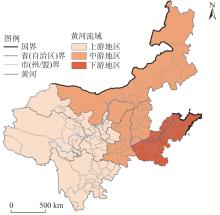
图2
研究区示意图 注:基于自然资源部标准地图服务网站审图号为GS(2023)2767号的标准地图制作,底图边界无修改。下同。"
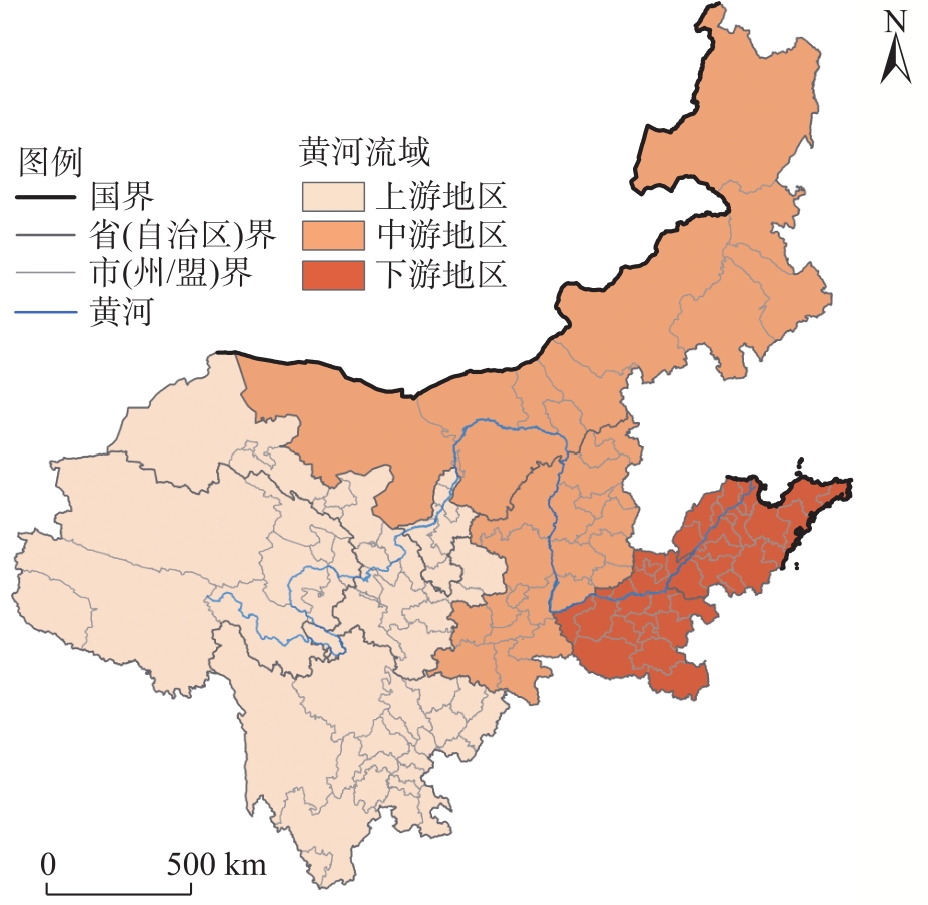

表1
制造业绿色转型程度指标体系"
| 变量 | 一级指标 | 二级指标 | 指标说明 |
|---|---|---|---|
| 制造业绿色转型程度 | 投入 | 劳动投入 | 企业员工人数 |
| 资本投入 | 企业固定资产净额 | ||
| 能源投入 | 企业所在城市工业用电量按企业从业人员占城市城镇人员就业比重 | ||
| 产出 | 期望产出 | 企业营业收入 | |
| 非期望产出 | 工业SO2、工业废水、工业烟粉尘排放量 |
表2
数实融合指标体系"
| 变量 | 一级指标 | 二级指标 | 指标说明 |
|---|---|---|---|
| 数实融合水平 | 数字经济 | 互联网普及率 | 百人中互联网宽带接入用户数 |
| 互联网相关产出 | 人均电信业务总量 | ||
| 移动互联网用户数 | 百人中移动电话用户数 | ||
| 互联网相关从业人员 | 计算机服务和软件业从业人员占城镇单位从业人员比重 | ||
| 数字金融 | 数字普惠金融指数 | ||
| 实体经济 | 发展规模 | 第二产业占地区生产总值比重 | |
| 规模以上工业企业利润总额 | |||
| 规模以上工业企业数量 | |||
| 人均社会消费品零售额 | |||
| 发展结构 | 实体经济从业人员(除金融业、房地产业从业人员)占比 | ||
| 发展潜力 | 规模以上工业企业的R&D投入强度 |
表3
相关变量描述性统计"
| 变量 | 样本量 | 均值 | 标准差 | 最小值 | 最大值 |
|---|---|---|---|---|---|
| GMT | 1284 | 0.997 | 0.095 | 0.827 | 1.176 |
| Mix | 1284 | 0.294 | 0.050 | 0.182 | 0.420 |
| Size | 1284 | 8.452 | 1.103 | 6.201 | 11.115 |
| ROA | 1284 | 0.047 | 0.055 | -0.094 | 0.228 |
| ROE | 1284 | 0.083 | 0.101 | -0.329 | 0.388 |
| Board | 1284 | 2.185 | 0.178 | 1.792 | 2.708 |
| GOV | 1284 | 0.137 | 0.036 | 0.077 | 0.257 |
| ECO | 1284 | 7.528 | 3.536 | 2.060 | 20.015 |
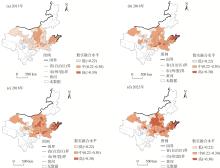
图3
黄河流域城市数实融合空间演化过程"

表4
数实融合对黄河流域制造业绿色转型的影响"
| 变量 | 未考虑控制变量 | 考虑控制变量 |
|---|---|---|
| Mix | 0.096*** | 0.109*** |
| (3.782) | (4.146) | |
| Size | - | 0.001** |
| - | (2.245) | |
| ROA | - | 0.036* |
| - | (1.863) | |
| ROE | - | -0.022** |
| - | (-2.189) | |
| Board | - | -0.004 |
| - | (-1.571) | |
| GOV | - | 0.037 |
| - | (0.978) | |
| ECO | - | -0.000 |
| - | (-0.094) | |
| 常数项 | 0.820*** | 0.816*** |
| (102.815) | (63.904) | |
| city | 是 | 是 |
| year | 是 | 是 |
| N | 1284 | 1284 |
| R2 | 0.979 | 0.979 |
表5
内生性与稳健性检验"
| 变量 | 两阶段最小二乘法 | 剔除省会城市 | 不同时段 | F.Mix | ||
|---|---|---|---|---|---|---|
| 第1阶段 | 第2阶段 | 2011—2017年 | 2018—2022年 | |||
| Mix | GMT | GMT | GMT | GMT | GMT | |
| 工具变量 | 0.010*** | - | - | - | - | - |
| (5.857) | - | - | - | - | - | |
| Mix | - | 0.271** | 0.124*** | 0.108*** | 0.273*** | - |
| - | (2.008) | (3.353) | (3.237) | (3.400) | - | |
| F.Mix | - | - | - | - | - | 0.065** |
| - | - | - | - | - | (2.085) | |
| 控制变量 | 是 | 是 | 是 | 是 | 是 | 是 |
| 常数项 | -0.459*** | 0.779*** | 0.806*** | 0.813*** | 0.961*** | 0.827*** |
| (-3.872) | (23.186) | (48.850) | (44.585) | (30.328) | (59.513) | |
| city | 是 | 是 | 是 | 是 | 是 | 是 |
| year | 是 | 是 | 是 | 是 | 是 | 是 |
| N | 1284 | 1284 | 900 | 749 | 535 | 1177 |
| R2 | 0.978 | 0.979 | 0.979 | 0.947 | 0.881 | 0.976 |
表6
机制检验结果"
| 变量 | 绿色技术创新水平 | 生产结构优化 |
|---|---|---|
| Mix | 0.460* | -0.684*** |
| (1.766) | (-2.796) | |
| 控制变量 | 是 | 是 |
| 常数项 | 0.068 | -1.005*** |
| (0.735) | (-7.708) | |
| city | 是 | 是 |
| year | 是 | 是 |
| N | 942 | 1233 |
| R2 | 0.153 | 0.566 |
表7
产权性质和污染排放程度异质性检验结果"
| 变量 | 产权性质 | 污染排放程度 | |||
|---|---|---|---|---|---|
| 国有制造业企业 | 非国有制造业企业 | 重污染制造业企业 | 非重污染制造业企业 | ||
| Mix | 0.092** | 0.108*** | 0.122*** | 0.099*** | |
| (2.040) | (3.144) | (2.594) | (3.109) | ||
| 控制变量 | 是 | 是 | 是 | 是 | |
| 常数项 | 0.835*** | 0.812*** | 0.823*** | 0.819*** | |
| (47.500) | (46.178) | (39.454) | (55.080) | ||
| city | 是 | 是 | 是 | 是 | |
| year | 是 | 是 | 是 | 是 | |
| N | 693 | 591 | 480 | 804 | |
| R2 | 0.980 | 0.979 | 0.981 | 0.979 | |
表8
区域异质性检验结果"
| 变量 | 上游地区 | 中游地区 | 下游地区 |
|---|---|---|---|
| GMT | GMT | GMT | |
| Mix | 0.137*** | 0.113** | 0.118** |
| (2.724) | (2.381) | (2.335) | |
| 控制变量 | 是 | 是 | 是 |
| 常数项 | 0.817*** | 0.795*** | 0.831*** |
| (35.172) | (32.975) | (41.243) | |
| city | 是 | 是 | 是 |
| year | 是 | 是 | 是 |
| N | 324 | 228 | 732 |
| R2 | 0.981 | 0.983 | 0.977 |
表9
空间杜宾模型回归结果及分解结果"
| 变量 | 地理距离矩阵 | 经济距离矩阵 | |||||||
|---|---|---|---|---|---|---|---|---|---|
| GMT | 直接效应 | 间接效应 | 总效应 | GMT | 直接效应 | 间接效应 | 总效应 | ||
| Mix | 0.098** | 0.087* | 0.639 | 0.726 | 0.082* | 0.084* | -0.032 | 0.052 | |
| (2.109) | (1.885) | (1.341) | (1.497) | (1.842) | (1.825) | (-0.193) | (0.311) | ||
| W×Mix | 1.011 | - | - | - | -0.017 | - | - | - | |
| (1.506) | - | - | - | (-0.092) | - | - | - | ||
| ρ | -0.568* | - | - | - | -0.084 | - | - | - | |
| (-1.834) | - | - | - | (-0.996) | - | - | - | ||
| sigma2_e | 0.000*** | - | - | - | 0.000*** | - | - | - | |
| (15.101) | - | - | - | (15.091) | - | - | - | ||
| 控制变量 | 是 | 是 | 是 | 是 | 是 | 是 | 是 | 是 | |
| city | 是 | 是 | 是 | 是 | 是 | 是 | 是 | 是 | |
| year | 是 | 是 | 是 | 是 | 是 | 是 | 是 | 是 | |
| N | 456 | 456 | 456 | 456 | 456 | 456 | 456 | 456 | |
| R2 | 0.579 | 0.579 | 0.579 | 0.579 | 0.312 | 0.312 | 0.312 | 0.312 | |
| [1] | 解学梅, 韩宇航. 本土制造业企业如何在绿色创新中实现“华丽转型”?--基于注意力基础观的多案例研究[J]. 管理世界, 2022, 38(3): 76-106. |
| [Xie Xuemei, Han Yuhang. How can local manufacturing enterprises achieve luxuriant transformation in green innovation? A multi-case study based on attention-based view[J]. Journal of Management World, 2022, 38(3): 76-106. ] | |
| [2] | 崔兴华, 林明裕. FDI如何影响企业的绿色全要素生产率?--基于Malmquist-Luenberger指数和PSM-DID的实证分析[J]. 经济管理, 2019, 41(3): 38-55. |
| [Cui Xinghua, Lin Mingyu. How does foreign direct investment affect the green total factor productivity of enterprises? Empirical analysis based on Malmquist-Luenberger index and PSM-DID model[J]. Business and Management Journal, 2019, 41(3): 38-55. ] | |
| [3] | 陈福中, 蒋国海, 董康银. 数字经济对制造业绿色转型的空间溢出效应[J]. 中国人口·资源与环境, 2024, 34(5): 114-125. |
| [Chen Fuzhong, Jiang Guohai, Dong Kangyin. Spatial spillover effects of the digital economy on the green transformation of the manufacturing industry[J]. China Population, Resources and Environment, 2024, 34(5): 114-125. ] | |
| [4] | 万攀兵, 杨冕, 陈林. 环境技术标准何以影响中国制造业绿色转型--基于技术改造的视角[J]. 中国工业经济, 2021(9): 118-136. |
| [Wan Panbing, Yang Mian, Chen Lin. How do environmental technology standards affect the green transition of China’s manufacturing industry: A perspective from technological transformation[J]. China Industrial Economics, 2021(9): 118-136. ] | |
| [5] | 简冠群, 冯浩文. 数字化高端赋能制造业绿色发展的逻辑和实践--黄河流域多元异质性下的探索性案例研究[J]. 管理学刊, 2024, 37(3): 43-59. |
|
[Jian Guanqun, Feng Haowen. The logic and practice of digital high-end enabling the green development of the manufacturing industry: Exploratory case study on the multiple heterogeneity of the Yellow River Basin[J]. Journal of Management, 2024, 37(3): 43-59. ]
doi: 10.38104/vadyba |
|
| [6] | 张峰, 魏巍. 黄河流域制造业绿色发展合作网络时空格局及驱动因素[J]. 统计与决策, 2024, 40(12): 173-178. |
| [Zhang Feng, Wei Wei. The spatio-temporal pattern and driving factors of the green development cooperation network of manufacturing industry in the Yellow River Basin[J]. Statistics & Decision, 2024, 40(12): 173-178. ] | |
| [7] | 欧阳日辉, 龚伟. 促进数字经济和实体经济深度融合: 机理与路径[J]. 北京工商大学学报(社会科学版), 2023, 38(4): 10-22. |
| [Ouyang Rihui, Gong Wei. Promoting the deep integration of the digital economy and the real economy: Mechanism and path[J]. Journal of Beijing Technology and Business University (Social Sciences), 2023, 38(4): 10-22. ] | |
| [8] | 丁述磊, 刘翠花, 李建奇. 数实融合的理论机制、模式选择与推进方略[J]. 改革, 2024(1): 51-68. |
| [Ding Shulei, Liu Cuihua, Li Jianqi. Theoretical mechanism, mode selection and promotion strategies of digital-real integration[J]. Reform, 2024(1): 51-68. ] | |
| [9] | 董亚娟, 付思瑶, 秦媛. 中国数字经济与实体经济: 耦合协调、空间演进及影响路径[J]. 统计与决策, 2023, 39(14): 5-10. |
| [Dong Yajuan, Fu Siyao, Qin Yuan. China’s digital economy and real economy: Coupling coordination, spatial evolution and influencing paths[J]. Statistics & Decision, 2023, 39(14): 5-10. ] | |
| [10] | 黄先海, 高亚兴. 数实产业技术融合与企业全要素生产率--基于中国企业专利信息的研究[J]. 中国工业经济, 2023(11): 118-136. |
| [Huang Xianhai, Gao Yaxing. Technology convergence of digital and real economy industries and enterprise total factor productivity: Research based on Chinese enterprise patent information[J]. China Industrial Economics, 2023(11): 118-136. ] | |
| [11] | 崔琳昊, 冯烽. 数实融合与城市绿色发展: 影响与机制[J]. 上海财经大学学报, 2024, 26(4): 49-63. |
| [Cui Linhao, Feng Feng. Digital-real economy integration and urban green development: Impact and mechanism[J]. Journal of Shanghai University of Finance and Economics, 2024, 26(4): 49-63. ] | |
| [12] | 何德旭, 张昊, 刘蕴霆. 新型实体企业促进数实融合提升发展质量[J]. 中国工业经济, 2024(2): 5-21. |
| [He Dexu, Zhang Hao, Liu Yunting. New substantive enterprises promote the digital-substantive integration and improve the quality of development[J]. China Industrial Economics, 2024(2): 5-21. ] | |
| [13] | 陈雨露. 数字经济与实体经济融合发展的理论探索[J]. 经济研究, 2023, 58(9): 22-30. |
| [Chen Yulu. Theoretical exploration of the integrated development of the digital economy and the real economy[J]. Economic Research Journal, 2023, 58(9): 22-30. ] | |
| [14] | 张自然, 海梅红. 数实融合促进绿色全要素生产率提升研究[J]. 经济纵横, 2025(3): 54-65. |
| [Zhang Ziran, Hai Meihong. Integration of digital economy and real economy improves green total factor productivity[J]. Economic Review Journal, 2025(3): 54-65. ] | |
| [15] | 邝嫦娥, 刘江月, 李文意. 数智融合赋能与制造业企业绿色转型[J]. 当代财经, 2024(5): 114-127. |
| [Kuang Chang’e, Liu Jiangyue, Li Wenyi. Digital-intelligence integration empowerment and green transformation of manufacturing enterprises[J]. Contemporary Finance & Economics, 2024(5): 114-127. ] | |
| [16] | 吴传清, 孟晓倩. 长江经济带数字化转型对制造业绿色发展影响研究[J]. 南通大学学报(社会科学版), 2022, 38(6): 37-47. |
| [Wu Chuanqing, Meng Xiaoqian. Research on the impact of digital transformation on the green development of manufacturing industry in the Yangtze River Economic Belt[J]. Journal of Nantong University (Social Sciences Edition), 2022, 38(6): 37-47. ] | |
| [17] |
任贵秀, 刘凯. 黄河流域绿色创新的时空演化特征及影响因素分析[J]. 干旱区地理, 2024, 47(1): 158-169.
doi: 10.12118/j.issn.1000-6060.2023.313 |
|
[Ren Guixiu, Liu Kai. Spatiotemporal evolution characteristics and influencing factors of green innovation in the Yellow River Basin[J]. Arid Land Geography, 2024, 47(1): 158-169. ]
doi: 10.12118/j.issn.1000-6060.2023.313 |
|
| [18] | 杨汝岱, 李艳, 孟珊珊. 企业数字化发展、全要素生产率与产业链溢出效应[J]. 经济研究, 2023, 58(11): 44-61. |
| [Yang Rudai, Li Yan, Meng Shanshan. Corporate digitization development, total factor productivity and industrial chain spillover effects[J]. Economic Research Journal, 2023, 58(11): 44-61. ] | |
| [19] |
谢宇, 薛选登. 数字经济赋能绿色发展福利--基于黄河流域资源型城市的经验证据[J]. 干旱区地理, 2025, 48(6): 1127-1139.
doi: 10.12118/j.issn.1000-6060.2024.406 |
|
[Xie Yu, Xue Xuandeng. Digital economy empowers green development welfare: Empirical evidence based on resource-based cities in the Yellow River Basin[J]. Arid Land Geography, 2025, 48(6): 1127-1139. ]
doi: 10.12118/j.issn.1000-6060.2024.406 |
|
| [20] | 刘玉斌, 王丹婵. 数字化对制造业企业绿色转型的影响机制研究[J]. 山西大学学报(哲学社会科学版), 2023, 46(6): 138-148. |
| [Liu Yubin, Wang Danchan. The impact mechanism of digitalization on the green transformation of manufacturing enterprises[J]. Journal of Shanxi University (Philosophy and Social Science Edition), 2023, 46(6): 138-148. ] | |
| [21] | 马亮, 高峻, 李娅宁. 数字化赋能制造企业绿色转型升级--绿色创业导向与绿色创新的链式中介作用[J]. 科技进步与对策, 2024, 41(17): 76-86. |
| [Ma Liang, Gao Jun, Li Yaning. Digitalization empowering manufacturing enterprises to green transformation and upgrade: Green entrepreneurship orientation and green innovation in a chain mediation role[J]. Science & Technology Progress and Policy, 2024, 41(17): 76-86. ] | |
| [22] |
张旭红, 周成, 靳轶婷, 等. 黄河流域城市数字经济网络演化特征及其影响机理[J]. 经济地理, 2025, 45(5): 35-45.
doi: 10.15957/j.cnki.jjdl.2025.05.004 |
|
[Zhang Xuhong, Zhou Cheng, Jin Yiting, et al. Network evolution characteristics and influencing mechanism of digital economy in cities of the Yellow River Basin[J]. Economic Geography, 2025, 45(5): 35-45. ]
doi: 10.15957/j.cnki.jjdl.2025.05.004 |
|
| [23] | 薛超凯, 陈凯华, 王全景, 等. 黄河流域产业发展现状、问题与对策建议[J]. 中国科学院院刊, 2024, 39(6): 971-984. |
| [Xue Chaokai, Chen Kaihua, Wang Quanjing, et al. Current status, challenges, and policy recommendations for industrial development in the Yellow River Basin[J]. Bulletin of Chinese Academy of Sciences, 2024, 39(6): 971-984. ] | |
| [24] |
张帅, 吴珍玮, 陆朝阳, 等. 中国省域数字经济与实体经济融合的演变特征及驱动因素[J]. 经济地理, 2022, 42(7): 22-32.
doi: 10.15957/j.cnki.jjdl.2022.07.003 |
|
[Zhang Shuai, Wu Zhenwei, Lu Zhaoyang, et al. Spatio-temporal evolution characteristics and driving factors of the integration between digital economy and real economy in China[J]. Economic Geography, 2022, 42(7): 22-32. ]
doi: 10.15957/j.cnki.jjdl.2022.07.003 |
|
| [25] | 赵涛, 张智, 梁上坤. 数字经济、创业活跃度与高质量发展--来自中国城市的经验证据[J]. 管理世界, 2020, 36(10): 65-76. |
| [Zhao Tao, Zhang Zhi, Liang Shangkun. Digital economy, entrepreneurship, and high-quality economic development: Empirical evidence from urban China[J]. Management World, 2020, 36(10): 65-76. ] | |
| [26] | 张晖, 李靖, 权天舒. 数字基础设施建设促进了数字经济与实体经济融合吗?--基于“宽带中国”战略的准自然实验[J]. 经济问题探索, 2023(10): 1-15. |
| [Zhang Hui, Li Jing, Quan Tianshu. Has the construction of digital infrastructure promoted the integration of the digital economy and the real economy: A quasi-natural experiment based on the “broadband China” strategy[J]. Inquiry into Economic Issues, 2023(10): 1-15. ] | |
| [27] | 熊广勤, 石大千, 李美娜. 低碳城市试点对企业绿色技术创新的影响[J]. 科研管理, 2020, 41(12): 93-102. |
| [Xiong Guangqin, Shi Daqian, Li Meina. The effect of low-carbon pilot cities on the green technology innovation of enterprises[J]. Science Research Management, 2020, 41(12): 93-102. ] | |
| [28] | 高厚宾, 王蔷瑞. “绿色的馈赠”: 数字化转型对企业环境绩效的影响--来自中国制造业A股上市公司的经验证据[J]. 河南师范大学学报(哲学社会科学版), 2023, 50(5): 88-94. |
| [Gao Houbin, Wang Qiangrui. “Green gifts”: The impact of digital transformation on corporate environmental performance: Empirical evidence from A-share listed companies in China’s manufacturing industry[J]. Journal of Henan Normal University (Philosophy and Social Sciences Edition), 2023, 50(5): 88-94. ] | |
| [29] | 江艇. 因果推断经验研究中的中介效应与调节效应[J]. 中国工业经济, 2022(5): 100-120. |
| [Jiang Ting. Mediating effects and moderating effects in causal inference[J]. China Industrial Economics, 2022(5): 100-120. ] | |
| [30] | 吕越, 陈泳昌, 张昊天, 等. 电商平台与制造业企业创新--兼论数字经济和实体经济深度融合的创新驱动路径[J]. 经济研究, 2023, 58(8): 174-190. |
| [Lü Yue, Chen Yongchang, Zhang Haotian, et al. E-commerce platforms and manufacturing firm innovation: On the innovation-driven path of deep integration of the digital economy and the real economy[J]. Economic Research Journal, 2023, 58(8): 174-190. ] |
| [1] | 李晓鹏, 贾富贵, 雷双, 李康. 黄河流域农作物受灾时空演变特征及致灾因子[J]. 干旱区地理, 2026, 49(9): 1815-1825. |
| [2] | 徐庆迪, 杨清. 黄河流域粮食生产韧性与水资源承载力时空耦合、演变轨迹及驱动因素[J]. 干旱区地理, 2026, 49(9): 1940-1950. |
| [3] | 罗庆, 臧永婷, 王云龙, 王山冰, 刘乐. 黄河流域乡镇人口分布格局的演变特征及其驱动机制[J]. 干旱区地理, 2026, 49(8): 1711-1723. |
| [4] | 高莹, 周可丽, 元媛, 史薪茹, 吴佳霖. 黄河流域旅游经济与居民福祉耦合协调时空演变及驱动机制研究[J]. 干旱区地理, 2026, 49(7): 1493-1508. |
| [5] | 马小雯, 郭精军, 谢雁. 新质生产力对黄河流域城市绿色发展的赋能效应研究[J]. 干旱区地理, 2026, 49(6): 1238-1248. |
| [6] | 李文美, 吴新年, 任珩, 李娜, 张晶. 基于文献计量的黄河流域生态环境研究态势分析[J]. 干旱区地理, 2026, 49(5): 928-938. |
| [7] | 陈文宣, 陈钰, 王生隆. 黄河流域农业碳排放时空演化特征及其影响因素分析[J]. 干旱区地理, 2026, 49(4): 713-726. |
| [8] | 郝晓燕, 李玥蓉, 吴月. 黄河流域物流业全要素碳生产率测度及影响因素——基于能源禀赋差异视角[J]. 干旱区地理, 2026, 49(4): 756-768. |
| [9] | 王伟军, 李娟, 李花. 黄河流域旅游-生态-福祉耦合协调的多尺度时空演化及分异机理[J]. 干旱区地理, 2026, 49(4): 683-696. |
| [10] | 石卓达, 杨宏伟. 新质生产力对中国生态旅游高质量发展的影响[J]. 干旱区地理, 2026, 49(3): 440-450. |
| [11] | 王慧丽, 李妞, 刘英, 刘咏涵. 黄河流域水资源-生态韧性动态耦合与级层障碍解析[J]. 干旱区地理, 2026, 49(3): 569-580. |
| [12] | 周文丽, 武珊珊, 苏鹏. 新质生产力对旅游业高质量发展的影响效应研究——基于黄河流域9省区的实证[J]. 干旱区地理, 2026, 49(2): 224-234. |
| [13] | 陈宇, 岳游松. 黄河流域冰雪旅游目的地可达性及影响因素研究[J]. 干旱区地理, 2026, 49(2): 235-244. |
| [14] | 魏丽蓉, 程占红, 石烨, 张玉尧, 王紫彦, 牛莉芹. 黄河流域旅游生态安全的演化特征和影响因素分析——基于社会网络分析视角[J]. 干旱区地理, 2026, 49(2): 245-254. |
| [15] | 李雷, 薛新帅, 刘家民. 基于机器学习模型的海绵城市建设政策对黄河流域鸟类生物多样性的影响[J]. 干旱区地理, 2026, 49(10): 2205-2214. |
|
||