干旱区地理 ›› 2026, Vol. 49 ›› Issue (5): 917-927.doi: 10.12118/j.issn.1000-6060.2025.425 cstr: 32274.14.ALG2025425
卢盛栋1( ), 王文春2, 郝小栋3, 孙立军3, 张华明1
收稿日期:2025-07-21
修回日期:2025-09-10
出版日期:2026-05-25
发布日期:2026-05-25
作者简介:卢盛栋(1983-),男,硕士,高级工程师,主要从事气象灾害防御技术研究. E-mail: Lsd202406@126.com
基金资助:
LU Shengdong1(), WANG Wenchun2, HAO Xiaodong3, SUN Lijun3, ZHANG Huaming1
Received:2025-07-21
Revised:2025-09-10
Published:2026-05-25
Online:2026-05-25
摘要:
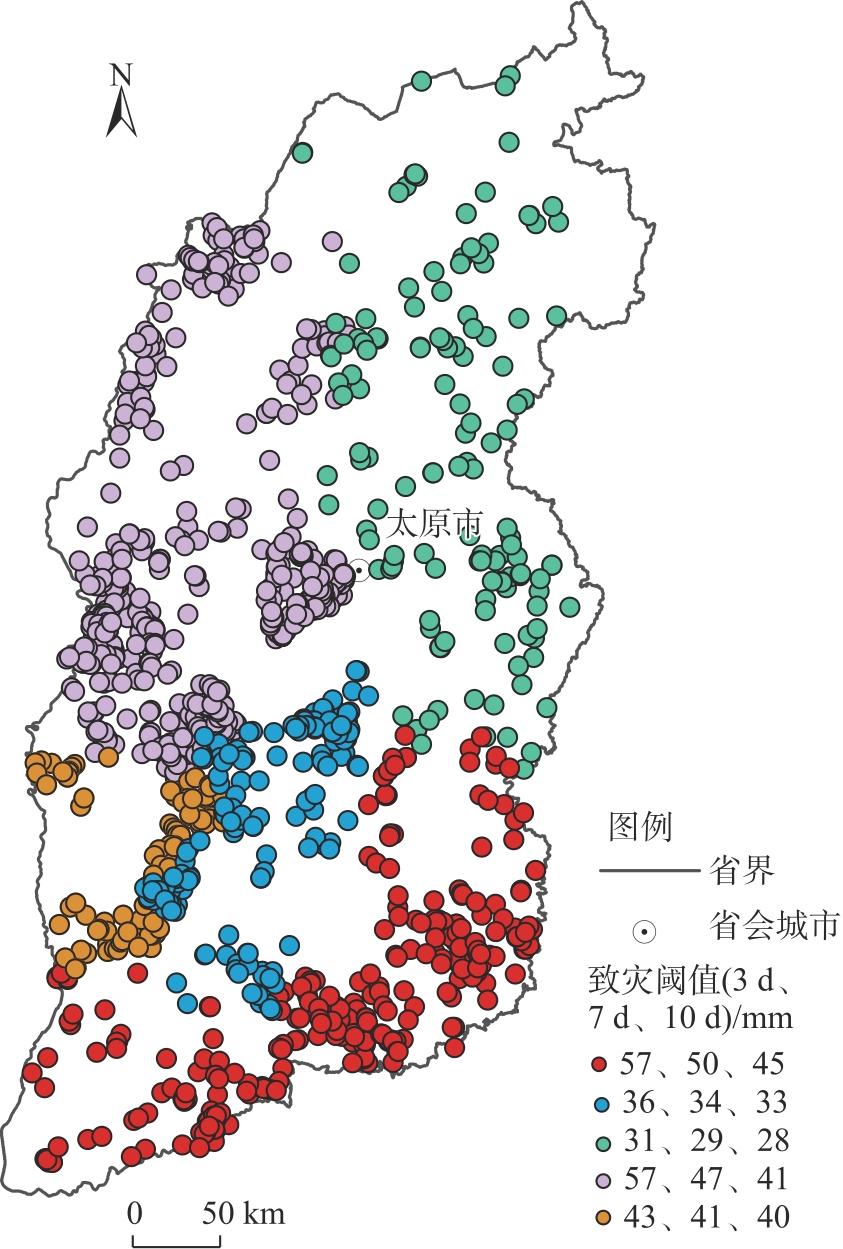
以改进降雨诱发滑坡灾害时空概率算法,提高预报预警能力为研究目标,基于2001—2020年山西省滑坡灾害与同期降雨资料,剔除冻融期及无明显降雨诱发的滑坡灾害样本,重构样本集。采用逻辑回归方法,构建了以累积有效降雨量、降雨间隔历时为变量的降雨致灾概率模型。结合下垫面影响因子空间分布特征,将山西省划分为5个片区,应用贝叶斯公式对逻辑回归模型进行修正,建立空间概率模型。通过接受者操作特征曲线(ROC)获得降雨致灾最佳临界值,最后应用2021—2023年样本进行检验,经插值获得各片区降雨致灾阈值曲线。结果表明:(1) 山西省南部冻融期结束时间在5月上旬,而北部则可持续到6月中旬。(2) ROC曲线表明逻辑回归模型、贝叶斯公式修正模型均有一定的预测能力,且后者更佳,临界致灾概率分别为61.51%、60.37%。(3) 逻辑回归模型、贝叶斯公式修正模型准确率分别为86.44%、93.22%,贝叶斯公式修正效果显著。(4) 山西省各片区均表现为随着降雨间隔时长的增加,所需阈值逐渐递减,就空间分布而言,山西省滑坡灾害隐患点阈值呈现从西南到东北逐渐降低的特点。
卢盛栋, 王文春, 郝小栋, 孙立军, 张华明. 基于贝叶斯公式修正的降雨型滑坡灾害概率研究[J]. 干旱区地理, 2026, 49(5): 917-927.
LU Shengdong, WANG Wenchun, HAO Xiaodong, SUN Lijun, ZHANG Huaming. Probability of landslide disasters induced by rainfall based on Bayesian formula correction[J]. Arid Land Geography, 2026, 49(5): 917-927.
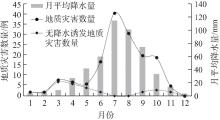
图1
山西省逐月降水量与滑坡灾害发生数量对比"
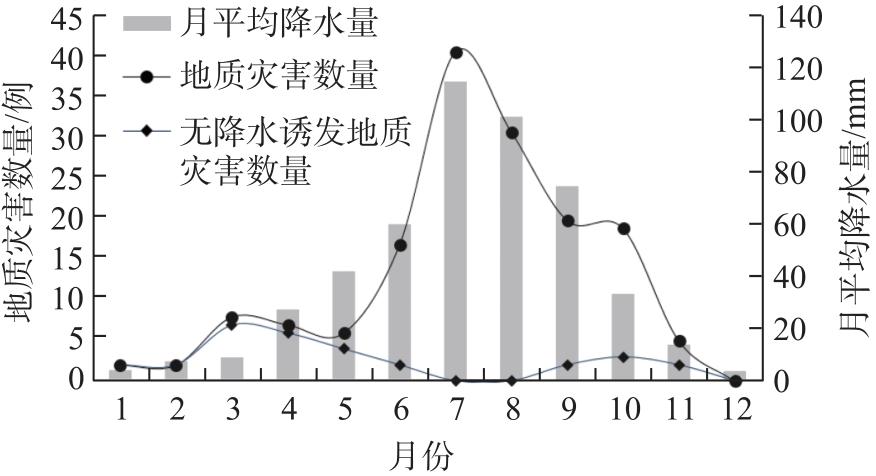
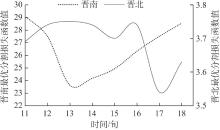
图2
不同分界点损失函数变化曲线"
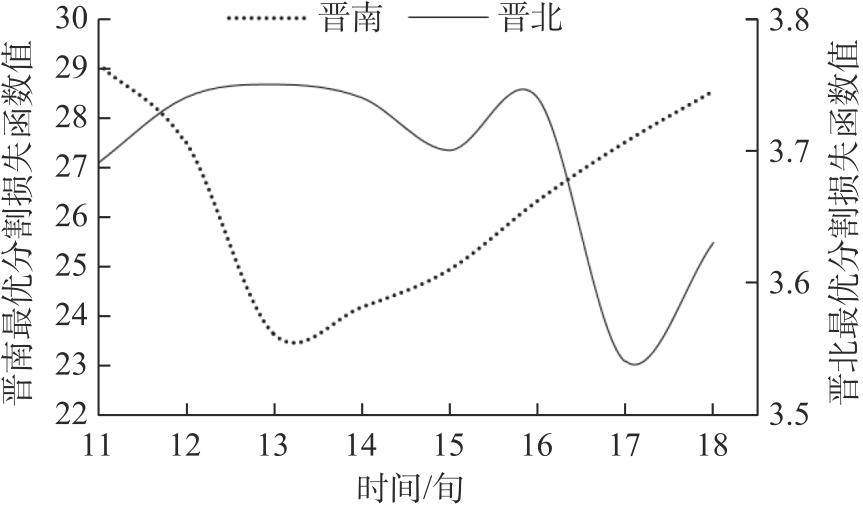
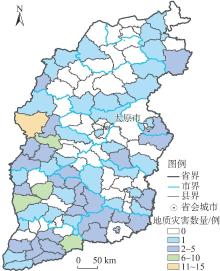
图3
样本空间分布 注:基于山西省自然资源厅标准地图服务网站审图号为晋S(2024)018号的标准地图制作,底图边界无修改。下同。"
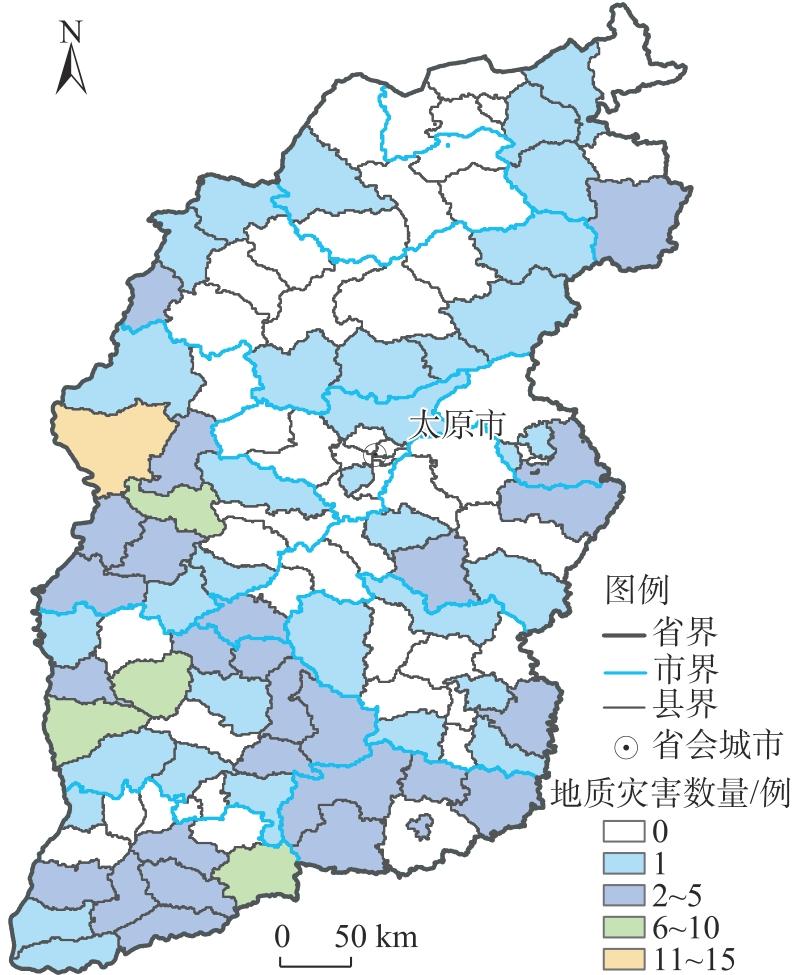
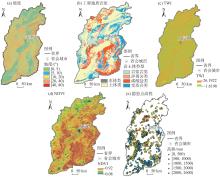
图4
山西省滑坡灾害的主要影响因子分布 注:NDVI为归一化植被指数;TWI为地形湿度指数。"
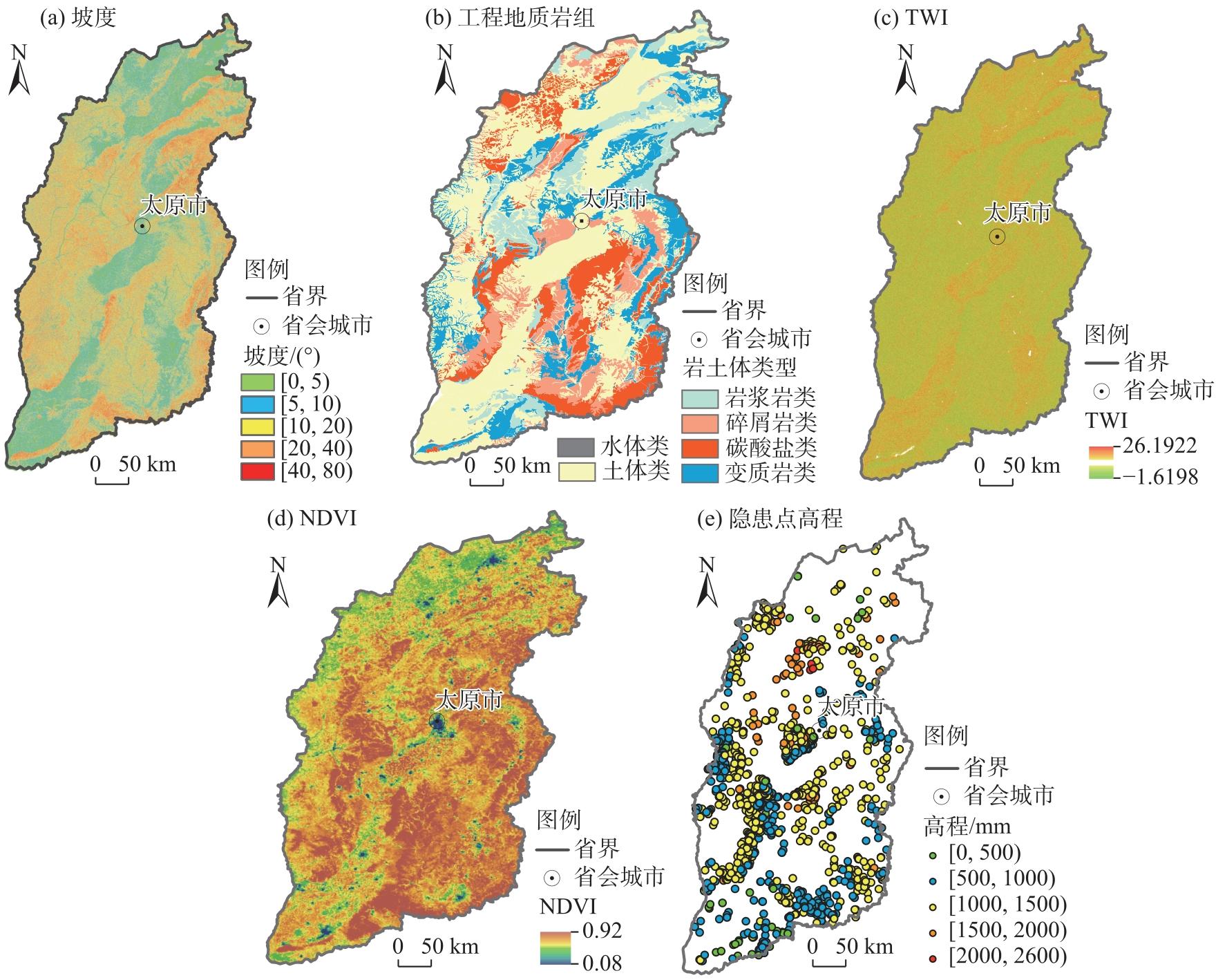
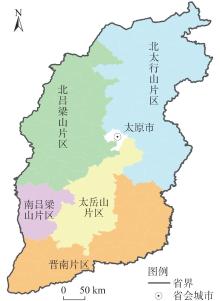
图5
山西省片区划分"
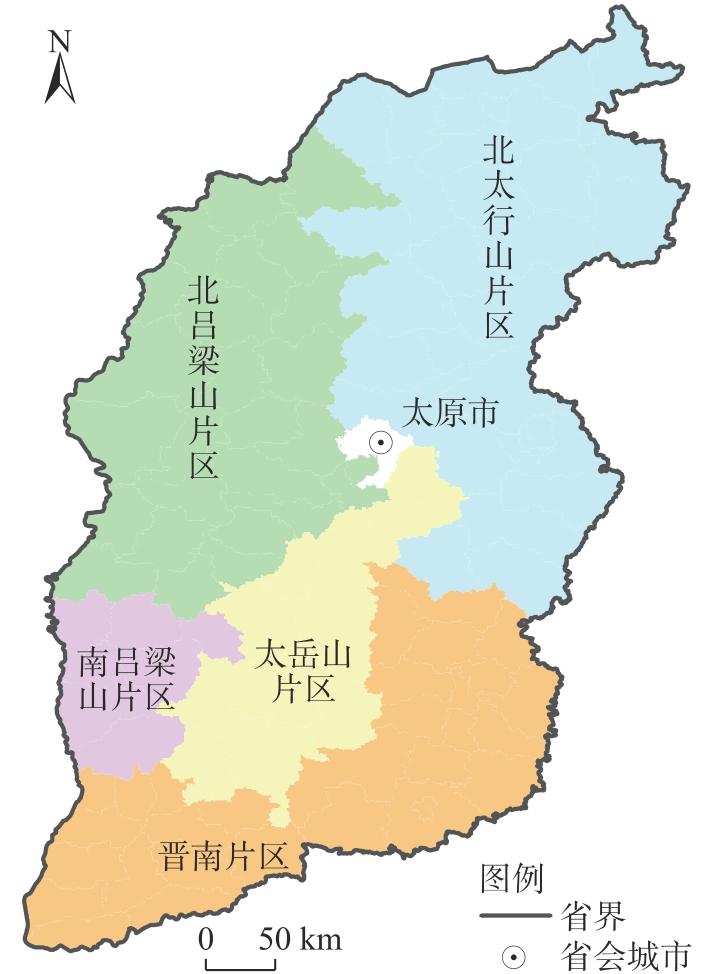

表1
部分影响因子各区域占比"
| 主要影响因子 | 北太行山片区 | 晋南片区 | 太岳山片区 | 北吕梁山片区 | 南吕梁山片区 | |
|---|---|---|---|---|---|---|
| 坡度/(°) | (0.00, 12.64) | 54.50 | 59.16 | 53.31 | 42.89 | 34.75 |
| [12.64, 31.78) | 39.51 | 34.67 | 43.34 | 53.09 | 57.80 | |
| [31.78, 78.80) | 5.99 | 6.17 | 3.35 | 4.01 | 7.45 | |
| NDVI | (0.076, 0.460) | 1.91 | 1.97 | 1.45 | 1.96 | 0.62 |
| [0.460, 0.732) | 40.80 | 27.98 | 29.55 | 52.76 | 30.10 | |
| [0.732, 0.920) | 57.29 | 70.05 | 68.99 | 45.28 | 69.28 | |
| TWI | [-1.62, 6.42) | 43.45 | 43.63 | 45.44 | 48.05 | 50.95 |
| [6.42, 15.44) | 56.16 | 56.07 | 54.18 | 51.62 | 48.78 | |
| [15.44, 26.19) | 0.39 | 0.31 | 0.38 | 0.33 | 0.27 | |
| 工程地质岩组 | 土体 | 43.25 | 44.27 | 47.86 | 60.60 | 39.51 |
| 岩体 | 56.08 | 55.56 | 52.06 | 39.27 | 60.49 | |
| 其他(水体等) | 0.07 | 0.18 | 0.08 | 0.13 | 0.00 | |
| 隐患点高程/m | [0, 1000) | 28.46 | 62.12 | 29.84 | 32.23 | 31.37 |
| [1000, 2800] | 71.54 | 37.78 | 70.16 | 67.77 | 68.63 | |
表2
贝叶斯公式修正概率统计结果"
| 变量 | 短期降雨 | 中期降雨 | 中长期降雨 | |||||||
|---|---|---|---|---|---|---|---|---|---|---|
| 较少 | 较多 | 特别多 | 较少 | 较多 | 特别多 | 较少 | 较多 | |||
| P(C1|B,L) | 0.00 | 100.00 | 100.00 | 0.00 | 75.00 | 100.00 | 30.00 | 7.69 | ||
| P(C1|B) | 36.36 | 66.67 | 100.00 | 23.81 | 41.18 | 100.00 | 30.77 | 7.69 | ||
| P(C2|B,L) | 0.00 | 100.00 | 100.00 | 0.00 | 100.00 | 100.00 | 10.00 | 19.23 | ||
| P(C2|B) | 18.18 | 100.00 | 100.00 | 4.76 | 100.00 | 100.00 | 7.69 | 19.23 | ||
| P(C3|B,L) | 0.00 | 100.00 | 100.00 | 0.00 | 25.00 | 100.00 | 15.00 | 11.54 | ||
| P(C3|B) | 9.09 | 100.00 | 100.00 | 33.33 | 11.76 | 100.00 | 11.54 | 11.54 | ||
| P(C4|B,L) | 0.00 | 100.00 | 100.00 | 0.00 | 100.00 | 100.00 | 10.00 | 19.23 | ||
| P(C4|B) | 36.36 | 100.00 | 100.00 | 9.52 | 100.00 | 100.00 | 7.69 | 19.23 | ||
| P(C5|B,L) | 100.00 | 100.00 | 100.00 | 0.00 | 100.00 | 100.00 | 35.00 | 42.31 | ||
| P(C5|B) | 100.00 | 100.00 | 100.00 | 28.57 | 100.00 | 100.00 | 42.31 | 42.31 | ||
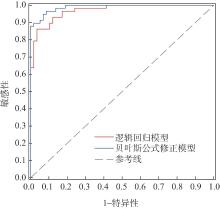
图6
逻辑回归模型、贝叶斯公式修正模型的ROC曲线 注:ROC为接受者操作特征曲线。"
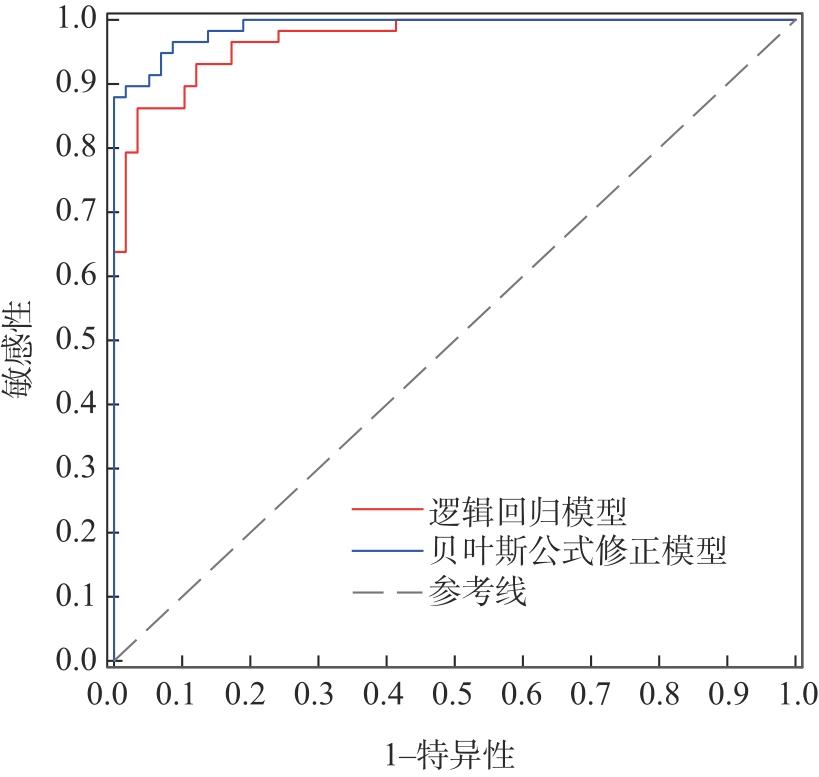
表3
2021—2023年样本检验结果"
| 样本序号 | 累积有效降雨量/mm | 降雨历时/d | 是否发生滑坡灾害 | 逻辑回归 概率/% | 贝叶斯公式 修正概率/% | 样本序号 | 累积有效降雨量/mm | 降雨历时/d | 是否发生滑坡灾害 | 逻辑回归 概率/% | 贝叶斯公式 修正概率/% |
|---|---|---|---|---|---|---|---|---|---|---|---|
| 1 | 56.46 | 15 | 是 | 96.68 | 100.00 | 30 | 93.79 | 12 | 否 | 99.66 | 99.66 |
| 2 | 162.21 | 14 | 是 | 100.00 | 100.00 | 31 | 33.23 | 7 | 否 | 16.71 | 16.71 |
| 3 | 59.81 | 10 | 是 | 86.83 | 100.00 | 32 | 1.97 | 1 | 否 | 0.14 | 0.00 |
| 4 | 175.51 | 14 | 是 | 100.00 | 100.00 | 33 | 18.38 | 7 | 否 | 4.94 | 0.00 |
| 5 | 299.01 | 11 | 是 | 100.00 | 100.00 | 34 | 0.60 | 2 | 否 | 0.17 | 0.00 |
| 6 | 302.90 | 12 | 是 | 100.00 | 100.00 | 35 | 19.18 | 9 | 否 | 10.26 | 0.00 |
| 7 | 142.38 | 11 | 是 | 99.99 | 99.99 | 36 | 9.10 | 7 | 否 | 2.18 | 0.00 |
| 8 | 98.57 | 12 | 是 | 99.78 | 100.00 | 37 | 51.14 | 6 | 否 | 41.72 | 41.72 |
| 9 | 69.73 | 10 | 是 | 94.21 | 94.21 | 38 | 34.29 | 4 | 否 | 7.02 | 7.02 |
| 10 | 99.42 | 4 | 是 | 96.59 | 96.59 | 39 | 15.40 | 1 | 否 | 0.46 | 0.46 |
| 11 | 48.25 | 7 | 是 | 44.04 | 93.62 | 40 | 14.74 | 2 | 否 | 0.62 | 0.93 |
| 12 | 28.31 | 16 | 是 | 76.28 | 63.10 | 41 | 16.11 | 15 | 否 | 42.56 | 35.21 |
| 13 | 116.75 | 10 | 是 | 99.91 | 99.91 | 42 | 41.68 | 11 | 否 | 64.45 | 53.31 |
| 14 | 103.24 | 11 | 是 | 99.80 | 99.80 | 43 | 44.76 | 11 | 否 | 70.58 | 58.38 |
| 15 | 107.92 | 4 | 是 | 98.40 | 98.40 | 44 | 10.90 | 1 | 否 | 0.31 | 0.31 |
| 16 | 127.28 | 11 | 是 | 99.98 | 99.98 | 45 | 106.93 | 8 | 否 | 99.58 | 99.58 |
| 17 | 94.57 | 5 | 是 | 96.30 | 96.30 | 46 | 29.50 | 2 | 否 | 2.33 | 2.33 |
| 18 | 112.94 | 5 | 是 | 99.28 | 99.28 | 47 | 1.30 | 2 | 否 | 0.18 | 0.18 |
| 19 | 172.05 | 10 | 是 | 100.00 | 100.00 | 48 | 56.92 | 6 | 否 | 54.77 | 54.77 |
| 20 | 112.37 | 11 | 是 | 99.91 | 99.91 | 49 | 43.78 | 8 | 否 | 42.85 | 42.85 |
| 21 | 206.98 | 14 | 是 | 100.00 | 100.00 | 50 | 27.09 | 11 | 否 | 32.45 | 31.64 |
| 22 | 91.73 | 11 | 是 | 99.42 | 99.42 | 51 | 16.35 | 6 | 否 | 2.93 | 0.00 |
| 23 | 41.55 | 14 | 是 | 83.98 | 69.47 | 52 | 20.58 | 6 | 否 | 4.25 | 4.25 |
| 24 | 37.05 | 11 | 是 | 54.34 | 44.95 | 53 | 5.89 | 8 | 否 | 2.33 | 0.00 |
| 25 | 217.32 | 4 | 是 | 100.00 | 100.00 | 54 | 29.40 | 1 | 否 | 1.63 | 1.63 |
| 26 | 145.05 | 7 | 是 | 99.98 | 99.98 | 55 | 23.40 | 2 | 否 | 1.35 | 1.35 |
| 27 | 84.35 | 9 | 是 | 97.73 | 97.73 | 56 | 51.26 | 7 | 否 | 50.87 | 50.87 |
| 28 | 32.92 | 13 | 是 | 62.57 | 81.36 | 57 | 40.33 | 11 | 否 | 61.60 | 60.06 |
| 29 | 213.07 | 4 | 是 | 100.00 | 100.00 | 58 | 47.10 | 2 | 否 | 10.58 | 15.88 |
表4
逻辑回归模型与贝叶斯公式修正模型检验结果汇总"
| 类型 | 预测未发生 | 预测发生 | |||
|---|---|---|---|---|---|
| 逻辑回归 模型 | 贝叶斯公式修正模型 | 逻辑回归 模型 | 贝叶斯公式修正模型 | ||
| 实际未发生 | 24 | 27 | 5 | 2 | |
| 实际发生 | 2 | 1 | 27 | 28 | |
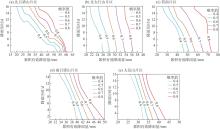
图7
累积有效降雨量与降雨历时致灾等概率曲线分布"
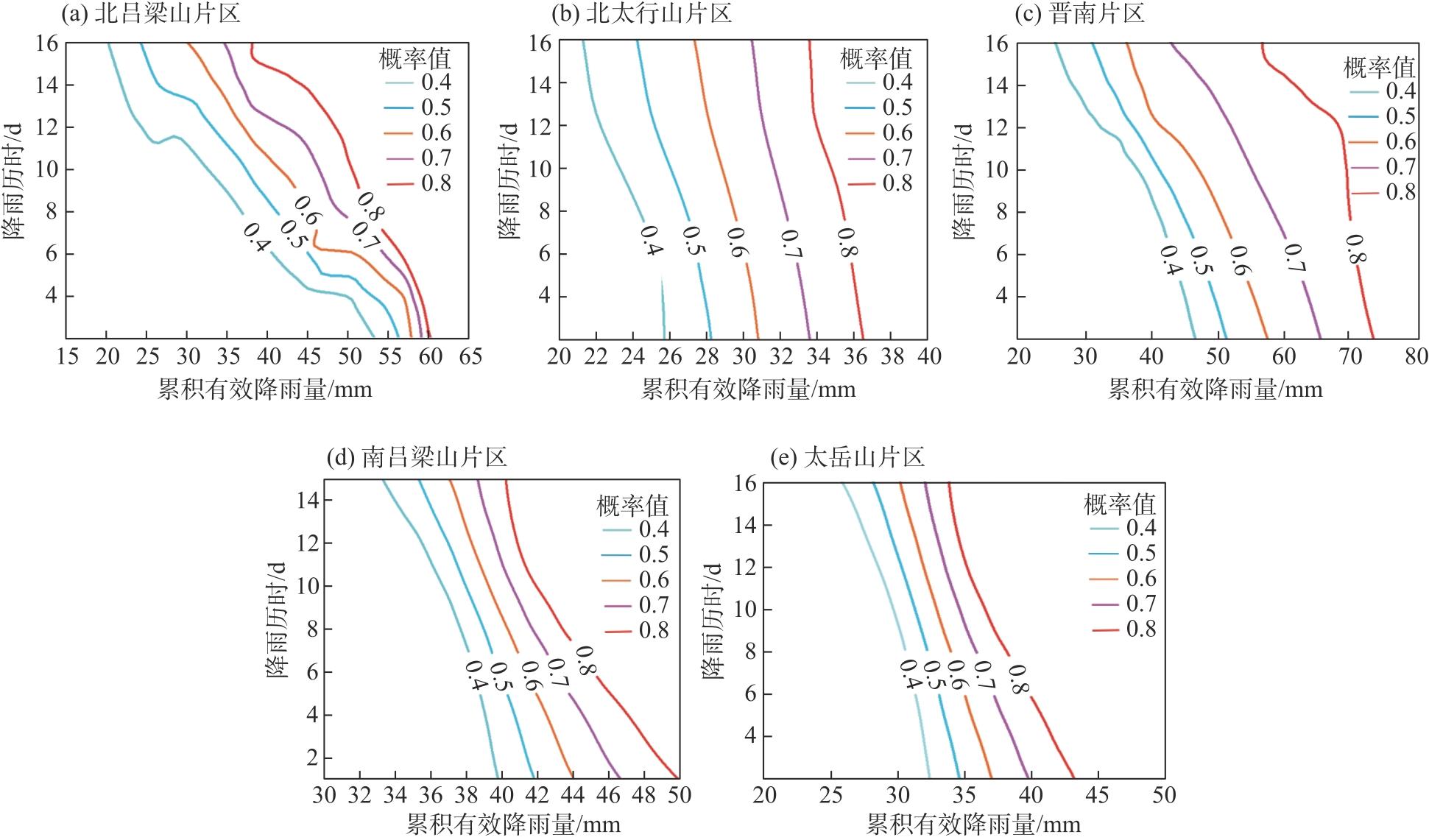
表5
滑坡灾害发生概率为60%的累积有效降雨致灾阈值"
| 降雨 历时/d | 北吕梁 山片区 | 北太行 山片区 | 晋南 片区 | 南吕梁 山片区 | 太岳山 片区 |
|---|---|---|---|---|---|
| 3 | 57.10 | 30.70 | 56.81 | 42.67 | 35.81 |
| 7 | 47.23 | 29.36 | 49.59 | 40.84 | 33.89 |
| 10 | 40.96 | 28.39 | 44.78 | 39.52 | 32.52 |
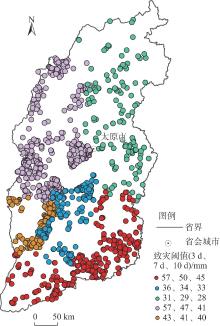
图8
隐患点致灾概率为60%的致灾阈值空间分布"
| [1] |
Zhuang J Q, Peng J B, Wang G H, et al. Distribution and characteristics of landslide in Loess Plateau: A case study in Shaanxi Province[J]. Engineering Geology, 2018, 236: 89-96.
doi: 10.1016/j.enggeo.2017.03.001 |
| [2] |
Qiu H J, EgmiA D, Cui P, et al. Size distribution of loess slides in relation to local slope height within different slope morphologies[J]. Catena, 2016, 145: 155-163.
doi: 10.1016/j.catena.2016.06.005 |
| [3] |
Peng J B, Wang S K, Wang Q Y, et al. Distribution and genetic types of loess landslides in China[J]. Journal of Asian Earth Sciences, 2019, 170: 329-350.
doi: 10.1016/j.jseaes.2018.11.015 |
| [4] |
胡胜, 邱海军, 王宁练, 等. 地形对黄土高原滑坡的影响[J]. 地理学报, 2021, 76(11): 2697-2709.
doi: 10.11821/dlxb202111008 |
|
[Hu Sheng, Qiu Haijun, Wang Ninglian, et al. The influence of terrain on loess landslides in Loess Plateau[J]. Acta Geographica Sinica, 2021, 76(11): 2697-2709.]
doi: 10.11821/dlxb202111008 |
|
| [5] |
Prahan B. Remote sensin and GIS-based landslide hazard analysis and cross-validation using multivariate logistic regression model on three test areas in Malaysia[J]. Advances Space Research, 2010, 45: 1244-1256.
doi: 10.1016/j.asr.2010.01.006 |
| [6] | 毛伊敏, 张茂盛, 程秀娟, 等. 基于不确定贝叶斯分类技术的滑坡危险性评价[J]. 中国矿业大学学报, 2015, 44(4): 769-774. |
| [Mao Yimin, Zhang Maosheng, Cheng Xiujuan, et al. Landslide hazards assessment based on uncertain bayesian classification method[J]. Journal of China Univercity of Mining & Technology, 2015, 44(4): 769-774.] | |
| [7] |
Huang F M, Zhang J, Zhou C B, et al. A deep learning algorithm using a fully connected sparse autoencoder neural network for landslide susceptibility prediction[J]. Landslides, 2020, 17(1): 217-229.
doi: 10.1007/s10346-019-01274-9 |
| [8] |
Segoni S, Piciullo L, Gariano S L. A review of the recent literature on rainfall thresholds for landslide occurrence[J]. Landslides, 2018, 15(8): 1483-1501.
doi: 10.1007/s10346-018-0966-4 |
| [9] |
赵国蓉, 李万志, 李冰, 等. 青海东部降雨型滑坡灾害特征及其致灾雨量分析[J]. 干旱区地理, 2025, 48(4): 632-639.
doi: 10.12118/j.issn.1000-6060.2024.382 |
|
[Zhao Guorong, Li Wanzhi, Li Bing, et al. Characteristics of rainfall-type landslide disasters in eastern Qinghai and analysis of their causing rainfalls[J]. Arid Land Geography, 2025, 48(4): 632-639.]
doi: 10.12118/j.issn.1000-6060.2024.382 |
|
| [10] |
梁世川, 乔华, 吕东, 等. 伊犁谷地地质灾害分布特征及主控因素分析[J]. 干旱区地理, 2023, 46(6): 880-888.
doi: 10.12118/j.issn.1000-6060.2022.458 |
|
[Liang Shichuan, Qiao Hua, Lü Dong, et al. Distribution characteristics and main controlling factors of geohazards in Ili Valley[J]. Arid Land Geography, 2023, 46(6): 880-888.]
doi: 10.12118/j.issn.1000-6060.2022.458 |
|
| [11] |
Calvello M, Piciullo L. Assessing the performance of regional landslide early warning models: The EDuMap mathod[J]. Natural Hazards Earth System Sciences, 2016, 16(1): 103-122.
doi: 10.5194/nhess-16-103-2016 |
| [12] |
Baum R L, Godt J W. Early warning of rainfall-induced shallow landslides and debris flows in the USA[J]. Landslides, 2010, 7(3): 259-272.
doi: 10.1007/s10346-009-0177-0 |
| [13] | Guzzetti F, Gariano S L, Peruccacci S, et al. Geographical landslide early warning systems[J]. Earth-Science Reviews, 2020, 200: 102973, doi: 10.1016/j.earscirev.2019.102973. |
| [14] |
陈世泷, 孟庆凯, 戴勇, 等. 基于CMIP6未来情景的伊犁河流地质灾害危险性评估预测[J]. 干旱区地理, 2025, 48(4): 599-611.
doi: 10.12118/j.issn.1000-6060.2024.520 |
|
[Chen Shilong, Meng Qingkai, Dai Yong, et al. Geological disaster hazard assessment and prediction in the Ili River Basin based on CMIP6 future scenarios[J]. Arid Land Geography, 2025, 48(4): 599-611.]
doi: 10.12118/j.issn.1000-6060.2024.520 |
|
| [15] | 裴艳茜, 邱海军, 胡胜, 等. “一带一路”地区滑坡灾害风险评估[J]. 干旱区地理, 2018, 41(6): 1225-1240. |
|
[Pei Yanqian, Qiu Haijun, Hu Sheng, et al. Risk assessment of landslides along the Silk Road Economic Belt[J]. Arid Land Geography, 2018, 41(6): 1225-1240.]
doi: 10.12118/j.issn.1000-6060.2018.06.10 |
|
| [16] | 葛云峰, 李信杰, 杜彬, 等. 多功能高速远程滑坡运动堆积过程物理模型试验装置设计与应用[J]. 地质科技通报, 2020, 39(1): 86-94. |
| [Ge Yunfeng, Li Xinjie, Du Bin, et al. Design and application of multifunctional physical model test device for movement and accumulation process of rapid long-runout landslide[J]. Bulletin of Geological Science and Technology, 2020, 39(1): 86-94.] | |
| [17] | 葛云峰, 周婷, 霍少磊, 等. 高速远程滑坡运动堆积过程中的能量传递机制[J]. 地球科学, 2019, 44(11): 3939-3949. |
| [Ge Yunfeng, Zhou Ting, Huo Shaolei, et al. Energy transfer mechanism during movement and accumulation of rockslide avalanche[J]. Earth Science, 2019, 44(11): 3939-3949.] | |
| [18] |
Kim S W, Chun K W, Kim M, et al. Effect of antecedent rainfall conditions and their variations on shallow landslide-triggering rainfall thresholds in South Korea[J]. Landslides, 2020, 18(7): 569-582.
doi: 10.1007/s10346-020-01505-4 |
| [19] |
Pradhsn A M S, Lee S R, Kim Y T. A shallow slide prediction model combining rainfall threshold warnings and shallow slide susceptibility in Busan, Korea[J]. Landslides, 2019, 16(3): 647-659.
doi: 10.1007/s10346-018-1112-z |
| [20] |
Melillo M, Brunetti M T, Peruccacci S, et al. An algorithm for the objective reconstruction of rainfall events responsible for landslides[J]. Landslides, 2015, 12(2): 311-320.
doi: 10.1007/s10346-014-0471-3 |
| [21] | Park J Y, Lee S R, Lee D H, et al. A regional-scale landslide early warning methodology applying statistical and physically based approach in sequence[J]. Engineering Geology, 2019, 260: 1-14. |
| [22] |
Piciullo L, Calvello M, Cepeda J M. Territorial early warning systems for rainfall-induced landslides[J]. Earth-Science Reviews, 2018, 179(1): 228-247.
doi: 10.1016/j.earscirev.2018.02.013 |
| [23] | Fathani T F, Karnawati D, Wilopo W. An integrated methodology to develop a standard for landslide early warning systems[J]. Natural Hazards and Earth System Sciences, 2016, 16(9): 2123-2135. |
| [24] | Nel C. The rainfall intensity-duration control of shallow landslides and debris flows[J]. Geografiska Annaler Series A-Physical Geography, 1980, 62: 23-27. |
| [25] |
Guzzetti F, Cardinali M, Reichenbach P. Landslides triggered by the 23 November 2000 rainfall event in the Imperia Province, western Liguria, Italy[J]. Engineering Geology, 2004, 73(3): 229-245.
doi: 10.1016/j.enggeo.2004.01.006 |
| [26] | 谢剑明, 刘礼领, 殷坤龙, 等. 浙江省滑坡灾害预警预报的降雨阈值研究[J]. 地质科技情报, 2003(4): 101-105. |
| [Xie Jianming, Liu Liling, Yin Kunlong, et al. Study on rainfall threshold of landslide early warning and prediction in Zhejiang Province[J]. Geological Science Technology Information, 2003(4): 101-105.] | |
| [27] | 夏梦想, 李远耀, 吴吉民, 等. 基于I-D统计模型的张家界市滑坡灾害降雨预警阈值研究[J]. 自然灾害学报, 2021, 30(4): 203-212. |
| [Xia Mengxiang, Li Yuanyao, Wu Jimin, et al. Research on rainfall early warning threshold of landslide disaster in Zhangjiajie City based on I-D statistical model[J]. Journal of Natural Disasters, 2021, 30(4): 203-212.] | |
| [28] |
Guzzetti F, Peruccacci S, Rossi M, et al. Rainfall thresholds for the initiation of landslides in central and southern Europe[J]. Meteorology Atmospheric Physics, 2007, 98(3-4): 239-267.
doi: 10.1007/s00703-007-0262-7 |
| [29] | 刘谢攀, 殷坤龙, 肖长贵, 等. 基于I-D-R阈值模型的滑坡气象预警[J]. 地球科学, 2024, 49(3): 1039-1051. |
| [Liu Xiepan, Yin Kunlong, Xiao Changgui, et al. Meteorological early warning of landslide based on I-D-R threshold model[J]. Earth Science, 2024, 49(3): 1039-1051.] | |
| [30] | 盛逸凡, 李远耀, 徐勇, 等. 基于有效降雨强度和逻辑回归的降雨型滑坡预测模型[J]. 水文地质工程地质, 2019, 46(1): 156-162, 172. |
| [Sheng Yifan, Li Yuanyao, Xu Yong, et al. Prediction of rainfall-type landslides based on effective rainfall intensity and logistic regression[J]. Hydrogeology & Engineering geology, 2019, 46(1): 156-162, 172.] | |
| [31] | 刘海知, 徐辉, 包红军, 等. 区域降雨诱发滑坡阈值特征分析[J]. 自然灾害学报, 2021, 30(4): 181-190. |
| [Liu Haizhi, Xu Hui, Bao Hongjun, et al. Characteristics analysis of rainfall-induce landslide thresholds in local regions[J]. Journal of Natural Disaters, 2021, 30(4): 181-190.] | |
| [32] | 何雨枫, 丁明涛, 段钰, 等. 2000—2019年四川省滑坡灾害时空分布特征及影响因素分析[J]. 自然灾害学报, 2024, 33(6): 17-26. |
| [He Yufeng, Ding Mingtao, Duan Yu, et al. Analysis of spatial-temporal distribution characteristics and influence factors of landslides in Sichuan Province from 2000 to 2019[J]. Journal of Natural Disasters, 2024, 33(6): 17-26.] | |
| [33] | 林沛文, 何书, 鲜木斯艳·阿布迪克依木, 等. 基于逻辑回归-模糊层次分析模型的公路沿线滑坡易发性评价[J]. 自然灾害学报, 2024, 33(6): 27-36. |
| [Lin Peiwen, He Shu, Abudikeyimu Xmsy, et al. Landslide susceptibility assessment along highways based on LR-FAHP model[J]. Journal of Natural Disasters, 2024, 33(6): 27-36.] | |
| [34] |
Peruccacci S B, Runetti M T, Gariano S L, et al. Rainfall thresholds for possible landslide occurrence in Italy[J]. Geomorphology, 2017, 290(1): 39-57.
doi: 10.1016/j.geomorph.2017.03.031 |
| [35] |
Gariano S l, Brunetti M T, Lovine G, et al. Calibration and validation of rainfall thresholds for shallow landslide forecasting in Sicily, southern Italy[J]. Geomophology, 2015, 228(1): 653-665.
doi: 10.1016/j.geomorph.2014.10.019 |
| [36] |
Jaiswal P, van Westen C J. Estimating temporal probability for landslide initiation along transportation routes based on rainfall thresholds[J]. Geomorphology, 2009, 112(1-2): 96-105.
doi: 10.1016/j.geomorph.2009.05.008 |
| [37] |
Segoni S, Lagomarsino D, Fanti R, et al. Integration of rainfall thresholds and susceptibility maps in the Emilia Romagna (Italy) regional-scale landslide warning system[J]. Landslides, 2014, 12(4): 773-785.
doi: 10.1007/s10346-014-0502-0 |
| [38] |
Das I, Stein A, Kerle N, et al. Probabilistic landslide hazard assessment using suceptible units (HSU) along a national highway corridor in the northern Himalayas, India[J]. Landslides, 2011, 8(3): 293-308.
doi: 10.1007/s10346-011-0257-9 |
| [39] |
Tiranti D, Rabuffetti D. Estimation of rainfall thresholds triggering shallow landslides for an operational warning system implementation[J]. Landslides, 2010, 7(4): 471-481.
doi: 10.1007/s10346-010-0198-8 |
| [40] | 黄发明, 陈佳武, 范宣梅, 等. 降雨型滑坡时间概率的逻辑回归拟合及连续概率滑坡危险性建模[J]. 地球科学, 2022, 47(12): 4609-4628. |
| [Huang Faming, Chen Jiawu, Fan Xuanmei, et al. Logistic regression fitting of rainfall-induced ladslide occurrence probability and continuous landslide hazard prediction modelling[J]. Earth Science, 2022, 47(12): 4609-4628.] | |
| [41] | 宋宇飞, 曹琰波, 范文, 等. 基于贝叶斯方法的降雨诱发滑坡概率性预警模型研究[J]. 岩石力学与工程学报, 2023, 42(3): 558-574. |
| [Song Yufei, Cao Yanbo, Fan Wen, et al. Probabilistic early warning model for rainfall-induced landslides based on Bayesian approach[J]. Chinese Journal of Rock Mechanics and Engineering, 2023, 42(3): 558-574.] | |
| [42] | 卢盛栋, 李强, 李芬, 等. 大气降水诱发黄土高原滑坡灾害阈值及灾损研究[J]. 灾害学, 2023, 38(3): 53-59. |
| [Lu Shengdong, Li Qiang, Li Fen, et al. Study on threshold and damage of landslide disaster induced by atmospheric precipitation in Loess Plateau[J]. Journal of Catastrophology, 2023, 38(3): 53-59.] | |
| [43] | 赵晓萌, 卫星君, 王娜, 等. 降雨型滑坡灾害的特征聚合决策树预测模型[J]. 灾害学, 2020, 35(1): 27-31. |
| [Zhao Xiaomeng, Wei Xingjun, Wang Na, et al. Feature aggregation decision tree prediction model for rainfall landslide disaster[J]. Journal of Catastrophology, 2020, 35(1): 27-31.] | |
| [44] |
Rossi M, Guzzetti F, Reichenbach P, et al. Optimal landslide susceptibility zonation based on multiple forecasts[J]. Geomorphology, 2010, 114(4-5): 129-142.
doi: 10.1016/j.geomorph.2009.06.020 |
| [1] | 阿力木·艾尔肯, 李如琦, 努尔扎提·阿卜杜柯尤木, 玛依热·艾海提, 希热娜依·铁里瓦尔地. 1961—2022年新疆南部降雨和极端降雨特征[J]. 干旱区地理, 2026, 49(1): 13-22. |
| [2] | 鲁长金, 王志刚, 杨海龙, 武淼辰, 尹文天. W-OH阻水层对煤矸石坡面降雨入渗以及产流产沙过程影响[J]. 干旱区地理, 2025, 48(9): 1623-1635. |
| [3] | 张昕晗, 赵文婷, 焦菊英, 马晓武, 杨波, 凌麒. 1960—2023年黄土高原极端降水事件时空演变特征[J]. 干旱区地理, 2025, 48(7): 1153-1166. |
| [4] | 赵国蓉, 李万志, 刘冰, 祁门紫仪. 青海东部降雨型滑坡灾害特征及其致灾雨量分析[J]. 干旱区地理, 2025, 48(4): 632-639. |
| [5] | 杨晓亚, 于坤霞, 李占斌, 李鹏, 刘永刚, 莫淑红, 杨建宏. 秦岭山区-黄土高原地区生态基流区域差异及其阈值研究[J]. 干旱区地理, 2025, 48(3): 380-390. |
| [6] | 杨思远, 杨海龙, 杨鹏辉, 张巍, 张颂扬. 基于W-OH的矿区重构冻土阻水层功能评价模拟研究[J]. 干旱区地理, 2025, 48(1): 75-74. |
| [7] | 吴梦雨, 李冬杰, 韩玉国, 邱业, 曲芝旭. 河西走廊农田灌溉面积阈值分析[J]. 干旱区地理, 2024, 47(7): 1165-1174. |
| [8] | 焦美玲, 韩晶, 曹彦超, 王娟, 秦拓, 贺涛. 庆阳市空气污染及气象因子影响特征分析[J]. 干旱区地理, 2024, 47(6): 932-941. |
| [9] | 史继清, 周刊社, 张东东, 杜军, 甘臣龙, 普布多吉. 西藏地区一种新的四季划分方法[J]. 干旱区地理, 2024, 47(5): 773-784. |
| [10] | 成龙, 吴波, 贾晓红, 殷婕, 费兵强, 张令光, 岳艳鹏, 孙迎涛, 李佳. 基于连续观测数据的毛乌素沙地生长季土壤水分动态及其对降雨的响应[J]. 干旱区地理, 2024, 47(4): 648-661. |
| [11] | 张宏芳, 潘留杰, 卢珊, 沈姣姣. 近40 a来秦岭及周边地区极端降水变化特征[J]. 干旱区地理, 2024, 47(3): 380-390. |
| [12] | 梁宇靖,沈润平,师春香,邢雅洁,孙帅. 基于CLDAS融合降水的中国降雨侵蚀力研究[J]. 干旱区地理, 2022, 45(5): 1333-1346. |
| [13] | 艾尔肯·图尔荪,玉素甫江·如素力,崔一爽,喀迪阿依·阿力木,米日阿依·买土地. 2000—2019年新疆大型湖泊湖冰物候时空变化特征[J]. 干旱区地理, 2022, 45(5): 1440-1449. |
| [14] | 翟涌光,张鑫,冀鸿兰,牟献友,张宝森. 基于遥感影像的黄河内蒙古段冰-水分类研究[J]. 干旱区地理, 2022, 45(3): 763-773. |
| [15] | 焦若禺,宋孝玉,赵新凯,李蓝君,符冲,张志旭,王绍娜. 黄土沟壑区黑麦草植被冠层与根系坡面水沙效益及水力特性[J]. 干旱区地理, 2022, 45(1): 208-218. |
|
||