干旱区地理 ›› 2025, Vol. 48 ›› Issue (10): 1815-1827.doi: 10.12118/j.issn.1000-6060.2024.722 cstr: 32274.14.ALG2024722
王超( ), 何友均(), 韩丽丽
收稿日期:2024-11-27
修回日期:2025-01-17
出版日期:2025-10-25
发布日期:2025-10-27
通讯作者:
何友均(1976-),男,博士,研究员,主要从事生态经济与政策研究. E-mail: heyoujun@caf.ac.cn作者简介:王超(1998-),男,博士研究生,主要从事林业资源与环境经济研究. E-mail: wanngch@163.com
基金资助:
WANG Chao(), HE Youjun(), HAN Lili
Received:2024-11-27
Revised:2025-01-17
Published:2025-10-25
Online:2025-10-27
摘要:
植被恢复是生态恢复的前提,系统分析退耕还林强度与植被恢复的空间错配关系是科学制定生态保护与修复政策的基础。借助植被恢复潜力实现度和退耕还林强度的相对差异,分析了黄土高原植被恢复空间错配格局的时空变化特征,并运用地理加权回归对植被恢复空间错配格局的影响因素进行了探究。结果表明:(1) 2000—2022年黄土高原植被恢复效果不断提升,2022年植被恢复潜力实现度整体在0.75以上。青海南部和山西西部植被恢复的理论最大潜力值高于0.60,但潜力实现度低于0.65,是未来植被恢复的重点区域。(2) 退耕区域内,退耕还林强度与植被恢复的空间错配指数值普遍高于0.70,表现为严重的空间不匹配,且空间错配现象正逐渐向整个区域扩散。(3) 农村人口压力和农业产业结构是加剧黄土高原退耕还林强度与植被恢复空间错配的主要因素,其对黄土高原顺利实现退耕还林政策的生态目标带来挑战。未来,黄土高原应聚焦优化农业产业结构和提高城镇建设用地的集约化程度等政策措施,缓解退耕还林强度与植被恢复的空间错配关系。
王超, 何友均, 韩丽丽. 黄土高原退耕还林与植被恢复的空间错配格局及影响因素研究[J]. 干旱区地理, 2025, 48(10): 1815-1827.
WANG Chao, HE Youjun, HAN Lili. Spatial mismatch pattern and its influencing factors between the Grain for Green Project and vegetation restoration in the Loess Plateau[J]. Arid Land Geography, 2025, 48(10): 1815-1827.
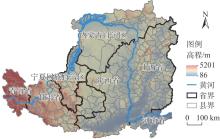
图1
研究区示意图 注:基于自然资源部标准地图服务网站审图号为GS(2020)4632号的标准地图制作,底图边界无修改。下同。"
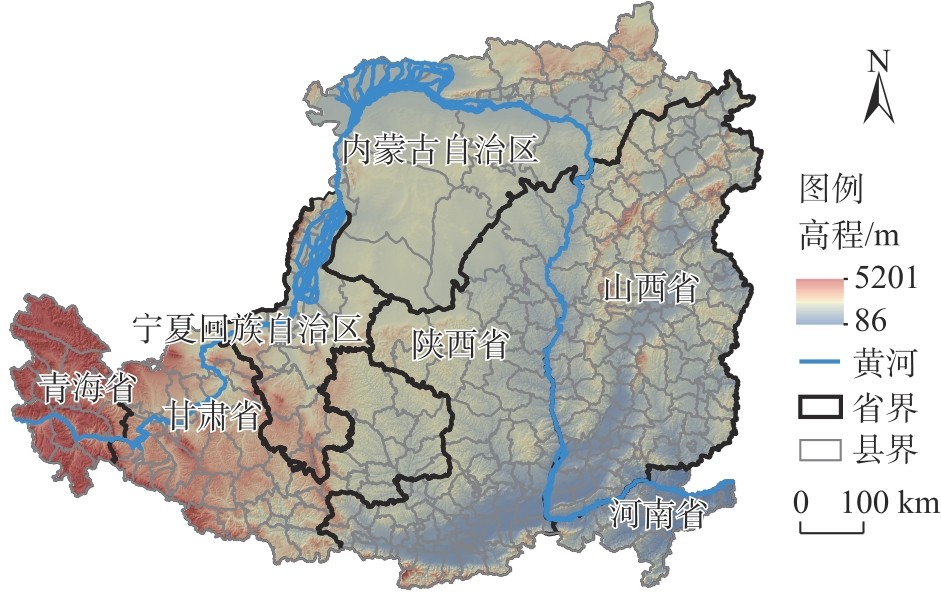

表1
数据来源及用途"
| 数据类型 | 数据名称 | 数据描述 | 数据来源 | 用途 |
|---|---|---|---|---|
| 土壤数据 | 土壤类型 | 数据类型为栅格格式,空间分辨率为1 km×1 km,利用ArcGIS 10.7将数据重采样为90 m×90 m | 资源环境科学与数据中心( | 构建相似生境单元 |
| DEM数据 | 高程、坡度、坡向 | 数据类型为栅格格式,空间分辨率为90 m×90 m | 中国科学院地理空间数据云( | |
| 遥感产品 | 土地利用 | 数据类型为栅格格式,利用ArcGIS 10.7将数据重采样为90 m×90 m | 武汉大学CLCD数据集( | 计算退耕还林政策强度 |
| EVI | 数据类型为栅格格式,时间分辨率为16 d合成产品,空间分辨率为250 m×250 m,利用ArcGIS 10.7将数据重采样为90 m×90 m | Google Earth Engine | 计算植被恢复潜力实现度 | |
| FVC | 数据类型为栅格格式,时间分辨率为30 d合成产品,空间分辨率为250 m×250 m,利用ArcGIS 10.7将数据重采样为90 m×90 m | 地球资源数据云( | 稳健性分析 | |
| 气象数据 | 年平均气温、年累计降水量 | 数据类型为TXT格式,时间分辨率为日值,空间分辨率为全国752个站点,利用R平台将数据转为栅格格式,利用ArcGIS 10.7对气象数据进行插值,并重采样至90 m×90 m | 国家气象科学数据中心 ( | 空间错配指数影响因素分析 |
| 社会经济数据 | 农村人口压力 | 农村人口数量占区域总人口的比重 | 2000—2022年《中国县域统计年鉴》、各省份《统计年鉴》 | |
| 农业产业结构 | 农业产值与地区生产总值的比重 | |||
| 乡村经济水平 | 农村居民人均可支配收入占人均GDP的比重 |
图2
2000—2022年黄土高原增强型植被指数(EVI)变化的分布"
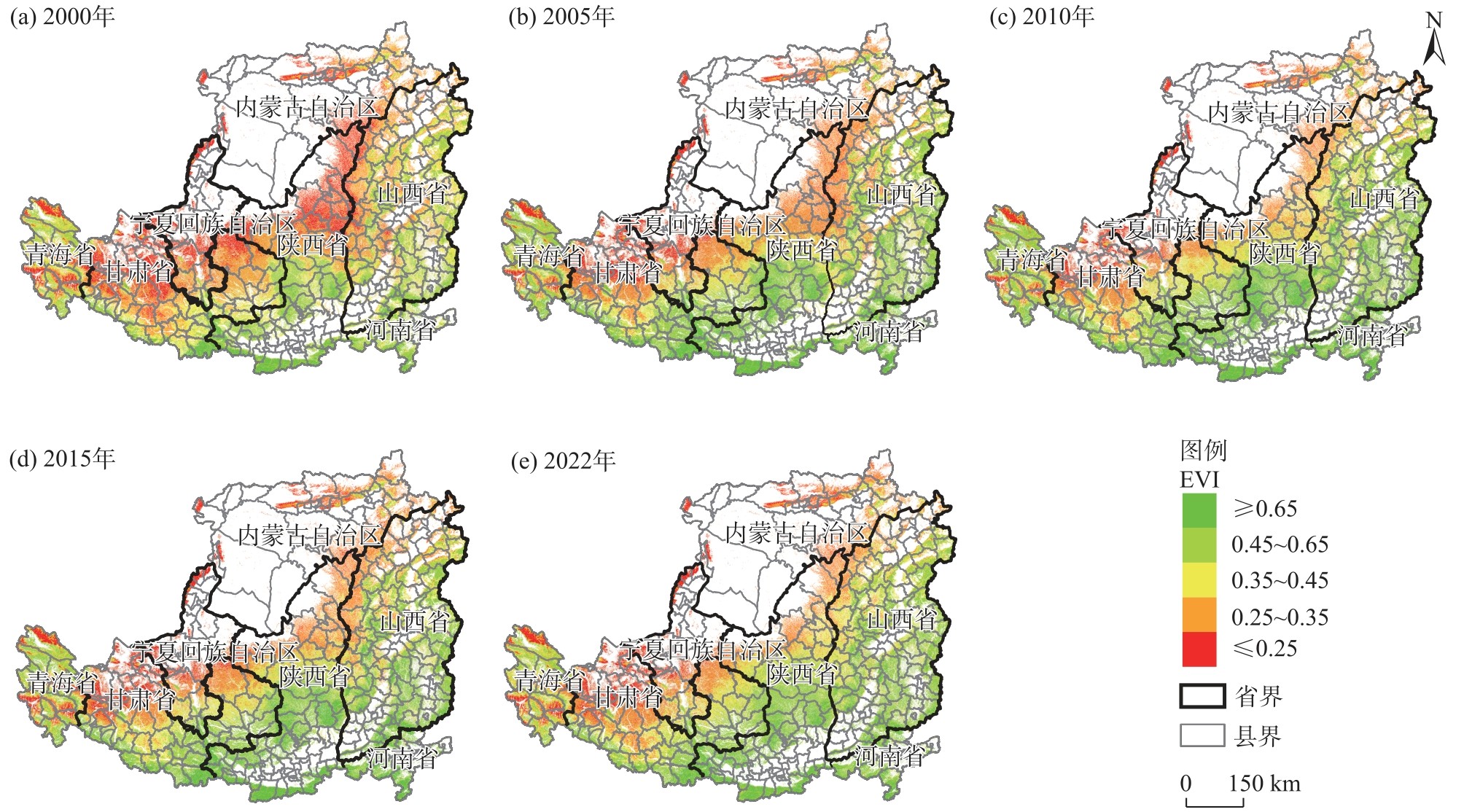
图3
黄土高原植被恢复潜力(VRP)的分布"
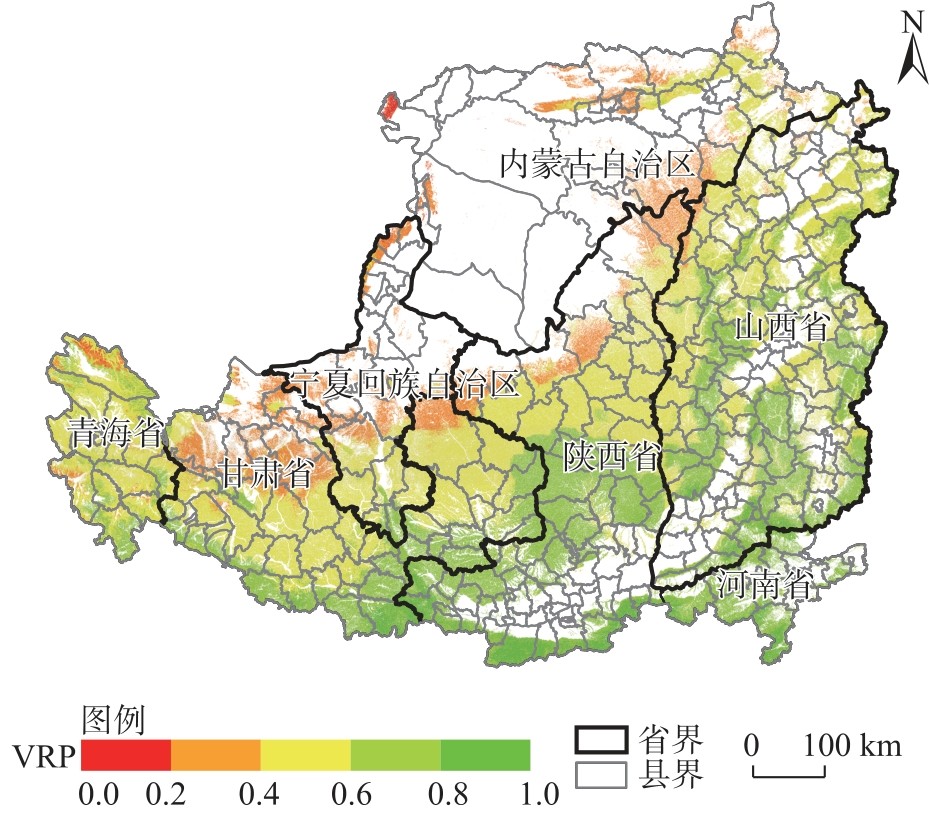
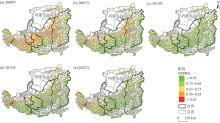
图4
2000—2022年黄土高原植被恢复潜力实现度(VRPRD)变化的分布"

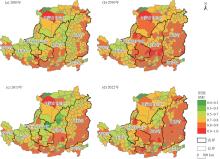
图5
2000—2022年黄土高原空间错配指数(SMI)变化的分布"
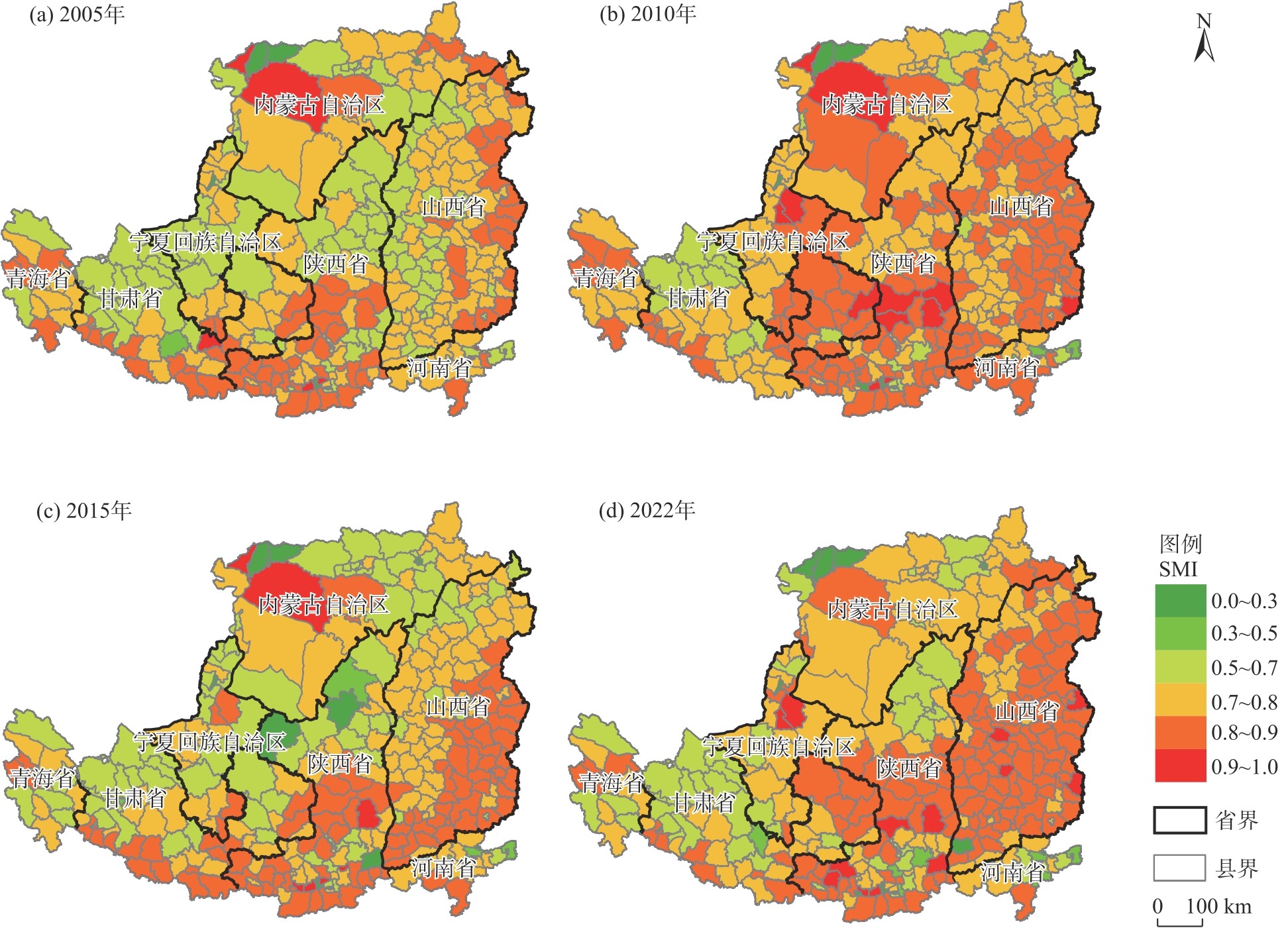
图6
黄土高原SMI空间分布特征"
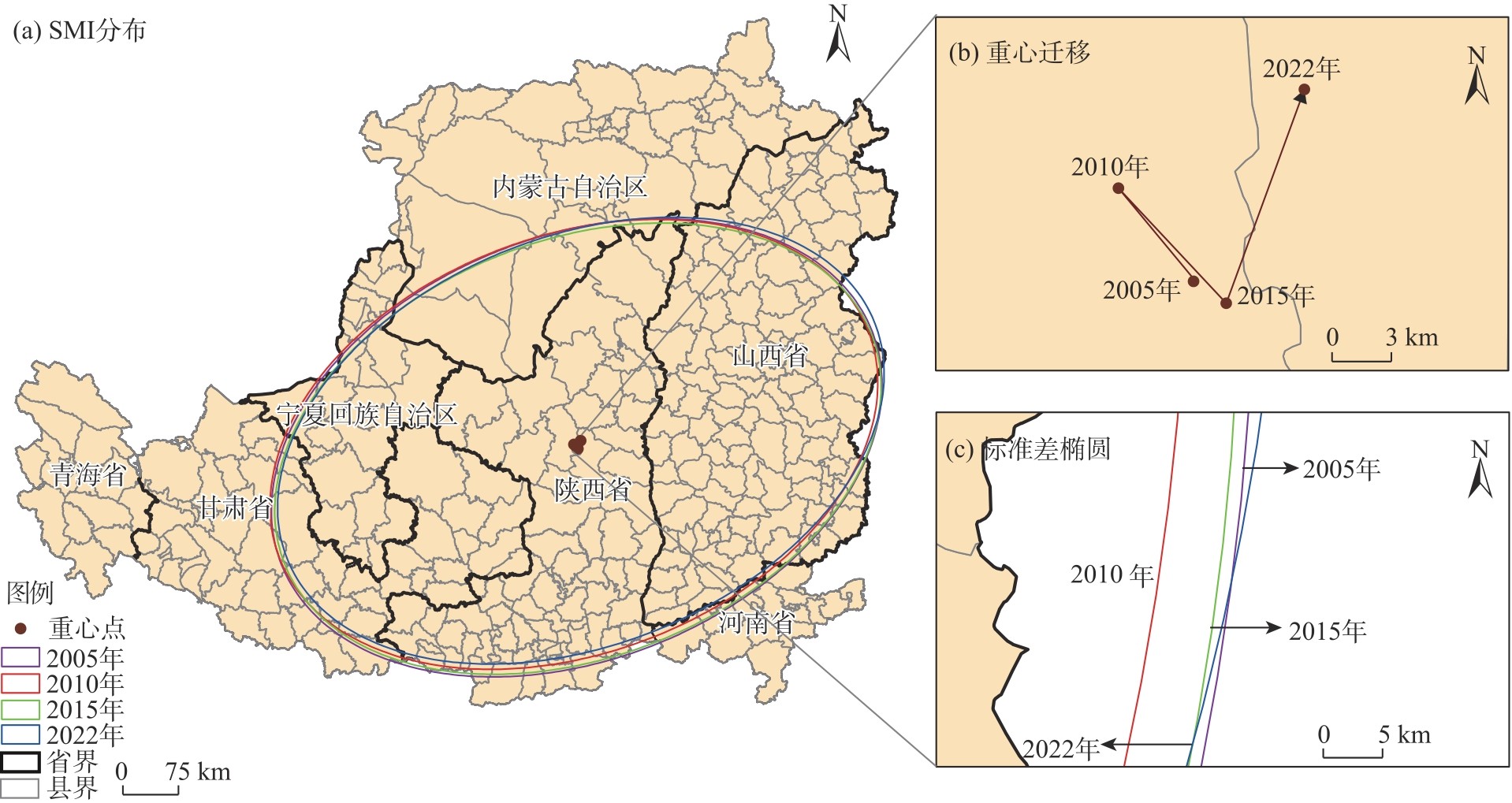
图7
各影响因素相关系数空间分布"

表2
多重共线性方差膨胀因子(VIF)检验"
| 变量 | 2005年 | 2010年 | 2015年 | 2022年 |
|---|---|---|---|---|
| 年平均气温 | 1.42 | 2.16 | 1.22 | 1.43 |
| 年累计降水量 | 1.25 | 2.17 | 1.18 | 1.64 |
| 农村人口压力 | 1.41 | 1.34 | 1.35 | 1.40 |
| 农业产业结构 | 2.02 | 2.11 | 1.75 | 1.33 |
| 乡村经济水平 | 1.54 | 1.74 | 1.38 | 1.09 |
表3
不同空间错配指数(SMI)的相关性检验结果"
| 年份 | 2005年 | 2010年 | 2015年 | 2022年 |
|---|---|---|---|---|
| 相关系数 | 0.71 | 0.72 | 0.79 | 0.83 |
| 常数项 | 0.44 | 0.45 | 0.37 | 0.26 |
| 决定系数(R2) | 0.84 | 0.79 | 0.84 | 0.90 |
| P值 | 0.00 | 0.00 | 0.00 | 0.00 |
| [1] | 刘希朝, 李效顺, 蒋冬梅. 基于土地利用变化的黄河流域景观格局及生态风险评估[J]. 农业工程学报, 2021, 37(4): 265-274. |
| [Liu Xizhao, Li Xiaoshun, Jiang Dongmei. Landscape pattern identification and ecological risk assessment using land-use change in the Yellow River Basin[J]. Transactions of the Chinese Society of Agricultural Engineering, 2021, 37(4): 265-274.] | |
| [2] | 于航, 金磊, 谭炳香, 等. 黄土高原退耕还林生态服务权衡协同分析——以安塞县为例[J]. 生态学杂志, 2023, 42(3): 544-551. |
|
[Yu Hang, Jin Lei, Tan Bingxiang, et al. Trade-off and synergy analysis of ecological services of grain for green program in Loess Plateau: A case study of Ansai County[J]. Chinese Journal of Ecology, 2023, 42(3): 544-551.]
doi: DOI: 10.13292/j.1000-4890.202303.015 |
|
| [3] |
董洁芳, 张凯莉, 屈学书, 等. 黄河流域城市生态福利绩效测算及驱动因素研究[J]. 干旱区地理, 2023, 46(5): 834-845.
doi: 10.12118/j.issn.1000-6060.2022.383 |
|
[Dong Jiefang, Zhang Kaili, Qu Xueshu, et al. Measurement and influencing factors of ecological well-being performance of cities in Yellow River Basin[J]. Arid Land Geography, 2023, 46(5): 834-845.]
doi: 10.12118/j.issn.1000-6060.2022.383 |
|
| [4] |
邵全琴, 刘树超, 宁佳, 等. 2000—2019年中国重大生态工程生态效益遥感评估[J]. 地理学报, 2022, 77(9): 2133-2153.
doi: 10.11821/dlxb202209001 |
|
[Shao Quanqin, Liu Shuchao, Ning Jia, et al. Assessment of ecological benefits of key national ecological projects in China in 2000—2019 using remote sensing[J]. Acta Geographica Sinica, 2022, 77(9): 2133-2153.]
doi: 10.11821/dlxb202209001 |
|
| [5] | 王丹丹, 吴普特, 赵西宁. 黄土高原退耕还林(草)效益评价研究进展[J]. 西北林学院学报, 2010, 25(3): 223-228. |
| [Wang Dandan, Wu Pute, Zhao Xining. Benefit evaluation of conversion of cropland to forest project in the Loess Plateau: A review[J]. Journal of Northwest Forestry University, 2010, 25(3): 223-228.] | |
| [6] | 周德成, 赵淑清, 朱超. 退耕还林工程对黄土高原土地利用/覆被变化的影响——以陕西省安塞县为例[J]. 自然资源学报, 2011, 26(11): 1866-1878. |
|
[Zhou Decheng, Zhao Shuqing, Zhu Chao. Impacts of the sloping land conversion program on the land use/cover change in the Loess Plateau: A case study in Ansai County of Shaanxi Province, China[J]. Journal of Natural Resources, 2011, 26(11): 1866-1878.]
doi: 10.11849/zrzyxb.2011.11.006 |
|
| [7] |
赵安周, 张安兵, 刘海新, 等. 退耕还林(草)工程实施前后黄土高原植被覆盖时空变化分析[J]. 自然资源学报, 2017, 32(3): 449-460.
doi: 10.11849/zrzyxb.20160411 |
|
[Zhao Anzhou, Zhang Anbin, Liu Haixin, et al. Spatiotemporal variation of vegetation coverage before and after implementation of grain for green project in the Loess Plateau[J]. Journal of Natural Resources, 2017, 32(3): 449-460.]
doi: 10.11849/zrzyxb.20160411 |
|
| [8] | 喻丹, 董晓华, 彭涛, 等. 基于减沙效益和经济效益的流域退耕还林方案优化[J]. 农业工程学报, 2023, 39(13): 260-270. |
| [Yu Dan, Dong Xiaohua, Peng Tao, et al. Optimization of grain for green program based on sediment reduction and economic benefits[J]. Transactions of the Chinese Society of Agricultural Engineering, 2023, 39(13): 260-270.] | |
| [9] | 安黎, 冯健. “空间错配”视角下城中村流动人口职住关系研究——以北京市挂甲屯村、皮村为例[J]. 城市发展研究, 2020, 27(12): 123-131. |
| [An Li, Feng Jian. Study on the jobs-housing relationship of the transient population in urban villages from the perspective of spatia mismatch: A case study of Guajiatun and Picun, Beijing[J]. Urban Development Studies, 2020, 27(12): 123-131.] | |
| [10] | 杨莉莉, 王健, 吴群. 工业用地空间错配对长三角城市群产业分工的影响研究[J]. 中国土地科学, 2023, 37(12): 104-114. |
| [Yang Lili, Wang Jian, Wu Qun. Study on the impact of spatial mismatch of industrial land on industrial division of labor in urban agglomeration of the Yangtze River Delta[J]. China Land Science, 2023, 37(12): 104-114.] | |
| [11] |
程开明, 于静涵. 中国城市资源空间错配: 特征测度与时空演进[J]. 地理科学, 2023, 43(4): 617-628.
doi: 10.13249/j.cnki.sgs.2023.04.005 |
|
[Cheng Kaiming, Yu Jinghan. Resource spatial misallocation of cities in China: Characteristic measurement and spatio-temporal evolution[J]. Scientia Geographica Sinica, 2023, 43(4): 617-628.]
doi: 10.13249/j.cnki.sgs.2023.04.005 |
|
| [12] | Li M, Ren X, Zhou L, et al. Spatial mismatch between pollutant emission and environmental quality in China: A case study of NOx[J]. Atmospheric Pollution Research, 2016, 7(2): 294-302. |
| [13] | Yang X, Feng Z, Chen Y. Study on the spatio-temporal patterns of urban air pollution and its spatial mismatch with air pollutant emissions in the Yellow River Basin, China[J]. Environmental Research Communications, 2023, 5(5): 055008, doi: 10.1088/2515-7620/acd0f4. |
| [14] |
王怡菲, 姚顺波, 邓元杰. 渭河流域水土流失治理效率的时空格局演化与影响因素[J]. 地理科学, 2019, 39(5): 836-846.
doi: 10.13249/j.cnki.sgs.2019.05.015 |
|
[Wang Yifei, Yao Shunbo, Deng Yuanjie. Spatio-temporal pattern evolution and influencing factors of governance efficiency of soil and water loss in the Weihe River Catchment[J]. Scientia Geographica Sinica, 2019, 39(5): 836-846.]
doi: 10.13249/j.cnki.sgs.2019.05.015 |
|
| [15] | Ning J, Zhang D, Yu Q. Quantifying the efficiency of soil conservation and optimized strategies: A case study in a hotspot of afforestation in the Loess Plateau[J]. Land Degradation & Development, 2021, 32(3): 1114-1126. |
| [16] | Xu X, Zhang D. Comparing the long-term effects of artificial and natural vegetation restoration strategies: A case study of Wuqi and its adjacent counties in northern China[J]. Land Degradation & Development, 2021, 32(14): 3930-3945. |
| [17] |
张道军. 植被恢复“潜力-实现”视角下生态政策效果评价的理论初探、模型构建及应用[J]. 地理研究, 2023, 42(12): 3099-3114.
doi: 10.11821/dlyj020230215 |
| [Zhang Daojun. Theoretical exploration, model construction and application of ecological policy effect evaluation from the “potential-realization” perspective of vegetation restoration[J]. Geographical Research, 2023, 42(12): 3099-3114.] | |
| [18] | 成佩昆, 胡守庚, 孙涛, 等. 陕西省退耕还林工程对植被恢复的效应——基于PCSE修正的面板数据模型[J]. 干旱区研究, 2018, 35(6): 1477-1486. |
| [Cheng Peikun, Hu Shougeng, Sun Tao, et al. Effect of grain for green project on vegetation regeneration in Shaanxi Province: Based on PCSE panel data model[J]. Arid Zone Research, 2018, 35(6): 1477-1486.] | |
| [19] | 杨彩云, 王世曦, 杨春艳, 等. 川藏铁路沿线植被覆盖度时空变化特征分析[J]. 干旱区资源与环境, 2021, 35(3): 174-182. |
| [Yang Caiyun, Wang Shixi, Yang Chunyan, et al. Spatial-temporal variation characteristics of vegetation coverage alono Sichuan-Tibet railway[J]. Journal of Arid Land Resources and Environment, 2021, 35(3): 174-182.] | |
| [20] |
贾一越, 齐璇璇, 黄蕊, 等. 山西省植被覆盖度的时空变化及驱动因子[J]. 应用生态学报, 2024, 35(4): 1073-1082.
doi: 10.13287/j.1001-9332.202403.023 |
| [Jia Yiyue, Qi Xuanxuan, Huang Rui, et al. Spatiotemporal variation and driving factors of vegetation coverage in Shanxi Province, China[J]. Chinese Journal of Applied Ecology, 2024, 35(4): 1073-1082.] | |
| [21] |
王若茹, 李小马, 甘德欣, 等. 湖南省2002—2020年植被动态演变特征及影响因子[J]. 应用生态学报, 2024, 35(5): 1312-1320.
doi: 10.13287/j.1001-9332.202405.023 |
|
[Wang Ruoru, Li Xiaoma, Gan Dexin, et al. Characteristics and drivers of vegetation temporal dynamics in Hunan Province of China during 2002—2020[J]. Chinese Journal of Applied Ecology, 2024, 35(5): 1312-1320.]
doi: 10.13287/j.1001-9332.202405.023 |
|
| [22] |
李雅倩, 杨建华, 夏皓斌, 等. 2000—2022年伊犁河流域植被时空变化特征[J]. 干旱区地理, 2024, 47(5): 741-752.
doi: 10.12118/j.issn.1000-6060.2023.480 |
|
[Li Yaqian, Yang Jianhua, Xia Haobin, et al. Spatiotemporal variations of vegetation in the lli River Basin from 2000 to 2022[J]. Arid Land Geography, 2024, 47(5): 741-752.]
doi: 10.12118/j.issn.1000-6060.2023.480 |
|
| [23] | Zhu A, Lu G, Liu J, et al. Spatial prediction based on Third Law of Geography[J]. Annals of GIS, 2018, 24(4): 225-240. |
| [24] | Zhang D, Xu X, Yao S, et al. A novel similar habitat potential model based on sliding-window technique for vegetation restoration potential mapping[J]. Land Degradation & Development, 2020, 31(6): 760-772. |
| [25] | 易浪, 任志远, 张翀, 等. 黄土高原植被覆盖变化与气候和人类活动的关系[J]. 资源科学, 2014, 36(1): 166-174. |
| [Yi Lang, Ren Zhiyuan, Zhang Chong, et al. Vegetation cover, climate and human activities on the Loess Plateau[J]. Resources Science, 2014, 36(1): 166-174.] | |
| [26] | Tobler W R. A computer movie simulating urban growth in the Detroit region[J]. Economic Geography, 1970, 46(Suppl. 1): 234-240. |
| [27] | Bisson M, Fornaciai A, Coli A, et al. The vegetation resilience after fire (VRAF) index: Development, implementation and an illustration from central Italy[J]. International Journal of Applied Earth Observation and Geoinformation, 2008, 10(3): 312-329. |
| [28] | 顾朝军, 穆兴民, 高鹏, 等. 1961—2014年黄土高原地区降水和气温时间变化特征研究[J]. 干旱区资源与环境, 2017, 31(3): 136-143. |
| [Gu Chaojun, Mu Xingmin, Gao Peng, et al. Characteristics of temporal variation in precipitation and temperature in the Loess Plateau from 1961 to 2014[J]. Journal of Arid Land Resources and Environment, 2017, 31(3): 136-143.] | |
| [29] | 余琦殷, 宋超. 基于MODIS数据的白芨滩自然保护区人工植被恢复区植被指数研究[J]. 福建农林大学学报(自然科学版), 2023, 52(6): 837-845. |
| [Yu Qiyin, Song Chao. Vegetation index of artificial vegetation restoration area in Baijitan Nature Reserve based on MODIS data[J]. Journal of Fujian Agriculture and Forestry University (Natural Science Edition), 2023, 52(6): 837-845.] | |
| [30] | 靳峰, 戈文艳, 秦伟, 等. 甘肃省植被时空变化及其未来发展潜力[J]. 中国水土保持科学(中英文), 2023, 21(1): 110-118. |
| [Jin Feng, Ge Wenyan, Qin Wei, et al. Spatiotemporal variation of vegetation and its future development potential in Gansu Province[J]. Science of Soil and Water Conservation, 2023, 21(1): 110-118.] | |
| [31] | Li J, Ning J, Song J, et al. Analysis of the spatial mismatch pattern of net carbon in agriculture and its influencing factors[J]. Environmental Impact Assessment Review, 2024, 106: 107522, doi: 10.1016/j.eiar.2024.107522. |
| [32] |
卢新海, 李佳, 刘超, 等. 中国城市土地绿色利用效率驱动因素及空间分异[J]. 地理科学, 2022, 42(4): 611-621.
doi: 10.13249/j.cnki.sgs.2022.04.006 |
|
[Lu Xinhai, Li Jia, Liu Chao, et al. Driving factors and spatial differentiation of urban land green use efficiency in China[J]. Scientia Geographica Sinica, 2022, 42(4): 611-621.]
doi: 10.13249/j.cnki.sgs.2022.04.006 |
|
| [33] |
Mganga K Z, Musimba N K, Nyariki D M. Combining sustainable land management technologies to combat land degradation and improve rural livelihoods in semi-arid lands in Kenya[J]. Environmental Management, 2015, 56(6): 1538-1548.
doi: 10.1007/s00267-015-0579-9 pmid: 26178534 |
| [34] | 李婷, 吕一河, 任艳姣, 等. 黄土高原植被恢复成效及影响因素[J]. 生态学报, 2020, 40(23): 8593-8605. |
| [Li Ting, Lü Yihe, Ren Yanjiao, et al. Gauging the effectiveness of vegetation restoration and the influence factors in the Loess Plateau[J]. Acta Ecologica Sinica, 2020, 40(23): 8593-8605.] | |
| [35] | Zhang D, Jia Q, Xu X, et al. Assessing the coordination of ecological and agricultural goals during ecological restoration efforts: A case study of Wuqi County, northwest China[J]. Land Use Policy, 2019, 82: 550-562. |
| [36] |
孙锐, 陈少辉, 苏红波. 黄土高原不同生态类型NDVI时空变化及其对气候变化响应[J]. 地理研究, 2020, 39(5): 1200-1214.
doi: 10.11821/dlyj020190399 |
| [Sun Rui, Chen Shaohui, Su Hongbo. Spatiotemporal variation of NDVI in different ecotypes on the Loess Plateau and its response to climate change[J]. Geographical Research, 2020, 39(5): 1200-1214.] | |
| [37] | 谢佩君, 宋小燕, 孙文义, 等. 基于GEE的黄土高原植被绿度线推移变化研究[J]. 中国环境科学, 2023, 43(12): 6518-6529. |
| [Xie Peijun, Song Xiaoyan, Sun Wenyi, et al. Research on the shift change of vegetation greenness line in the Loess Plateau based on GEE[J]. China Environmental Science, 2023, 43(12): 6518-6529.] | |
| [38] | 柴文雯, 贾夏, 赵永华, 等. 黄土高原人类活动强度与植被覆盖的时空关联[J]. 生态学报, 2024, 44(15): 6708-6721. |
| [Cai Wenwen, Jia Xia, Zhao Yonghua, et al. Spatio-temporal correlation between human activity intensity and vegetation cover on the Loess Plateau[J]. Acta Ecologica Sinica, 2024, 44(15): 6708-6721.] | |
| [39] | 王一, 郝利娜, 许强, 等. 2001—2019年黄土高原植被覆盖度时空演化特征及地理因子解析[J]. 生态学报, 2023, 43(6): 2397-2407. |
| [Wang Yi, Hao Lina, Xu Qiang, et al. Spatio-temporal variations of vegetation coverage and its geographical factors analysis on the Loess Plateau from 2001 to 2019[J]. Acta Ecologica Sinica, 2023, 43(6): 2397-2407.] |
| [1] | 李梦冉, 徐小任, 王梁, 段健, 史舒琪, 任丹丹. 黄河流域农业碳排放时空变化特征及影响因素分析[J]. 干旱区地理, 2025, 48(5): 854-865. |
| [2] | 马海清, 陈强强. 甘肃省农业碳排放时空分异特征及影响因素[J]. 干旱区地理, 2025, 48(5): 879-892. |
| [3] | 王立奇, 李国柱. 中国城市生态韧性时空特征及影响因素分析[J]. 干旱区地理, 2025, 48(5): 893-904. |
| [4] | 李文龙, 郭靖, 林海英, 潘霞. 资源依赖性地区生态经济价值时空演变与影响因素研究——以内蒙古县域为例[J]. 干旱区地理, 2025, 48(10): 1855-1865. |
| [5] | 张傲翔, 苗成林, 陈峥妍. 黄河流域城市生态韧性、社会网络及其影响因素分析[J]. 干旱区地理, 2025, 48(1): 130-142. |
| [6] | 吴一帆, 邢培学, 郑伟伟, 夏显力, 张超正. 粮食产销平衡区耕地非粮化动态演变及分区管控——以陕西省为例[J]. 干旱区地理, 2025, 48(1): 153-167. |
| [7] | 林秋平, 李松芮, 杨上广, 王云云. 乌鲁木齐市物流企业区位时空演化、影响因素和发展策略研究[J]. 干旱区地理, 2024, 47(7): 1252-1262. |
| [8] | 慕石雷, 杨玉欢, 乌日陶克套胡. 国家沙漠(石漠)公园空间分异格局与影响因素[J]. 干旱区地理, 2024, 47(2): 356-368. |
| [9] | 卢北, 曾俊伟, 钱勇生, 魏谞婷, 杨民安, 李海军. 兰州市主城区路网形态对城市活力的影响分析[J]. 干旱区地理, 2023, 46(8): 1333-1343. |
| [10] | 柏荷, 明義森, 刘启航, 黄昌. 基于MGWR模型的黄河流域GPM卫星降水数据降尺度研究[J]. 干旱区地理, 2023, 46(7): 1052-1062. |
| [11] | 倪红红, 马强, 卜元坤, 杨小轩, 李卫忠. 陕西省林业企业时空格局演变及影响因素分析[J]. 干旱区地理, 2023, 46(12): 2098-2110. |
| [12] | 晁勐, 张俊, 刘翔. 兰州市主城区房价分异及驱动因素研究[J]. 干旱区地理, 2022, 45(6): 2004-2012. |
| [13] | 王雅琴,杨海梅,范文波,许忠宇,乔长录. 近50 a新疆风蚀气候侵蚀力迁移特征及影响因素研究[J]. 干旱区地理, 2022, 45(2): 370-378. |
| [14] | 杨海娟,孙来玎,周美君,李飞. 黄土高原粮食生产空间重构过程中的生态系统服务权衡——以陕北榆林市为例[J]. 干旱区地理, 2022, 45(1): 226-236. |
| [15] | 温伯清,刘戎,庞国伟,张泉. GPM卫星降水数据的降尺度研究——以陕西省为例[J]. 干旱区地理, 2021, 44(3): 786-795. |
|
||

