Arid Land Geography ›› 2025, Vol. 48 ›› Issue (10): 1721-1735.doi: 10.12118/j.issn.1000-6060.2024.790
• The Third Xinjiang Scientific Expedition • Previous Articles Next Articles
Adiljan PARHAT1,2( ), LI Gangyong1,2, CHEN Chunbo2,3,4(), PENG Jian1,2
Received:2024-12-26
Revised:2025-01-27
Online:2025-10-25
Published:2025-10-27
Contact:
CHEN Chunbo
E-mail:a15292895767@126.com;ccb_8586@ms.xjb.ac.cn
Adiljan PARHAT, LI Gangyong, CHEN Chunbo, PENG Jian. Spatio-temporal shifts in ecological habitat quality of the oasis-desert critical zone on the northern slope of Kunlun Mountains: Taking the Yutian Oasis in Hotan Prefecture as an example[J].Arid Land Geography, 2025, 48(10): 1721-1735.
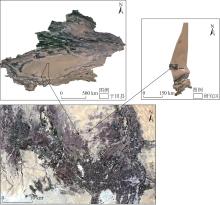
Fig. 1
Overview of Yutian Oasis research area"

Tab. 1
Calibration parameters for thermal infrared band of Landsat data"
| 定标参数 | Landsat5 | Landsat7 | Landsat8 |
|---|---|---|---|
| K1 | 607.76 | 666.09 | 774.8853 |
| K2 | 1260.56 | 1282.71 | 1321.0789 |
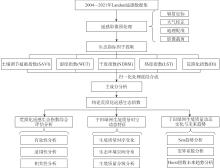
Fig. 2
Technical route"
Tab. 2
Contribution rates of ecological factor indices to the first principal component (PC1)"
| 年份 | SAVI | WET | NDBSI | LST | DI | 特征值 | 贡献率/% |
|---|---|---|---|---|---|---|---|
| 2004 | 0.414 | 0.451 | -0.428 | -0.475 | -0.466 | 0.456 | 94.61 |
| 2005 | 0.459 | 0.444 | -0.432 | -0.440 | -0.461 | 0.481 | 93.76 |
| 2006 | 0.434 | 0.447 | -0.445 | -0.473 | -0.437 | 0.520 | 93.25 |
| 2007 | 0.446 | 0.446 | -0.428 | -0.468 | -0.447 | 0.481 | 94.19 |
| 2008 | 0.444 | 0.441 | -0.427 | -0.477 | -0.445 | 0.491 | 94.32 |
| 2009 | 0.445 | 0.443 | -0.438 | -0.462 | -0.447 | 0.498 | 94.75 |
| 2010 | 0.453 | 0.437 | -0.424 | -0.466 | -0.455 | 0.501 | 93.39 |
| 2011 | 0.442 | 0.460 | -0.427 | -0.463 | -0.443 | 0.525 | 94.58 |
| 2012 | 0.456 | 0.439 | -0.415 | -0.467 | -0.457 | 0.483 | 93.98 |
| 2013 | 0.452 | 0.384 | -0.462 | -0.479 | -0.454 | 0.479 | 91.26 |
| 2014 | 0.447 | 0.454 | -0.431 | -0.455 | -0.448 | 0.487 | 94.97 |
| 2015 | 0.440 | 0.441 | -0.428 | -0.483 | -0.442 | 0.489 | 94.48 |
| 2016 | 0.450 | 0.445 | -0.452 | -0.439 | -0.451 | 0.445 | 93.48 |
| 2017 | 0.440 | 0.437 | -0.431 | -0.484 | -0.442 | 0.440 | 93.52 |
| 2018 | 0.441 | 0.443 | -0.436 | -0.473 | -0.442 | 0.486 | 95.58 |
| 2019 | 0.433 | 0.446 | -0.431 | -0.484 | -0.441 | 0.439 | 92.92 |
| 2020 | 0.422 | 0.468 | -0.400 | -0.434 | -0.505 | 0.383 | 87.03 |
| 2021 | 0.411 | 0.442 | -0.442 | -0.484 | -0.453 | 0.459 | 92.39 |
Fig. 3
Time series change trends of ecological factors in Yutian Oasis from 2004 to 2021"
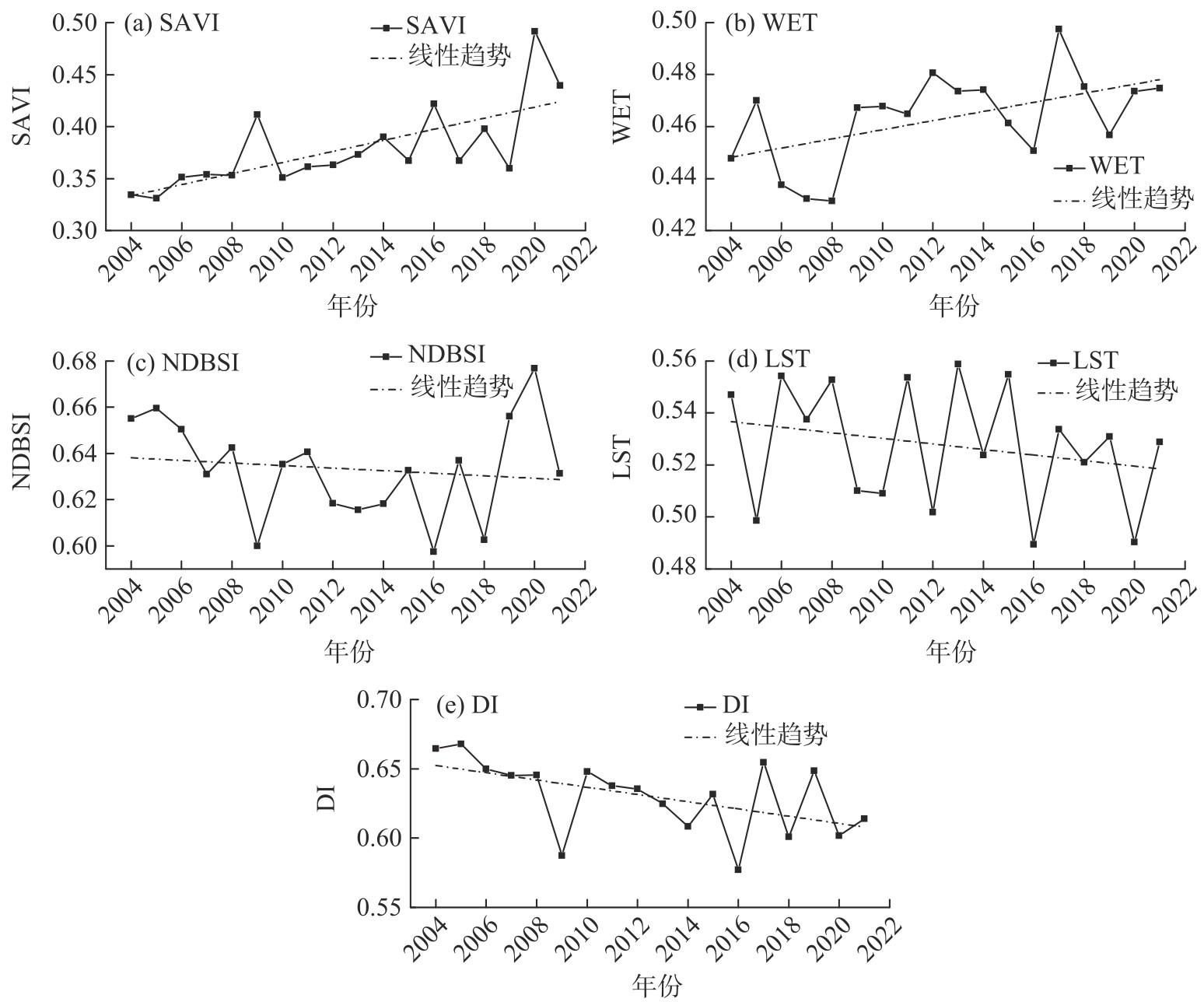
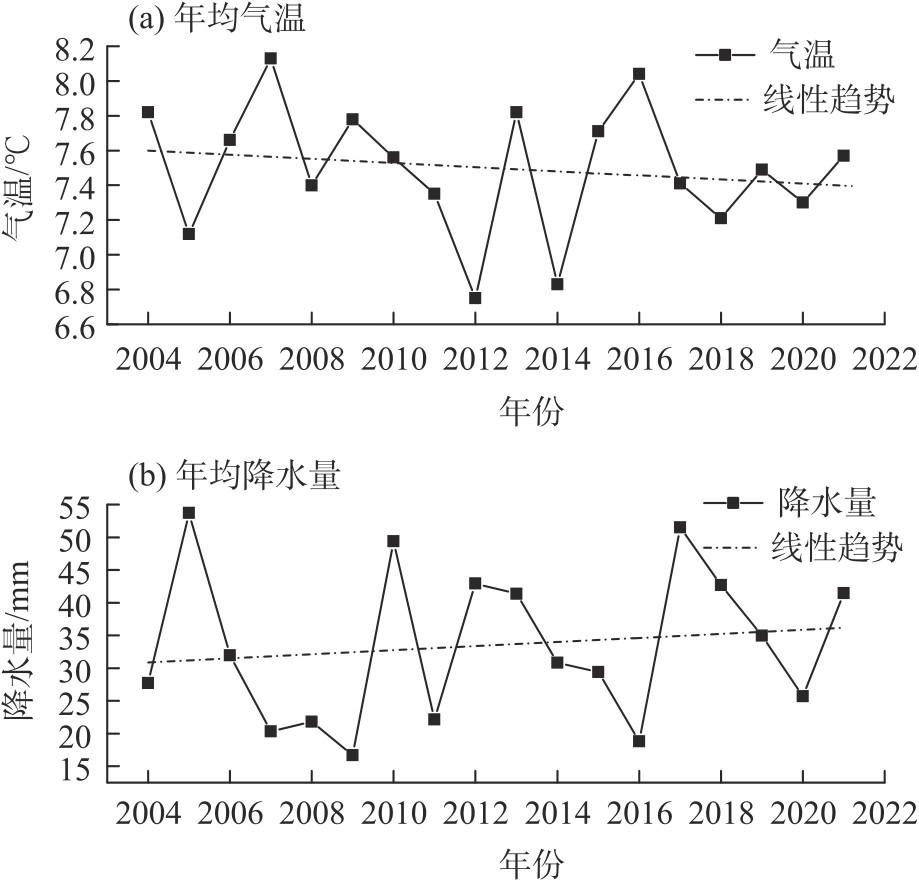
Fig. 4
Change trends of climate factors in Yutian County from 2004 to 2021"
Tab. 3
Correlation between DRSEI and ecological factors"
| 因子 | DRSEI | SAVI | WET | NDBSI | LST | DI |
|---|---|---|---|---|---|---|
| DRSEI | 1.000 | 0.378 | 0.396 | -0.729 | -0.453 | -0.698 |
| SAVI | 0.378 | 1.000 | 0.307 | -0.117 | -0.481 | -0.801 |
| WET | 0.396 | 0.307 | 1.000 | -0.162 | -0.346 | -0.187 |
| NDBSI | -0.729 | -0.117 | -0.162 | 1.000 | 0.112 | 0.626 |
| LST | -0.453 | -0.481 | -0.346 | 0.112 | 1.000 | 0.431 |
| DI | -0.698 | -0.801 | -0.187 | 0.626 | 0.431 | 1.000 |
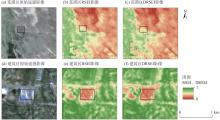
Fig. 5
Comparison of RSEI and DRSEI details in Yutian Oasis in 2021"
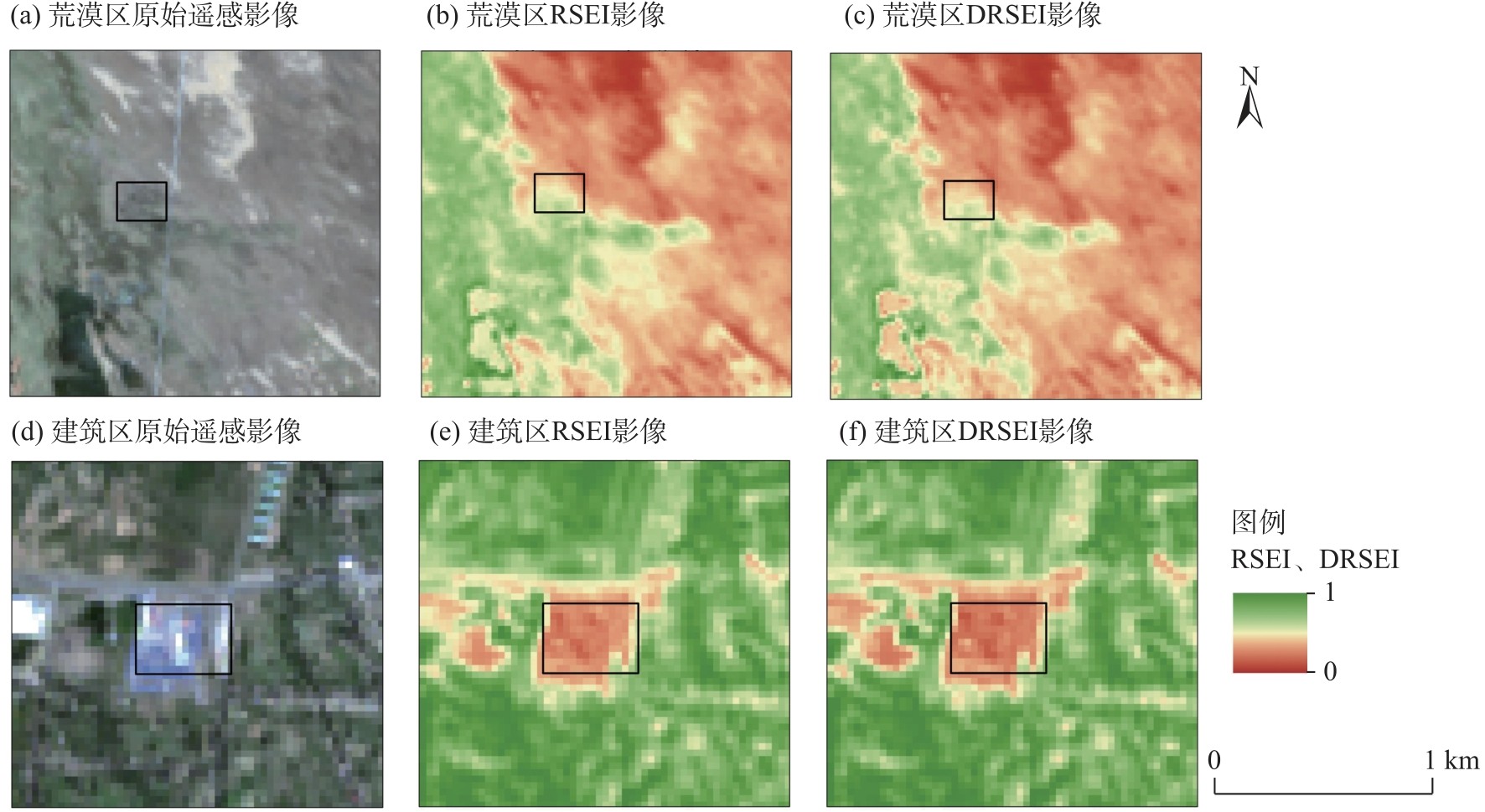
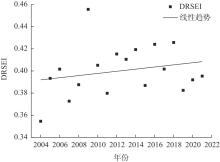
Fig. 6
Time series trend of DRSEI in Yutian Oasis from 2004 to 2021"
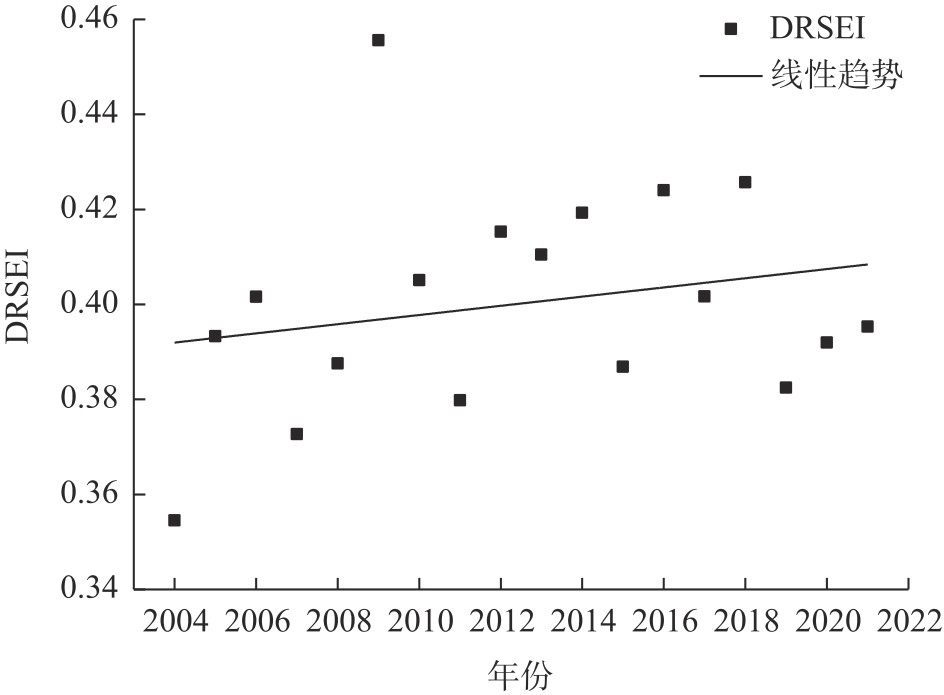
Fig. 7
Spatial distributions of DRSEI in Yutian Oasis from 2004 to 2021"
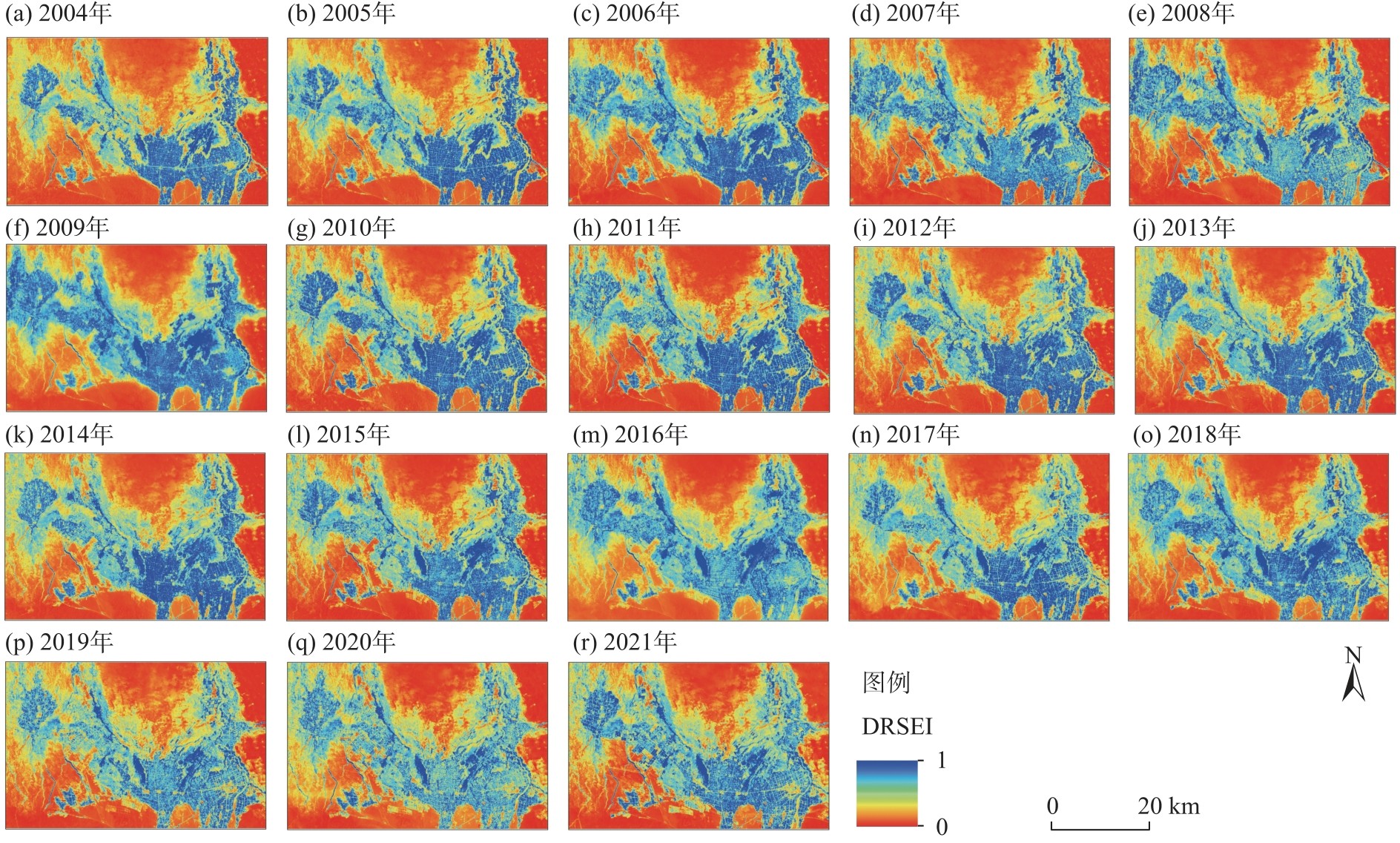
Fig. 8
Spatial distributions of DRSEI hierarchy in Yutian Oasis from 2004 to 2021"
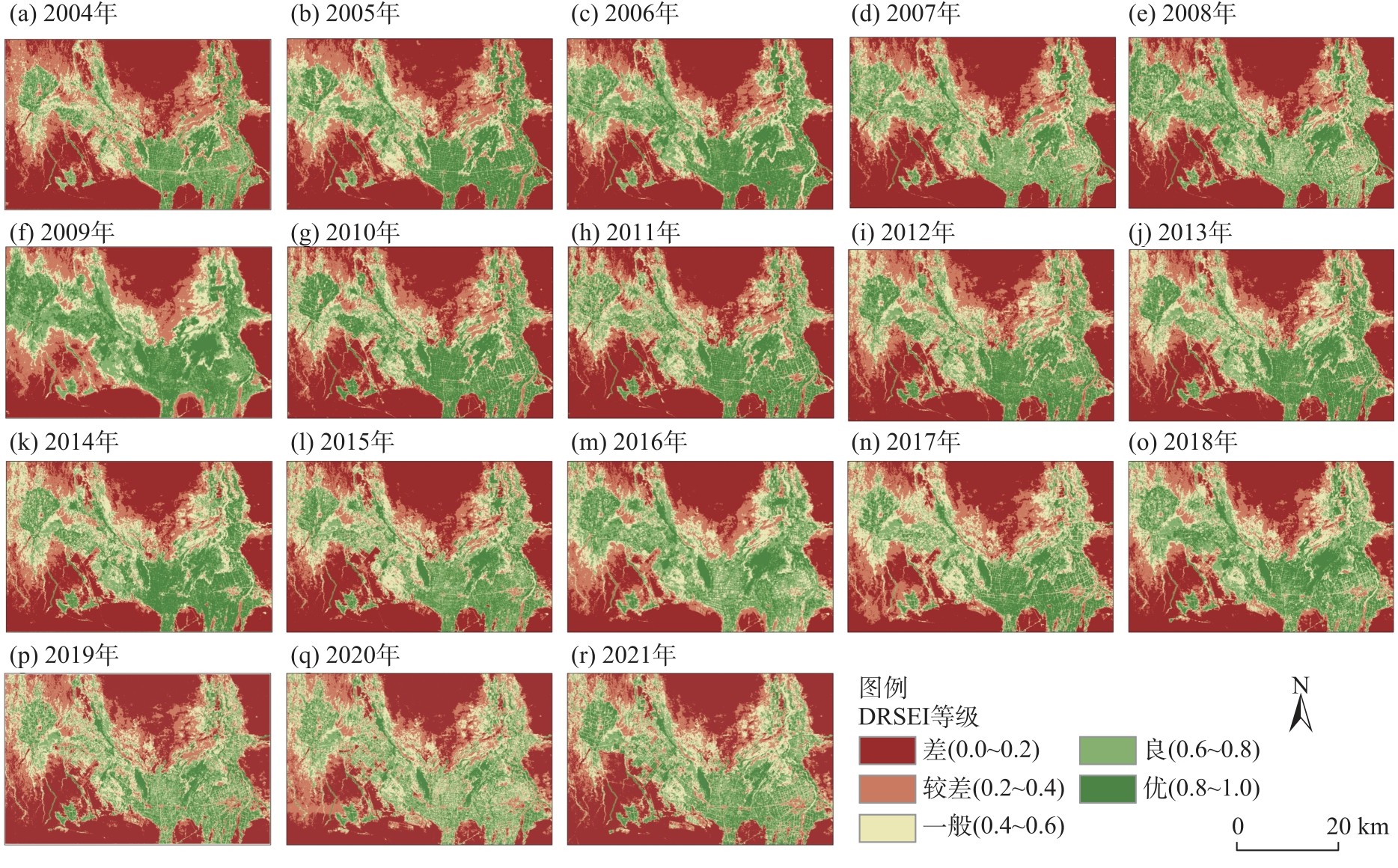
Fig. 9
Changes in the proportion of DRSEI grading area in Yutian Oasis from 2004 to 2021"
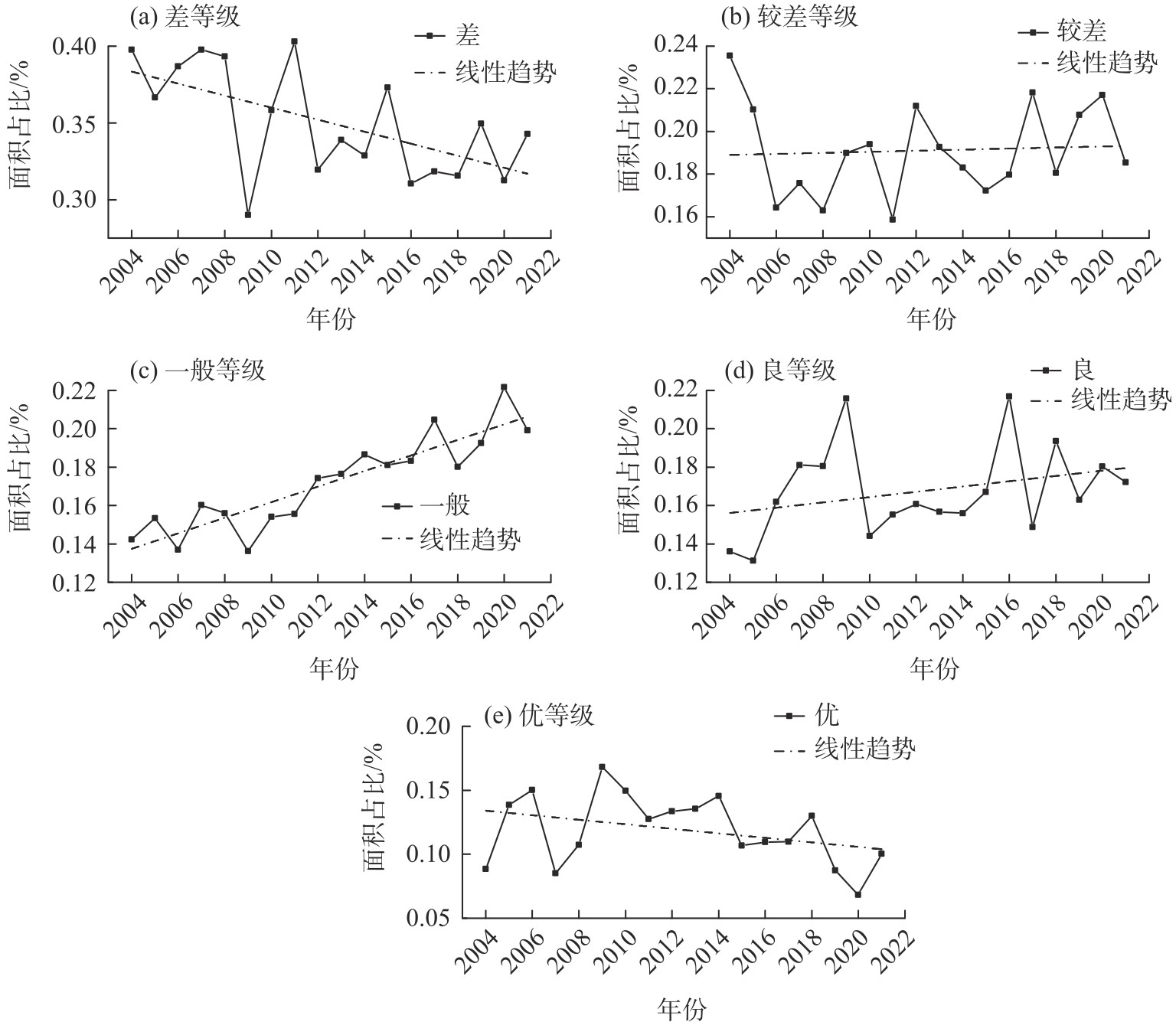
Fig. 10
Trend of DRSEI Sen and coefficient of variation in Yutian Oasis from 2004 to 2021"
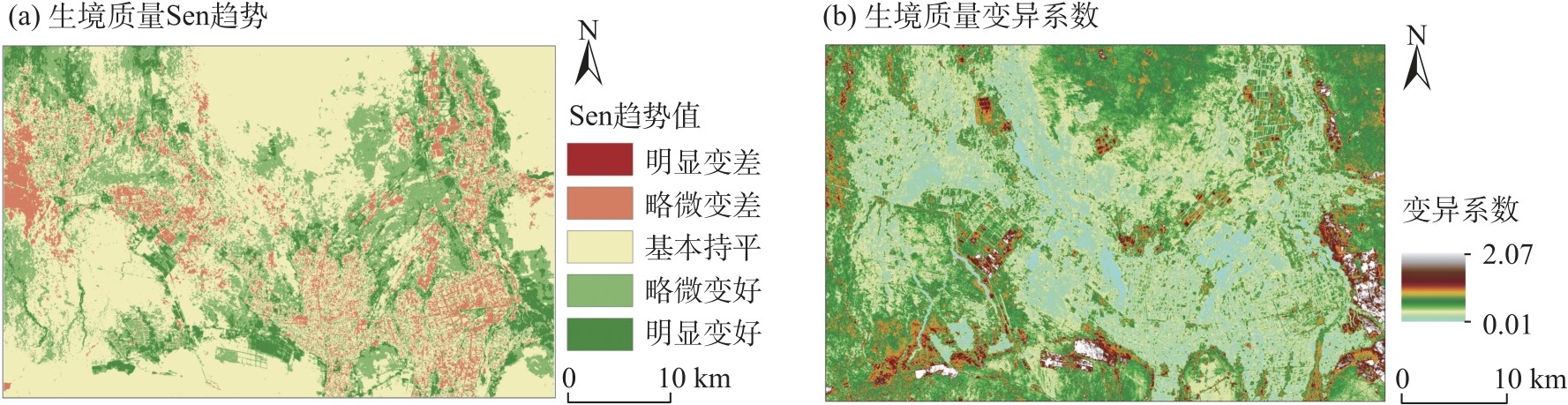
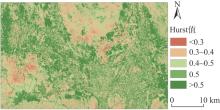
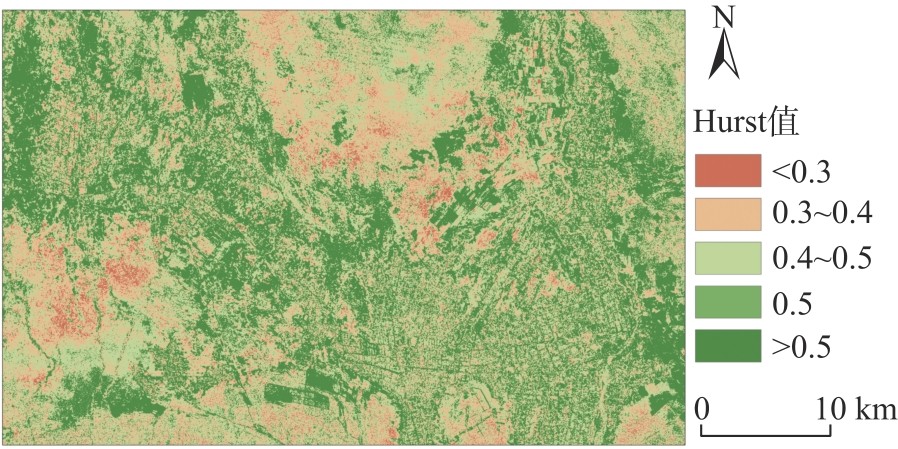
Fig. 11
Future trend of Hurst index in Yutian Oasis from 2004 to 2021"
| [1] | 李红, 张迪, 雷宁. 推动生态环境系统保护修复促进人与自然和谐共生——以吉林省舒兰市为例[J]. 中国林业产业, 2023(3): 56-57. |
| [Li Hong, Zhang Di, Lei Ning. Promoting the protection and restoration of the ecological environment system, promoting the harmonious coexistence between man and nature: A case study of Shulan, Jilin Province[J]. China Forestry Industry, 2023(3): 56-57.] | |
| [2] | 董战峰, 张哲予, 杜艳春, 等. “绿水青山就是金山银山”理念实践模式与路径探析[J]. 中国环境管理, 2020, 12(5): 11-17. |
| [Dong Zhanfeng, Zhang Zheyu, Du Yanchun, et al. Practice mode and path of “lucid waters and lush mountains are invaluable assets”[J]. Chinese Journal of Environmental Management, 2020, 12(5): 11-17.] | |
| [3] | 林墨飞, 关雅文, 连艺霏. 基于“山水林田湖草沙”一体化保护治理的生态旅游景区规划设计研究——以章古台沙地国家森林公园为例[J]. 美与时代(上), 2024(4): 98-103. |
| [Lin Mofei, Guan Yawen, Lian Yifei. A study on the planning and design of eco-tourism scenic spots based on the integrated protection and management of mountains, rivers, forests, lakes, grass and sand: Taking Zhanggutai National Forest Park as an example[J]. Designs(I), 2024(4): 98-103.] | |
| [4] | 姜雨萌, 孙鹏. “绿水青山”如何转化为“绿色”的“金山银山”?——基于生态承载力对环境污染影响的传导机制研究[J]. 林业经济, 2020, 42(7): 15-26. |
| [Jiang Yumeng, Sun Peng. How to transform “lucid waters and lush mountains” to “mountains of gold and silver” with less pollution?: Study on the transmission mechanism of environmental pollution based on ecological carrying capacity[J]. Forestry Economics, 2020, 42(7): 15-26.] | |
| [5] | 张利民, 刘希刚. 山水林田湖草沙一体化保护的系统性逻辑[J]. 南京工业大学学报(社会科学版), 2024, 23(1): 24-32, 113. |
| [Zhang Limin, Liu Xigang. Systematic logic of integrated protection of landscape, forest, field, lake, grass and sand[J]. Journal of Nanjing Tech University (Social Sciences Edition), 2024, 23(1): 24-32, 113.] | |
| [6] | 郜国明, 田世民, 曹永涛, 等. 黄河流域生态保护问题与对策探讨[J]. 人民黄河, 2020, 42(9): 112-116. |
| [Gao Guoming, Tian Shimin, Cao Yongtao, et al. Discussion on the issues and countermeasures of ecological conservation of the Yellow River Basin[J]. Yellow River, 2020, 42(9): 112-116.] | |
| [7] | 陈春波, 李刚勇, 彭建. 1981—2018年新疆草地归一化植被指数时空特征及其对气候变化的响应[J]. 生态学报, 2023, 43(4): 1537-1552. |
| [Chen Chunbo, Li Gangyong, Peng Jian. Spatio-temporal characteristics of Xinjiang grassland NDVI and its response to climate change from 1981 to 2018[J]. Acta Ecologica Sinica, 2023, 43(4): 1537-1552.] | |
| [8] | Liu Y, Chai C, Zhang Q, et al. Monitoring and evaluation of ecological environment quality in the Tianshan Mountains of China using remote sensing from 2001 to 2020[J]. Sustainability, 2025, 17(4): 1673-1673. |
| [9] | Gupta K, Kumar P, Pathan S K, et al. Urban neighborhood green index: A measure of green spaces in urban areas[J]. Landscape and Urban Planning, 2012, 105(3): 325-335. |
| [10] | Yuan F, Bauer M E. Comparison of impervious surface area and normalized difference vegetation index as indicators of surface urban heat island effects in Landsat imagery[J]. Remote Sensing of Environment, 2007, 106(3): 375-386. |
| [11] | Nichol J. Remote sensing of uban heat islands by day and night[J]. Photogrammetric Enginering and Remote Sensing, 2005, 71(5): 613-621. |
| [12] | 徐涵秋. 区域生态环境变化的遥感评价指数[J]. 中国环境科学, 2013, 33(5): 889-897. |
| [Xu Hanqiu. A remote sensing index for assessment of regional ecological changes[J]. China Environmental Science, 2013, 33(5): 889-897.] | |
| [13] | 魏雨涵, 钱建平, 范伟伟, 等. 基于RSEI的漓江流域生态环境质量动态监测[J]. 中国水土保持科学, 2021, 19(1): 122-131. |
| [Wei Yuhan, Qian Jianping, Fan Weiwei, et al. Dynamic monitoring of ecological environment quality in Lijiang River Basin based on RSEI[J]. Science of Soil and Water Conservation, 2021, 19(1): 122-131.] | |
| [14] | 代云豪, 管瑶, 刘孟琴, 等. 1990—2020年阿拉尔垦区生态环境质量动态监测与评价[J]. 水土保持通报, 2022, 42(2): 122-128. |
| [Dai Yunhao, Guan Yao, Liu Mengqin, et al. Dynamic monitoring and evaluation of ecological environment quality in Alar reclamation area from 1990 to 2020[J]. Bulletin of Soil and Water Conservation, 2022, 42(2): 122-128.] | |
| [15] | Yang Z K, Tian J, Li W Y, et al. Spatio-temporal pattern and evolution trend of ecological environment quality in the Yellow River Basin[J]. Acta Ecologica Sinica, 2021, 41(19): 7627-7636. |
| [16] | 宝音涛格涛, 张永福. 基于遥感生态指数的渭库绿洲生态环境质量监测[J]. 中南农业科技, 2024, 45(1): 135-141. |
| [Bao Yintaogetao, Zhang Yongfu. Monitoring of ecological environment quality in the Weiku Oasis based on the remote sensing ecological index[J]. South-Central Agricultural Science and Technology, 2024, 45(1): 135-141.] | |
| [17] | 张乃明, 陈冬花, 邢菲, 等. 基于遥感生态指数的新疆干旱区博乐市生态变化分析[J]. 水土保持通报, 2019, 39(1): 154-159, 166. |
| [Zhang Naiming, Chen Donghua, Xing Fei, et al. Ecological change analysis of Bole City in arid regions of Xinjiang Wei Autonomous Region based on remote sensing ecological index[J]. Bulletin of Soil and Water Conservation, 2019, 39(1): 154-159, 166.] | |
| [18] |
蒋超亮, 吴玲, 刘丹, 等. 干旱荒漠区生态环境质量遥感动态监测——以古尔班通古特沙漠为例[J]. 应用生态学报, 2019, 30(3): 877-883.
doi: 10.13287/j.1001-9332.201903.008 |
|
[Jiang Chaoliang, Wu Ling, Liu Dan, et al. Dynamic monitoring of eco-environmental quality in arid desert area by remote sensing: Taking the Gurbantunggut Desert China as an example[J]. Chinese Journal of Applied Ecology, 2019, 30(3): 877-883.]
doi: 10.13287/j.1001-9332.201903.008 |
|
| [19] | 姜烨, 蒋玉祥. 干旱区绿洲城市生态变化遥感评价——以武威市凉州区为例[J]. 北京测绘, 2020, 34(5): 628-633. |
| [Jiang Ye, Jiang Yuxiang. Remote sensing evaluation of urban ecological changes in arid region oasis: Taking the Liangzhou District in Wuwei as an example[J]. Beijing Surveying and Mapping, 2020, 34(5): 628-633.] | |
| [20] | Zhang W B, Ma L B, Li H B, et al. Trends in the future evolution of rural settlements in oasis-desert areas under water use simulation scenarios: Take the Hexi Corridor region of China as an example[J]. Landscape and Urban Planning, 2024, 248: 18, doi: 10.1016/j.landurbplan.2024.105110. |
| [21] | 满苏尔·沙比提, 玉苏甫·买买提, 娜斯曼·那斯尔丁. 1991—2011年新疆于田绿洲土地利用/覆被时空变化特征分析[J]. 冰川冻土, 2014, 36(3): 582-589. |
| [Sabit Mansur, Mamat Yusuf, Nasirdin Nasima. Spatio-temporal characteristics analysis of land use/cover changes in Yutian Oasis, Xinjiang during 1991—2011[J]. Journal of Glaciology and Geocryology, 2014, 36(3): 582-589.] | |
| [22] | 许发号. 丝绸之路上的冰雪奇葩──新疆于田县供销社改革侧记[J]. 中国供销合作经济, 2001(2): 67, 70. |
| [Xu Fahao. A rare flower on the Silk Road: A sidelights on the reform of the Xinjiang Yutian County supply and marketing association[J]. China Co-operation Economy, 2001(2): 67, 70.] | |
| [23] | 江红南. 干旱区绿洲土壤湿度时空变化影响因素及其影响力分析[J]. 江苏农业科学, 2018, 46(20): 286-291. |
| [Jiang Hongnan. Analysis of influence factors and their influences of temporal and spatial changes of soil moisture in oasis of arid areas[J]. Jiangsu Agricultural Sciences, 2018, 46(20): 286-291.] | |
| [24] | 古丽娜尔·哈里别克. 于田绿洲土壤盐分对芦苇生长的影响研究[D]. 乌鲁木齐: 新疆大学, 2012. |
| [Halibak Gulnar. The soil salinity effects on the growth of Phragmites australis in Yutian Oasis[D]. Urumqi: Xinjiang University, 2012.] | |
| [25] | 依力亚斯江·努尔麦麦提, 师庆东, 阿不都拉·阿不力孜, 等. 灰色评估模型定量评价于田绿洲土壤盐渍化风险[J]. 农业工程学报, 2019, 35(8): 176-184. |
| [Nurmemet Ilyas, Shi Qingdong, Abliz Abdulla, et al. Quantitative evaluation of soil salinization risk in Keriya Oasis based on grey evaluation model[J]. Transactions of the Chinese Society of Agricultural Engineering, 2019, 35(8): 176-184.] | |
| [26] | An M, Meng F, He W J, et al. Assessment on eco-environmental quality of the Yellow River Basin by considering desertification index[J]. Journal of Mountain Science, 2024, 21: 3275-3292. |
| [27] | Huete A R. A soil-adjusted vegetation index (SAVI)[J]. Remote Sensing of Environment, 1988, 25(3): 295-309.] |
| [28] | 曾丽红, 宋开山, 张柏, 等. 应用Landsat数据和SEBAL模型反演区域蒸散发及其参数估算[J]. 遥感技术与应用, 2008, 23(3): 255-263. |
| [Zeng Lihong, Song Kaishan, Zhang Bo, et al. Applying Landsat data and SEBAL model to inverse regional evapotranspiration and its parameters estimation[J]. Remote Sensing Technology and Application, 2008, 23(3): 255-263.] | |
| [29] | van de Griend A, Owe M. On the relationship between thermal emissivity and the normalized difference vegetation index for natural surfaces[J]. International Journal of Remote Sensing, 1993, 14(6): 1119-1121. |
| [30] | 李博伦, 遆超普, 颜晓元. Landsat 8陆地成像仪影像的缨帽变换推导[J]. 测绘科学, 2016, 41(4): 102-107. |
| [Li Bolun, Di Chaopu, Yan Xiaoyuan. Study of derivation of tasseled cap transformation for Landsat 8 OLI images[J]. Science of Surveying and Mapping, 2016, 41(4): 102-107.] | |
| [31] | NASA. NASA's Web site:The Landsat-7 science data user's handbook[EB/OL]. [2024-04-19]. http://ltpwww.gsfc.nasa.gov/IAS/handbook/handbook.toc.html. |
| [32] | 李红军, 雷玉平, 郑力, 等. SEBAL模型及其在区域蒸散研究中的应用[J]. 遥感技术与应用, 2005, 20(3): 321-325. |
| [Li Hongjun, Lei Yuping, Zheng Li, et al. SEBAL model and its application in the study of regional evapotranspiration[J]. Remote Sensing Technology and Application, 2005, 20(3): 321-325.] | |
| [33] | Roy P S, Rikimaru A, Miyatake S. Tropical forest cover density mapping[J]. Tropical Ecology, 2002, 43(1): 39-47. |
| [34] | Xu H. A new index for delineating built-up land features in satellite imagery[J]. International Journal of Remote Sensing, 2008, 29(14): 4269-4276. |
| [35] | 蒋欣洪, 宋伟东, 孙尚宇. 改进型遥感生态指数在银川市生态环境质量评价中的应用[J]. 西北林学院学报, 2025, 40(3): 208-218. |
| [Jiang Xinhong, Song Weidong, Sun Shangyu. Application of improved remote sensing ecological index in ecological environment evaluation in Yinchuan City[J]. Journal of Northwest Forestry University, 2025, 40(3): 208-218.] | |
| [36] |
罗镕基, 王宏涛, 王成. 基于改进遥感生态指数的甘肃省古浪县生态质量评价[J]. 干旱区地理, 2023, 46(4): 539-549.
doi: 10.12118/j.issn.1000-6060.2022.322 |
|
[Luo Rongji, Wang Hongtao, Wang Cheng. Ecological quality evaluation of Gulang County in Gansu Province based on improved remote sensing ecological index[J]. Arid Land Geography, 2023, 46(4): 539-549.]
doi: 10.12118/j.issn.1000-6060.2022.322 |
|
| [37] |
徐涵秋, 邓文慧. MRSEI指数的合理性分析及其与RSEI指数的区别[J]. 遥感技术与应用, 2022, 37(1): 1-7.
doi: 10.11873/j.issn.1004-0323.2022.1.0001 |
| [Xu Hanqiu, Deng Wenhui. Rationality analysis of MRSEI and its difference with RSEI[J]. Remote Sensing Technology and Application, 2022, 37(1): 1-7.] | |
| [38] |
李新妹, 吴作航, 王震山, 等. 基于MODIS遥感数据的福建植被生产力时空分布与干旱响应分析[J]. 生态环境学报, 2024, 33(6): 841-852.
doi: 10.16258/j.cnki.1674-5906.2024.06.002 |
| [Li Xinmei, Wu Zuohang, Wang Zhenshan, et al. Spatio-temporal dynamics of vegetation productivity and drought impacts in Fujian Province using MODIS data[J]. Ecology and Environmental Sciences, 2024, 33(6): 841-852.] | |
| [39] | 薛桦, 刘萍. 基于RSEI的黄河中游地区生态环境质量时空演化特征及驱动因素——以延安市为例[J]. 水土保持研究, 2024, 31(1): 373-384. |
| [Xue Hua, Liu Ping. Spatiotemporal variation of ecological environmental quality and its response to different driving factors in the section of Yellow River Basin in recent 31 years: Taking Yan'an City as an example[J]. Research of Soil and Water Conservation, 2024, 31(1): 373-384.] | |
| [40] | 燕爱玲, 黄强, 王义民. 黄河流域径流演变的持久性测度[J]. 干旱区资源与环境, 2007, 21(11): 27-30. |
| [Yan Ailing, Huang Qiang, Wang Yimin. Persistence measure on runoff evolution of the Yellow River[J]. Journal of Arid Land Resources and Environment, 2007, 21(11): 27-30.] | |
| [41] | 易雪, 李得勤, 杨森, 等. 植被覆盖度增加对辽宁地区气温变化的影响研究[J]. 大气科学, 2024, 48(2): 463-479. |
| [Yi Xue, Li Deqin, Yang Sen, et al. Impact of fractional vegetation coverage increase on air temperature change in Liaoning Province[J]. Chinese Journal of Atmospheric Sciences, 2024, 48(2): 463-479.] | |
| [42] | 汤从沧, 李巧, 陶洪飞, 等. 基于改进遥感生态指数模型的塔里木河流域生态环境质量评价[J]. 环境科学, 2025, 46(7): 4485-4498. |
| [Tang Congcang, Li Qiao, Tao Hongfei, et al. Evaluation of the ecological environment quality in the Tarim River Basin based on the modified remote sensing ecological index model[J]. Environmental Science, 2025, 46(7): 4485-4498.] | |
| [43] |
胡瑞媛, 畅建霞, 郭爱军, 等. 塔里木河干流生态系统变化与生态效益分析[J]. 干旱区地理, 2024, 47(4): 622-633.
doi: 10.12118/j.issn.1000-6060.2023.254 |
|
[Hu Ruiyuan, Chang Jianxia, Guo Aijun, et al. Ecosystem variation and ecological benefits analysis of the mainstream of Tarim River[J]. Arid Land Geography, 2024, 47(4): 622-633.]
doi: 10.12118/j.issn.1000-6060.2023.254 |
|
| [44] | 国家林业和草原局. 新疆于田县“梯田式”治沙助力打好塔克拉玛干沙漠边缘阻击战[N]. 三北工程简报, 2024-07-09. |
| [National Forestry and Grassland Administration. The sand control approach in Yutian County, Xinjiang, contributes to the effective containment of the Taklimakan Desert's encroachment[N]. Three-North Project Briefing, 2024-07-09.] | |
| [45] | 国家环保总局. HJ/T192-2006. 中华人民共和国环境保护行业标准(试行)[S]. 北京: 中国环境科学出版社, 2006. |
| [Ministry of Environmental Protection of the People's Republic of China. HJ/T192-2006. Industry standard for environment in the People's Republic of China protection (trial)[S]. Beijing: China Environmental Science Press, 2006.] | |
| [46] |
柯丽娜, 徐佳慧, 王楠, 等. 基于遥感生态指数的滨海湿地生态质量变化评价——以辽东湾北部区为例[J]. 生态环境学报, 2022, 31(7): 1417-1424.
doi: 10.16258/j.cnki.1674-5906.2022.07.014 |
| [Ke Li'na, Xu Jiahui, Wang Nan, et al. Evaluation of ecological quality of coastal wetland based on remote sensing ecological index: A case study of northern Liaodong Bay[J]. Ecology and Environmental Sciences, 2022, 31(7): 1417-1424.] | |
| [47] |
王丽霞, 赵蕊, 刘招, 等. 基于RSEI的延河流域生态环境质量监测与预估[J]. 干旱区研究, 2022, 39(3): 943-954.
doi: 10.13866/j.azr.2022.03.28 |
|
[Wang Lixia, Zhao Rui, Liu Zhao, et al. Monitoring and prediction of ecological environmental quality in the Yanhe River Basin based on the remote sensing ecological index[J]. Arid Zone Research, 2022, 39(3): 943-954.]
doi: 10.13866/j.azr.2022.03.28 |
|
| [48] | 赵学鹏, 王媛媛. 绿洲乡村聚落分布特征及其驱动机制——基于新疆于田县的分析[J]. 乡村论丛, 2021(3): 95-101. |
| [Zhao Xuepeng, Wang Yuanyuan. Distribution characteristics and driving mechanism of oasis rural settlements: An analysis based on Yutian County, Xinjiang[J]. The Village, 2021(3): 95-101.] | |
| [49] | 古丽米热·艾米肉拉, 艾合麦提·吾买尔, 海米提·依米提. 于田绿洲近50年人类活动强度变化研究[J]. 西南农业大学学报(社会科学版), 2011, 9(10): 40-42. |
| [Amiroula Gulmira, Wumar Ehmat, Emmit Hamit. Study on the change of human activity intensity in Yutian Oasis in recent 50 years[J]. Journal of Teacher Education, 2011, 9(10): 40-42.] | |
| [50] | 杜梦迪, 李兰, 罗光明, 等. 气候与土地利用变化对于田绿洲农业耗水特征的影响[J]. 水土保持通报, 2020, 40(3): 103-109. |
| [Du Mengdi, Li Lan, Luo Guangming, et al. Effects of climate and land use change on agricultural water consumption in Yutian Oasis[J]. Bulletin of Soil and Water Conservation, 2020, 40(3): 103-109.] | |
| [51] | 陈春波, 李刚勇. 1981—2020年昆仑山-阿尔金山草地NDVI时空变化及其对气温、降水的响应[J]. 中国草地学报, 2023, 45(2): 13-25. |
| [Chen Chunbo, Li Gangyong. Temporal and spatial variation of grassland NDVl in Kunlun Mountains, Altun Mountains and its responses to temperature and precipitation from 1981 through 2020[J]. Chinese Journal of Grassland, 2023, 45(2): 13-25.] | |
| [52] | 姚一平, 瓦哈甫·哈力克, 伏吉芮. 西北干旱区绿洲沙漠化与盐渍化驱动力分析——以于田绿洲为例[J]. 黑龙江大学自然科学学报, 2015, 32(4): 519-525. |
| [Yao Yiping, Halek Wahhaf, Fu Jirui. Analysis on the driving forces of oasis desertification and salinization in the arid region of northwest China: A case study of Keriya Oasis[J]. Journal of Natural Science of Heilongjiang University, 2015, 32(4): 519-525.] | |
| [53] | 艾合买提·吾买尔, 海米提·依米提, 赛迪古丽·哈西木, 等. 于田绿洲脆弱生态环境成因及生态脆弱性评价[J]. 干旱区资源与环境, 2010, 24(5): 74-79. |
| [Wumar Ehmat, Emmit Hamit, Kasim Sadigul, et al. Formation and assessment of eco-environmental fragility of Yutian Oasis[J]. Journal of Arid Land Resources and Environment, 2010, 24(5): 74-79.] | |
| [54] | 刘传胜. 基于3S技术的绿洲-荒漠过渡带生态环境变化预警线的提取研究[D]. 乌鲁木齐: 新疆大学, 2002. |
| [Liu Chuansheng. Extracting precaution line of the oasis-desert transition belt based on“3S” techniques[D]. Urumqi: Xinjiang University, 2002.] | |
| [55] | 张伟, 杜培军, 郭山川, 等. 改进型遥感生态指数及干旱区生态环境评价[J]. 遥感学报, 2023, 27(2): 299-317. |
| [Zhang Wei, Du Peijun, Guo Shanchuan, et al. Enhanced remote sensing ecological index and ecological environment evaluation in arid area[J]. National Remote Sensing Bulletin, 2023, 27(2): 299-317.] |
| [1] | SHI Yudong, WANG Shengjie, ZHANG Mingjun, ZHU Chenggang, CHE Yanjun. Spatial distribution characteristics of stable hydrogen and oxygen isotopes in surface waters on the northern slope of the Kunlun Mountains [J]. Arid Land Geography, 2024, 47(7): 1127-1135. |
| [2] | ZHU Chenggang, CHEN Yaning, ZHANG Mingjun, CHE Yanjun, SUN Meiping, ZHAO Ruifeng, WANG Yang, LIU Yuting. Preliminary report on scientific investigation of water resources on the northern slope of Kunlun Mountains [J]. Arid Land Geography, 2024, 47(7): 1097-1105. |
| [3] | . Spatial variability of soil moisture in typical oasis of different seasons in arid areas:a case of Yutian Oasis [J]. , 2014, 37(2): 349-355. |
| [4] | WU Xue-mei,TIYIP Tashpolat,JIANG Hong-tao,TAO Lan-hua,SAWUT Mamat,ZHANG Fei. Comparative study of Central Asia of arid region between Mare Oasis, Turkmenistan and Yutian Oasis, China in land use/cover change dynamic evolution [J]. , 2013, 36(4): 731-741. |
|
||

