干旱区地理 ›› 2026, Vol. 49 ›› Issue (2): 245-254.doi: 10.12118/j.issn.1000-6060.2024.772 cstr: 32274.14.ALG2024772
魏丽蓉1( ), 程占红1(), 石烨2, 张玉尧2, 王紫彦1, 牛莉芹2
收稿日期:2024-12-17
修回日期:2025-02-16
出版日期:2026-02-25
发布日期:2026-02-27
通讯作者:
程占红(1972-),男,博士,教授,主要从事旅游生态研究. E-mail: chengzhanhong@163.com作者简介:魏丽蓉(1997-),女,博士研究生,主要从事旅游生态研究. E-mail: wlr2297091258@163.com
基金资助:
WEI Lirong1(), CHENG Zhanhong1(), SHI Ye2, ZHANG Yuyao2, WANG Ziyan1, NIU Liqin2
Received:2024-12-17
Revised:2025-02-16
Published:2026-02-25
Online:2026-02-27
摘要:
深入剖析黄河流域旅游生态安全的空间关联网络结构与影响因素,对于平衡经济效益与生态约束,促进地区可持续发展具有重要意义。基于2009—2022年黄河流域省际面板数据,综合运用熵值法、修正引力模型、社会网络分析法和二次指派程序回归,确定指标权重,构建关联矩阵,解析9省区旅游生态安全的空间关联特征,定位驱动网络演变的关键要素。结果表明:(1) 黄河流域9省区旅游生态安全表现出显著的跨行政区划特征,区域间依存度呈现持续增强趋势。(2) 流域内旅游生态安全网络存在明显的空间异质性,核心节点缺位导致区域集聚效应与联动发展不足。(3) 不同省区的板块归属不同,决定了其在空间关联网络中功能与地位的不同。(4) 地区生产总值、人均旅游消费、第三产业增加值、废水排放量和固体废弃物利用率构成了黄河流域旅游生态安全的主要影响因素。基于社会网络分析视角,分别从整体和局部2方面揭示黄河流域旅游生态安全的空间网络结构特征,剖析关键影响因素,为黄河流域旅游生态安全的可持续发展提供新的理论视角。
魏丽蓉, 程占红, 石烨, 张玉尧, 王紫彦, 牛莉芹. 黄河流域旅游生态安全的演化特征和影响因素分析——基于社会网络分析视角[J]. 干旱区地理, 2026, 49(2): 245-254.
WEI Lirong, CHENG Zhanhong, SHI Ye, ZHANG Yuyao, WANG Ziyan, NIU Liqin. Evolution characteristics and influencing factors of tourism ecological security in the Yellow River Basin: Based on social network analysis[J]. Arid Land Geography, 2026, 49(2): 245-254.

表1
黄河流域旅游生态安全评价指标体系"
| 准则层 | 要素层 | 指标层 | 权重 | 指标含义 |
|---|---|---|---|---|
| 驱动力(D) | 经济要素 | 地区生产总值(D1) | 0.0580 | 国民经济增长对旅游地生态环境的冲击 |
| 第三产业增加值(D2) | 0.0638 | 产业结构对生态环境的影响 | ||
| 社会要素 | 城镇化率(D3) | 0.0158 | 城市化进程对旅游生态的冲击 | |
| 人口自然增长率(D4) | 0.0165 | 人口对资源和环境的基础压力 | ||
| 旅游要素 | 旅游人数增长率(D5) | 0.0121 | 旅游市场的活力和吸引力 | |
| 旅游收入增长率(D6) | 0.0156 | 旅游产业的增长能力 | ||
| 压力(P) | 交通压力 | 旅游交通压力(P1) | 0.0101 | 游客的流动性对旅游目的地交通设施的影响 |
| 社会压力 | 人口密度(P2) | 0.0284 | 当地居民对旅游空间的占用度 | |
| 游客密度指数(P3) | 0.0098 | 旅游者对旅游地的干扰程度 | ||
| 旅游空间指数(P4) | 0.0154 | 游客对旅游地的占用程度 | ||
| 环境压力 | 废水排放量(P5) | 0.0149 | 水资源污染对生态系统的负面影响 | |
| 废气排放量(P6) | 0.0183 | 空气污染对生态系统的负面影响 | ||
| 单位电力消耗量(P7) | 0.0220 | 旅游活动对电力资源的需求和消耗情况 | ||
| 单位水资源消耗量(P8) | 0.0102 | 旅游活动对水资源的需求和消耗情况 | ||
| 状态(S) | 经济质量 | 旅游总收入(S1) | 0.0797 | 旅游经济发展水平 |
| 旅游总人数(S2) | 0.0562 | 旅游市场规模 | ||
| 旅游资源 | 旅游景区密度指数(S3) | 0.0522 | 旅游业的发展潜力 | |
| 基础设施 | 星级饭店数(S4) | 0.0345 | 旅游基础设施的完备度和游客接待能力 | |
| 旅行社数(S5) | 0.0396 | 旅游市场的活跃度 | ||
| 生态环境 | 森林覆盖率(S6) | 0.0371 | 旅游地的环境稳定性 | |
| 人均公共绿地面积(S7) | 0.0410 | 旅游地的游憩空间承载力状况 | ||
| 空气质量优良率(S8) | 0.0125 | 地区的生态环境综合情况 | ||
| 影响(I) | 旅游经济 | 旅游收入指数(I1) | 0.0374 | 旅游业发展水平及对经济发展的贡献度 |
| 人均旅游消费(I2) | 0.0325 | 旅游者的消费水平 | ||
| 旅游业从业人数(I3) | 0.0598 | 旅游业的就业吸纳能力和人才资本水平 | ||
| 响应(R) | 社会响应 | 普通高等学校在校学生数(R1) | 0.0493 | 旅游业后续发展的人才供给能力 |
| 经济调控 | 旅游固定资产投入(R2) | 0.0485 | 旅游地在基础设施改善方面的投入力度 | |
| 地方财政环境保护支出(R3) | 0.0323 | 政府在生态保护方面的投入力度 | ||
| 财政支出占GDP比重(R4) | 0.0411 | 相关部门对生态环境投资的经济动力 | ||
| 环境治理 | 生活垃圾无害化处理率(R5) | 0.0115 | 旅游地的污染防治水平 | |
| 固体废弃物利用率(R6) | 0.0239 | 旅游地的可持续发展能力 |
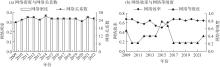
图1
黄河流域旅游生态安全整体网络特征分析"
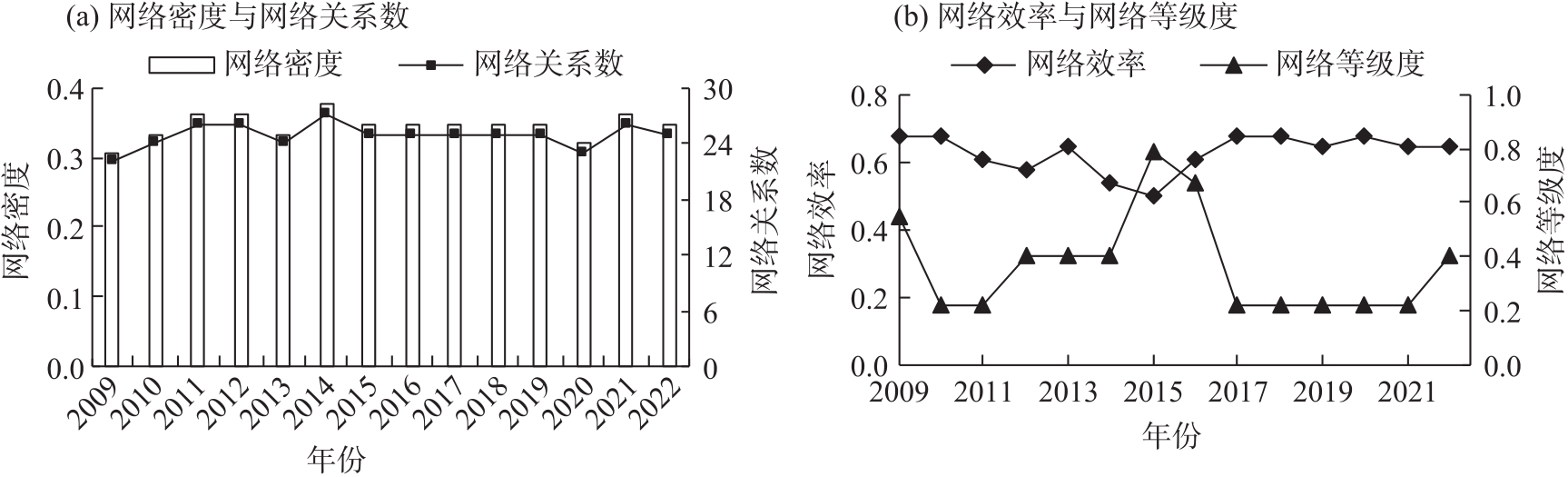
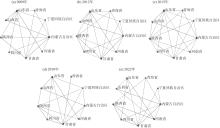
图2
黄河流域旅游生态安全空间网络演变"
表2
黄河流域旅游生态安全个体网络特征分析"
| 省区 | 2009年 | 2012年 | 2015年 | 2018年 | 2022年 | ||||||||||||||
|---|---|---|---|---|---|---|---|---|---|---|---|---|---|---|---|---|---|---|---|
| DC | CC | BC | DC | CC | BC | DC | CC | BC | DC | CC | BC | DC | CC | BC | |||||
| 宁夏回族自治区 | 37.50 | 29.63 | 0.00 | 37.50 | 38.10 | 0.00 | 50.00 | 30.77 | 0.00 | 62.50 | 66.67 | 0.00 | 50.00 | 38.10 | 0.00 | ||||
| 内蒙古自治区 | 37.50 | 23.53 | 13.50 | 37.50 | 28.57 | 13.00 | 25.00 | 16.33 | 5.33 | 50.00 | 40.00 | 14.50 | 50.00 | 29.63 | 10.67 | ||||
| 甘肃省 | 37.50 | 23.53 | 7.33 | 37.50 | 29.63 | 10.83 | 37.50 | 23.53 | 0.50 | 50.00 | 44.44 | 23.58 | 37.50 | 30.77 | 10.17 | ||||
| 青海省 | 37.50 | 29.63 | 0.00 | 50.00 | 42.11 | 0.00 | 50.00 | 30.77 | 0.00 | 37.50 | 33.33 | 0.00 | 37.50 | 40.00 | 0.00 | ||||
| 陕西省 | 37.50 | 23.53 | 0.00 | 50.00 | 30.77 | 8.00 | 50.00 | 24.24 | 3.33 | 37.50 | 42.11 | 3.50 | 37.50 | 28.57 | 10.17 | ||||
| 山西省 | 25.00 | 22.22 | 6.33 | 25.00 | 25.81 | 8.33 | 25.00 | 16.33 | 4.00 | 25.00 | 33.33 | 11.08 | 37.50 | 28.57 | 0.33 | ||||
| 山东省 | 25.00 | 21.05 | 9.50 | 25.00 | 23.53 | 10.00 | 12.50 | 15.69 | 3.33 | 25.00 | 28.57 | 9.50 | 25.00 | 22.22 | 0.67 | ||||
| 四川省 | 25.00 | 27.59 | 0.00 | 50.00 | 30.77 | 0.50 | 50.00 | 30.77 | 0.00 | 12.50 | 40.00 | 0.25 | 25.00 | 30.77 | 3.33 | ||||
| 河南省 | 12.50 | 19.05 | 0.33 | 12.50 | 20.51 | 0.33 | 12.50 | 15.69 | 0.50 | 12.50 | 23.53 | 0.58 | 12.50 | 25.81 | 7.67 | ||||
| 平均值 | 30.56 | 24.42 | 4.11 | 36.11 | 29.98 | 5.67 | 34.72 | 22.68 | 1.89 | 34.72 | 39.11 | 7.00 | 34.72 | 30.49 | 4.78 | ||||
表3
黄河流域旅游生态安全空间网络板块归属"
| 板块 | 省区 | 省区数 | 接收数合计 | 发出数合计 | 期望内部关 系比例/% | 实际内部关 系比例/% | 板块类型 | |||
|---|---|---|---|---|---|---|---|---|---|---|
| 板块内 | 板块外 | 板块内 | 板块外 | |||||||
| 板块一 | 山西省、河南省 | 2 | 1 | 4 | 1 | 4 | 12.50 | 20.00 | 双向溢出 | |
| 板块二 | 甘肃省、青海省、四川省、宁夏回族自治区 | 4 | 4 | 3 | 4 | 9 | 37.50 | 30.77 | 净溢出 | |
| 板块三 | 内蒙古自治区 | 1 | 0 | 5 | 0 | 3 | 0.00 | 0.00 | 净受益 | |
| 板块四 | 陕西省、山东省 | 2 | 0 | 8 | 0 | 4 | 12.50 | 0.00 | 经纪人 | |
表4
板块关联关系的密度矩阵与像矩阵"
| 板块 | 密度矩阵 | 像矩阵 | |||||||
|---|---|---|---|---|---|---|---|---|---|
| 板块一 | 板块二 | 板块三 | 板块四 | 板块一 | 板块二 | 板块三 | 板块四 | ||
| 板块一 | 0.500 | 0.000 | 0.500 | 0.750 | 1.000 | 0.000 | 1.000 | 1.000 | |
| 板块二 | 0.000 | 0.333 | 1.000 | 0.625 | 0.000 | 0.000 | 1.000 | 1.000 | |
| 板块三 | 1.000 | 0.250 | - | 0.000 | 1.000 | 0.000 | - | 0.000 | |
| 板块四 | 0.500 | 0.250 | 0.000 | 0.000 | 1.000 | 0.000 | 0.000 | 0.000 | |
表5
QAP相关性和回归性分析"
| 变量 | QAP相关性分析 | QAP回归分析 | ||||||
|---|---|---|---|---|---|---|---|---|
| 相关系数 | P值 | 非标准化回归系数 | 标准化回归系数 | 显著性概率 | 概率A | 概率B | ||
| 截距项 | - | - | 0.081 | 0.000 | - | - | - | |
| 地区生产总值 | 0.258 | 0.024 | 0.409 | 0.270 | 0.068 | 0.068 | 0.932 | |
| 人均旅游消费 | 0.302 | 0.024 | 0.256 | 0.218 | 0.037 | 0.037 | 0.963 | |
| 第三产业增加值 | 0.303 | 0.003 | 0.102 | 0.056 | 0.086 | 0.086 | 0.914 | |
| 废水排放量 | 0.249 | 0.047 | 0.307 | 0.300 | 0.073 | 0.073 | 0.927 | |
| 固体废弃物利用率 | 0.249 | 0.037 | 0.123 | 0.257 | 0.013 | 0.013 | 0.987 | |
| [1] | 王胜鹏, 滕堂伟, 鲍涵. 黄河流域城市旅游效率时空演化特征及其驱动因素[J]. 统计与信息论坛, 2023, 38(5): 105-117. |
| [Wang Shengpeng, Teng Tangwei, Bao Han. Spatio-temporal evolution and driving factors of urban tourism efficiency in the Yellow River Basin[J]. Journal of Statistics and Information, 2023, 38(5): 105-117.] | |
| [2] | Park S, Xu Y, Jiang L, et al. Spatial structures of tourism destinations: A trajectory data mining approach leveraging mobile big data[J]. Annals of Tourism Research, 2020, 84: 102973, doi: 10.1016/j.annals.2020.102973. |
| [3] | 曹新向, 陈太政, 王伟红. 旅游地生态安全评价研究——以开封市为例[J]. 水土保持研究, 2006, 13(2): 209-212. |
| [Cao Xinxiang, Chen Taizheng, Wang Weihong. Ecological security evaluation of tourism destination: A case of Kaifeng City[J]. Research of Soil and Water Conservation, 2006, 13(2): 209-212.] | |
| [4] | Li H, Weng G, Wang D. Assessing the sustainable development level of the tourism eco-security system in the Chengdu-Chongqing urban agglomeration: A comprehensive analysis of dynamic evolution characteristics and driving factors[J]. Sustainability, 2024, 16(16): 6740, doi: 10.3390/su16166740. |
| [5] | 杨友宝, 王梦瑶. 长江中游城市群环境规制对旅游生态安全的影响效应研究[J]. 湖南师范大学自然科学学报, 2024, 47(5): 11-20. |
| [Yang Youbao, Wang Mengyao. Study on the impact of environmental regulation on tourism ecological security of the urban agglomerations in the middle reaches of the Yangtze River[J]. Journal of Natural Science of Hunan Normal University, 2024, 47(5): 11-20.] | |
| [6] | 李竹, 吴卫. 长江中游旅游生态效率与区域生态安全的空间一致性研究[J]. 长江流域资源与环境, 2022, 31(3): 537-550. |
| [Li Zhu, Wu Wei. Study on spatial consistency of tourism eco-efficiency and regional eco-security in middle reaches of Yangtze River[J]. Resources and Environment in the Yangtze Basin, 2022, 31(3): 537-550.] | |
| [7] | 陆保一, 明庆忠, 史鹏飞, 等. 基于DPSIR-SBM框架的旅游生态安全时空动态及影响路径——以云南省为例[J]. 地理与地理信息科学, 2023, 39(6): 134-142. |
| [Lu Baoyi, Ming Qingzhong, Shi Pengfei, et al. Temporal and spatial dynamics of tourism ecological security based on DPSIR-SBM framework and its influence path: Taking Yunnan Province as an example[J]. Geography and Geo-Information Science, 2023, 39(6): 134-142.] | |
| [8] |
杨春宇, 洪焕州, 尤碧莹, 等. 旅游生态系统“空间均衡”演化的理论探讨与动态评价研究——以贵州4个世界自然遗产地为例[J]. 中国生态旅游, 2023, 13(3): 359-379.
doi: 10.12342/zgstly.20230035 |
|
[Yang Chunyu, Hong Huanzhou, You Biying, et al. Theoretical discussion and dynamic evaluation of the “spatial equilibrium” evolution of tourism ecosystem: A case study of four world natural heritage sites in Guizhou[J]. Journal of Chinese Ecotourism, 2023, 13(3): 359-379.]
doi: 10.12342/zgstly.20230035 |
|
| [9] | Wu S, Zhao C, Yang L, et al. Spatial and temporal evolution analysis of ecological security pattern in Hubei Province based on ecosystem service supply and demand analysis[J]. Ecological Indicators, 2024, 162: 112051, doi: 10.1016/j.ecolind.2024.112051. |
| [10] |
肖钊富, 李瑞, 吕宛青. 成渝城市群旅游生态安全时空格局演化研究[J]. 世界地理研究, 2023, 32(10): 122-133.
doi: 10.3969/j.issn.1004-9479.2023.10.2021806 |
|
[Xiao Zhaofu, Li Rui, Lü Wanqing. Study on temporal and spatial pattern evolution of tourism ecological security in Chengdu-Chongqing urban agglomeration[J]. World Regional Studies, 2023, 32(10): 122-133.]
doi: 10.3969/j.issn.1004-9479.2023.10.2021806 |
|
| [11] | 李玲. 新疆旅游生态安全评价及时空演变特征研究[J]. 生态经济, 2021, 37(8): 126-131. |
| [Li Ling. Study on the eco-security evaluation and spatial-temporal evolution of tourism in Xinjiang[J]. Ecological Economy, 2021, 37(8): 126-131.] | |
| [12] | 马小宾, 章锦河, 孙怡, 等. 长江经济带旅游生态安全时空格局及影响因素[J]. 水土保持研究, 2024, 31(5): 376-388. |
| [Ma Xiaobin, Zhang Jinhe, Sun Yi, et al. Spatiotemporal pattern and influencing factors of tourism ecological security in the Yangtze River Economic Belt[J]. Research of Soil and Water Conservation, 2024, 31(5): 376-388.] | |
| [13] | 吕雅诗, 刘敏, 闫旭纲. 汾河流域旅游生态安全时空格局演变与影响因素[J]. 地域研究与开发, 2023, 42(5): 87-93. |
| [Lü Yashi, Liu Min, Yan Xugang. Spatio-temporal pattern evolution and influencing factors of tourism ecological security in Fenhe River Basin[J]. Areal Research and Development, 2023, 42(5): 87-93.] | |
| [14] | 郑秋霞, 匡耀求, 黄宁生, 等. 广东省旅游生态安全时空测度及障碍因子诊断[J]. 水土保持研究, 2017, 24(5): 252-258. |
| [Zheng Qiuxia, Kuang Yaoqiu, Huang Ningsheng, et al. Spatiotemporal measurement and diagnosis of obstacle factors on tourism eco-security in Guangdong Province[J]. Research of Soil and Water Conservation, 2017, 24(5): 252-258.] | |
| [15] | 李锦宏, 曾雪, 曹庆瑶, 等. 喀斯特山地旅游生态系统安全评价及趋势预测——以贵州国际山地旅游目的地为考察样本[J]. 生态经济, 2022, 38(9): 145-151. |
| [Li Jinhong, Ceng Xue, Cao Qingyao, et al. Evaluation and trend forecast of tourism ecological security in Karst mountainous areas: Taking international mountain tourism destination of Guizhou Province as an investigation sample[J]. Ecological Economy, 2022, 38(9): 145-151.] | |
| [16] | 王兆峰, 陈青青. 1998年以来长江经济带旅游生态安全时空格局演化及趋势预测[J]. 生态学报, 2021, 41(1): 320-332. |
| [Wang Zhaofeng, Chen Qingqing. Spatio-temporal pattern evolution and trend prediction of tourism ecological security in the Yangtze River Economic Belt since 1998[J]. Acta Ecologica Sinica, 2021, 41(1): 320-332.] | |
| [17] | 石丹, 关婧文. 基于DPSIR-物元的吉林省旅游生态安全时空格局测度及障碍诊断[J]. 生态学杂志, 2022, 41(8): 1653-1664. |
| [Shi Dan, Guan Jingwen. Spatial-temporal pattern measurement and obstacle diagnosis of tourism ecological security based on DPSIR-matter-element in Jilin Province[J]. Chinese Journal of Ecology, 2022, 41(8): 1653-1664.] | |
| [18] | 翁钢民, 潘越, 李凌雁. 基于改进DPSIR-DS模型的旅游生态安全等级测度及时空演变分析——以“丝绸之路”沿线五省区为例[J]. 旅游科学, 2018, 32(6): 17-32. |
| [Weng Gangmin, Pan Yue, Li Lingyan. The eco-security grading and spatial-temporal evolution of tourism based on improved DPSIR-DS model: A case study of the five northwestern provinces along the silk road[J]. Tourism Science, 2018, 32(6): 17-32.] | |
| [19] | 余正军, 杨梦妮, 韩朝阳. 基于PSR模型的西藏旅游生态安全分析[J]. 西藏民族大学学报(哲学社会科学版), 2023, 44(1): 140-146, 152. |
| [Yu Zhengjun, Yang Mengni, Han Chaoyang. Ecological security analysis of Tibet tourism based on PSR model[J]. Journal of Xizang Minzu University (Philosophy and Social Sciences Edition), 2023, 44(1): 140-146, 152.] | |
| [20] |
杨荣美, 周宏, 张燕妮, 等. 基于熵权TOPSIS方法与模糊物元模型的河西走廊地区旅游生态安全评估[J]. 干旱区地理, 2024, 47(1): 117-126.
doi: 10.12118/j.issn.1000-6060.2023.321 |
|
[Yang Rongmei, Zhou Hong, Zhang Yanni, et al. Tourism ecological security assessment in Hexi Corridor region based onentropy weight TOPSIS method and fuzzy matter-element model[J]. Arid Land Geography, 2024, 47(1): 117-126.]
doi: 10.12118/j.issn.1000-6060.2023.321 |
|
| [21] | 尚会娟, 那守海. 基于综合法的森林公园旅游生态足迹研究[J]. 林业经济, 2021, 43(4): 45-56. |
| [Shang Huijuan, Na Shouhai. Study of tourism ecological footprint of forest park based on comprehensive method[J]. Forestry Economics, 2021, 43(4): 45-56.] | |
| [22] |
秦晓楠, 程钰. 中国旅游城市生态安全系统评估与类型划分研究——基于节点权重约束网络DEA模型[J]. 地理科学, 2019, 39(1): 156-163.
doi: 10.13249/j.cnki.sgs.2019.01.018 |
| [Qin Xiaonan, Cheng Yu. Evaluation and type classification on Chinese tourist urban ecological security system: Based on the network DEA model with node weight[J]. Geographical Science, 2019, 39(1): 156-163.] | |
| [23] | 徐美, 刘春腊, 李丹, 等. 基于改进TOPSIS-灰色GM(1, 1)模型的张家界市旅游生态安全动态预警[J]. 应用生态学报, 2017, 28(11): 3731-3739. |
| [Xu Mei, Liu Chunla, Li Dan, et al. Tourism ecological security early warning of Zhangjiajie, China based on the improved TOPSIS method and the grey GM(1, 1) model[J]. Chinese Journal of Applied Ecology, 2017, 28(11): 3731-3739.] | |
| [24] |
张傲翔, 苗成林, 陈峥妍. 黄河流域城市生态韧性、社会网络及其影响因素分析[J]. 干旱区地理, 2025, 48(1): 130-142.
doi: 10.12118/j.issn.1000-6060.2024.101 |
|
[Zhang Aoxiang, Miao Chenglin, Chen Zhengyan. Urban ecological resilience, social networks and its influencing factors in the Yellow River Basin[J]. Arid Land Geography, 2025, 48(1): 130-142.]
doi: 10.12118/j.issn.1000-6060.2024.101 |
|
| [25] | 段洋洲, 王奕淇, 甄雯青. 黄河流域环境治理绩效的空间关联网络及影响因素分析[J]. 环境科学研究, 2024, 37(7): 1546-1560. |
| [Duan Yangzhou, Wang Yiqi, Zhen Wenqing. Analysis of spatial correlation network and influencing factors of environment governance performance in the Yellow River Basin[J]. Research of Environmental Sciences, 2024, 37(7): 1546-1560.] | |
| [26] | 钱昭英, 刘书杰. 黄河流域农业绿色低碳生产效率空间关联网络结构特征及驱动因素识别[J]. 干旱区资源与环境, 2024, 38(2): 27-38. |
| [Qian Zhaoying, Liu Shujie. On the characteristics and driving factors of spatial correlation network of agricultural green low-carbon agricultural production efficiency in the Yellow River Basin[J]. Journal of Arid Land Resources and Environment, 2024, 38(2): 27-38.] | |
| [27] |
王凯, 余芳芳, 胡奕, 等. 中国旅游业碳减排潜力的空间关联网络结构及其影响因素[J]. 地理科学, 2022, 42(6): 1034-1043.
doi: 10.13249/j.cnki.sgs.2022.06.009 |
| [Wang Kai, Yu Fangfang, Hu Yi, et al. Spatial correlation network structure of tourism carbon emission reduction potential and the determinants in China[J]. Geographical Science, 2022, 42(6): 1034-1043.] | |
| [28] |
王瑞莉, 刘玉, 王成新, 等. 黄河流域经济联系及其网络结构演变研究[J]. 世界地理研究, 2022, 31(3): 527-537.
doi: 10.3969/j.issn.1004-9479.2022.03.2020602 |
|
[Wang Ruili, Liu Yu, Wang Chengxin, et al. Study on the economic connection and network structure evolution of the Yellow River Basin[J]. World Regional Studies, 2022, 31(3): 527-537.]
doi: 10.3969/j.issn.1004-9479.2022.03.2020602 |
|
| [29] | 谢朝武, 樊玲玲, 吴贵华. 黄河流域城市旅游效率的空间网络结构及其影响因素分析[J]. 华中师范大学学报(自然科学版), 2022, 56(1): 146-157. |
| [Xie Chaowu, Fan Lingling, Wu Guihua. Spatial network structure and influencing factors of urban tourism efficiency in the Yellow River Basin[J]. Journal of Central China Normal University (Natural Sciences Edition), 2022, 56(1): 146-157.] | |
| [30] | 申明智, 郑群明. 基于DPSIRM与障碍度模型的南山国家公园旅游生态安全评价及其障碍因子研究[J]. 湖南生态科学学报, 2024, 11(3): 71-79. |
| [Shen Mingzhi, Zheng Qunming. Research on tourism ecological security evaluation and barrier factors of Nanshan National Park based on DPSIRM and barrier model[J]. Journal of Hunan Ecological Science, 2024, 11(3): 71-79.] | |
| [31] |
穆学青, 郭向阳, 明庆忠, 等. 黄河流域旅游生态安全的动态演变特征及驱动因素[J]. 地理学报, 2022, 77(3): 714-735.
doi: 10.11821/dlxb202203015 |
|
[Mu Xueqing, Guo Xiangyang, Ming Qingzhong, et al. Dynamic evolution characteristics and driving factors of tourism ecological security in the Yellow River Basin[J]. Acta Geographica Sinica, 2022, 77(3): 714-735.]
doi: 10.11821/dlxb202203015 |
|
| [32] |
于伟, 吕晓, 宋金平. 山东省城镇化包容性发展的时空格局[J]. 地理研究, 2018, 37(2): 319-332.
doi: 10.11821/dlyj201802007 |
| [Yu Wei, Lü Xiao, Song Jinping. The spatial and temporal patterns of inclusive development in the urbanization of Shandong Province[J]. Geographical Research, 2018, 37(2): 319-332.] | |
| [33] | 李智慧, 郭海燕, 胡奕, 等. 中国旅游生态安全的空间关联网络结构及其影响因素[J]. 生态学报, 2024, 44(23): 10582-10594. |
| [Li Zhihui, Guo Haiyan, Hu Yi, et al. Spatial correlation network structure and influencing factors of tourism ecological security in China[J]. Acta Ecological Sinica, 2024, 44(23): 10582-10594.] | |
| [34] |
冯颖, 侯孟阳, 姚顺波. 中国粮食生产空间关联网络的结构特征及其形成机制[J]. 地理学报, 2020, 75(11): 2380-2395.
doi: 10.11821/dlxb202011008 |
|
[Feng Ying, Hou Mengyang, Yao Shunbo. Structural characteristics and formation mechanism of spatial correlation network of grain production in China[J]. Acta Geographica Sinica, 2020, 75(11): 2380-2395.]
doi: 10.11821/dlxb202011008 |
|
| [35] | 王俊, 徐金海, 夏杰长. 中国区域旅游经济空间关联结构及其效应研究——基于社会网络分析[J]. 旅游学刊, 2017, 32(7): 15-26. |
| [Wang Jun, Xu Jinhai, Xia Jiechang. Study on the spatial correlation structure of China’s tourism economic and its effect: Based on social network analysis[J]. Tourism Tribune, 2017, 32(7): 15-26.] |
| [1] | 周灵敏, 伊木然·库鲁万, 玉素甫江·如素力, 吴海智, 娜扎开提·尼加提. 中国西北干旱区大型湖泊湖冰物候时空差异及影响因素[J]. 干旱区地理, 2026, 49(3): 484-495. |
| [2] | 王慧丽, 李妞, 刘英, 刘咏涵. 黄河流域水资源-生态韧性动态耦合与级层障碍解析[J]. 干旱区地理, 2026, 49(3): 569-580. |
| [3] | 屠正伟, 张沛, 张中华. 银川都市圈乡村“三生空间”冲突格局演变特征及影响因素[J]. 干旱区地理, 2026, 49(3): 594-606. |
| [4] | 张嘉伟, 裴婷婷, 陈英, 谢保鹏. 大食物观下甘肃省粮食和重要农产品供给安全评价及影响因素[J]. 干旱区地理, 2026, 49(3): 619-630. |
| [5] | 周文丽, 武珊珊, 苏鹏. 新质生产力对旅游业高质量发展的影响效应研究——基于黄河流域9省区的实证[J]. 干旱区地理, 2026, 49(2): 224-234. |
| [6] | 陈宇, 岳游松. 黄河流域冰雪旅游目的地可达性及影响因素研究[J]. 干旱区地理, 2026, 49(2): 235-244. |
| [7] | 刘昊, 李福莲, 汪圣. 中国居家社区养老与机构养老耦合协调格局及影响因素研究[J]. 干旱区地理, 2026, 49(2): 381-392. |
| [8] | 孙国军, 李家瑶, 王子轩. 黄河流域数文旅产业发展水平评价与耦合协调时空特征分析[J]. 干旱区地理, 2026, 49(1): 117-127. |
| [9] | 杨迪, 邹进, 马晓飞, 张珣, 周锐, 刘艳春, 石金莲. 体育旅游资源空间分布特征及可持续发展研究——以新疆为例[J]. 干旱区地理, 2026, 49(1): 140-150. |
| [10] | 戢晓峰, 李子歆, 曹瑞, 李武, 陈方. 地级市尺度下中国物流企业空间格局演化特征及影响因素[J]. 干旱区地理, 2026, 49(1): 176-185. |
| [11] | 王雅俊, 王一峰. 宁夏易地扶贫搬迁安置区融入新型城镇化效果评价及影响因素[J]. 干旱区地理, 2026, 49(1): 186-197. |
| [12] | 李佳琳, 李新虎, 王弘超, 崔萌萌, 郭语博, 靳浩东, 任萧萧. 不同影响因素下盐结皮蒸发阻力定量模拟研究[J]. 干旱区地理, 2026, 49(1): 80-93. |
| [13] | 黄静, 李婷, 李朋飞, Altansukh OCHIR, 杨梅焕, 王涛, 李莎. 2000—2020年蒙古国植被净初级生产力时空演变特征及其影响因素[J]. 干旱区地理, 2025, 48(9): 1541-1554. |
| [14] | 彭文英, 赵爽, 单子溢, 陈泽宇. 黄河流域新质生产力生态化水平测度与障碍因子[J]. 干旱区地理, 2025, 48(9): 1648-1659. |
| [15] | 田小波. 黄河流域城市旅游业高质量发展水平测度与空间格局特征[J]. 干旱区地理, 2025, 48(9): 1660-1671. |
|
||

