干旱区地理 ›› 2025, Vol. 48 ›› Issue (9): 1683-1693.doi: 10.12118/j.issn.1000-6060.2024.545 cstr: 32274.14.ALG2024545
• 区域发展 • 上一篇
刘艺欣1,2( ), 裴婷婷1(), 陈英1, 谢保鹏1
收稿日期:2024-09-12
修回日期:2024-12-01
出版日期:2025-09-25
发布日期:2025-09-17
通讯作者:
裴婷婷(1989-),女,博士,副教授,主要从事土地生态与农村发展等方面的研究. E-mail: peitt@gsau.edu.cn作者简介:刘艺欣(1997-),女,硕士研究生,主要从事农村发展等方面的研究. E-mail: 1073323120327@st.gsau.edu.cn
基金资助:
LIU Yixin1,2(), PEI Tingting1(), CHEN Ying1, XIE Baopeng1
Received:2024-09-12
Revised:2024-12-01
Published:2025-09-25
Online:2025-09-17
摘要:
乡村振兴战略是中国实现全面建成社会主义现代化强国的重大举措之一。依据乡村振兴战略内涵,构建乡村振兴发展水平评价指标体系,采用熵值法测度2013—2022年甘肃省85个县(区)乡村振兴发展水平,运用Dagum基尼系数、核密度估计方法分析乡村振兴区域差异。 结果表明:(1) 甘肃省乡村振兴发展水平总体呈上升态势,产业兴旺、生态宜居2个维度的发展增速最为明显。(2) 甘肃省县域乡村振兴发展水平呈现出“西北高、东南低”的空间分布特征,其中高水平区分布在河西地区,低水平区主要集中在河东地区。(3) 乡村振兴水平总体基尼系数呈波动下降趋势,区域间差异是导致区域差异的主要来源;甘肃省85个县域的乡村振兴发展水平呈现逐步收敛趋势,表现出一定的稳态性。据此,提出依据区域实际情况制定精准化政策以促进区域乡村振兴协调发展。
刘艺欣, 裴婷婷, 陈英, 谢保鹏. 基于县域尺度的甘肃省乡村振兴发展水平测度及时空分异[J]. 干旱区地理, 2025, 48(9): 1683-1693.
LIU Yixin, PEI Tingting, CHEN Ying, XIE Baopeng. Measurement and spatial-temporal differentiation of rural revitalization development level in Gansu Province based on county scale[J]. Arid Land Geography, 2025, 48(9): 1683-1693.

图1
研究区示意图 注:基于自然资源部标准地图服务网站审图号为GS(2024)0650号的标准地图制作,底图边界无修改。下同。"

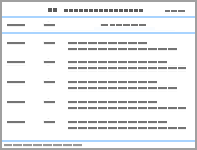
表1
甘肃省县域乡村振兴评价指标体系"
| 一级指标(权重) | 二级指标 | 指标解释 | 指标属性 | 二级指标权重 |
|---|---|---|---|---|
| 产业兴旺 (0.265) | 粮食综合生产能力 | 粮食总产量/t | 正向 | 0.061 |
| 农业劳动生产水平 | 农业劳动生产率/104元·人-1 | 正向 | 0.080 | |
| 农业机械化水平 | 农业机械总动力/农作物总播种面积/% | 正向 | 0.055 | |
| 农业产业化水平 | 农村人均地区生产总值/元 | 正向 | 0.067 | |
| 乡村就业情况 | 乡村就业人数占乡村总人口的比重/% | 正向 | 0.002 | |
| 生态宜居 (0.259) | 农村人居环境情况 | 农村垃圾集中处理率/% | 正向 | 0.035 |
| 农村污水集中处理率/% | 正向 | 0.136 | ||
| 农业绿色发展水平 | 农用化肥施用量(折纯)/t | 负向 | 0.002 | |
| 农村用电量情况 | 农村用电量/108 kW·h | 正向 | 0.065 | |
| 农村绿化情况 | 荒山荒(沙)地造林面积/104 hm2 | 正向 | 0.020 | |
| 农村生态保护情况 | 塑料薄膜使用量/t | 负向 | 0.002 | |
| 乡风文明 (0.144) | 农村思想道德建设水平 | 教育文化娱乐占生活消费比重/% | 正向 | 0.021 |
| 农村文化建设水平 | 图书室(馆)、文化站个数/个 | 正向 | 0.099 | |
| 农村教育投入水平 | 农村小学教师数与在校学生数比例/% | 正向 | 0.019 | |
| 农村社会保障水平 | 各种社会福利性单位/个 | 正向 | 0.005 | |
| 治理有效 (0.169) | 乡村居民受教育水平 | 万人乡村从业人员中高中及以上学历从业人员人数/104人 | 正向 | 0.049 |
| 乡村基层组织配套水平 | 乡村人口数量/村民委员会数量/% | 正向 | 0.012 | |
| 乡村经济治理水平 | 乡镇经济组织(乡务)管理人员数量/104人 | 正向 | 0.057 | |
| 乡村财政收支水平 | 地方财政收支比/% | 正向 | 0.051 | |
| 生活富裕 (0.161) | 农村居民收入水平 | 农村居民人均可支配收入/元 | 正向 | 0.042 |
| 农村居民消费水平 | 农村居民人均可消费性支出/元 | 正向 | 0.028 | |
| 农村基础设施情况 | 通宽带的村个数占比/个 | 正向 | 0.010 | |
| 农村消费供应水平 | 村均50 m2以上的超市个数/个 | 正向 | 0.080 |

图2
2013—2022年甘肃省乡村振兴发展综合指数及各维度发展指数"


图3
2013—2022年甘肃省县域乡村振兴发展综合指数空间分布"

表2
甘肃省乡村振兴总体和区域内基尼系数"
| 年份 | 总体 | 陇中 地区 | 河西 地区 | 陇东南地区 | 甘南、临夏地区 |
|---|---|---|---|---|---|
| 2013 | 0.183 | 0.159 | 0.120 | 0.108 | 0.133 |
| 2014 | 0.189 | 0.151 | 0.121 | 0.133 | 0.147 |
| 2015 | 0.187 | 0.143 | 0.123 | 0.134 | 0.154 |
| 2016 | 0.171 | 0.133 | 0.111 | 0.119 | 0.127 |
| 2017 | 0.148 | 0.114 | 0.084 | 0.116 | 0.106 |
| 2018 | 0.156 | 0.130 | 0.109 | 0.115 | 0.103 |
| 2019 | 0.153 | 0.131 | 0.118 | 0.119 | 0.110 |
| 2020 | 0.156 | 0.124 | 0.119 | 0.123 | 0.123 |
| 2021 | 0.159 | 0.119 | 0.118 | 0.111 | 0.125 |
| 2022 | 0.160 | 0.125 | 0.113 | 0.127 | 0.126 |
表3
甘肃省乡村振兴区域间基尼系数"
| 年份 | 陇中-河西 地区 | 陇中-陇东南 地区 | 陇中-甘南、临夏 地区 | 河西-陇东南 地区 | 河西-甘南、临夏地区 | 陇东南-甘南、临夏地区 |
|---|---|---|---|---|---|---|
| 2013 | 0.159 | 0.175 | 0.371 | 0.120 | 0.283 | 0.248 |
| 2014 | 0.161 | 0.197 | 0.365 | 0.137 | 0.269 | 0.231 |
| 2015 | 0.161 | 0.190 | 0.363 | 0.135 | 0.265 | 0.235 |
| 2016 | 0.153 | 0.181 | 0.334 | 0.121 | 0.233 | 0.205 |
| 2017 | 0.117 | 0.165 | 0.285 | 0.113 | 0.211 | 0.169 |
| 2018 | 0.140 | 0.178 | 0.283 | 0.124 | 0.199 | 0.154 |
| 2019 | 0.144 | 0.189 | 0.250 | 0.130 | 0.170 | 0.134 |
| 2020 | 0.154 | 0.187 | 0.258 | 0.129 | 0.169 | 0.145 |
| 2021 | 0.160 | 0.193 | 0.278 | 0.122 | 0.176 | 0.145 |
| 2022 | 0.159 | 0.182 | 0.279 | 0.123 | 0.175 | 0.162 |
表4
甘肃省乡村振兴区域差异来源及贡献率"
| 年份 | 区域内 | 区域间 | 超变密度 |
|---|---|---|---|
| 2013 | 18.27 | 66.26 | 15.47 |
| 2014 | 18.62 | 66.37 | 15.01 |
| 2015 | 18.72 | 65.69 | 15.59 |
| 2016 | 18.36 | 67.01 | 14.64 |
| 2017 | 18.17 | 69.51 | 12.32 |
| 2018 | 19.20 | 66.62 | 14.18 |
| 2019 | 20.05 | 62.80 | 17.15 |
| 2020 | 20.09 | 61.75 | 18.16 |
| 2021 | 19.05 | 65.92 | 15.02 |
| 2022 | 19.69 | 62.15 | 18.16 |

图4
甘肃省乡村振兴综合指数分布动态"

| [1] | 叶兴庆. 新时代中国乡村振兴战略论纲[J]. 改革, 2018(1): 65-73. |
| [Ye Xingqing. The general principles of the China’s rural vitalization strategy in the new era[J]. Reform, 2018(1): 65-73.] | |
| [2] |
吴茜, 陈强强. 甘肃省行业碳排放影响因素及脱钩努力研究[J]. 干旱区地理, 2023, 46(2): 274-283.
doi: 10.12118/j.issn.1000-6060.2022.126 |
|
[Wu Qian, Chen Qiangqiang. Influencing factors and decoupling efforts of industry-related carbon emissions in Gansu Province[J]. Arid Land Geography, 2023, 46(2): 274-283.]
doi: 10.12118/j.issn.1000-6060.2022.126 |
|
| [3] | 张永江. 习近平关于“三农”工作重要论述的战略思维与启示[J]. 当代经济管理, 2023, 45(12): 56-65. |
| [Zhang Yongjiang. The strategic thinking dimension of Xi Jinping’s important speech on the work about agriculture, rural areas and farmers[J]. Contemporary Economic Management, 2023, 45(12): 56-65.] | |
| [4] | 赵延安, 陈凤仪. 乡村振兴战略的思想资源、科学内涵和实现路径[J]. 西北农林科技大学学报(社会科学版), 2023, 23(6): 1-9. |
| [Zhao Yan’an, Chen Fengyi. The ideological resources, scientific connotation and implementation path of rural revitalization strategy[J]. Journal of Northwest A & F University (Social Science Edition), 2023, 23(6): 1-9.] | |
| [5] | 白斯琴毕力格, 赵欣. 民族地区脱贫攻坚成果同乡村振兴有效衔接研究——以内蒙古自治区兴安盟西哲里木镇为例[J]. 民族学论丛, 2023(3): 56-64. |
| [Bai Siqingbilige, Zhao Xin. Research on the effective connection between poverty alleviation achievements and rural revitalization in ethnic minority areas: A case study of Xizhelimu Town, Xing’an League, Inner Mongolia Autonomous Region[J]. Journal of Hui Muslim Minority Studies, 2023(3): 56-64.] | |
| [6] | 潘丽. 乡村振兴背景下农村社会治理法治化路径[J]. 农业经济, 2024(7): 76-77. |
| [Pan Li. The path of rural social governance under the rule of law in the context of rural revitalization[J]. Agricultural Economy, 2024(7): 76-77.] | |
| [7] | 田红宇, 孟娜娜, 关洪浪. 数字金融赋能乡村产业振兴的效应与路径研究——来自产业融合视角的经验证据[J]. 世界农业, 2024(8): 77-89. |
| [Tian Hongyu, Meng Nana, Guan Honglang. Research on the effect and path of digital finance empowering rural industry revitalization: Empirical evidence from the perspective of industry convergence[J]. World Agriculture, 2024(8): 77-89.] | |
| [8] |
龙花楼, 徐雨利, 郑瑜晗, 等. 中国式现代化下的县域城乡融合发展[J]. 经济地理, 2023, 43(7): 12-19.
doi: 10.15957/j.cnki.jjdl.2023.07.002 |
|
[Long Hualou, Xu Yuli, Zheng Yuhan, et al. Urban-rural integrated development at county level under Chinese path to modernization[J]. Economic Geography, 2023, 43(7): 12-19.]
doi: 10.15957/j.cnki.jjdl.2023.07.002 |
|
| [9] | 罗必良. 明确发展思路, 实施乡村振兴战略[J]. 南方经济, 2017(10): 8-11. |
| [Luo Biliang. Clarify development ideas and implement the rural revitalization strategy[J]. Southern Economy, 2017(10): 8-11.] | |
| [10] | 王颂吉, 魏后凯. 城乡融合发展视角下的乡村振兴战略: 提出背景与内在逻辑[J]. 农村经济, 2019(1): 1-7. |
| [Wang Songji, Wei Houkai. Rural revitalization strategy from the perspective of urban-rural integration development: Background and internal logic[J]. Rural Economy, 2019(1): 1-7.] | |
| [11] |
刘彦随. 新时代乡村振兴地理学研究[J]. 地理研究, 2019, 38(3): 461-466.
doi: 10.11821/dlyj020190133 |
| [Liu Yansui. Research on the geography of rural revitalization in the new era[J]. Geographical Research, 2019, 38(3): 461-466.] | |
| [12] |
刘彦随, 周扬, 李玉恒. 中国乡村地域系统与乡村振兴战略[J]. 地理学报, 2019, 74(12): 2511-2528.
doi: 10.11821/dlxb201912007 |
|
[Liu Yansui, Zhou Yang, Li Yuheng. Rural regional system and rural revitalization strategy in China[J]. Acta Geographica Sinica, 2019, 74(12): 2511-2528.]
doi: 10.11821/dlxb201912007 |
|
| [13] | 王霞, 陈洁, 张斌, 等. 统筹新型城镇化和乡村全面振兴: 理论逻辑、现实挑战与实现路径[J]. 农业现代化研究, 2025, 46(1): 22-32. |
| [Wang Xia, Chen Jie, Zhang Bin, et al. Coordinating new urbanization and comprehensive rural revitalization: Theoretical logic, realistic challenges, and practical paths[J]. Research on Agricultural Modernization, 2025, 46(1): 22-32.] | |
| [14] | 沈俊鑫, 赵卉紫, 彭媛. 数字经济赋能乡村振兴的组态及路径分析——以江西省为例[J]. 农林经济管理学报, 2025, 24(1): 45-54. |
| [Shen Junxin, Zhao Huizi, Peng Yuan. Analysis of configuration and pathways of Jiangxi’s digital economy empowering rural revitalization[J]. Journal of Agro-Forestry Economics and Management, 2025, 24(1): 45-54.] | |
| [15] | 张挺, 李闽榕, 徐艳梅. 乡村振兴评价指标体系构建与实证研究[J]. 管理世界, 2018, 34(8): 99-105. |
| [Zhang Ting, Li Minrong, Xu Yanmei. Construction and empirical research of evaluation index system for rural revitalization[J]. Journal of Management World, 2018, 34(8): 99-105.] | |
| [16] | 吴兆娟, 李萍, 高冬梅, 等. 重庆县域尺度乡村振兴弹性评价指标体系构建与实证研究[J]. 西南农业学报, 2023, 36(11): 2564-2572. |
| [Wu Zhaojuan, Li Ping, Gao Dongmei, et al. Elastic evaluation index system and empirical analysis of rural revitalization level at the country scale in Chongqing[J]. Southwest China Journal of Agricultural Sciences, 2023, 36(11): 2564-2572.] | |
| [17] | 周苗苗, 廖和平, 李涛, 等. 脱贫县乡村发展水平测度及空间格局研究——以重庆市城口县为例[J]. 西南大学学报(自然科学版), 2022, 44(5): 23-34. |
| [Zhou Miaomiao, Liao Heping, Li Tao, et al. Measurement of rural development level and study of spatial pattern in poverty alleviation counties: A case study of Chengkou, Chongqing[J]. Journal of Southwest University (Natural Science Edition), 2022, 44(5): 23-34.] | |
| [18] | 何茜. 中国乡村共同富裕指标体系构建: 理论逻辑与实践审思[J]. 西南大学学报(社会科学版), 2023, 49(5): 29-41. |
| [He Qian. Achieving solid progression establishing an index system for rural common prosperity: Theoretical logic & practical pondering[J]. Journal of Southwest University (Social Science Edition), 2023, 49(5): 29-41.] | |
| [19] | 孔晓旭, 伍荣耀. 公共文化服务水平对城乡居民收入差距的影响——基于乡村振兴视角[J]. 当代经理人, 2024(3): 24-38. |
| [Sun Xiaoxu, Wu Rongyao. Impact of public cultural service on income gap between urban and rural residents: From the perspective of rural revitalization[J]. Contemporary Manager, 2024(3): 24-38.] | |
| [20] | 熊正贤, 刘丽, 王亚飞. 乡村振兴视域下乡风文明建设水平的系统测度、演进态势及空间关联性[J]. 长江师范学院学报, 2024, 40(6): 36-50. |
| [Xiong Zhengxian, Liu Li, Wang Yafei. Systematic measurement, evolutionary dynamics and spatial correlation of the development level of rural civilization construction from the perspective of rural revitalization[J]. Journal of Yangtze Normal University, 2024, 40(6): 36-50.] | |
| [21] | 李爱军. 安徽省乡村振兴发展水平测度及差异分析[J]. 大理大学学报, 2024, 9(7): 25-33. |
|
[Li Aijun. Measurement and difference analysis of rural revitalization and development level in Anhui Province[J]. Journal of Dali University, 2024, 9(7): 25-33.]
doi: 10. 3969 / j. issn. 2096-2266. 2024. 07. 004 |
|
| [22] | 李长亮, 李昊儒, 周美秀. 乡村振兴评价指标体系构建及实证[J]. 统计与决策, 2022, 38(22): 66-70. |
| [Li Changliang, Li Haoru, Zhou Meixiu. Construction and empirical evidence of evaluation index system for rural revitalization[J]. Statistics & Decision, 2022, 38(22): 66-70.] | |
| [23] | 闫周府, 吴方卫. 从二元分割走向融合发展——乡村振兴评价指标体系研究[J]. 经济学家, 2019(6): 90-103. |
| [Yan Zhoufu, Wu Fangwei. From binary segmentation to convergence development: A study on the evaluation index system of rural revitalization[J]. Economist, 2019(6): 90-103.] | |
| [24] | 宋川, 张宁. 河北省乡村振兴水平评价及空间差异研究[J]. 中国农业资源与区划, 2024, 45(3): 187-195. |
| [Song Chuan, Zhang Ning. Evaluation of rural revitalization level and research spatial differences in Hebei Province[J]. Chinese Journal of Agricultural Resources and Regional Planning, 2024, 45(3): 187-195.] | |
| [25] | 许润达, 张建平, 葛扬. 中国乡村振兴水平的指标构建、测度评价及时空演变[J]. 规划师, 2024, 40(8): 43-49. |
| [Xu Runda, Zhang Jianping, Ge Yang. The index construction, measurement and evaluation, and spatial-temporal evolution of China’s rural revitalization level[J]. Planners, 2024, 40(8): 43-49.] | |
| [26] | 吴儒练. 省域乡村振兴发展水平测度及空间集聚特征分析[J]. 统计与决策, 2023, 39(4): 59-64. |
| [Wu Rulian. Measurement of provincial rural revitalization development level and analysis of spatial agglomeration characteristics[J]. Statistics & Decision, 2023, 39(4): 59-64.] | |
| [27] | 杨朝娟, 贺高祥. 长江经济带乡村振兴发展水平时空演化及预测[J]. 统计与决策, 2023, 39(11): 77-82. |
| [Yang Chaojuan, He Gaoxiang. Spatiotemporal evolution and prediction of the development level of rural revitalization in the Yangtze River Economic Belt[J]. Statistics & Decision, 2023, 39(11): 77-82.] | |
| [28] | 周达宝, 徐丽婷, 许鑫, 等. 脱贫地区乡村振兴水平时空演变及障碍因子——以江西罗霄山区为例[J]. 山地学报, 2024, 42(1): 81-93. |
| [Zhou Dabao, Xu Liting, Xu Xin, et al. Spatio-temporal evolution of rural revitalization level and its obstacle factors in poverty-alleviation regions: A case study of the Luoxiao Mountains region in Jiangxi Province, China[J]. Mountain Research, 2024, 42(1): 81-93.] | |
| [29] | 毛锦凰. 乡村振兴评价指标体系构建方法的改进及其实证研究[J]. 兰州大学学报(社会科学版), 2021, 49(3): 47-58. |
| [Mao Jinhuang. The improvement and empirical research of the methods of constructing rural revitalization evaluation index system[J]. Journal of Lanzhou University (Social Sciences Edtion), 2021, 49(3): 47-58.] | |
| [30] | 陈培彬, 谢源, 王海平, 等. 福建省乡村振兴实施成效分析及其优化路径——基于2015—2019年9地市面板数据[J]. 世界农业, 2020(1): 98-107. |
| [Chen Peibin, Xie Yuan, Wang Haiping, et al. Analysis of the implementation effectiveness of rural revitalization in Fujian Province and its optimization path: Based on the panel data of 9 prefectures and cities from 2015 to 2019[J]. World Agriculture, 2020(1): 98-107.] | |
| [31] | 王青, 刘亚男. 中国乡村振兴水平的地区差距及动态演进[J]. 华南农业大学学报(社会科学版), 2022, 21(2): 98-109. |
| [Wang Qing, Liu Ya’nan. The regional disparity and dynamic evolution of China’s rural revitalization level[J]. Journal of South China Agricultural University (Social Science Edition), 2022, 21(2): 98-109.] | |
| [32] |
尹君锋, 石培基. 甘肃省县域乡村振兴发展评估与空间格局分异[J]. 中国沙漠, 2022, 42(5): 158-166.
doi: 10.7522/j.issn.1000-694X.2022.00043 |
|
[Yin Junfeng, Shi Peiji. Rural revitalization development assessment and spatial heterogeneity of counties in Gansu, China[J]. Journal of Desert Research, 2022, 42(5): 158-166.]
doi: 10.7522/j.issn.1000-694X.2022.00043 |
|
| [33] | 高宏旭, 张明善, 李楠新. 乡村振兴发展动态的空间关联网络特征[J]. 统计与决策, 2024, 40(19): 55-60. |
| [Gao Hongxu, Zhang Mingshan, Li Nanxin. Characteristics of spatial correlation network of rural revitalization development dynamics[J]. Statistics & Decision, 2024, 40(19): 55-60.] | |
| [34] |
杨永丰, 张非凡, 罗仕伟. 成渝城市群县域旅游效率与乡村振兴水平的交互响应[J]. 经济地理, 2024, 44(9): 221-231.
doi: 10.15957/j.cnki.jjdl.2024.09.023 |
|
[Yang Yongfeng, Zhang Feifan, Luo Shiwei. Interactive response of county-level tourism efficiency and rural revitalization in Chengdu-Chongqing urban agglomeration[J]. Economic Geography, 2024, 44(9): 221-231.]
doi: 10.15957/j.cnki.jjdl.2024.09.023 |
|
| [35] | 马琰, 雷振东, 刘加平, 等. 面向乡村振兴精细化治理的国土空间综合整治规划研究[J]. 规划师, 2023, 39(5): 26-33. |
| [Ma Yan, Lei Zhendong, Liu Jiaping, et al. Territorial space comprehensive reorganization planning for refined governance of rural revitalization[J]. Planners, 2023, 39(5): 26-33.] | |
| [36] | 林元城, 杨忍, 葛语思. 农村土地综合整治助力乡村振兴的内在逻辑与传导机制[J]. 规划师, 2023, 39(5): 12-18. |
| [Lin Yuancheng, Yang Ren, Ge Yusi. Internal logic and transmission mechanism of rural comprehensive land consolidation for rural revitalization[J]. Planners, 2023, 39(5): 12-18.] | |
| [37] | 宣朝庆, 郝光耀. 文明乡风如何形塑——以农村建房中邻里纠纷为中心的思考[J]. 中国农业大学学报(社会科学版), 2018, 35(3): 96-102. |
| [Xuan Chaoqing, Hao Guangyao. How to shape a good social customs and manners in rural areas: A reflection on the neighborhood dispute during the house building[J]. Journal of China Agricultural University (Social Sciences Edition), 2018, 35(3): 96-102.] | |
| [38] | 唐成玲, 陈诺, 胡琴. 乡风文明的政策实践与农民声音[J]. 中国农业大学学报(社会科学版), 2022, 39(4): 73-88. |
| [Tang Chengling, Chen Nuo, Hu Qin. Social etiquette and civility in rural China: Policy implementation and famers’ voces[J]. Journal of China Agricultural University (Social Sciences Edition), 2022, 39(4): 73-88.] | |
| [39] | 李燕, 吴敏. 乡村治理中的金融路径再认知[J]. 中国行政管理, 2021(1): 66-72. |
| [Li Yan, Wu Min. Financial logic in rural governance: From the perspective of financial practice[J]. Chinese Public Administration, 2021(1): 66-72.] | |
| [40] | 蔡文伯, 贺薇宇. 我国乡村振兴发展水平综合评价研究[J]. 重庆大学学报(社会科学版), 2023, 29(1): 102-116. |
| [Cai Wenbo, He Weiyu. Research on comprehensive evaluation of development level of China’s rural revitalization[J]. Journal of Chongqing University (Social Science Edition), 2023, 29(1): 102-116.] | |
| [41] | 吴钊骏, 吴大放, 李升发, 等. 乡村振兴水平时空特征及其影响因素——以广东省为例[J]. 水土保持通报, 2023, 43(6): 369-379. |
| [Wu Zhaojun, Wu Dafang, Li Shengfa, et al. Spatial and temporal characteristics of rural revitalization level and its influencing factor: Take Guangdong Province as an example[J]. Bulletin of Soil and Water Conservation, 2023, 43(6): 369-379.] | |
| [42] | 马富成. 甘肃省乡村振兴水平的区域差异与影响因素研究[D]. 兰州: 兰州财经大学, 2023. |
| [Ma Fucheng. Study on regional difference and influencing factors of rural revitalization level in Gansu Province[D]. Lanzhou: Lanzhou University of Finance and Economics, 2023.] | |
| [43] | 刘淑娟, 海新权. 甘肃省乡村振兴发展水平评价及障碍因子诊断[J]. 建设科技, 2023(16): 23-26. |
| [Liu Shujuan, Hai Xinquan. Evaluation of rural revitalization development level and diagnosis of obstacle factors in Gansu Province[J]. Construction Science and Technology, 2023(16): 23-26.] | |
| [44] | 芦风英, 庞智强, 邓光耀. 乡村振兴水平测度及空间关联效应研究——以甘肃省为例[J]. 统计与决策, 2022, 38(23): 63-68. |
| [Lu Fengying, Pang Zhiqiang, Deng Guangyao. Research on the measurement of rural revitalization level and spatial correlation effect: A case study of Gansu Province[J]. Statistics & Decision, 2022, 38(23): 63-68.] | |
| [45] | 伏广彬, 吴秉昊, 李文, 等. 巩固脱贫攻坚成果与乡村振兴耦合协调发展研究——以甘肃省为例[J]. 统计与决策, 2024, 40(14): 63-67. |
| [Fu Guangbin, Wu Binghao, Li Wen, et al. Research on the coupling and coordinated development of consolidating the achievements of poverty alleviation and rural revitalization: A case study of Gansu Province[J]. Statistics & Decision, 2024, 40(14): 63-67.] | |
| [46] |
李瑾, 文琦, 杨骁. 基于资源环境承载力的干旱区乡村振兴路径研究——以宁夏为例[J]. 干旱区地理, 2022, 45(1): 287-297.
doi: 10.12118/j.issn.1000–6060.2021.063 |
|
[Li Jin, Wen Qi, Yang Xiao. Rural revitalization path based on the resources and environment carrying capacity in arid area: A case of Ningxia Hui Autonomous Region[J]. Arid Land Geography, 2022, 45(1): 287-297.]
doi: 10.12118/j.issn.1000–6060.2021.063 |
| [1] | 余瀚, 孟志华, 王静爱. 甘肃省自然灾害社会脆弱性评价与综合区划[J]. 干旱区地理, 2025, 48(8): 1421-1431. |
| [2] | 王鑫, 郑芳, 何铃瑶, 何浩亮, 侯迎. 宁夏县域共同富裕水平时空分异格局及驱动因素研究[J]. 干旱区地理, 2025, 48(7): 1293-1303. |
| [3] | 任诗琦, 王永瑜. 黄河流域地级市绿色发展水平测度与空间收敛性研究[J]. 干旱区地理, 2025, 48(6): 1031-1042. |
| [4] | 薛晨浩, 白永平, 王生鹏. 基于多维评价方法的沿黄地区经济韧性时空分异规律[J]. 干旱区地理, 2025, 48(6): 1103-1114. |
| [5] | 马海清, 陈强强. 甘肃省农业碳排放时空分异特征及影响因素[J]. 干旱区地理, 2025, 48(5): 879-892. |
| [6] | 李潇飞, 龚健, 叶菁, 方鸿嘉, 张世镇, 林家胜. 生态系统服务权衡协同下的甘肃省生态功能分区优化[J]. 干旱区地理, 2025, 48(3): 467-479. |
| [7] | 胡舒云, 陆玉麒. 甘肃省冷凉区宜农空间识别与开发[J]. 干旱区地理, 2025, 48(2): 257-270. |
| [8] | 刘苗苗, 吴卫东. 陕西省新型城镇化与乡村振兴耦合性实证研究[J]. 干旱区地理, 2024, 47(8): 1420-1430. |
| [9] | 马明德, 李俊杰, 薛晨皓. 宁夏区域发展对环境胁迫的时空演变及驱动机制分析[J]. 干旱区地理, 2024, 47(6): 1061-1072. |
| [10] | 周成, 赵亚玲, 任敏敏, 靳轶婷, 吕丝丝. 黄河流域国家湿地公园时空分异、重心演化与驱动因素分析[J]. 干旱区地理, 2024, 47(3): 506-514. |
| [11] | 姜筱筱, 李雪梅, 韩惠, 许民, 凌红波. 甘肃省土地利用转变对碳储量变化的影响研究[J]. 干旱区地理, 2024, 47(12): 2075-2082. |
| [12] | 谭丹, 聂灿齐, 黄武斌, 李文瑶, 谢丽君. 甘肃省雷暴大风活动特征及潜势预报研究[J]. 干旱区地理, 2024, 47(12): 2083-2092. |
| [13] | 孟晓, 田明华, 杜磊, 马爽. 中国农业农村现代化发展水平测度及其协调性研究[J]. 干旱区地理, 2024, 47(1): 137-146. |
| [14] | 王松茂, 宁文萍, 牛金兰, 安康. 黄河流域城市生态韧性时空分异及收敛研究——基于七大城市群61个城市的实证分析[J]. 干旱区地理, 2024, 47(1): 93-103. |
| [15] | 张君霞, 黄武斌, 李安泰, 杨秀梅, 黎倩, 边宏伟. 甘肃省主要地质灾害精细化气象风险预警预报[J]. 干旱区地理, 2023, 46(9): 1443-1452. |
|
||