干旱区地理 ›› 2025, Vol. 48 ›› Issue (12): 2247-2259.doi: 10.12118/j.issn.1000-6060.2025.060 cstr: 32274.14.ALG2025060
王录仓1,2( ), 廖婷1
收稿日期:2025-02-09
修回日期:2025-05-15
出版日期:2025-12-25
发布日期:2025-12-30
作者简介:王录仓(1967-),男,博士,教授,主要从事寒区旱区人居环境方面的研究. E-mail: wanglc007@nwnu.edu.cn
基金资助:
WANG Lucang1,2(), LIAO Ting1
Received:2025-02-09
Revised:2025-05-15
Published:2025-12-25
Online:2025-12-30
摘要:
生态移民是为了改善人居环境、缓解生态压力而形成的特殊移民,是实现联合国可持续发展目标的重要举措。然而由于大规模移民的外部性迁入,导致安置区生境破碎化更剧烈和更特殊。综合应用景观格局指数,系统地对疏勒河移民安置区生境转化和破碎化的时空过程与特征展开了研究。结果表明:(1) 移民期间,疏勒河移民安置区域内,人工生境逐渐替代自然生境,同时,从移民初期至移民中期、移民末期以及后移民期,整体呈现出从突变到平稳再到剧变的规律。除此之外,移民安置区数量越多、分布越分散,人工生境扩张趋势越明显。(2) 总斑块数量、边界密度、多样性、均匀度均呈现持续增加趋势,而蔓延度和聚合度则持续下降,这表明生境在向破碎化、多样化以及复杂化方向转变。相较于小型移民安置基地和移民安置点,大型移民安置基地破碎化程度更高,这反映出移民规模对生境破碎化存在一定影响;值得注意的是,在自然生境的破碎化程度加重的同时,人工生境破碎化程度趋于收敛。因此,研究认为生态移民是导致生境破碎化的关键因素。
王录仓, 廖婷. 生态移民安置区生境破碎化研究——以疏勒河移民安置工程为例[J]. 干旱区地理, 2025, 48(12): 2247-2259.
WANG Lucang, LIAO Ting. Impact of ecological migration on habitat fragmentation in resettlement areas: Take the Shule River Resettlement Project as an example[J]. Arid Land Geography, 2025, 48(12): 2247-2259.
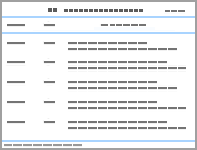
表1
1997—2006年疏勒河生态移民安置区的移民迁入情况"
| 灌区名称 | 乡镇、农场名称 | 迁入户数/户 | 迁入人数/人 |
|---|---|---|---|
| 昌马灌区 | 双塔乡 | 2762 | 12988 |
| 七墩乡 | 1467 | 7103 | |
| 七道沟分场 | 1568 | 8755 | |
| 黄花农场 | 770 | 3861 | |
| 饮马农场 | 429 | 2667 | |
| 扎花村 | 459 | 2534 | |
| 双塔灌区 | 梁湖分场 | 1575 | 7769 |
| 环城乡 | 342 | 1650 | |
| 花海灌区 | 毕家滩乡 | 1390 | 6301 |
| 独山子分场 | 1823 | 8372 | |
| 合计 | 12585 | 62000 |
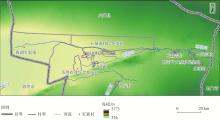
图1
研究区示意图"
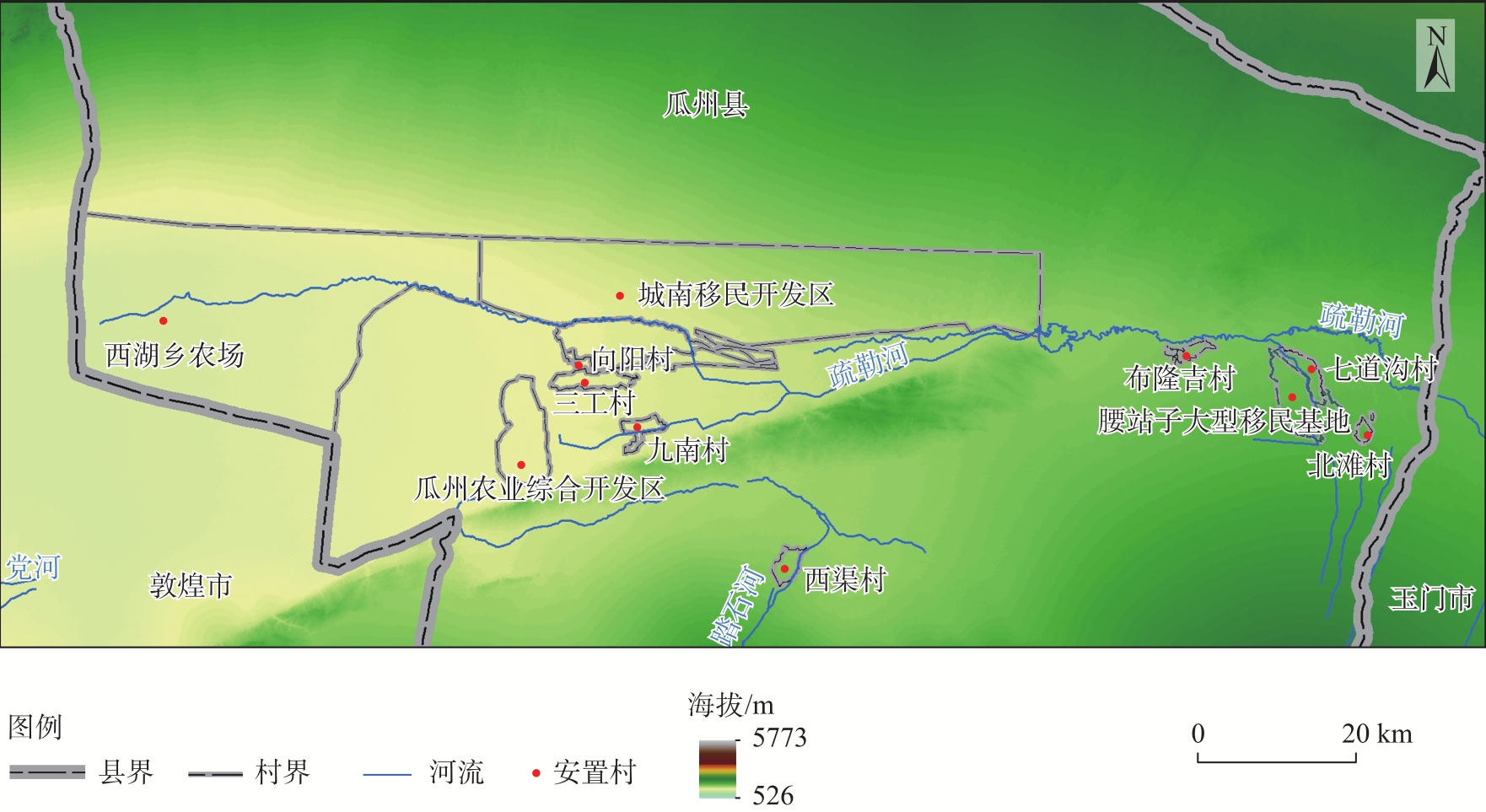
表2
景观格局指数"
| 名称 | 计算公式 | 公式说明 | 表征意义 |
|---|---|---|---|
| 总斑块数(NP) | ni为i类生境的斑块指数 | 数值越大,破碎度越高 | |
| 斑块密度(PD) | NP为第i类生境的斑块数;Ai为i类生境的总面积(km2) | 表征破碎化程度和空间分布格局的不均匀性与复杂性。数值越大,破碎度越高 | |
| 边界密度(ED) | eik为i类生境第k斑块的边缘长度(km);A为生境总面积(km2) | 反映生境类型的边界特征和边缘效应。值越大,异质斑块越多,生境越破碎 | |
| 蔓延度(C) | m为斑块类型总数;Pi为i类斑块面积占总面积的比例;gik为第i类斑块与第k类斑块相邻的边数(基于像元邻域,通常为8邻域) | 反映不同生境类型的延展程度。指数高说明某类斑块形成良好的连接性;反之则说明该处的生境由多种斑块共同构成,具有复杂性且破碎化程度高 | |
| 聚合度(AI) | gii为第i斑块中,同类斑块像元间相邻的公共边界长度,AI⊆(0,100] | 值越大,同类生境斑块越聚集,破碎度越低。高值表明生境由大簇组成,低值表明生境由许多小块组成 | |
| 多样性(SHDI) | Pi为第i类生境占全部生境面积之比;m为生境类型数 | SHDI=0,表明整个生境由一种组成;SHDI逐渐增大,表明不同类型生境斑块增多并且趋于均衡化,反映生境类型的丰富度和复杂度 | |
| 均匀度 (SHEI) | m为生境类型数 | 当SHEI=0,无多样性;当SHEI=1,表明各生境面积均匀分布,有最大多样性 | |
| 分维数 (FRAC) | Pi为斑块i的周长;Ai为斑块i的面积 | 数值越小,斑块边界越近于直线;反之则表示边界形状越复杂 |
表3
1996—2020年不同移民安置区生境类型的面积变化"
| 生境类型 | 安置区类型 | 移民初期 | 移民中期 | 移民末期 | 后移民期 | 1996—2020年 |
|---|---|---|---|---|---|---|
| 耕地 | 大型移民安置基地 | 4.078 | 3.594 | 3.795 | 4.782 | 20.559 |
| 4个小型移民安置基地 | 1.656 | 3.485 | 4.184 | 9.992 | 24.905 | |
| 6个移民安置点 | 17.612 | 14.316 | 14.405 | 2.463 | 62.028 | |
| 小计 | 23.346 | 21.395 | 22.384 | 17.237 | 107.492 | |
| 建设用地 | 大型移民安置基地 | 0.618 | 0.010 | 0.001 | 0.016 | 0.027 |
| 4个小型移民安置基地 | 0.005 | 0.086 | 0.220 | 0.108 | 1.100 | |
| 6个移民安置点 | 2.176 | 0.082 | 0.051 | -0.378 | 0.000 | |
| 小计 | 8.241 | 0.178 | 0.272 | -0.254 | 1.127 | |
| 草地 | 大型移民安置基地 | 49.740 | -0.981 | -3.069 | -4.238 | -8.975 |
| 4个小型移民安置基地 | 0.007 | 5.199 | 3.812 | -7.037 | 13.941 | |
| 6个移民安置点 | 0.023 | 10.102 | -5.638 | -55.519 | 0.000 | |
| 小计 | 49.770 | 14.320 | -4.895 | -66.794 | 4.966 | |
| 水域 | 大型移民安置基地 | -6.261 | -0.006 | 0.000 | 0.030 | 0.031 |
| 4个小型移民安置基地 | -10.537 | 0.025 | 0.000 | -0.043 | 0.008 | |
| 6个移民安置点 | -67.357 | 0.017 | 0.000 | -0.017 | 0.000 | |
| 小计 | -84.155 | 0.036 | 0.000 | -0.030 | 0.039 | |
| 荒地 | 大型移民安置基地 | 1.656 | -2.618 | -0.726 | -0.596 | -11.649 |
| 4个小型移民安置基地 | 17.612 | -8.795 | -8.217 | -169.878 | -206.810 | |
| 6个移民安置点 | 0.000 | -24.518 | -8.817 | 115.478 | 0.000 | |
| 小计 | 19.268 | -35.931 | -17.760 | -54.996 | -218.459 |
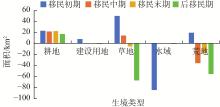
图2
1996—2020年生境类型的面积变化"
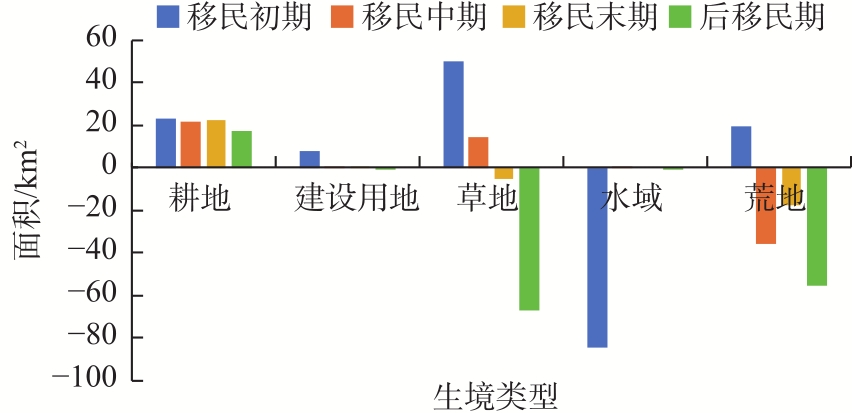
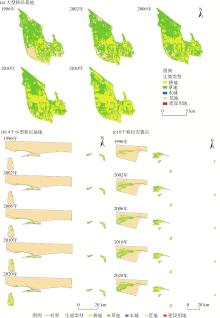
图3
1996—2020年不同移民安置区生境类型的面积变化"
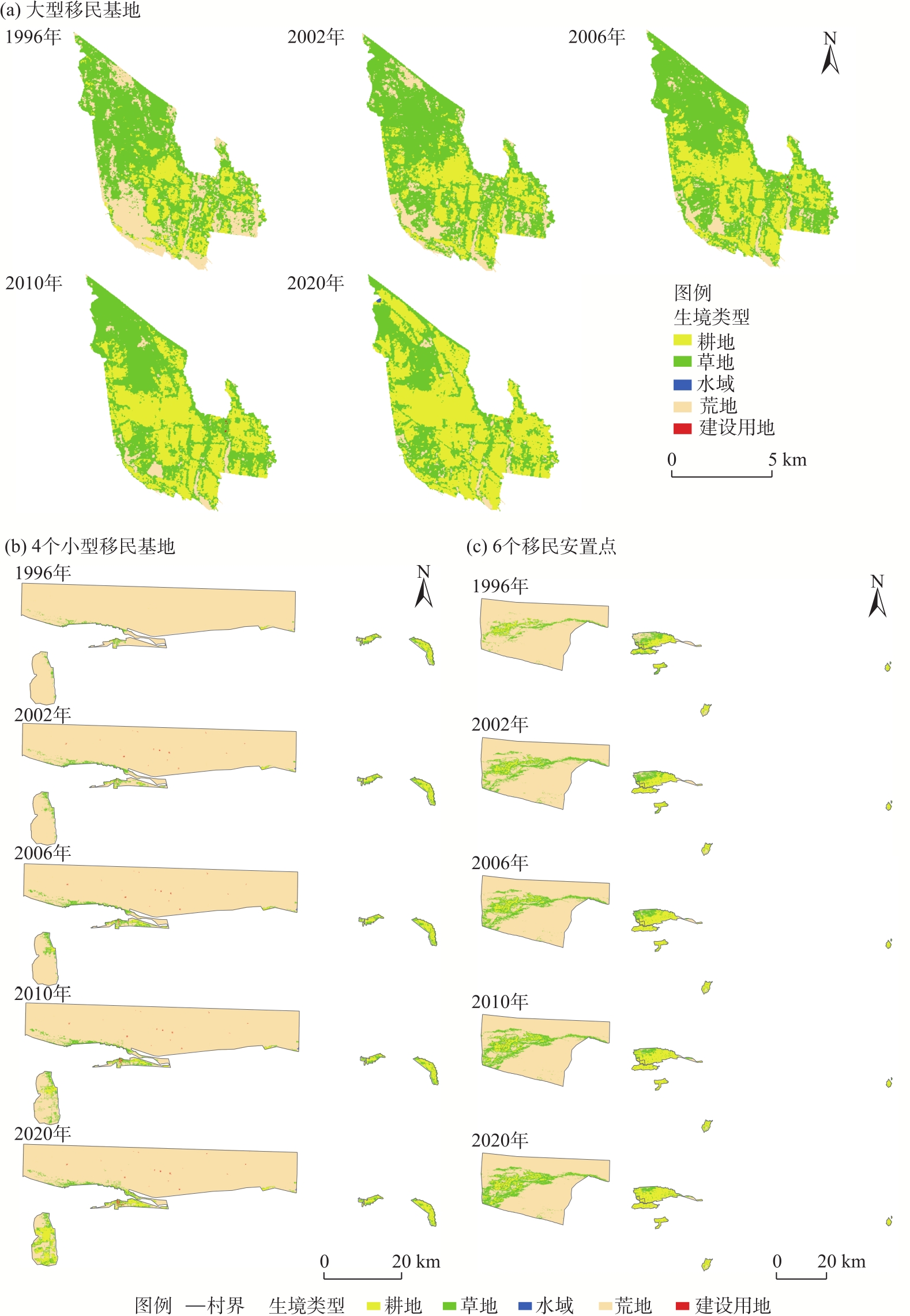
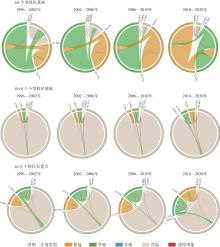
图4
移民安置区生境类型转移图"

表4
不同安置区景观格局指数变化"
| 景观格局指数 | 安置区类型 | 1996年 | 2002年 | 2003年 | 2007年 | 2010年 | 2015年 | 2021年 |
|---|---|---|---|---|---|---|---|---|
| NP | 大型移民安置基地 | 24.00 | 25.00 | 27.00 | 21.00 | 24.00 | 26.00 | 22.00 |
| 4个小型移民安置基地 | 170.00 | 157.00 | 158.00 | 159.00 | 171.00 | 185.00 | 196.00 | |
| 6个移民安置点 | 378.00 | 355.00 | 353.00 | 399.00 | 396.00 | 406.00 | 454.00 | |
| ED | 大型移民安置基地 | 5.78 | 5.37 | 5.59 | 5.48 | 5.96 | 5.91 | 6.22 |
| 4个小型移民安置基地 | 1.36 | 1.32 | 1.32 | 1.38 | 1.45 | 1.64 | 1.64 | |
| 6个移民安置点 | 2.37 | 2.47 | 2.49 | 2.59 | 2.61 | 2.53 | 2.62 | |
| C | 大型移民安置基地 | 46.35 | 43.13 | 42.66 | 41.41 | 40.16 | 40.67 | 41.37 |
| 4个小型移民安置基地 | 85.04 | 86.60 | 86.51 | 85.80 | 85.46 | 84.37 | 84.36 | |
| 6个移民安置点 | 81.46 | 80.16 | 80.01 | 78.87 | 78.73 | 78.23 | 78.72 | |
| SHDI | 大型移民安置基地 | 0.73 | 0.81 | 0.82 | 0.88 | 0.90 | 0.91 | 0.91 |
| 4个小型移民安置基地 | 0.29 | 0.31 | 0.31 | 0.33 | 0.34 | 0.36 | 0.36 | |
| 6个移民安置点 | 0.39 | 0.43 | 0.43 | 0.46 | 0.46 | 0.48 | 0.46 | |
| SHEI | 大型移民安置基地 | 0.66 | 0.74 | 0.74 | 0.80 | 0.82 | 0.83 | 0.83 |
| 4个小型移民安置基地 | 0.21 | 0.19 | 0.19 | 0.20 | 0.21 | 0.22 | 0.22 | |
| 6个移民安置点 | 0.24 | 0.26 | 0.27 | 0.28 | 0.29 | 0.30 | 0.28 | |
| AI | 大型移民安置基地 | 82.34 | 83.63 | 83.01 | 83.49 | 82.24 | 82.58 | 81.50 |
| 4个小型移民安置基地 | 95.85 | 95.98 | 95.97 | 95.83 | 95.64 | 95.16 | 95.18 | |
| 6个移民安置点 | 93.56 | 93.32 | 93.29 | 93.03 | 92.99 | 93.20 | 92.97 | |
| FRAC | 大型移民安置基地 | 1.03 | 1.03 | 1.03 | 1.03 | 1.03 | 1.03 | 1.04 |
| 4个小型移民安置基地 | 1.02 | 1.02 | 1.02 | 1.03 | 1.03 | 1.03 | 1.03 | |
| 6个移民安置点 | 1.02 | 1.03 | 1.03 | 1.02 | 1.02 | 1.02 | 1.02 |
| [1] |
贾耀锋. 中国生态移民效益评估研究综述[J]. 资源科学, 2016, 38(8): 1550-1560.
doi: 10.18402/resci.2016.08.13 |
|
[Jia Yaofeng. Review of benefit evaluation research on ecological migration in China[J]. Resources Science, 2016, 38(8): 1550-1560.]
doi: 10.18402/resci.2016.08.13 |
|
| [2] | International Organization for Migration (IOM). Glossary on migration (2nd ed)[DB/OL]. [2025-05-01]. https://publications.iom.int/system/files/pdf/iml_34_glossary.pdf. |
| [3] |
Swain A. Environmental migration and conflict dynamics: Focus on developing regions[J]. Third World Quarterly, 1996, 17(5): 959-973.
pmid: 12321041 |
| [4] | Li J T, Dong H R, Li S X. Economic development and optimal allocation of land use in ecological emigration area in China[J]. Land Use Policy, 2024, 142: 107178, doi: 10.1016/j.landusepol.2024.107178. |
| [5] |
Hu Y C, Zhou W, Yuan T. Environmental impact assessment of ecological migration in China: A survey of immigrant resettlement regions[J]. Journal of Zhejiang University-Science A, 2018, 19(3): 240-254.
doi: 10.1631/jzus.A1600669 |
| [6] |
Myers N. Environmental refugees in a globally warmed world estimating the scope of what could well become a prominent international phenomenon[J]. Bioscience, 1993, 43(11): 752-761.
doi: 10.2307/1312319 |
| [7] |
Tolba M K. Our biological heritage under siege[J]. Bioscience, 1989, 39(10): 725-728.
doi: 10.1093/bioscience/39.10.725 |
| [8] | Jäger J. Environmental change and forced migration[J]. Environment, 2009, 51(5): 4-4. |
| [9] |
Hugo G. Environmental concerns and international migration[J]. International Migration Review, 1996, 30(1): 105-131.
pmid: 12291410 |
| [10] | Black R. Environmental refugees: Myth or reality?[J]. Un High Commissioner for Refugees, 2001, 19(2): 167-182. |
| [11] | Dun O, Gemenne F. Defining environmental migration[J]. Forced Migration Review, 2008, 31: 10-11. |
| [12] | Woube M. Effects of resettlement schemes on the biophysical and human environments: The case of the Gambela Region, Ethiopia[M]. Boca Raton, Florida USA: Universal-Publishers, 2005:14-18. |
| [13] | Correa E. Preventive resettlement of populations at risk of disaster: Experiences from Latin America[M]. Washington: World Bank, 2011: 85-106. |
| [14] |
William M J. Understanding the relationship between environmental change and migration: The development of an effects framework based on the case of northern Ethiopia[J]. Global Environmental Change, 2013, 23(6): 1501-1510.
doi: 10.1016/j.gloenvcha.2013.07.021 |
| [15] |
Adamo S B. Environmental migration and cities in the context of global environmental change[J]. Current Opinion in Environmental Sustainability, 2010, 2(3): 161-165.
doi: 10.1016/j.cosust.2010.06.005 |
| [16] | Tan Y. Development-induced displacement and resettlement: An overview of issues and interventions[J]. Routledge Handbook of Migration and Development, 2020: 373-381. |
| [17] | Zhou Z F, Feng Q, Zhu C L, et al. The spatial and temporal evolution of ecological environment quality in karst ecologically fragile areas driven by poverty alleviation resettlement[J]. Land, 2022, 11(8): 1150, doi: 10.3390/land11081150. |
| [18] |
Mao X F, Wei X Y, Xia J X. Evaluation of ecological migrants’adaptation to their new living area in Three-River Headwater wetlands, China[J]. Procedia Environmental Sciences, 2012, 13: 1346-1353.
doi: 10.1016/j.proenv.2012.01.127 |
| [19] |
Kura Y, Joffre O, Laplante B, et al. Coping with resettlement: A livelihood adaptation analysis in the Mekong River Basin[J]. Land Use Policy, 2017, 60(1): 139-149.
doi: 10.1016/j.landusepol.2016.10.017 |
| [20] |
Platt R V, Ogra M V, Badola R, et al. Conservation-induced resettlement as a driver of land cover change in India: An object-based trend analysis[J]. Applied Geography, 2016, 69(4): 75-86.
doi: 10.1016/j.apgeog.2016.02.006 |
| [21] |
Reuveny R. Ecomigration and violent conflict: Case studies and public policy implications[J]. Human Ecology, 2008, 36(1): 1-13.
doi: 10.1007/s10745-007-9142-5 |
| [22] |
Warner K. Global environmental change and migration: Governance challenges[J]. Global Environmental Change, 2010, 20(3): 402-413.
doi: 10.1016/j.gloenvcha.2009.12.001 |
| [23] |
Ocello C, Petrucci A, Testa M R. Environmental aspects of internal migration in Tanzania[J]. Population and Environment, 2015, 37(1): 99-108.
doi: 10.1007/s11111-014-0229-9 |
| [24] |
Wilmsen B, Van Hulten A. Following resettled people over time: The value of longitudinal data collection for understanding the livelihood impacts of the Three Gorges Dam, China[J]. Impact Assessment and Project Appraisal, 2017, 35(1): 94-105.
doi: 10.1080/14615517.2016.1271542 |
| [25] |
Miller F, Ha T T P, Van Da H, et al. Double displacement-Interactions between resettlement, environmental change and migration[J]. Geoforum, 2022, 129: 13-27.
doi: 10.1016/j.geoforum.2021.12.016 |
| [26] |
Evrard O, Goudineau Y. Planned resettlement, unexpected migrations and cultural trauma in Laos[J]. Development and Change, 2004, 35(5): 937-962.
doi: 10.1111/dech.2004.35.issue-5 |
| [27] |
Bossio D, Geheb K, CriEngle N L. Adaptive capacity and its assessment[J]. Global Environmental Change, 2011, 21(2): 647-656.
doi: 10.1016/j.gloenvcha.2011.01.019 |
| [28] | Gardner R H, Turner M G. Quantitative Methods in Landscape Ecology: The Analysis and Interpretation of Landscape Heterogeneity[M]. New York: Springer, 1991: 1-25. |
| [29] | Li W J, Kang J W, Wang Y. Effects of habitat fragmentation on ecosystem services and their trade-offs in southwest China: A multi-perspective analysis[J]. Ecological Indicators, 2024, 167: 112699, doi: 10.1016/j.ecolind.2024.112699. |
| [30] | Haddad N M, Brudvig L A, Clobert J, et al. Habitat fragmentation and its lasting impact on Earth’s ecosystems[J]. Science Advances, 2015, 1(2): e1500052, doi: 10.1126/sciadv.1500052. |
| [31] |
Teckentrup L, Kramer-Schadt S, Jeltsch F. The risk of ignoring fear: Underestimating the effects of habitat loss and fragmentation on biodiversity[J]. Landscape Ecology, 2019, 34(12): 2851-2868.
doi: 10.1007/s10980-019-00922-8 |
| [32] | Tang J J, Zhou L, Dang X W, et al. Impacts and predictions of urban expansion on habitat quality in the densely populated areas: A case study of the Yellow River Basin, China[J]. Ecological Indicators, 2023, 151: 110320, doi: 10.1016/j.ecolind.2023.110320. |
| [33] | Tao Y, Hastings A, Lafferty K D, et al. Landscape fragmentation overturns classical metapopulation thinking[J]. Proceedings of the National Academy of Sciences, 2024, 121(20): e2303846121, doi: 10.1073/pnas.2303846121. |
| [34] |
Bozkurt S G, Basaraner M. Spatio-temporal investigation of urbanization and its impact on habitat fragmentation in natural ecosystems of istanbul using Shannon’s entropy and landscape metrics in GIS[J]. Environment, Development and Sustainability, 2024, 26(10): 26879-26907.
doi: 10.1007/s10668-023-04410-7 |
| [35] | 王鹏, 王亚娟, 刘小鹏, 等. 干旱区生态移民土地利用景观格局变化分析——以宁夏红寺堡区为例[J]. 干旱区资源与环境, 2018, 32(12): 69-74. |
| [Wang Peng, Wang Yajuan, Liu Xiaopeng, et al. Change of land use and landscape pattern in ecological resettlement area in central Ningxia[J]. Journal of Arid Land Resources and Environment, 2018, 32(12): 69-74.] | |
| [36] | Yang Y, Sherbinin A D, Liu Y. China’s poverty alleviation resettlement: Progress, problems and solutions[J]. Habitat International, 2020, 98: 102-135. |
| [37] | 包智明. 关于生态移民的定义、分类及若干问题[J]. 中央民族大学学报: 哲学社会科学版, 2006, 33(1): 27-31. |
| [Bao Zhiming. The definition, category and some other issues about ecological migration[J]. Journal of Minzu University of China (Philosophy and Social Sciences Edition), 2006, 33(1): 27-31.] | |
| [38] | World Bank. Resettlement action plan (RAP) of the proposed China: Gansu Cultural and Natural Heritage Protection and Development Project[R]. Washington: Word Bank, 2007. |
| [39] | 王军德, 程玉菲, 金彦兆. 移民安置综合开发区土地利用变化及驱动力分析——以疏勒河中游干流区为例[J]. 水利水电技术, 2018, 49(10): 46-51. |
| [Wang Junde, Cheng Yufei, Jin Yanzhao. Analysis on land use variation and its driving force of comprehensive development region for immigrant settlement: A case of main stream region of Mid-Shulehe River[J]. Water Resources and Hydropower Engineering, 2018, 49(10): 46-51.] | |
| [40] | 马晴, 李丁, 廖杰, 等. 疏勒河中下游绿洲土地利用变化及其驱动力分析[J]. 经济地理, 2014, 34(1): 148-155. |
| [Ma Qing, Li Ding, Liao Jie, et al. Analysis of land use change and its driving forces in the oasis of Shule River middle and lower reaches[J]. Economic Geography, 2014, 34(1): 148-155.] | |
| [41] | 马利邦, 李晓阳, 成文娟, 等. 基于灌区面板数据的流域土地利用强度及其影响因素时空差异识别[J]. 生态学杂志, 2019, 38(3): 908-918. |
| [Ma Libang, Li Xiaoyang, Cheng Wenjuan, et al. Basin land use intensity based on panel data of irrigation district and the identification of spatiotemporal difference of influencing factors[J]. Chinese Journal of Ecology, 2019, 38(3): 908-918.] | |
| [42] | 谢霞, 杨国靖, 王增如, 等. 疏勒河上游山区不同海拔梯度的景观格局变化[J]. 生态学杂志, 2010, 29(7): 1420-1426. |
| [Xie Xia, Yang Guojing, Wang Zengru, et al. Landscape pattern change in mountainous areas along an altitude gradient in the upper reaches of Shule River[J]. Chinese Journal of Ecology, 2010, 29(7): 1420-1426.] | |
| [43] |
张齐飞, 陈亚宁, 孙从建, 等. 塔里木河流域水储量变化及绿洲生态安全评估[J]. 干旱区地理, 2024, 47(1): 1-14.
doi: 10.12118/j.issn.1000-6060.2023.247 |
|
[Zhang Qifei, Chen Yaning, Sun Congjian, et al. Changes in terrestrial water storage and evaluation of oasis ecological security in the Tarim River Basin[J]. Arid Land Geography, 2024, 47(1): 1-14.]
doi: 10.12118/j.issn.1000-6060.2023.247 |
|
| [44] | 张幸福, 徐当会, 王辉, 等. 疏勒河流域中下游景观格局动态变化分析研究[J]. 兰州大学学报: 自然科学版, 2004, 40(4): 81-85. |
| [Zhang Xingfu, Xu Danghui, Wang Hui, et al. Study on the dynamic variation of landscape pattern in the middle and lower reaches of the Shule River Basin[J]. Journal of Lanzhou University (Natural Sciences), 2004, 40(4): 81-85.] | |
| [45] | Ma L B, Cheng W J, Bo J, et al. Spatio-temporal variation of land-use intensity from a multi-perspective-taking the middle and lower reaches of Shule River Basin in China as an example[J]. Sustainability, 2018, 10(3): 771, doi: 10.3390/su10030771. |
| [46] | 程水英. 疏勒河流域景观动态变化研究[D]. 西安: 西北大学, 2004. |
| [Cheng Shuiying. Study on dynamic change of landscape in Shule River Basin[D]. Xi’an: Northwest University, 2004.] | |
| [47] | 潘竟虎, 苏有才, 黄永生, 等. 疏勒河中游景观与景观格局动态[J]. 应用生态学报, 2012, 23(4): 1090-1096. |
|
[Pan Jinghu, Su Youcai, Huang Yongsheng, et al. Dynamic changes of land use and landscape patterns in middle reaches of Shule River, northwest China[J]. Chinese Journal of Applied Ecology, 2012, 23(4): 1090-1096.]
pmid: 22803479 |
|
| [48] | 孙旭伟, 李森, 王亚晖, 等. 1975—2020年疏勒河流域绿洲时空变化研究[J]. 生态学报, 2022, 42(22): 9111-9120. |
| [Sun Xuwei, Li Sen, Wang Yahui, et al. Spatiotemporal change of oasis in Shule River Basin during 1975—2020[J]. Acta Ecologica Sinica, 2022, 42(22): 9111-9120.] | |
| [49] | 常跟应, 张文侠. 基于生态文明的疏勒河流域大规模移民反思[J]. 兰州大学学报(自然科学版), 2014, 50(3): 405-409. |
| [Chang Gengying, Zhang Wenxia. Ecological civilization-based rethinking of large-scale immigration and land development along Shule River[J]. Journal of Lanzhou University (Natural Sciences), 2014, 50(3): 405-409.] | |
| [50] |
杨静, 周冬梅, 马静, 等. 疏勒河流域农业水土资源时空匹配特征分析[J]. 干旱区地理, 2023, 46(6): 982-992.
doi: 10.12118/j.issn.1000-6060.2022.474 |
|
[Yang Jing, Zhou Dongmei, Ma Jing, et al. Spatial and temporal matching characteristics of agricultural land and water resources in the Shule River Basin[J]. Arid Land Geography, 2023, 46(6): 982-992.]
doi: 10.12118/j.issn.1000-6060.2022.474 |
|
| [51] | 贾芳. 重构绿洲生态系统的理性思考——以疏勒河流域酒泉移民区为例[J]. 全国商情(理论研究), 2013(7): 7-9. |
| [Jia Fang. Rational thinking on reconstructing the oasis ecosystem: A case study of Jiuquan resettlement area in Shule River Basin[J]. China Circulation Economy, 2013(7): 7-9.] | |
| [52] | 刘强, 艾学山. 疏勒河灌区三大水库联合调度研究[J]. 中国农村水利水电, 2008(4): 42-45. |
| [Liu Qiang, Ai Xueshan. Research on combined operation of the three reservoirs in the Shule River irrigation[J]. China Rural Water and Hydropower, 2008(4): 42-45.] |
| [1] | 田晋华, 黄枭, 高雅玉, 郝建斌, 吴冠衡, 何文博. 中国西北干旱生态移民区跨流域调水生态效益研究——以黄花滩生态移民区为例[J]. 干旱区地理, 2025, 48(11): 1926-1938. |
| [2] | 吴海娟, 郑芳, 易洁琰. 生态移民村镇居民居住满意度及其影响因素研究[J]. 干旱区地理, 2023, 46(8): 1387-1396. |
| [3] | 董丽, 王满旺, 东梅. 基于生态足迹法的宁夏生态移民区可持续发展能力研究[J]. 干旱区地理, 2023, 46(6): 1004-1012. |
| [4] | 张伟,周亮,孙东琪,胡凤宁. 干旱区生态移民空间迁移特征与生态影响——以甘肃省古浪县为例[J]. 干旱区地理, 2022, 45(2): 618-627. |
| [5] | 苗红, 贾菲, 耿一睿, 孔云霄, 邓慧丽. 宁夏生态移民安置区人地耦合系统脆弱性分析 [J]. 干旱区地理, 2020, 43(3): 796-806. |
| [6] | 王 芳, 栾福明, 杨兆萍, 熊黑钢, 韩 芳, 时 卉, 王昭国. 新疆天山遗产地居民对生态移民的感知及满意度研究[J]. 干旱区地理, 2019, 42(3): 653-663. |
| [7] | 王 鹏, 刘小鹏, 王亚娟, 韩晓佳, 温胜强. 黄土丘陵沟壑区生态移民过程及其生态系统服务价值评价—以宁夏海原县为例[J]. 干旱区地理, 2019, 42(2): 433-443. |
| [8] | 王亚娟, 王鹏, 韩文文, 刘小鹏, 陈晓, 孔福星. 宁夏中部干旱带生态移民过程生态风险时空分异——以红寺堡区为例[J]. 干旱区地理, 2018, 41(4): 817-825. |
|
||

