干旱区地理 ›› 2026, Vol. 49 ›› Issue (11): 2282-2292.doi: 10.12118/j.issn.1000-6060.2025.837 cstr: 32274.14.ALG2025837
李永晴1,2,3( ), 李均力2,3(), 王晓华1, 都伟冰1, 靳镜宇2,3, 马于博4
收稿日期:2025-12-20
修回日期:2026-02-17
出版日期:2026-11-25
发布日期:2026-11-13
通讯作者:
李均力(1980-),男,博士,研究员,主要从事遥感智能信息提取研究. E-mail: lijl@ms.xjb.ac.cn作者简介:李永晴(2001-),女,硕士研究生,主要从事干旱区林果提取研究. E-mail: Li_Yongqing@home.hpu.edu.cn论文构思:李均力;数据管理:李永晴;规范分析:李永晴;获取资助:李均力;调查研究:李永晴;方法设计:马于博;项目管理:王晓华;提供资源:靳镜宇;软件编程:马于博;监督指导:都伟冰;验证复核:靳镜宇;可视化:李永晴;初稿撰写:李永晴;修订编辑:李均力。
基金资助:
LI Yongqing1,2,3(), LI Junli2,3(), WANG Xiaohua1, DU Weibing1, JIN Jingyu2,3, MA Yubo4
Received:2025-12-20
Revised:2026-02-17
Published:2026-11-25
Online:2026-11-13
摘要:
获取林果种植结构变化对于优化林果种植结构、促进林果产业提质增效具有重要作用。基于第二次新疆森林资源调查资料和高分遥感制图技术,对比分析了2004—2024年新疆阿克苏地区林果种植结构的时空格局变化及转化特征。结果表明:(1)阿克苏地区林果种植规模翻倍,种植面积由2004年的1231.70 km2增加至2024年的2592.08 km2,其中核桃、枣和苹果等分别增加了1130.55 km2、273.28 km2、218.83 km2,杏减少了162.79 km2,林果种植规模化趋势明显。(2)林果主栽品种发生改变,由2004年的核桃和杏(种植面积占比分别为42.75%和23.93%)转为2024年的核桃和枣(种植面积占比分别为63.93%和16.07%),杏种植面积占比降至5.09%,苹果增至10.35%,特色林果种植更为集中,林果结构调整中核桃、苹果、枣逐步替代了杏和其他非特色林果品种。(3)林果种植结构空间上呈现集聚化特征,热点区域分布在阿克苏市、温宿县以及新和县等水资源条件较好、灌溉体系完善的绿洲核心区,冷点区多位于绿洲边缘或传统杏种植区。20 a来,阿克苏地区林果种植表现出主栽品种强化与空间集聚化的特征,优势林果通过规模扩张与品种替代改变了林果种植结构,形成以核桃为核心发展、苹果与枣特色发展的林果空间格局。
李永晴, 李均力, 王晓华, 都伟冰, 靳镜宇, 马于博. 2004—2024年新疆阿克苏地区林果种植结构变化[J]. 干旱区地理, 2026, 49(11): 2282-2292.
LI Yongqing, LI Junli, WANG Xiaohua, DU Weibing, JIN Jingyu, MA Yubo. Changes of fruit planting structure in Aksu Prefecture of Xinjiang from 2004 to 2024[J]. Arid Land Geography, 2026, 49(11): 2282-2292.
图1
研究区概况 注:基于自然资源部标准地图服务网站审图号为GS(2024)0650号的标准地图制作,底图边界无修改。下同。"
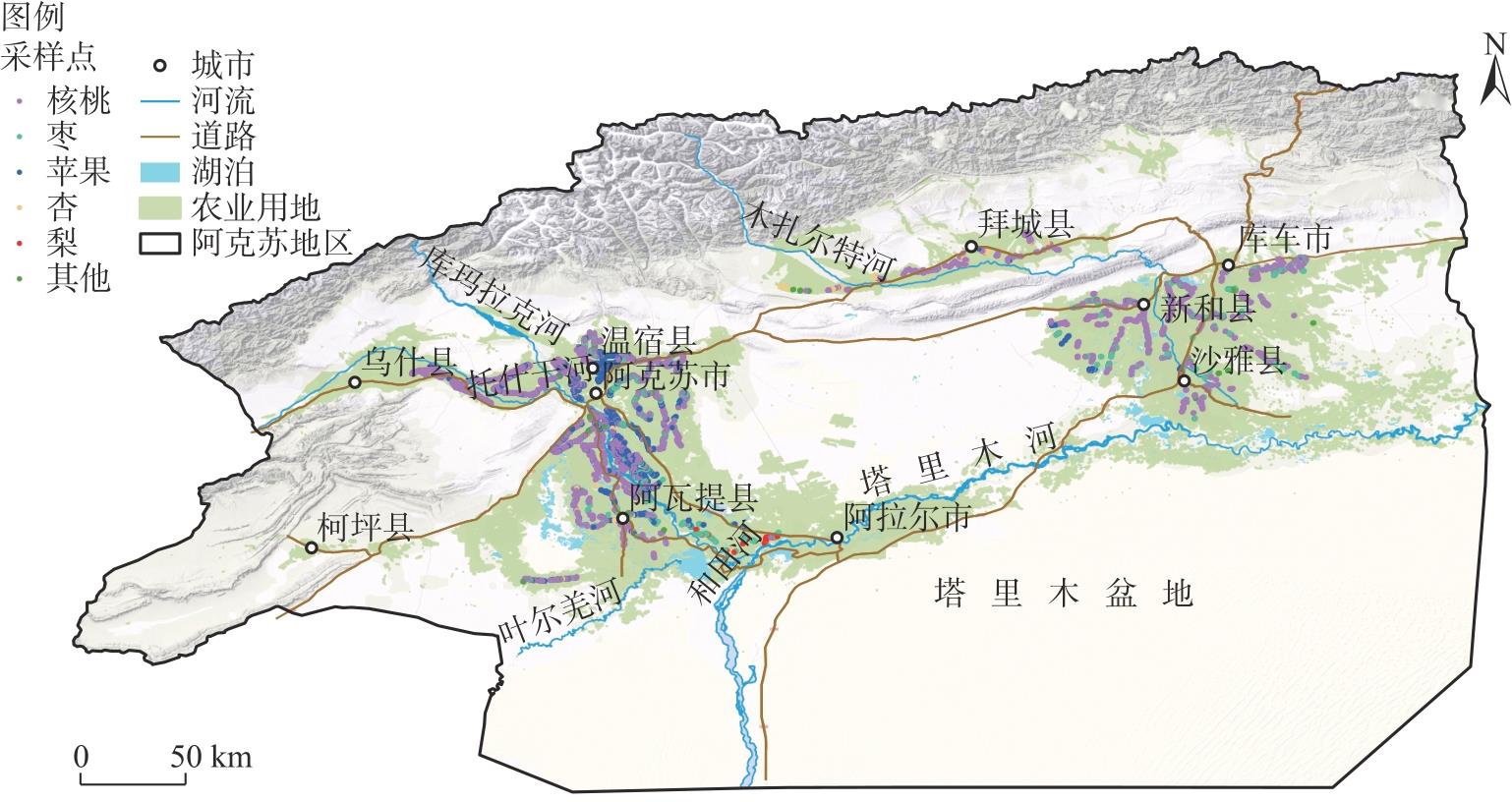
图2
技术流程 注:Sentinel-2为哨兵2号遥感影像;GF-2为高分2号遥感影像;U-Net是一种卷积神经网络架构。"
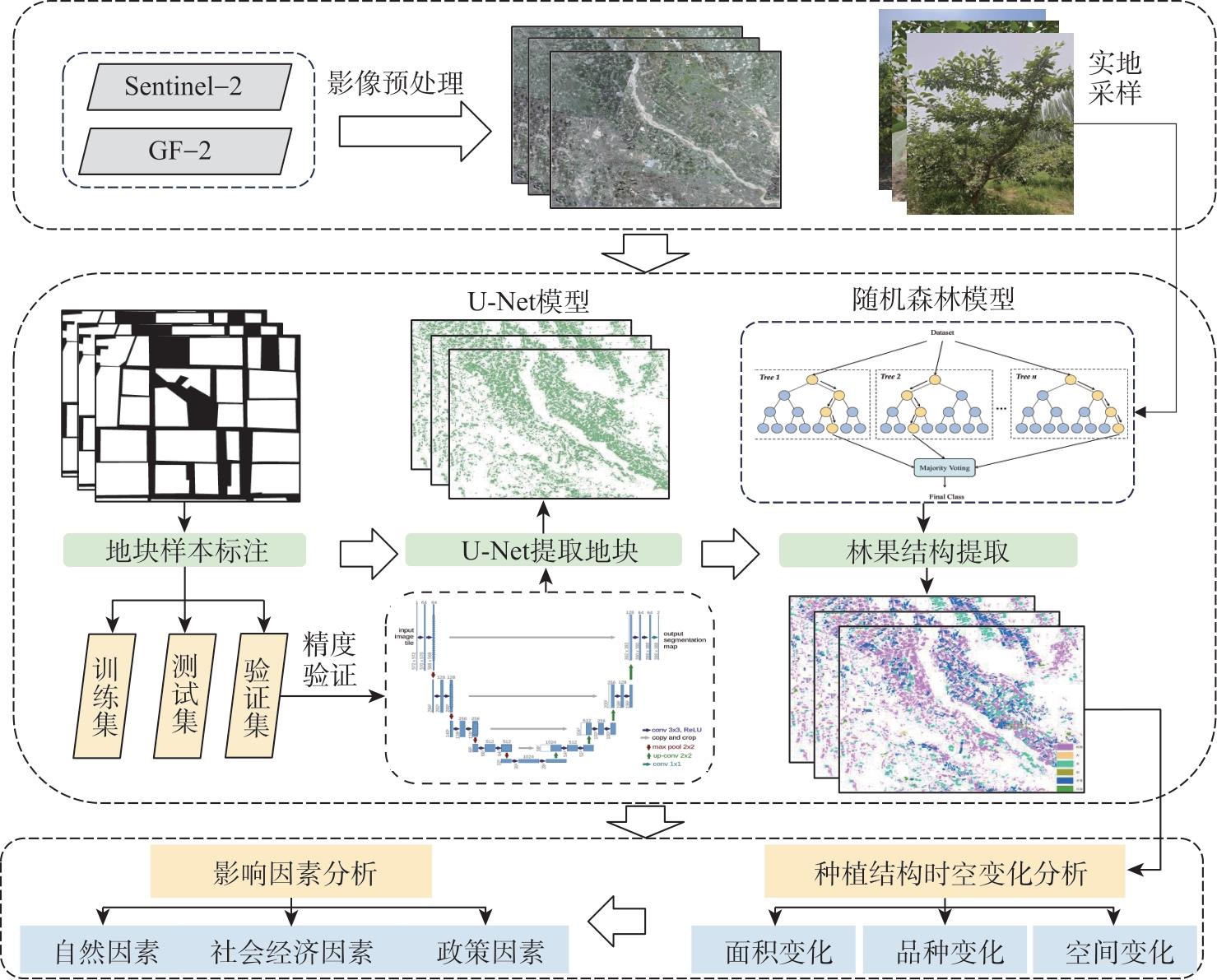
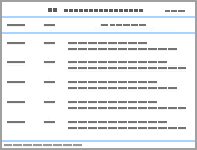
表1
随机森林分类精度"
| 品种 | 生产者精度/% | 用户精度/% |
|---|---|---|
| 核桃 | 93.76 | 94.88 |
| 枣 | 85.73 | 83.76 |
| 苹果 | 84.36 | 83.65 |
| 杏 | 90.20 | 87.62 |
| 梨 | 92.06 | 89.23 |
表2
2004—2024年阿克苏地区林果种植面积变化"
| 品种 | 2004年 | 2024年 | 2004—2024年 | |||||
|---|---|---|---|---|---|---|---|---|
| 面积/km2 | 面积占比/% | 面积/km2 | 面积占比/% | 面积变化/km2 | 面积变化率/% | |||
| 核桃 | 526.57 | 42.75 | 1657.12 | 63.93 | 1130.55 | 214.70 | ||
| 枣 | 143.20 | 11.63 | 416.48 | 16.07 | 273.28 | 190.84 | ||
| 苹果 | 49.45 | 4.01 | 268.28 | 10.35 | 218.83 | 442.53 | ||
| 杏 | 294.78 | 23.93 | 131.99 | 5.09 | -162.79 | -55.22 | ||
| 梨 | 93.35 | 7.58 | 92.01 | 3.55 | -1.34 | -1.44 | ||
| 其他 | 124.35 | 10.10 | 26.20 | 1.01 | -98.15 | -78.93 | ||
| 总计 | 1231.70 | 100.00 | 2592.08 | 100.00 | 1360.38 | - | ||
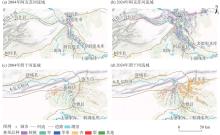
图3
2004—2024年阿克苏林果种植结构及分布"
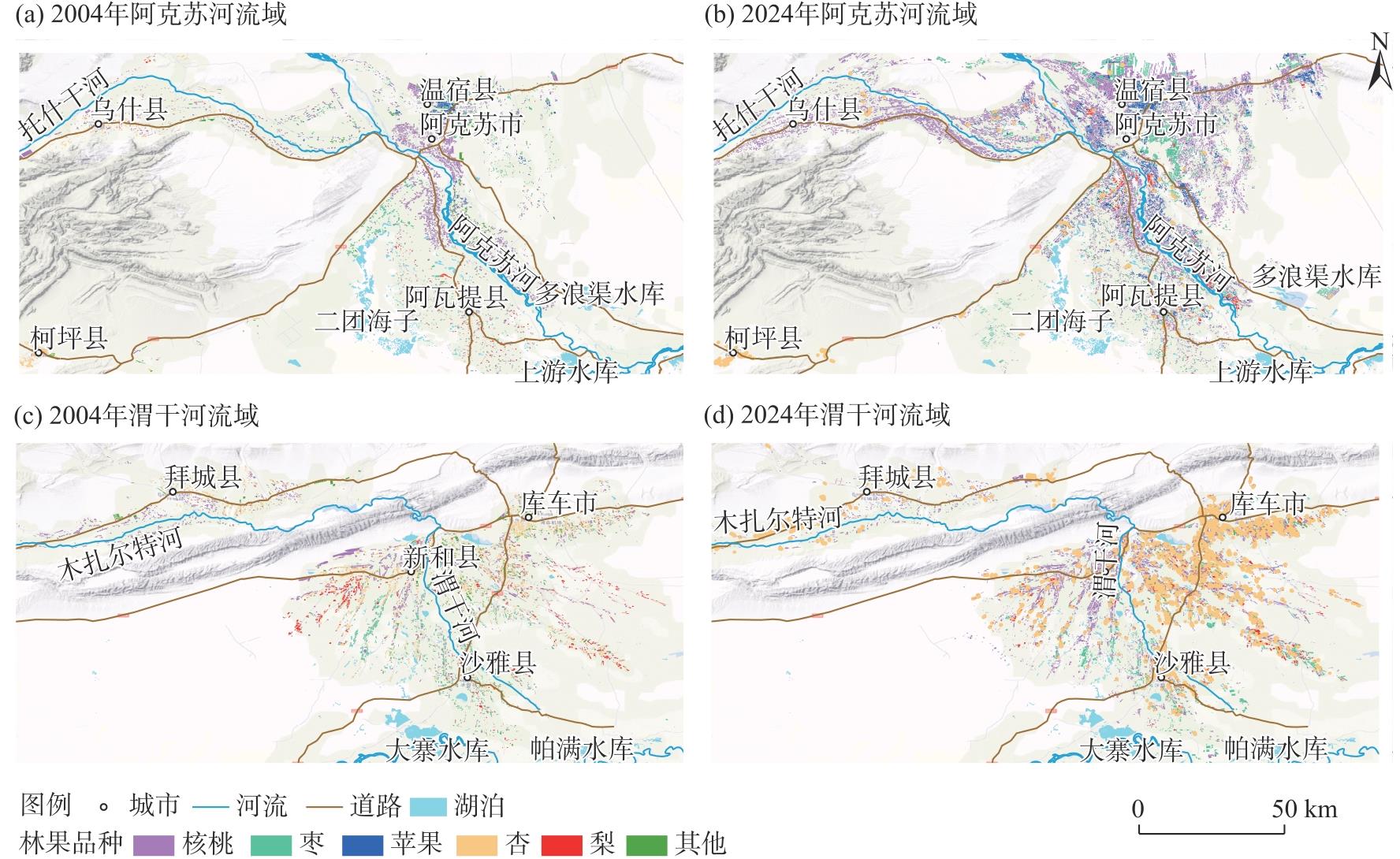
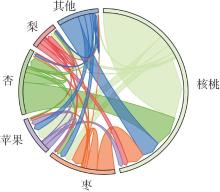
图4
2004—2024年阿克苏地区林果种植面积转化"
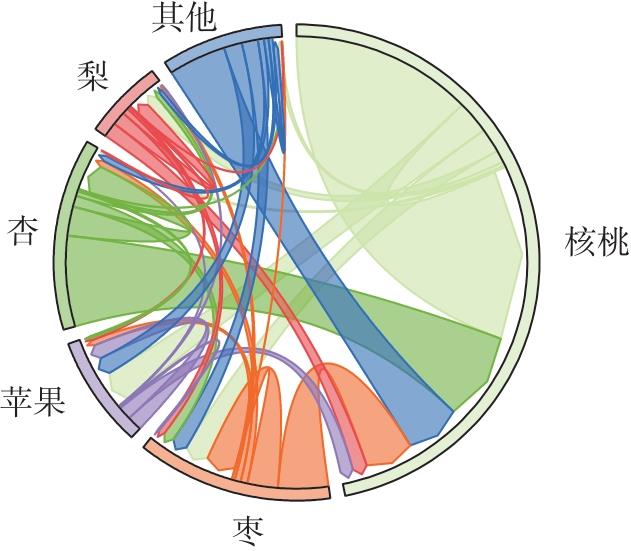
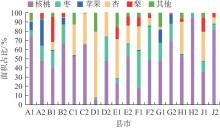
图5
阿克苏地区不同县市林果种植面积占比 注:A为阿克苏市;B为阿瓦提县;C为拜城县;D为柯坪县;E为库车市;F为沙雅县;G为温宿县;H为乌什县;J为新和县。A1、A2分别表示阿克苏市2004年、2024年,以此类推。"
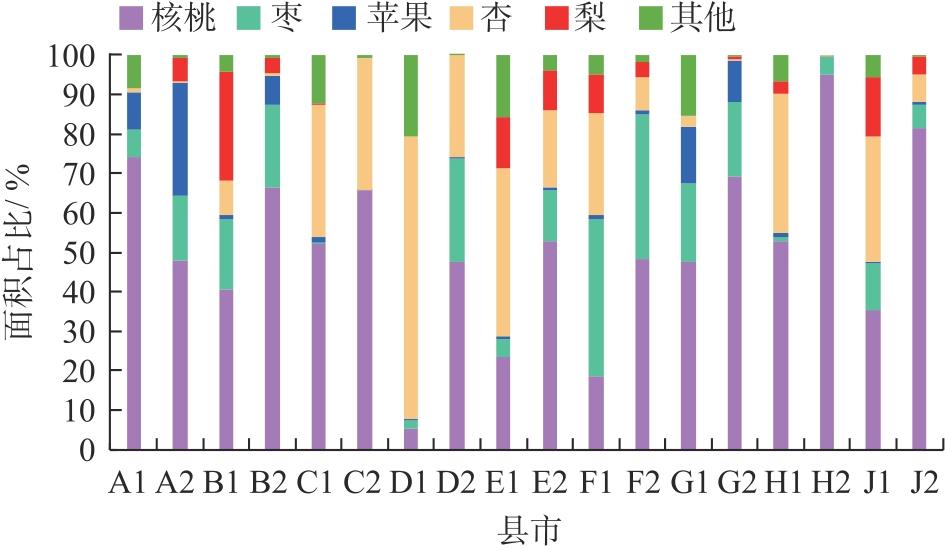
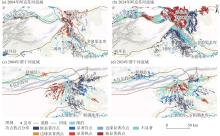
图6
阿克苏地区林果冷点热点分布"
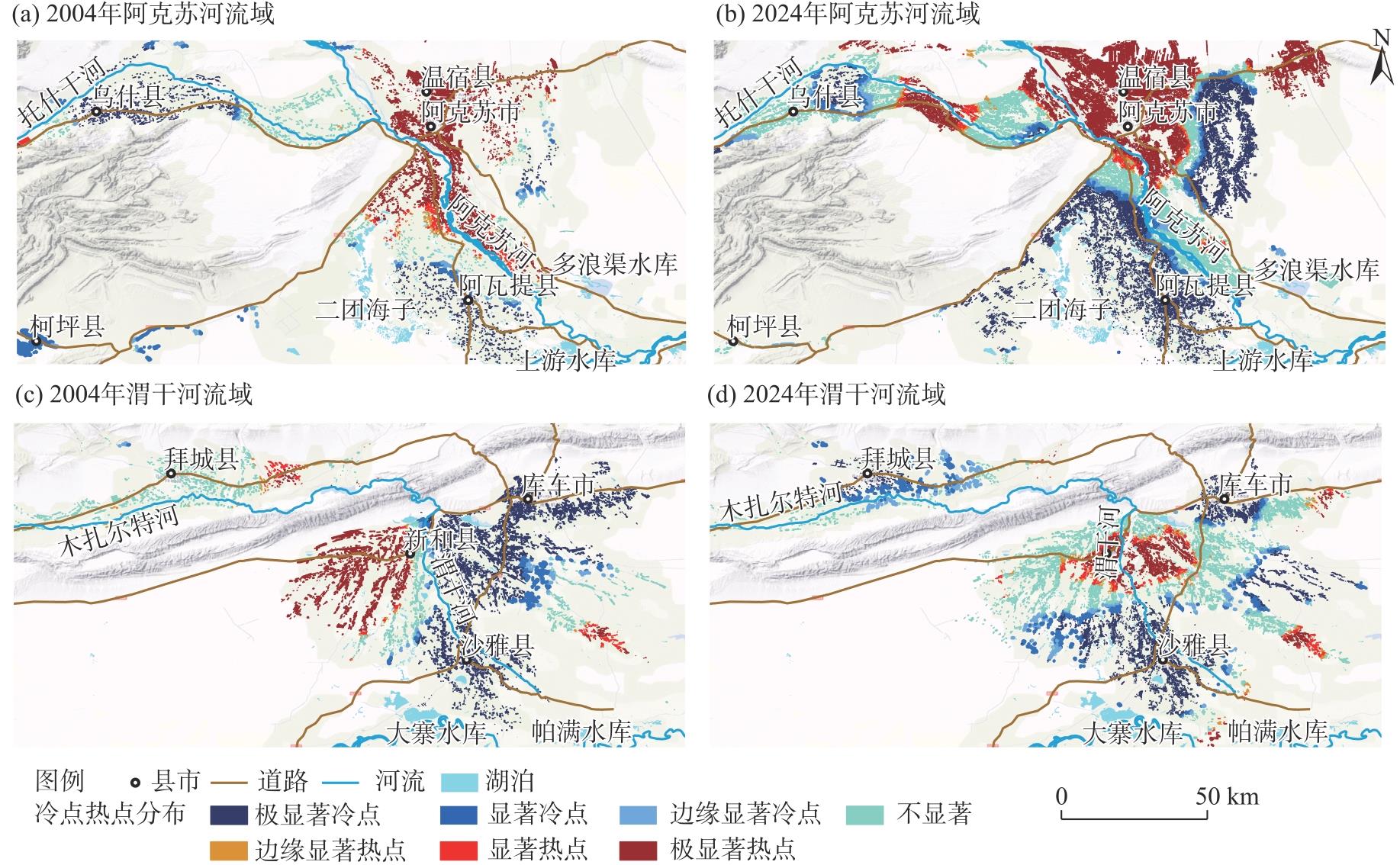
图7
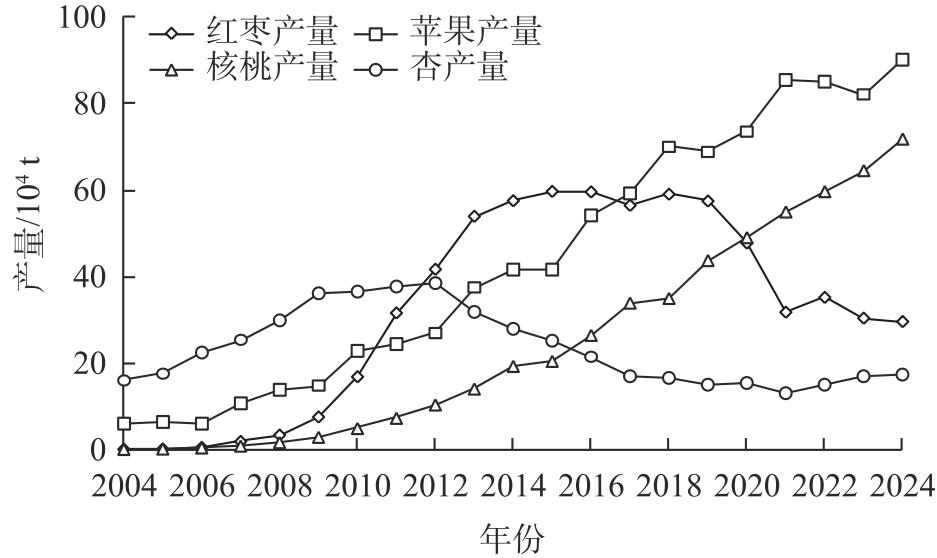
2004—2024年阿克苏地区林果产量变化"
| [1] |
Pretty J, Benton T G, Bharucha Z P, et al. Global assessment of agricultural system redesign for sustainable intensification[J]. Nature Sustainability, 2018, 1: 441-446.
doi: 10.1038/s41893-018-0114-0 |
| [2] | 李宇飞. 阿克苏市农业产业结构与布局优化研究[D]. 乌鲁木齐: 新疆大学, 2022. |
| [Li Yufei. Research on the optimization of agricultural industry structure and layout in Aksu City[D]. Urumqi: Xinjiang University, 2022.] | |
| [3] | 彭刚, 梁刚. 新疆阿克苏地区特色林果产业化发展的问题与思考[J]. 中国林业经济, 2018(2): 34-36. |
| [Peng Gang, Liang Gang. Research and reflection on the development of characteristic forest fruit industrialization in the Aksu Region of Xinjiang[J]. China Forestry Economics, 2018(2): 34-36.] | |
| [4] | 胡东宇, 高健, 黄力平, 等. 南疆四地州核桃产业现状与发展思路[J]. 北方园艺, 2021, 484(13): 148-154. |
| [Hu Dongyu, Gao Jian, Huang Liping, et al. Current situation and development idea of walnut industry in four prefectures of southern Xinjiang[J]. Northern Horticulture, 2021, 484(13): 148-154.] | |
| [5] |
蒋桂容, 覃建雄. 人与自然和谐共生新格局下评估干旱区林果业生产的生态功能价值——以新疆南疆地区为例[J]. 干旱区地理, 2022, 45(5): 1604-1614.
doi: 10.12118/j.issn.1000-6060.2021.512 |
|
[Jiang Guirong, Qin Jianxiong. Assessing the ecological function value of fruit plantation in arid areas under a new pattern of harmonious coexistence between man and nature: A case of southern Xinjiang[J]. Arid Land Geography, 2022, 45(5): 1604-1614.]
doi: 10.12118/j.issn.1000-6060.2021.512 |
|
| [6] | 张谱, 管文轲, 张和钰, 等. 人工绿洲林果产业用地时空变化——以新疆迪那河流域为例[J]. 林业科学, 2020, 56(12): 114-122. |
| [Zhang Pu, Guan Wenke, Zhang Heyu, et al. Spatial-temporal changes of forestry and fruit industry land in artificial oasis: A case study of Dina River Watershed in Xinjiang Uygur Autonomous Region[J]. Scientia Silvae Sinicae, 2020, 56(12): 114-122.] | |
| [7] | 陈仲新, 任建强, 唐华俊, 等. 农业遥感研究应用进展与展望_陈仲新[J]. 遥感学报, 2016, 20(5): 748-767. |
| [Chen Zhongxin, Ren Jianqiang, Tang Huajun, et al. Progress and perspectives on agricultural remote sensing research and applications in China[J]. Journal of Remote Sensing, 2016, 20(5): 748-767.] | |
| [8] | 代佳佳. 基于高分与多时相中分影像的苹果园地提取[J]. 中国农业资源与区划, 2022, 43(8): 140-148. |
| [Dai Jiajia. Apple orchard extraction based on high-resolution images and multi-temporal mid-resolution images[J]. Chinese Journal of Agricultural Resources and Regional Planning, 2022, 43(8): 140-148.] | |
| [9] | 任传帅, 黄文江, 叶回春, 等. 利用高分二号数据提取香蕉林信息及精度分析[J]. 遥感信息, 2017, 32(6): 78-84. |
| [Ren Chuanshuai, Huang Wenjiang, Ye Huichun, et al. Extraction of banana orchards based on GF-2 satellite imagery and its accuracy analysis[J]. Remote Sensing Information, 2017, 32(6): 78-84.] | |
| [10] | Liu P, Chen X. Intercropping classification from GF-1 and GF-2 satellite imagery using a rotation forest based on an SVM[J]. Isprs International Journal of Geo-Information, 2019, 8(2): 86, doi: 10.3390/ijgi8020086. |
| [11] | 靳镜宇, 白洁, 包安明, 等. 林农间作模式下和田绿洲特色林果结构遥感信息提取[J]. 农业工程学报, 2022, 38(3): 146-154. |
| [Jin Jingyu, Bai Jie, Bao Anming, et al. Extraction of the fruit trees based on satellite imagery under the pattern of forest and crops interplanting in Hotan oasis[J]. Transactions of the Chinese Society of Agricultural Engineering, 2022, 38(3): 146-154.] | |
| [12] |
姚金玺, 肖成志, 张志, 等. 基于GEE多源遥感数据的干旱区植被地物类型提取[J]. 干旱区研究, 2024, 41(1): 157-168.
doi: 10.13866/j.azr.2024.01.15 |
|
[Yao Jinxi, Xiao Chengzhi, Zhang Zhi, et al. Vegetation feature type extraction in arid regions based on GEE multi-source remote sensing data[J]. Arid Zone Research, 2024, 41(1): 157-168.]
doi: 10.13866/j.azr.2024.01.15 |
|
| [13] |
周欣兴, 赵林, 张文杰, 等. 基于Sentinel-2多时相影像的果树种植区遥感提取[J]. 浙江农业学报, 2022, 34(12): 2767-2777.
doi: 10.3969/j.issn.1004-1524.2022.12.20 |
|
[Zhou Xinxing, Zhao Lin, Zhang Wenjie, et al. Remote sensing extraction of fruit tree planting area based on Sentinel-2 multi-temporal images[J]. Acta Agriculturae Zhejiangensis, 2022, 34(12): 2767-2777.]
doi: 10.3969/j.issn.1004-1524.2022.12.20 |
|
| [14] | 宋荣杰, 宁纪锋, 常庆瑞, 等. 基于小波纹理和随机森林的猕猴桃果园遥感提取[J]. 农业机械学报, 2018, 49(4): 222-231. |
| [Song Rongjie, Ning Jifeng, Chang Qingrui, et al. Kiwifruit orchard mapping based on wavelet textures and random forest[J]. Transactions of the Chinese Society for Agricultural Machinery, 2018, 49(4): 222-231.] | |
| [15] |
张旭辉, 玉素甫江·如素力, 仇忠丽, 等. 基于Sentinel-2时序数据的新疆焉耆盆地农作物遥感识别与评估[J]. 干旱区地理, 2024, 47(4): 672-683.
doi: 10.12118/j.issn.1000-6060.2023.262 |
|
[Zhang Xuhui, Rusuli Yusufujiang, Qiu Zhongli, et al. Remote sensing identification and assessment of crops in the Yanqi Basin, Xinjiang, China based on Sentinel-2 time series data[J]. Arid Land Geography, 2024, 47(4): 672-683.]
doi: 10.12118/j.issn.1000-6060.2023.262 |
|
| [16] |
Maxwell A E, Warner T A, Fang F. Implementation of machine-learning classification in remote sensing: An applied review[J]. International Journal of Remote Sensing, 2018, 39: 2784-2817.
doi: 10.1080/01431161.2018.1433343 |
| [17] |
Peña M A, Liao R, Brenning A. Using spectrotemporal indices to improve the fruit-tree crop classification accuracy[J]. ISPRS Journal of Photogrammetry and Remote Sensing, 2017, 128: 158-169.
doi: 10.1016/j.isprsjprs.2017.03.019 |
| [18] | 沈江龙, 郑江华, 尼格拉·吐尔逊, 等. 若羌绿洲特色林果种植信息遥感提取方法适用性分析[J]. 中国农业资源与区划, 2022, 43(2): 206-219. |
| [Shen Jianglong, Zheng Jianghua, Tuerxun Nigela, et al. Applicability analysis of remote sensing extraction method of planting information of local fruit crop in Ruoqiang[J]. Chinese Journal of Agricultural Resources and Regional Planning, 2022, 43(2): 206-219.] | |
| [19] | 欧阳玲, 毛德华, 王宗明, 等. 基于GF-1与Landsat8 OLI影像的作物种植结构与产量分析[J]. 农业工程学报, 2017, 33(11): 147-156, 316. |
| [Ouyang Ling, Mao Dehua, Wang Zongming, et al. Analysis crops planting structure and yield based on GF-1 and Landsat8 OLI images[J]. Transactions of the Chinese Society of Agricultural Engineering, 2017, 33(11): 147-156, 316.] | |
| [20] | 张喜成. 开都-孔雀河流域农作物需水量及作物种植结构优化研究[D]. 乌鲁木齐: 新疆大学, 2019. |
| [Zhang Xicheng. Study on crop water requirement and crop planting structure optimization in Kaidu-Kongqi River Basin[D]. Urumqi: Xinjiang University, 2019.] | |
| [21] | 宋伟, 王运涛, 王立波, 等. 基于多源遥感影像的作物信息提取与需水量时空分析[J]. 生态学杂志, 2024, 43(4): 1113-1121. |
| [Song Wei, Wang Yuntao, Wang Libo, et al. Crop information extraction and spatial-temporal analysis of water demand based on multi-source remote sensing images[J]. Chinese Journal of Ecology, 2024, 43(4): 1113-1121.] | |
| [22] | 王翔, 戴俊生. 塔里木河流域林果业结构布局演变及驱动因素分析[J]. 新疆农业科学, 2024, 61(增刊1): 227-231. |
| [Wang Xiang, Dai Junsheng. Analysis and driving factors of structure layout of forest and fruit industry in Tarim River Basin[J]. Xinjiang Agricultural Sciences, 2024, 61(Suppl. 1): 227-231.] | |
| [23] | 肖永丽, 张少华, 库完汗·吾甫尔, 等. 新疆巴音郭楞蒙古自治州特色林果业发展现状及对策[J]. 果树资源学报, 2024, 5(5): 118-122. |
| [Xiao Yongli, Zhang Shaohua, Wufuer Kuwanhan, et al. Development situations and countermeasures of characteristic forest and fruit industry in Bayingol Mongolian Autonomous Prefecture, Xinjiang[J]. Journal of Resources, 2024, 5(5): 118-122.] | |
| [24] |
Ilniyaz O, Du Q, Kurban A, et al. An explanatory spatio-temporal pattern analysis of the fruit industry in Xinjiang, China, between 1988 and 2017[J]. Transactions in GIS, 2022, 26: 2383-2409.
doi: 10.1111/tgis.v26.5 |
| [25] | 李忠新, 杨军, 杨莉玲, 等. 南疆特色林果加工的现状及趋势[J]. 新疆农业科学, 2010, 47(11): 2177-2183. |
| [Li Zhongxin, Yang Jun, Yang Liling, et al. The present status and trends of the processing for the featured forest fruits in southern Xinjiang[J]. Xinjiang Agricultural Sciences, 2010, 47(11): 2177-2183.] | |
| [26] | 周晓雄. 阿克苏地区林果产业发展现状与对策[D]. 阿拉尔: 塔里木大学, 2021. |
| [Zhou Xiaoxiong. Present situation and countermeasures of forest fruit industry development in Aksu Region[D]. Aral: Tarim University, 2021.] | |
| [27] | 张圣微, 杨林, 叶德成, 等. 基于深度学习的内蒙古河套灌区2000—2021年种植结构提取与动态[J]. 农业工程学报, 2023, 39(18): 142-150. |
| [Zhang Shengwei, Yang Lin, Ye Decheng, et al. Extraction and dynamics of planting structure in Hetao Irrigation District of Inner Mongolia from 2000 to 2021 using deep learning[J]. Transactions of the Chinese Society of Agricultural Engineering, 2023, 39(18): 142-150.] | |
| [28] | Wang J J, Ding J L, Ran S, et al. Automatic pear extraction from high-resolution images by a visual attention mechanism network[J]. Remote Sensing, 2023, 15(13): 3283, doi: 10.3390/rs15133283. |
| [29] |
Breiman L. Random forests[J]. Machine Learning, 2001, 45: 5-32.
doi: 10.1023/A:1010933404324 |
| [30] |
Liang J X, Sawut M, Cui J T, et al. Object-oriented multi-scale segmentation and multi-feature fusion-based method for identifying typical fruit trees in arid regions using Sentinel-1/2 satellite images[J]. Scientific Reports, 2024, 14: 18230, doi: 10.21203/rs.3.rs-4191413/v1.
pmid: 39107396 |
| [31] | 邹彬. 西安市植被覆盖度冷热点时空动态变化及其风险分析[J]. 西安理工大学学报, 2020, 36(2): 197-204. |
| [Zou Bin. Temporal and spatial dynamic changes and risk analysis of cold spot and hot spot in vegetation coverage in Xi’an[J]. Journal of Xi’an University of Technology, 2020, 36(2): 197-204.] | |
| [32] | 彭睿. 新疆经济林果业高质量发展驱动力及实现路径研究[D]. 北京: 中国林业科学研究院, 2020. |
| [Peng Rui. Research on driving force and implementation path of high-quality development of economic forest and fruit industry in Xinjiang[D]. Beijing: Chinese Academy of Forestry, 2020.] | |
| [33] | 张少华, 肖永丽, 库完汗·吾甫尔, 等. 新疆杏产业发展现状、存在问题及对策建议[J]. 果农之友, 2024(8): 140-146. |
| [Zhang Shaohua, Xiao Yongli, Wupuer Kuwanhan, et al. Current development status, existing problems, and policy recommendations for the apricot industry in Xinjiang[J]. Fruit Growers’ Friend, 2024(8): 140-146.] | |
| [34] | 玛依拉·米吉提, 李晶, 赵向豪. 新发展格局下阿克苏苹果产业集群发展路径[J]. 北方园艺, 2025(1): 137-143. |
| [Mijiti Mayila, Li Jing, Zhao Xianghao. Development path of Aksu apple industrial cluster under the new development pattern[J]. Northern Horticulture, 2025(1): 137-143.] | |
| [35] |
王福红, 夏咏. 干旱区主要农作物生产时空格局演化及影响因素分析——以新疆地区为例[J]. 干旱区地理, 2025, 48(3): 444-454.
doi: 10.12118/j.issn.1000-6060.2024.201 |
|
[Wang Fuhong, Xia Yong. Spatio-temporal pattern evolution and influencing factors of main crops production in arid region: A case of Xinjiang[J]. Arid Land Geography, 2025, 48(3): 444-454.]
doi: 10.12118/j.issn.1000-6060.2024.201 |
|
| [36] | 杨杰, 高凡, 徐海量, 等. 阿克苏河流域生态系统服务价值时空演变及其驱动因素[J]. 环境科学, 2025, 46(4): 2385-2397. |
| [Yang Jie, Gao Fan, Xu Hailiang, et al. Spatial and temporal evolution of ecosystem service value and its driving factors in the Aksu River Basin[J]. Environmental Science, 2025, 46(4): 2385-2397.] | |
| [37] |
杨琛, 马斌, 何学敏, 等. 阿克苏河流域蒸散量时空变化规律与驱动因素[J]. 干旱区研究, 2025, 42(7): 1211-1221.
doi: 10.13866/j.azr.2025.07.05 |
| [Yang Chen, Ma Bin, He Xuemin, et al. Patterns of spatial and temporal variation of evapotranspiration in Aksu River Basin and factors driving them[J]. Arid Zone Research, 2025, 42(7): 1211-1221.] | |
| [38] | Jin J Y, Bai J, Bao A M, et al. Cost-benefit evaluation of walnut and jujube orchards under fruit tree-crop intercropping conditions in southern Xinjiang[J]. Forests, 2023, 14(11): 2259, doi: 10.3390/f14112259. |
| [39] | 张山清, 吉春容, 普宗朝. 气候变暖对新疆杏种植气候适宜性的影响[J]. 中国农业资源与区划, 2019, 40(9): 131-141. |
| [Zhang Shanqing, Ji Chunrong, Pu Zongchao. Impact of climate warming on apricot planting climatic suitability in Xinjiang[J]. Chinese Journal of Agrometeorology, 2019, 40(9): 131-141.] | |
| [40] | 徐德源, 王健, 任水莲, 等. 新疆杏的气候生态适应性及花期霜冻气候风险区划[J]. 中国生态农业学报(中英文), 2007, 15(2): 18-21. |
| [Xu Deyuan, Wang Jian, Ren Shuilian, et al. Ecological adaptability and venture climatic subarea zoning based on frost in florescence of apricot in Xinjiang[J]. Chinese Journal of Eco-Agriculture, 2007, 15(2): 18-21.] | |
| [41] | 吉春容, 邹陈, 陈丛敏, 等. 新疆特色林果冻害研究概述[J]. 沙漠与绿洲气象, 2011, 5(4): 1-4. |
| [Ji Chunrong, Zou Chen, Chen Congmin, et al. Review on frozen injury of fruit trees in Xinjiang[J]. Desert and Oasis Meteorology, 2011, 5(4): 1-4.] | |
| [42] | 吴顺科, 孙丙寅, 郑涛, 等. ‘树上干杏’果实生长与气象因子的相关性[J]. 西北林学院学报, 2022, 37(5): 111-116. |
| [Wu Shunke, Sun Bingyin, Zheng Tao, et al. Correlation between meteorological factors and fruit growth of ‘shushanggan apricot’[J]. Journal of Northwest Forestry University, 2022, 37(5): 111-116.] | |
| [43] | 阿克苏地区融媒体中心. 阿克苏地区打造产业链铺就“杏”福路[EB/OL]. [2023-06-27]. https://lcj.xinjiang.gov.cn/lcj/lcdt/202306/6df9a2f54e4445d6bb20a3651ec8e9ee.shtml. |
| [Aksu Regional Media Center. Aksu Region builds industrial chain, paving the “apricot” road to happiness[EB/OL]. [2023-06-27]. https://lcj.xinjiang.gov.cn/lcj/lcdt/202306/6df9a2f54e4445d6bb20a3651ec8e9ee.shtml.] | |
| [44] | 中国新闻网. 新疆库车: 低质果园改造助推“杏乡”林果业高质量发展[DB/OL]. [2024-03-22]. https://www.xj.chinanews.com.cn/dizhou/2024-03-22/detail-ihcytixp0494001.shtml. |
| [China News Service. Kuqa, Xinjiang: Upgrading low-quality orchards to promote high-quality development of the “apricot town” fruit industry[DB/OL]. [2024-03-22]. https://www.xj.chinanews.com.cn/dizhou/2024-03-22/detail-ihcytixp0494001.shtml.] |
| [1] | 徐筱, 王宁练, 石晨烈. 基于Sentinel-2和MODIS的七一冰川消融季反照率变化特征研究[J]. 干旱区地理, 2026, 49(8): 1560-1571. |
| [2] | 李森, 鱼腾飞, 赵鸿雁, 张志山, 颜长珍. 近50 a宁夏中部干旱带沙漠化时空变化及其逆转期驱动力[J]. 干旱区地理, 2026, 49(8): 1663-1674. |
| [3] | 陈先林, 闫志远, 刘全明, 张圣微. 1958—2023年内蒙古植被干旱时空特征与驱动因素分析[J]. 干旱区地理, 2026, 49(7): 1323-1335. |
| [4] | 伍蕊, 孙慧兰, 叶茂, 金晓亮, 周玫玲, 杨涵, 吴芳. 新疆伊犁河谷植被覆盖度时空变化特征及驱动力分析[J]. 干旱区地理, 2026, 49(6): 1157-1167. |
| [5] | 李素雲, 祝存兄, 王镜, 陈国茜, 史飞飞. SMAP升轨土壤水分产品在柴达木盆地的适用性和时空变化分析[J]. 干旱区地理, 2026, 49(6): 1203-1214. |
| [6] | 宁晓菊, 张立, 杨璐瑶, 毛齐正, 刘晓卓. 极端气候影响下黄河中下游地区宜居水平时空变化[J]. 干旱区地理, 2026, 49(5): 975-986. |
| [7] | 何雨晴, 王程, 黄威, 宋佳齐, 刘思源, 宗世敏. 生态优先视角下阿克苏国土空间开发与功能分区[J]. 干旱区地理, 2026, 49(5): 998-1012. |
| [8] | 安佳乐, 王蕾, 郑江华, 李建豪, 赵国兵, 尼格拉·吐尔逊, 伏蓉, 罗磊. 基于Sentinel-1和Sentinel-2的多特征组合下的火烧迹地变化检测[J]. 干旱区地理, 2026, 49(4): 791-803. |
| [9] | 王圣节, 张庆红, 桑铭键. 基于改进深度学习模型的干旱区城市PM2.5浓度预测与应用研究[J]. 干旱区地理, 2026, 49(2): 343-355. |
| [10] | 袁伟诚, 张会兰, 高慧茹, 谷方正. 十大孔兑流域植被覆盖度时空变化特征及其驱动力[J]. 干旱区地理, 2026, 49(10): 2094-2106. |
| [11] | 李锦珍, 吴田军, 骆剑承, 胡晓东, 周忠发, 曹峰. 基于“分区-分层”深度学习的干旱区土地利用遥感精细制图[J]. 干旱区地理, 2026, 49(10): 2122-2133. |
| [12] | 李若楠, 李均力, 刘帅琪, 都伟冰. 1960—2023年木孜塔格峰冰川变化及其地形因素分析[J]. 干旱区地理, 2026, 49(1): 23-34. |
| [13] | 黄静, 李婷, 李朋飞, Altansukh OCHIR, 杨梅焕, 王涛, 李莎. 2000—2020年蒙古国植被净初级生产力时空演变特征及其影响因素[J]. 干旱区地理, 2025, 48(9): 1541-1554. |
| [14] | 刘京会, 袁旭山, 李艳敏, 李鑫旭. 基于CMIP6的伊犁河流域极端降水时空特征分析研究[J]. 干旱区地理, 2025, 48(8): 1329-1341. |
| [15] | 张毅明, 汤宇磊, 冯俊波. 基于随机森林模型的青藏高原冰川预测及分析[J]. 干旱区地理, 2025, 48(8): 1342-1352. |
|
||