干旱区地理 ›› 2026, Vol. 49 ›› Issue (6): 1249-1263.doi: 10.12118/j.issn.1000-6060.2025.532 cstr: 32274.14.ALG2025532
尹继娇1,2( ), 杨扬1(), 徐新扬1, 杨图南1,3
收稿日期:2025-09-04
修回日期:2025-10-22
出版日期:2026-06-25
发布日期:2026-06-29
通讯作者:
杨扬(1974-),男,博士,教授,主要从事交通可持续发展等方面的研究. E-mail: yytongji@kust.edu.cn作者简介:尹继娇(1996-),女,博士研究生,主要从事交通可持续发展等方面的研究. E-mail: 18208861494@163.com
基金资助:
YIN Jijiao1,2(), YANG Yang1(), XU Xinyang1, YANG Tunan1,3
Received:2025-09-04
Revised:2025-10-22
Published:2026-06-25
Online:2026-06-29
摘要:
在全球经济数字化与不确定性加剧的背景下,城市韧性建设与物流系统升级成为区域发展的核心议题。然而,既有研究多将二者割裂探讨,缺乏对物流新质生产力与城市韧性协同网络演化规律与驱动因素的系统分析。基于2004—2023年中国30个省(区)的数据,综合运用VHSD-EM模型、耦合协调度模型、社会网络分析与二次指派程序等方法,系统分析中国物流新质生产力与城市韧性的空间组织网络结构演化及驱动力。结果表明:(1) 二者在时间维度上呈现同步演进与“东部>全国>中部>西部”的梯度差异。(2) 耦合协调度稳步提升但差距仍存,正处于从割裂状态向协调共生的转型阶段;呈现东高西低的稳定格局,空间格局实现从轻度失调到濒临失调的阶段性跃迁。(3) 协同网络结构从松散、等级化向多中心、扁平化转型,稳健性持续增强,并表现出“1+1>2”的非线性协同增益与东部核心区的“虹吸效应”;空间上形成环渤海与长三角核心区、东南沿海辐射区、中部-东北资源区和西部边缘区4大板块。(4) 协同网络发展遵循“三促三抑”驱动路径,其中经济水平、科技创新和对外开放为正向驱动,产业结构、政府干预和交通差异为负向约束。研究结果为促进中国物流新质生产力与城市韧性的高质量协同发展提供理论参考和政策启示。
尹继娇, 杨扬, 徐新扬, 杨图南. 中国物流新质生产力与城市韧性的空间组织网络结构演化及驱动力[J]. 干旱区地理, 2026, 49(6): 1249-1263.
YIN Jijiao, YANG Yang, XU Xinyang, YANG Tunan. Evolution and drivers of the spatial organizational network structure of China’s logistics new quality productivity and urban resilience[J]. Arid Land Geography, 2026, 49(6): 1249-1263.
图1
物流新质生产力的指标体系 注:GDP为地区生产总值; 为正向指标; 为负向指标。下同。"
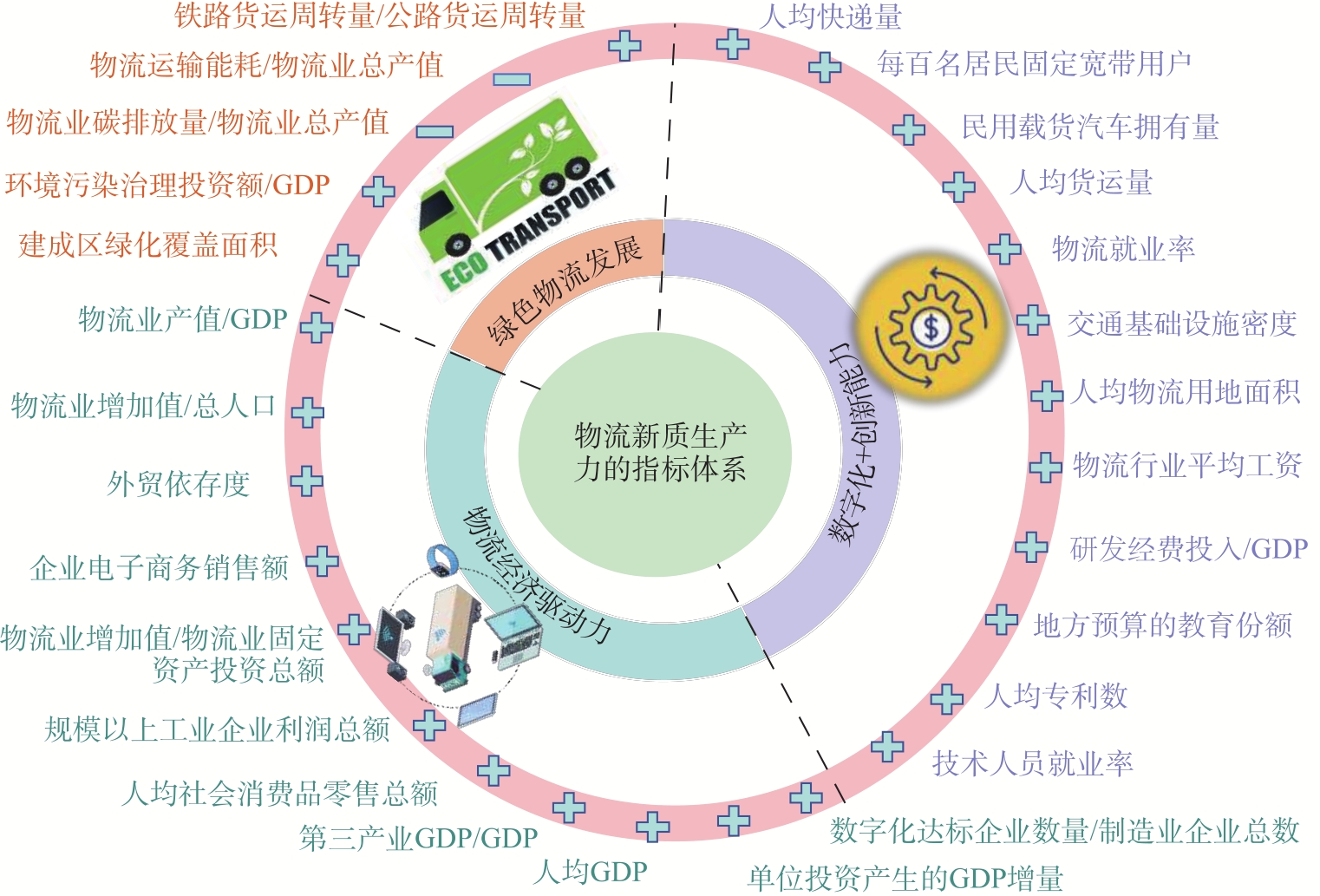
图2
城市韧性的指标体系"
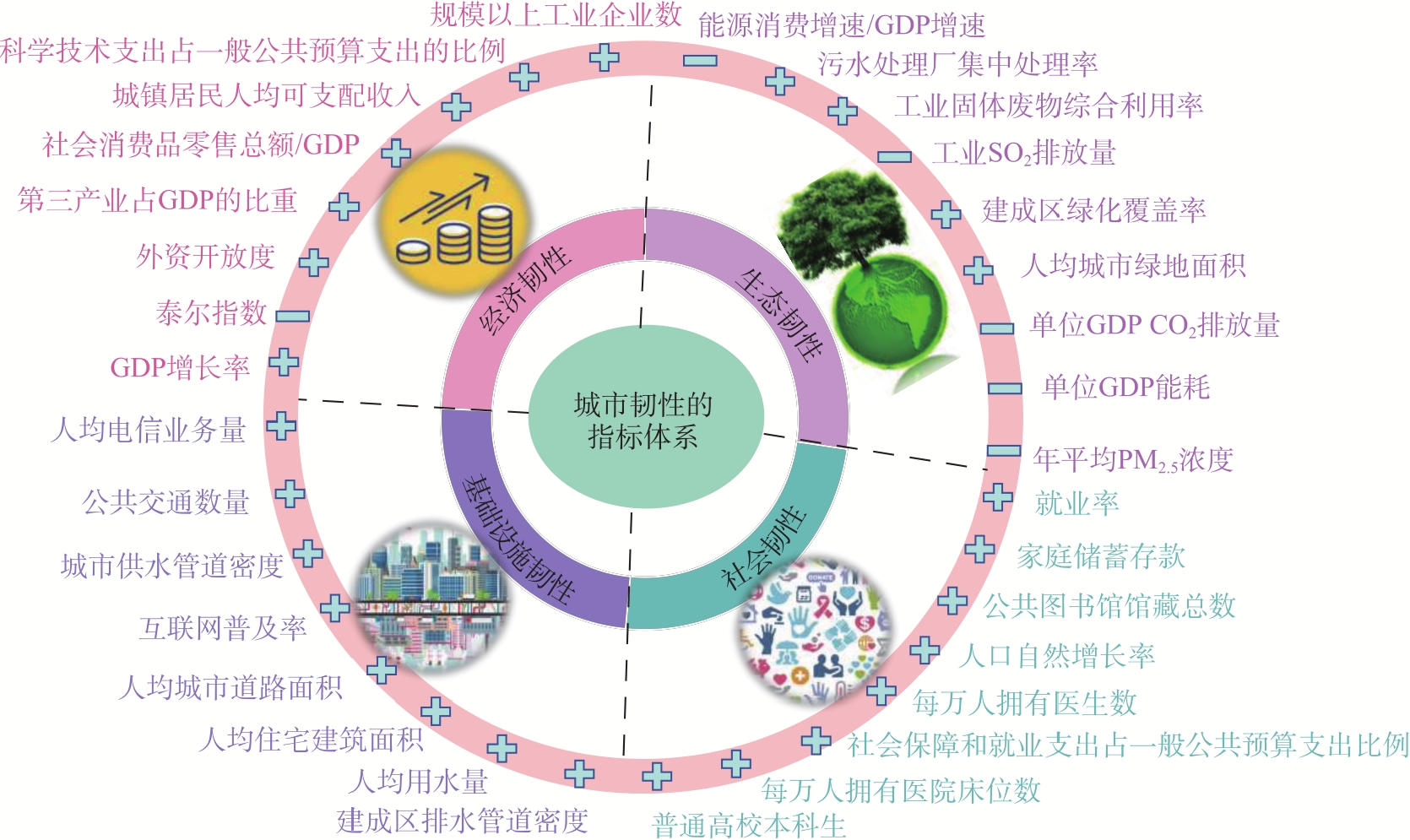

表1
数据来源"
| 指标 | 数据来源 |
|---|---|
| 工业SO2排放量、工业固体废物综合利用率、污水处理厂集中处理率、年平均PM2.5浓度、环境污染治理投资额/GDP | 《中国环境统计年鉴》 |
| 建成区绿化覆盖面积 | 中国城乡建设统计年鉴 |
| 数字化达标企业数量/制造业企业总数 | 工业和信息化部《智能制造试点示范企业名录》 |
| 技术人员就业率 | 万得数据库 |
| 人均物流用地面积 | 中国城市建设统计年鉴 |
| 物流业产值/GDP、物流业增加值/总人口、物流业增加值/物流业固定资产投资总额 | 企业信息化和数字化转型统计报表 |
| 环境污染治理投资额/GDP、年平均PM2.5浓度 | 《中国生态环境状况公报》和中国科学院资源环境科学与数据中心 |
| 其他指标 | 《中国统计年鉴》和各省统计年鉴 |
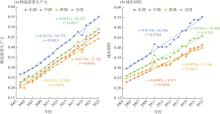
图3
2004—2023年中国物流新质生产力与城市韧性的时间演变趋势 注:r2为趋势线对数据的拟合程度。下同。"
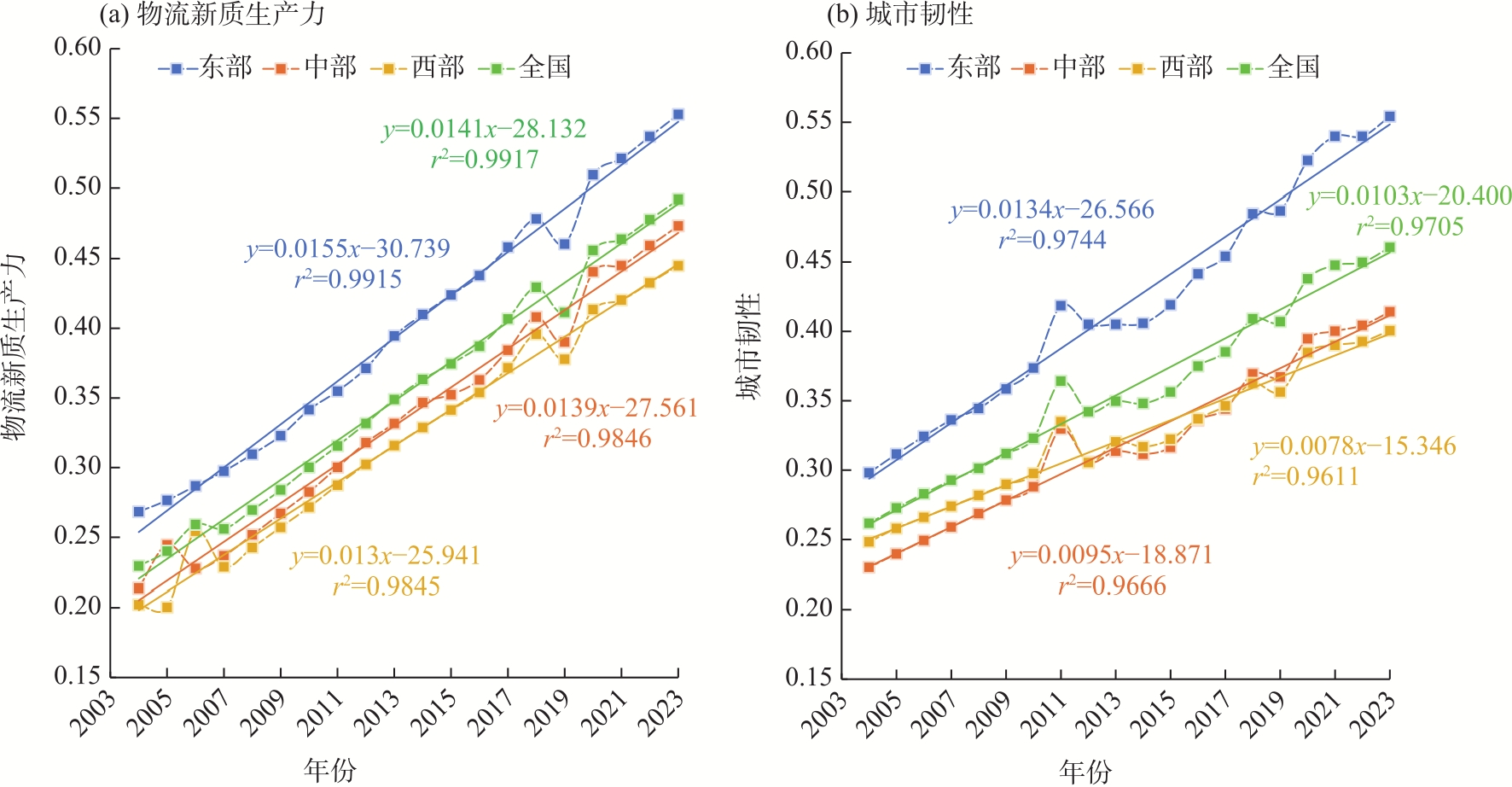
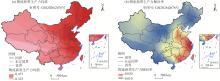
图4
2004—2023年中国物流新质生产力均值与倾向率的空间分布"
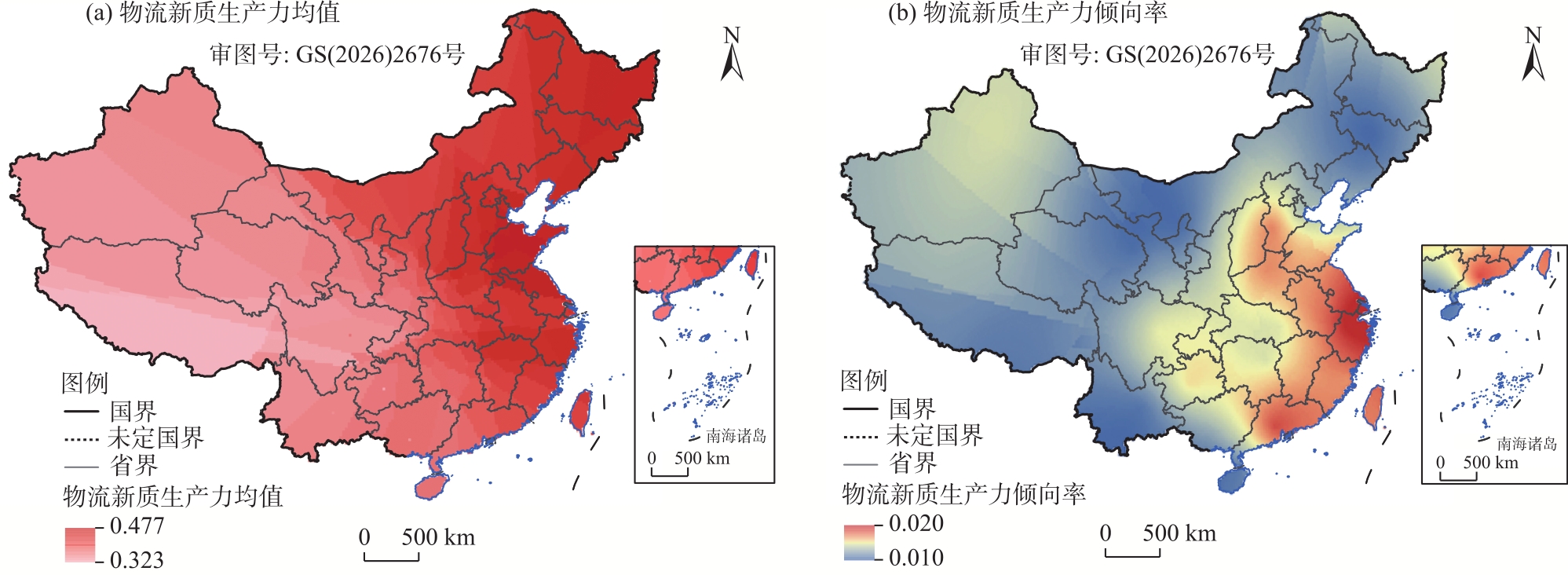
图5
2004—2023年中国城市韧性均值与倾向率的空间分布"
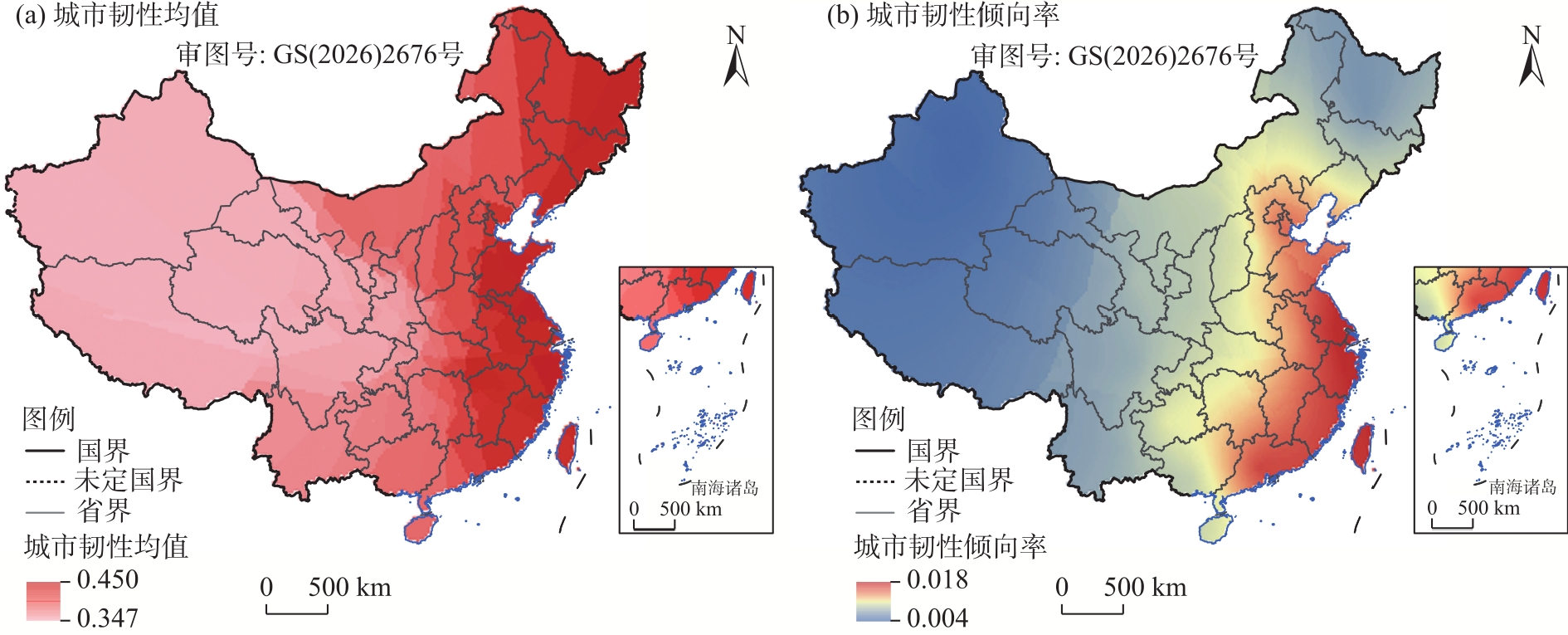
图6
2004—2023年中国物流新质生产力与城市韧性耦合协调度的时间演变趋势"
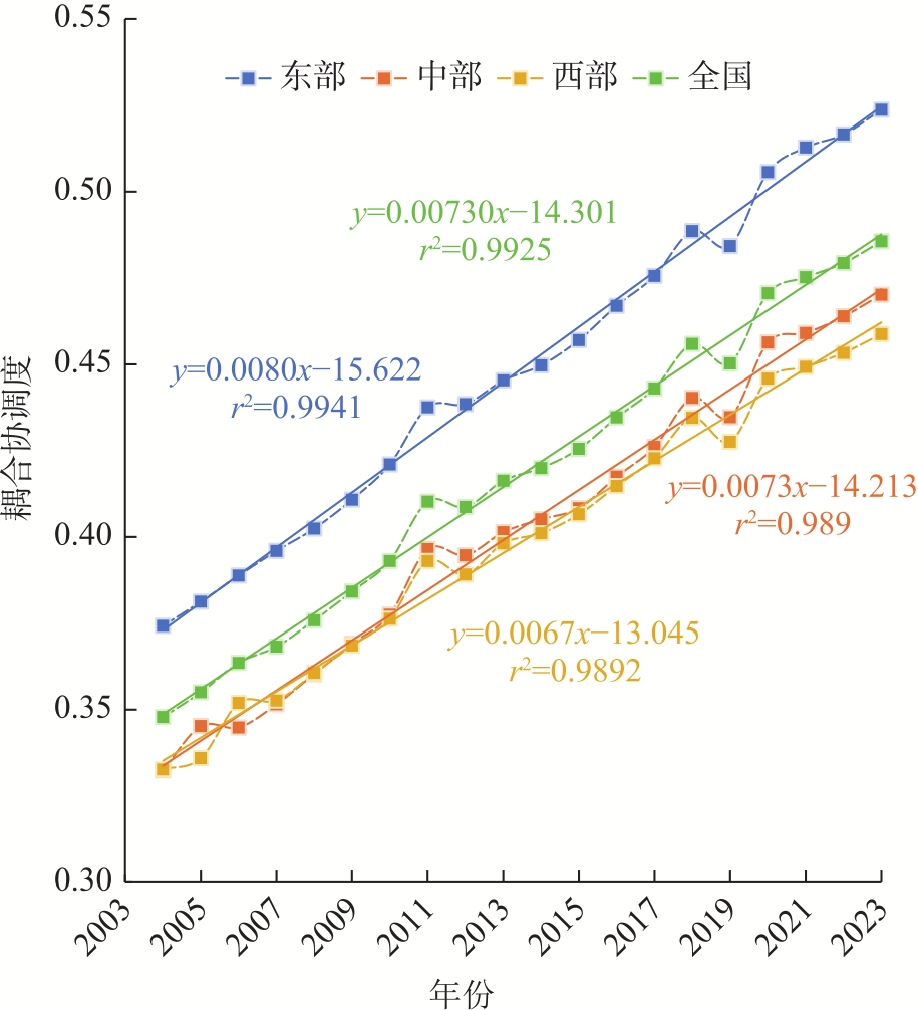
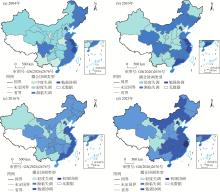
图7
2004—2023年中国物流新质生产力与城市韧性耦合协调类型的空间分布"
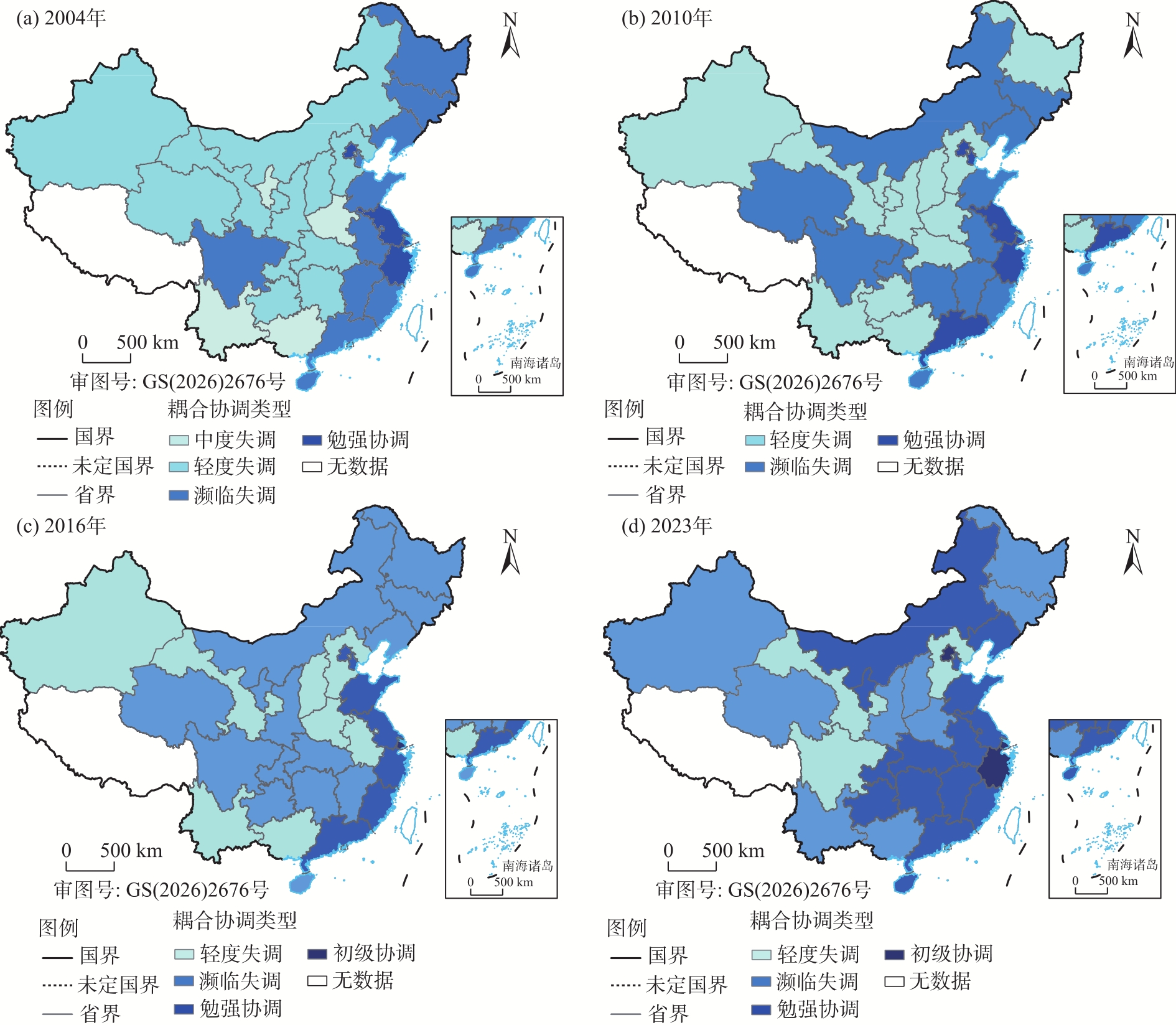
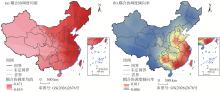
图8
2004—2023年中国物流新质生产力与城市韧性耦合协调度均值与倾向率的空间分布"
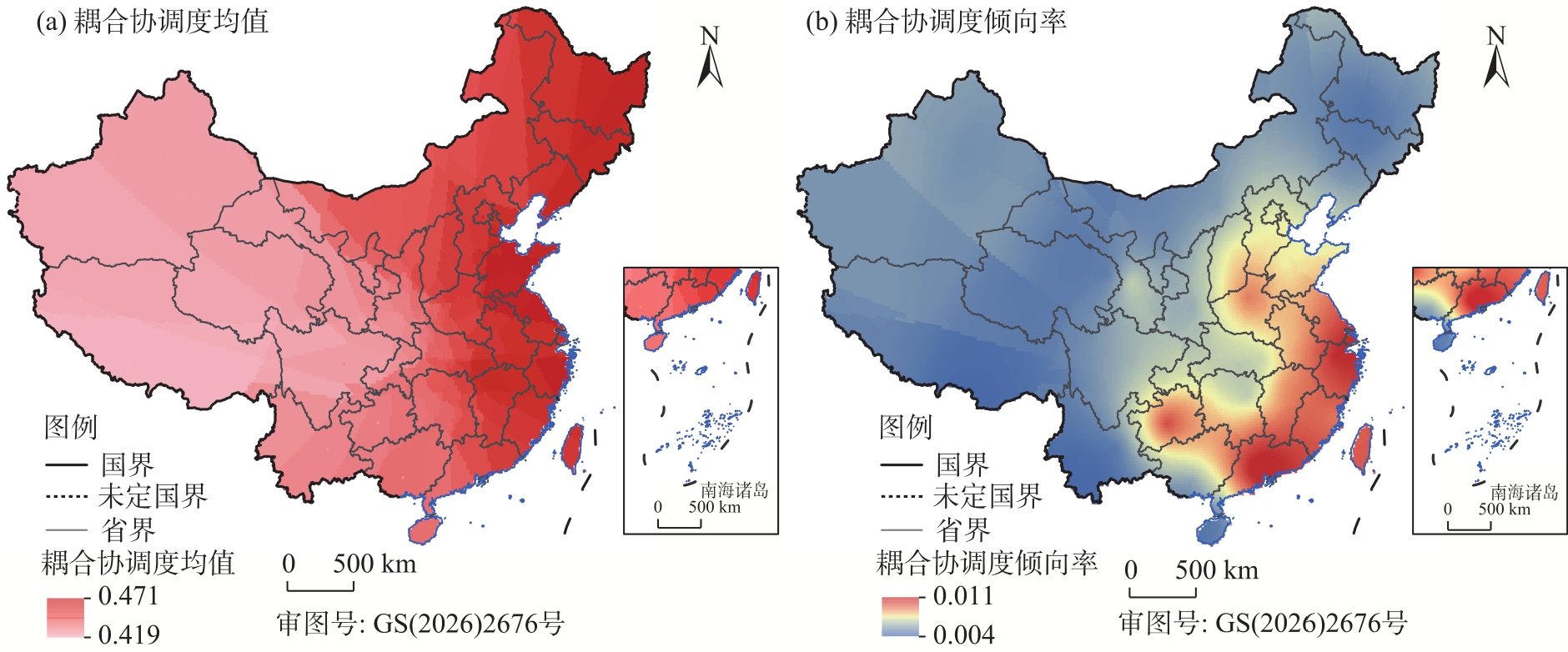
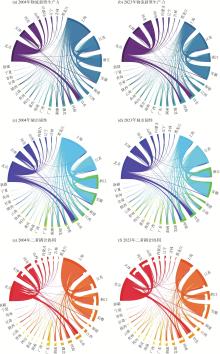
图9
2004年和2023年中国物流新质生产力与城市韧性耦合协同空间关联强度"
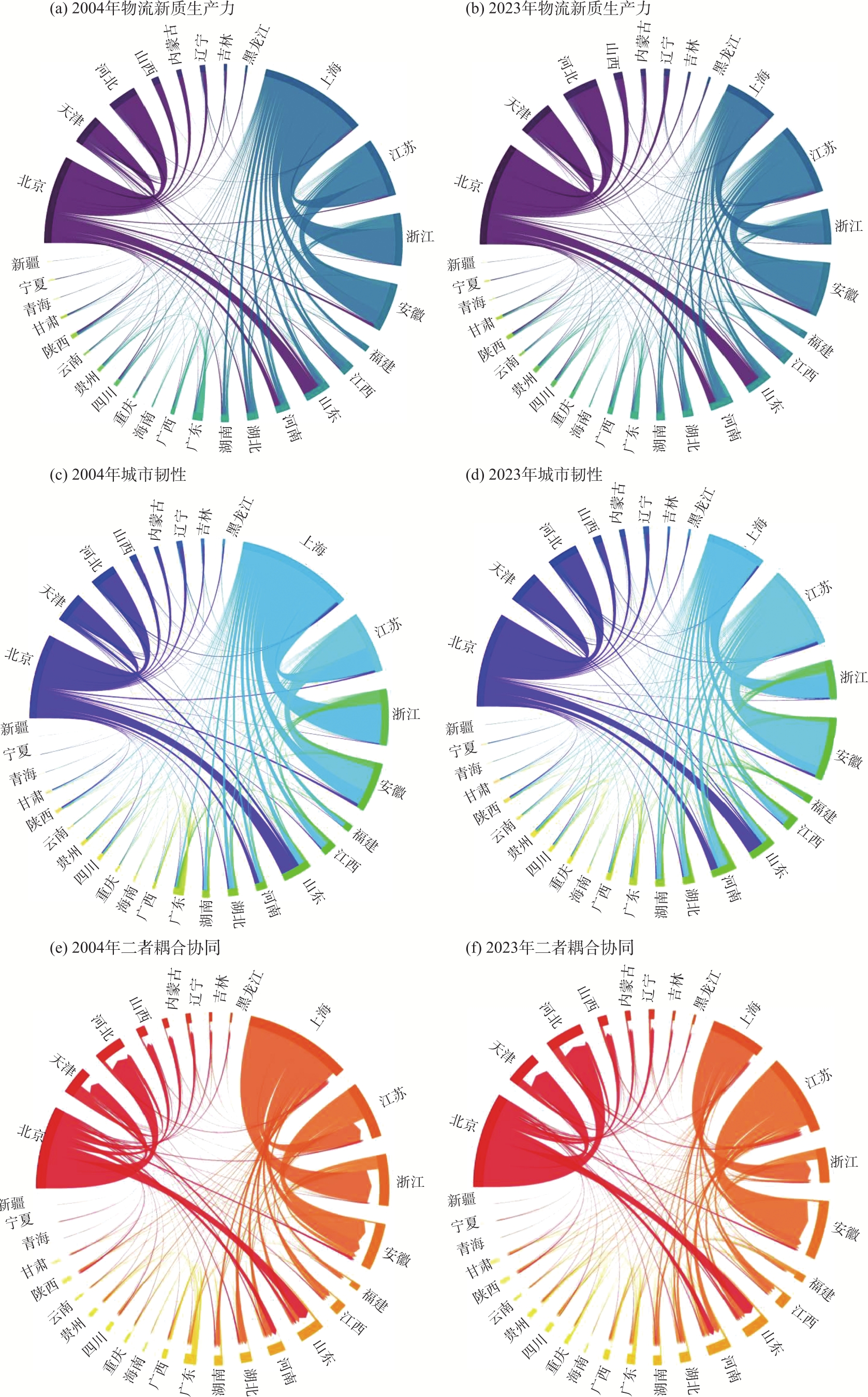
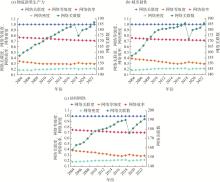
图10
2004—2023年中国物流新质生产力与城市韧性协同的整体网络结构"
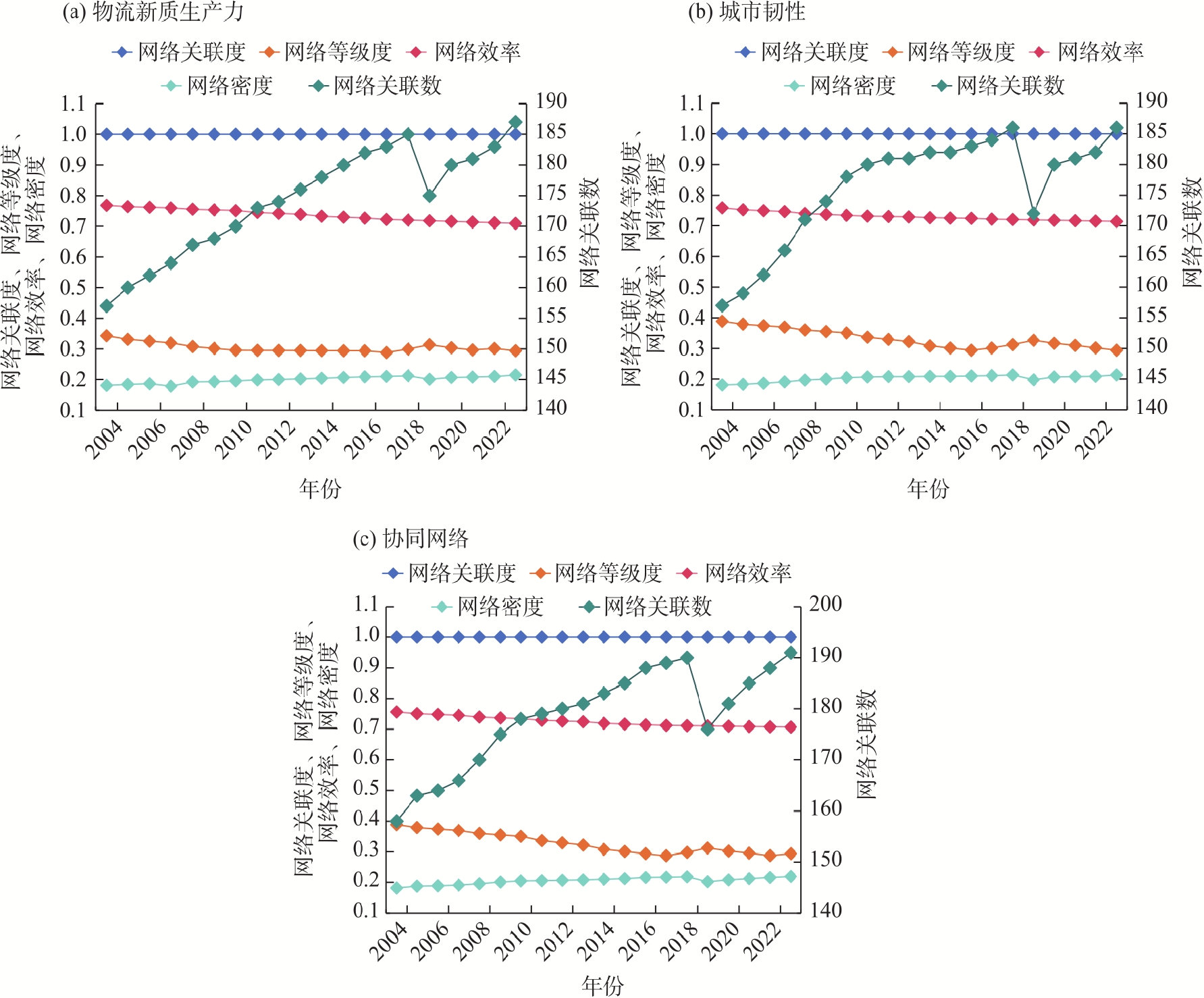
表2
中国物流新质生产力与城市韧性协同空间关联网络结构的度数中心度"
| 物流新质生产力 | 城市韧性 | 二者耦合协同 | |||||
|---|---|---|---|---|---|---|---|
| 2004年 | 2023年 | 2004年 | 2023年 | 2004年 | 2023年 | ||
| 89.655(北京) | 89.655(上海) | 93.103(上海) | 86.207(上海) | 93.103(上海) | 89.655(上海) | ||
| 82.759(上海) | 86.207(北京) | 89.655(北京) | 86.207(江苏) | 86.207(北京) | 86.207(江苏) | ||
| 62.069(江苏) | 86.207(江苏) | 65.517(江苏) | 82.759(北京) | 68.966(浙江) | 82.759(北京) | ||
| 62.069(浙江) | 62.069(浙江) | 65.517(浙江) | 65.517(浙江) | 65.517(江苏) | 65.517(浙江) | ||
| 58.621(天津) | 44.828(福建) | 58.621(广东) | 44.828(福建) | 55.172(天津) | 48.276(福建) | ||
| 55.172(广东) | 44.828(广东) | 55.172(天津) | 44.828(广东) | 55.172(广东) | 44.828(广东) | ||
| 27.586+(重庆) | 41.379-(河南) | 24.138+(重庆) | 41.379-(河南) | 24.138(山东) | 41.379-(河南) | ||
| 24.138(山东) | 37.931-(湖北) | 24.138+(四川) | 34.483-(湖北) | 24.138+(重庆) | 41.379+(甘肃) | ||
| 24.138+(四川) | 37.931(甘肃) | 24.138+(陕西) | 34.483+(甘肃) | 24.138+(四川) | 34.483-(湖北) | ||
| 24.138+(陕西) | 31.034(天津) | 24.138+(甘肃) | 31.034(天津) | 24.138+(陕西) | 31.034(天津) | ||
| 28.276(全国) | 33.793(全国) | 29.195(全国) | 33.333(全国) | 29.655(全国) | 34.023(全国) | ||
表3
中国物流新质生产力与城市韧性协同空间关联网络结构的接近中心度"
| 物流新质生产力 | 城市韧性 | 二者耦合协同 | |||||
|---|---|---|---|---|---|---|---|
| 2004年 | 2023年 | 2004年 | 2023年 | 2004年 | 2023年 | ||
| 90.625(北京) | 87.879(北京) | 93.548(上海) | 87.879(上海) | 93.548(上海) | 90.625(上海) | ||
| 78.378(上海) | 85.294(上海) | 90.625(北京) | 87.879(江苏) | 87.879(北京) | 87.879(江苏) | ||
| 67.442(天津) | 82.857(江苏) | 72.500(江苏) | 82.857(北京) | 76.316(浙江) | 82.857(北京) | ||
| 67.442(江苏) | 67.442(浙江) | 72.500(浙江) | 69.048(浙江) | 74.359(江苏) | 69.048(浙江) | ||
| 67.442(浙江) | 61.702-(河南) | 65.909(天津) | 61.702-(河南) | 67.442(天津) | 61.702-(河南) | ||
| 56.863(山东) | 59.184(天津) | 55.769(山东) | 58.000(天津) | 56.863(山东) | 58.000(天津) | ||
| 53.704-(河南) | 55.769-(湖北) | 52.727-(江西) | 55.769(山东) | 54.717-(河南) | 56.863(山东) | ||
| 50.000(辽宁) | 54.717(山东) | 51.786-(安徽) | 55.769-(湖北) | 52.727-(安徽) | 55.769-(湖北) | ||
| 49.153(河北) | 52.727(河北) | 50.877(广东) | 52.727-(江西) | 52.727-(江西) | 53.704-(江西) | ||
| 49.153-(山西) | 50.877-(江西) | 50.000(辽宁) | 51.786(河北) | 50.877-(湖北) | 52.727-(安徽) | ||
| 38.701(全国) | 39.207(全国) | 39.829(全国) | 40.146(全国) | 38.550(全国) | 40.411(全国) | ||
表4
中国物流新质生产力与城市韧性协同空间关联网络结构的中介中心度"
| 物流新质生产力 | 城市韧性 | 二者耦合协同 | |||||
|---|---|---|---|---|---|---|---|
| 2004年 | 2023年 | 2004年 | 2023年 | 2004年 | 2023年 | ||
| 24.846(广东) | 24.906(广东) | 21.706(广东) | 15.013(上海) | 25.281(广东) | 20.220-(江西) | ||
| 20.972(北京) | 17.012+(贵州) | 21.613(北京) | 14.432(北京) | 17.364(上海) | 17.855(广东) | ||
| 20.177-(江西) | 16.710(江西) | 19.660(上海) | 10.396(广东) | 12.953-(江西) | 13.424+(重庆) | ||
| 16.465(上海) | 16.592+(重庆) | 9.894-(江西) | 10.108-(湖南) | 11.096(北京) | 11.713(江苏) | ||
| 6.784-(河南) | 16.205(北京) | 4.516-(湖北) | 9.043(福建) | 6.221-(湖北) | 11.236(上海) | ||
| 5.805(江苏) | 16.172(上海) | 3.664(辽宁) | 7.263(江苏) | 5.110(江苏) | 11.210(北京) | ||
| 5.518(天津) | 8.654(江苏) | 2.186(江苏) | 6.667-(江西) | 2.745(浙江) | 9.745+(贵州) | ||
| 4.369(辽宁) | 8.148+(甘肃) | 1.837(浙江) | 5.160+(贵州) | 2.722(天津) | 9.405(福建) | ||
| 4.027(浙江) | 7.341-(湖南) | 1.813+(四川) | 4.508+(重庆) | 2.513-(河南) | 9.315+(甘肃) | ||
| 3.476+(贵州) | 4.707-(河南) | 1.690+(贵州) | 4.290-(河南) | 1.882+(四川) | 4.312+(云南) | ||
| 3.883(全国) | 5.037(全国) | 3.173(全国) | 3.370(全国) | 3.108(全国) | 4.528(全国) | ||
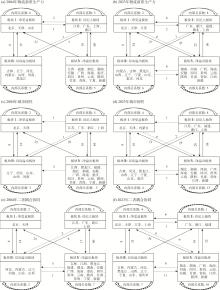
图11
2004—2023年中国物流新质生产力与城市韧性协同空间组织网络四大板块的传递关系 注:实线箭头表示像矩阵两板块为1;数据及箭头表示板块之间溢出数及溢出方向。"
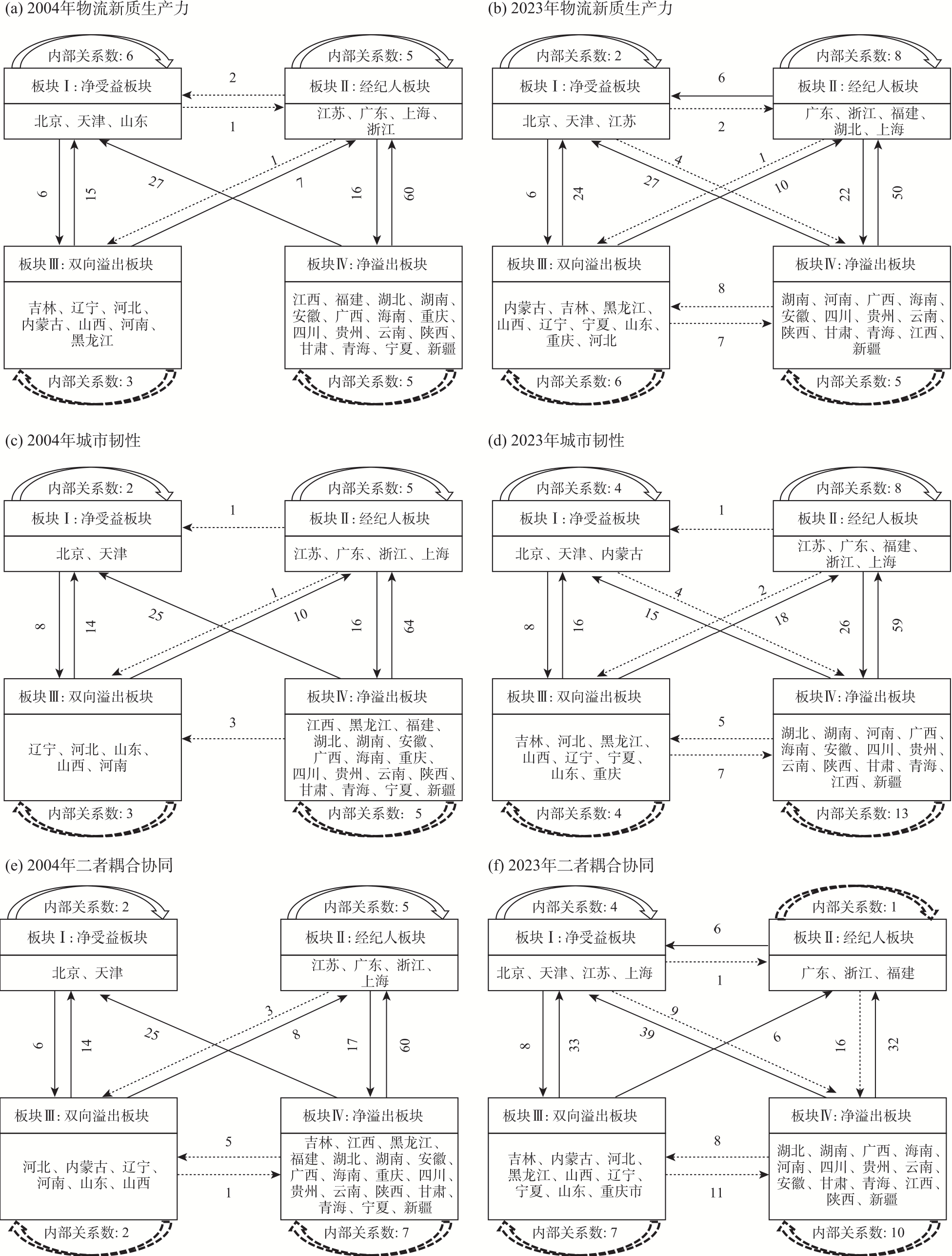
表5
QAP实证结果"
| 变量 | 2004年 | 2010年 | 2016年 | 2023年 |
|---|---|---|---|---|
| 经济发展水平 | 0.294*** | 0.398*** | 0.371*** | 0.414** |
| 产业结构 | -0.377 | -0.127* | -0.074** | -0.022** |
| 政府干预 | -0.167** | -0.245** | -0.265** | -0.301** |
| 生态本底 | -0.028 | -0.129 | -0.122 | 0.068 |
| 科技创新水平 | 0.158*** | 0.187*** | 0.198*** | 0.208*** |
| 对外开放水平 | 0.275*** | 0.336*** | 0.1241** | 0.091** |
| 基础设施发展 | -0.120*** | -0.077*** | -0.248*** | -0.259*** |
| 环境质量 | 0.289 | 0.273 | 0.186 | 0.078 |
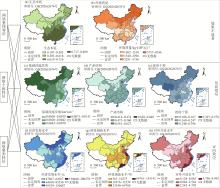
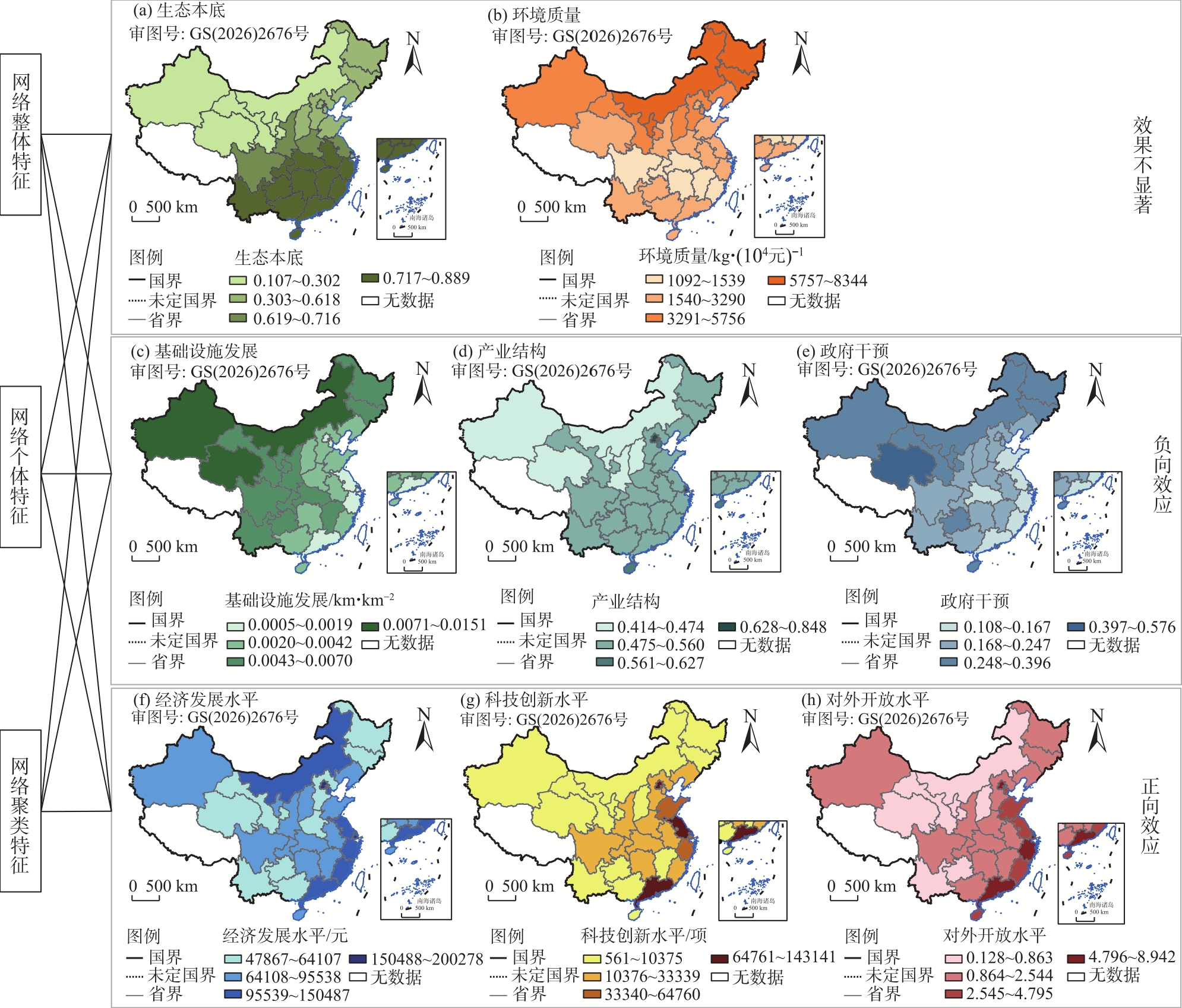
图12
中国物流新质生产力与城市韧性协同空间组织网络结构演化的驱动力"
| [1] | 习近平. 发展新质生产力是推动高质量发展的内在要求和重要着力点[J]. 求是, 2024(11): 4-8. |
| [Xi Jinping. Developing new quality productive forces is the intrinsic requirement and important focus of promoting high-quality development[J]. Qiushi, 2024(11): 4-8. ] | |
| [2] | 刘伟. 科学认识与切实发展新质生产力[J]. 经济研究, 2024, 59(3): 4-11. |
| [Liu Wei. Scientifically understanding and effectively developing new quality productive forces[J]. Economic Research Journal, 2024, 59(3): 4-11. ] | |
| [3] |
赵楠, 潘梦婷, 真虹. 交通运输新质生产力发展的理论逻辑与实现路径[J]. 中国公路学报, 2025, 38(1): 294-303.
doi: 10.19721/j.cnki.1001-7372.2025.01.021 |
|
[Zhao Nan, Pan Mengting, Zhen Hong. Theoretical logic and implementation pathways in the development of new quality productive forces in transportation[J]. China Journal of Highway and Transport, 2025, 38(1): 294-303. ]
doi: 10.19721/j.cnki.1001-7372.2025.01.021 |
|
| [4] | 马丹, 陈思年, 雷乐瑶, 等. 新质生产力对城市产业链韧性的影响研究[J]. 统计与信息论坛, 2025, 40(2): 19-35. |
| [Ma Dan, Chen Sinian, Lei Leyao, et al. Research on the influence of new quality productive forces on the resilience of urban industrial chain[J]. Journal of Statistics and Information, 2025, 40(2): 19-35. ] | |
| [5] | Karaman A S, Kilic M, Uyar A. Green logistics performance and sustainability reporting practices of the logistics sector: The moderating effect of corporate governance[J]. Journal of Cleaner Production, 2020, 258: 120718, doi: 10.1016/j.jclepro.2020.120718. |
| [6] |
Fan L B, Liu H, Shao Z X, et al. Panel data analysis of energy conservation and emission reduction on high-quality development of logistics industry in Yangtze River Delta of China[J]. Environmental Science and Pollution Research, 2022, 29(52): 78361-78380.
doi: 10.1007/s11356-022-21237-3 |
| [7] |
高帅, 张务伟. 中国新质生产力与新型城镇化的协同演化研究[J]. 干旱区地理, 2025, 48(8): 1445-1456.
doi: 10.12118/j.issn.1000-6060.2025.150 |
|
[Gao Shuai, Zhang Wuwei. Synergistic evolution of new quality productivity and new urbanization in China’s provinces[J]. Arid Land Geography, 2025, 48(8): 1445-1456. ]
doi: 10.12118/j.issn.1000-6060.2025.150 |
|
| [8] | 姜旭, 赵凯, 张维伟, 等. 中国物流高质量发展驱动机制研究: 基于政策演变视角[J]. 中国软科学, 2024, 39(增刊1): 231-242. |
| [Jiang Xu, Zhao Kai, Zhang Weiwei, et al. Study on the driving mechanism of high-quality development of China’s logistics: Based on the perspective of policy evolution[J]. China Soft Science, 2024, 39(Suppl. 1): 231-242. ] | |
| [9] | 叶翀, 冯昊. 长三角城市群物流业效率时空演化和影响因素[J]. 华东经济管理, 2024, 38(9): 52-60. |
| [Ye Chong, Feng Hao. Spatial-temporal evolution and influencing factors of logistics efficiency in the urban agglomeration of the Yangtze River Delta[J]. East China Economic Management, 2024, 38(9): 52-60. ] | |
| [10] |
谷城, 张树山. 中国物流产业智慧化空间联系的网络结构及其影响因素[J]. 经济地理, 2023, 43(5): 117-127.
doi: 10.15957/j.cnki.jjdl.2023.05.013 |
|
[Gu Cheng, Zhang Shushan. Network structure and influencing factors of spatial connection in the intelligence of China’s logistics industry[J]. Economic Geography, 2023, 43(5): 117-127. ]
doi: 10.15957/j.cnki.jjdl.2023.05.013 |
|
| [11] |
Chu Z F, Feng B, Lai F J. Logistics service innovation by third party logistics providers in China: Aligning Guanxi and organizational structure[J]. Transportation Research Part E: Logistics and Transportation Review, 2018, 118(10): 291-307.
doi: 10.1016/j.tre.2018.08.007 |
| [12] | 胡雨晨, 张梦琳, 毛义华, 等. 基于多灾害的城市韧性评估及应用研究[J]. 城市发展研究, 2024, 31(2): 35-43. |
| [Hu Yuchen, Zhang Menglin, Mao Yihua, et al. Multi-hazard resilience assessment and application study[J]. Urban Development Studies, 2024, 31(2): 35-43. ] | |
| [13] | Ribeiro P J G, Gonçalves L. Urban resilience: A conceptual framework[J]. Sustainable Cities and Society, 2019, 50: 101625, doi: 10.1016/j.scs.2019.101625. |
| [14] | Datola G. Implementing urban resilience in urban planning: A comprehensive framework for urban resilience evaluation[J]. Sustainable Cities and Society, 2023, 98: 104821, doi: 10.1016/j.scs.2023.104821. |
| [15] |
高志刚, 丁煜莹. 中国西北地区城市的韧性测度及影响因素[J]. 科技导报, 2021, 39(24): 118-129.
doi: 10.3981/j.issn.1000-7857.2021.24.013 |
| [Gao Zhigang, Ding Yuying. Measurement of urban resilience and its influencing factors in northwest China[J]. Science & Technology Review, 2021, 39(24): 118-129. ] | |
| [16] | 石龙宇, 郑巧雅, 杨萌, 等. 城市韧性概念、影响因素及其评估研究进展[J]. 生态学报, 2022, 42(14): 6016-6029. |
| [Shi Longyu, Zheng Qiaoya, Yang Meng, et al. A review of definitions, influence factors and assessment of urban resilience[J]. Acta Ecologica Sinica, 2022, 42(14): 6016-6029. ] | |
| [17] |
Xun X L, Yuan Y B. Research on the urban resilience evaluation with hybrid multiple attribute TOPSIS method: An example in China[J]. Natural Hazards, 2020, 103(1): 557-577.
doi: 10.1007/s11069-020-04000-0 |
| [18] |
应超, 李加林, 刘永超, 等. 东海海岸带县域城市韧性演化及影响因素[J]. 地理学报, 2024, 79(2): 462-483.
doi: 10.11821/dlxb202402011 |
|
[Ying Chao, Li Jialin, Liu Yongchao, et al. The spatiotemporal evolution and influencing factors of resilience of county-level cities in the East China Sea coastal zone based on “background-operation-efficiency”[J]. Acta Geographica Sinica, 2024, 79(2): 462-483. ]
doi: 10.11821/dlxb202402011 |
|
| [19] | 周慧, 杨泽锋, 崔祥民, 等. 数字经济发展对城市经济韧性的影响机制研究——基于企业家精神的中介效应[J]. 软科学, 2024, 38(10): 23-30. |
| [Zhou Hui, Yang Zefeng, Cui Xiangmin, et al. The impact mechanism of digital economy development on urban economic resilience: Mediating effect based on entrepreneurial spirit[J]. Soft Science, 2024, 38(10): 23-30. ] | |
| [20] | Storto L C, Evangelista P. Infrastructure efficiency logistics quality and environmental impact of land logistics systems in the EU: A DEA-based dynamic mapping[J]. Research in Transportation Business and Management, 2023, 46: 100814, doi: 10.1016/j.rtbm.2022.100814. |
| [21] | Du G, Li W D. Does innovative city building promote green logistics efficiency? Evidence from a quasi-natural experiment with 285 cities[J]. Energy Economics, 2022, 114(10): 424-436. |
| [22] | Botequilha-Leitão A, Díaz-Varela E R. Performance based planning of complex urban social-ecological systems: The quest for sustainability through the promotion of resilience[J]. Sustainable Cities and Society, 2020, 56: 102089, doi: 10.1016/j.scs.2020.102089. |
| [23] |
Wang S J, Cui Z T, Lin J J, et al. The coupling relationship between urbanization and ecological resilience in the Pearl River Delta[J]. Journal of Geographical Sciences, 2022, 32(1): 44-64.
doi: 10.1007/s11442-022-1935-3 |
| [24] | Wang H, Liu Z, Zhou Y. Assessing urban resilience in China from the perspective of socioeconomic and ecological sustainability[J]. Environmental Impact Assessment Review, 2023, 102: 107163, doi: 10.1016/j.eiar.2023.107163. |
| [25] | 唐孝文, 孙悦, 唐晓彬. 中国高端装备制造业技术创新能力评价研究[J]. 科研管理, 2021, 42(9): 1-9. |
| [Tang Xiaowen, Sun Yue, Tang Xiaobin. An evaluation of technological innovation capability of the advanced equipment manufacturing industry in China[J]. Science Research Management, 2021, 42(9): 1-9. ] | |
| [26] | 张清华, 于振山, 郭兰英. 中国物流业与经济高质量协调发展时空演化研究[J]. 经济问题, 2023, 45(2): 60-68. |
| [Zhang Qinghua, Yu Zhenshan, Guo Lanying. Research on the space-time evolution of the coordinated development of China’s logistics industry and high-quality economy[J]. On Economic Problems, 2023, 45(2): 60-68. ] | |
| [27] |
李锦, 蒲娟, 李明亮, 等. 新型城镇化与和美乡村耦合协调发展水平测度、地区差异及动态演进[J]. 干旱区地理, 2025, 48(12): 2220-2231.
doi: 10.12118/j.issn.1000-6060.2024.788 |
|
[Li Jin, Pu Juan, Li Mingliang, et al. Measurement, regional differences and dynamic evolution of the coupled coordinated development level of new urbanization and harmonious villages[J]. Arid Land Geography, 2025, 48(12): 2220-2231. ]
doi: 10.12118/j.issn.1000-6060.2024.788 |
|
| [28] |
张军涛, 吴雨阳, 朱悦. 中国制造业与生产性服务业协同集聚的空间关联网络与驱动机制[J]. 地理学报, 2025, 80(2): 396-414.
doi: 10.11821/dlxb202502009 |
|
[Zhang Juntao, Wu Yuyang, Zhu Yue. Spatial correlation network and its driving mechanism of collaboration agglomeration between manufacturing and producer services in China[J]. Acta Geographica Sinica, 2025, 80(2): 396-414. ]
doi: 10.11821/dlxb202502009 |
|
| [29] |
郝智娟, 文琦, 施琳娜, 等. 黄河流域城市群社会经济与生态环境耦合协调空间网络分析[J]. 经济地理, 2023, 43(12): 181-191.
doi: 10.15957/j.cnki.jjdl.2023.12.018 |
|
[Hao Zhijuan, Wen Qi, Shi Linna, et al. Spatial network analysis of coupling coordination between social economy and eco-environment in Yellow River Basin urban agglomerations[J]. Economic Geography, 2023, 43(12): 181-191. ]
doi: 10.15957/j.cnki.jjdl.2023.12.018 |
|
| [30] |
冯颖, 侯孟阳, 姚顺波. 中国粮食生产空间关联网络的结构特征及其形成机制[J]. 地理学报, 2020, 75(11): 2380-2395.
doi: 10.11821/dlxb202011008 |
|
[Feng Ying, Hou Mengyang, Yao Shunbo. Structural characteristics and formation mechanism of spatial correlation network of grain production in China[J]. Acta Geographica Sinica, 2020, 75(11): 2380-2395. ]
doi: 10.11821/dlxb202011008 |
|
| [31] | 李俊晓, 李朝奎, 殷智慧. 基于ArcGIS的克里金插值方法及其应用[J]. 测绘通报, 2013, 59(9): 87-90, 97. |
| [Li Junxiao, Li Chaokui, Yin Zhihui. ArcGIS based Kriging interpolation method and its application[J]. Bulletin of Surveying and Mapping, 2013, 59(9): 87-90, 97. ] |
| [1] | 史玉芳, 赵妍, 刘欣悦. 关中平原城市群新质生产力空间关联网络及影响因素研究[J]. 干旱区地理, 2026, 49(6): 1215-1225. |
| [2] | 杨岸. 中国农业新质生产力发展水平的测度、时空演进与障碍因素分析[J]. 干旱区地理, 2026, 49(6): 1226-1237. |
| [3] | 马小雯, 郭精军, 谢雁. 新质生产力对黄河流域城市绿色发展的赋能效应研究[J]. 干旱区地理, 2026, 49(6): 1238-1248. |
| [4] | 卢雅焱, 封甜, 杨兆萍, 韩芳, 贾莹莹. 中国省域新质生产力与旅游高质量发展适配度时空演变及障碍因子研究[J]. 干旱区地理, 2026, 49(4): 643-655. |
| [5] | 王生霞, 武芯如. 新质生产力与文旅融合发展的协同演进及空间效应[J]. 干旱区地理, 2026, 49(4): 656-668. |
| [6] | 吴佩隆, 谢雪梅, 白凯. 新质生产力对中国省域旅游全要素生产率的影响研究[J]. 干旱区地理, 2026, 49(4): 669-682. |
| [7] | 刘法建, 梁婉欣, 黄超群, 李松渊, 张博涵. 中国旅游新质生产力发展时空演化特征与驱动因素[J]. 干旱区地理, 2026, 49(3): 429-439. |
| [8] | 石卓达, 杨宏伟. 新质生产力对中国生态旅游高质量发展的影响[J]. 干旱区地理, 2026, 49(3): 440-450. |
| [9] | 卢昭东, 秦璐, 马燕. 新质生产力对中国旅游经济高质量发展的影响[J]. 干旱区地理, 2026, 49(3): 451-461. |
| [10] | 白洋, 陈明珠, 周春山, 李亚茹, 唐诚. 中国旅游新质生产力的演化测度与障碍识别[J]. 干旱区地理, 2026, 49(2): 211-223. |
| [11] | 周文丽, 武珊珊, 苏鹏. 新质生产力对旅游业高质量发展的影响效应研究——基于黄河流域9省区的实证[J]. 干旱区地理, 2026, 49(2): 224-234. |
| [12] | 朱怡婷, 梁桂仙, 周春山, 辛龙, 李金雪. 新疆文旅新质生产力发展时空演变特征与驱动因素[J]. 干旱区地理, 2026, 49(1): 128-139. |
| [13] | 彭文英, 赵爽, 单子溢, 陈泽宇. 黄河流域新质生产力生态化水平测度与障碍因子[J]. 干旱区地理, 2025, 48(9): 1648-1659. |
| [14] | 高帅, 张务伟. 中国新质生产力与新型城镇化的协同演化研究[J]. 干旱区地理, 2025, 48(8): 1445-1456. |
| [15] | 聂寒玉, 张颜辉, 李慧, 郑姚闽. 黄河流域旅游生态韧性发展水平的时空演化及多尺度障碍因子分析[J]. 干旱区地理, 2025, 48(6): 1089-1102. |
|
||