干旱区地理 ›› 2026, Vol. 49 ›› Issue (10): 2018-2029.doi: 10.12118/j.issn.1000-6060.2025.510 cstr: 32274.14.ALG2025510
仲俊涛1( ), 高俊杰2(), 米文宝3, 陈颖慧2
收稿日期:2025-08-27
修回日期:2025-10-13
出版日期:2026-10-25
发布日期:2026-10-26
通讯作者:
高俊杰(2000-),男,硕士研究生,主要从事生态系统服务等方面的研究. E-mail: gaojunjie0301@163.com作者简介:仲俊涛(1988-),男,博士,副教授,主要从事区域可持续发展等方面的研究. E-mail: zhongjuntao88@163.com论文构思:仲俊涛;获取资助:仲俊涛;调查研究:高俊杰、陈颖慧;方法设计:高俊杰;项目管理:仲俊涛;监督指导:米文宝;验证复核:高俊杰;可视化:高俊杰;初稿撰写:高俊杰;修订编辑:仲俊涛、高俊杰。
基金资助:
ZHONG Juntao1(), GAO Junjie2(), MI Wenbao3, CHEN Yinghui2
Received:2025-08-27
Revised:2025-10-13
Published:2026-10-25
Online:2026-10-26
摘要:
数字鸿沟作为信息时代的结构性矛盾,显著制约生态脆弱区农户生计韧性,揭示其作用机制对乡村振兴与数字中国建设具有重要意义。以青藏高原东北缘为例,基于428份农户微观调查数据,综合运用基准回归模型、中介效应检验及异质性分析方法,系统探究数字鸿沟对农户生计韧性的作用机制。结果表明:(1) 数字鸿沟显著抑制农户生计韧性,该结论通过倾向得分匹配、安慰剂检验及分位数回归3种稳健性检验。(2) 机制分析发现,数字鸿沟能够通过降低借贷可得性、加剧就业获取难度和削弱土地管护能力3条路径间接削弱农户生计韧性。(3) 异质性分析显示,区域类型、代际差异和生计策略显著调节数字鸿沟的影响效应,其中生态保护区、新生代农户及纯农业型农户的负面效应更为突出。研究从数字不平等视角拓展了可持续生计理论分析框架,可为高生态敏感区制定靶向性数字包容政策和改善农户生计提供有效参考。
仲俊涛, 高俊杰, 米文宝, 陈颖慧. 数字鸿沟对青藏高原东北缘农户生计韧性的影响[J]. 干旱区地理, 2026, 49(10): 2018-2029.
ZHONG Juntao, GAO Junjie, MI Wenbao, CHEN Yinghui. Impact of digital divide on farmers’ livelihood resilience in the northeastern margin of the Qinghai-Xizang Plateau[J]. Arid Land Geography, 2026, 49(10): 2018-2029.
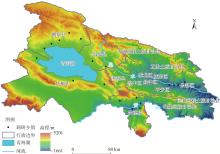
图1
研究区示意图"
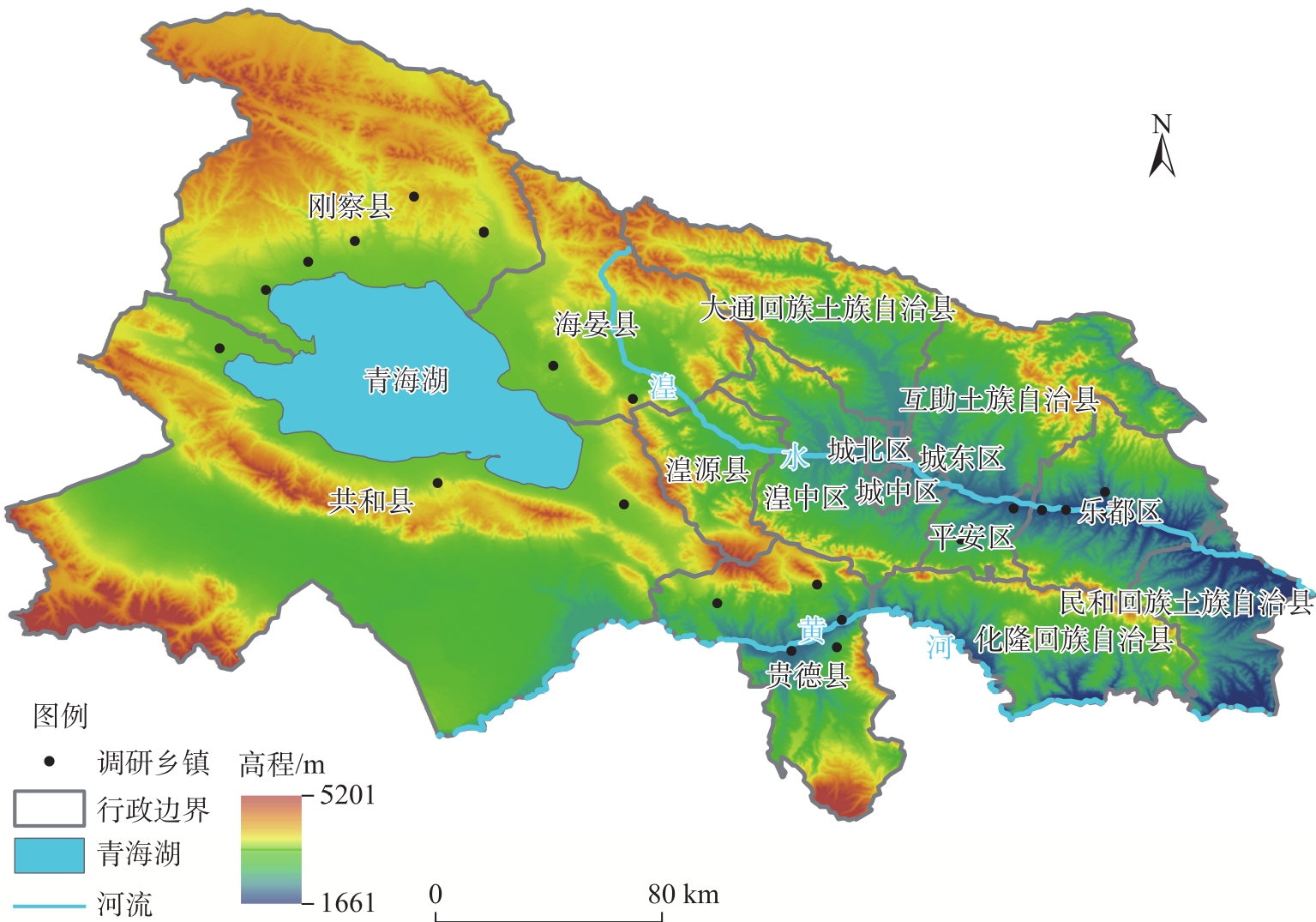
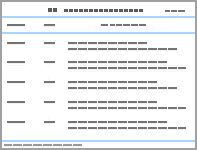
表1
数字鸿沟评价指标体系"
| 维度层 | 指标层 | 指标描述与赋值说明 |
|---|---|---|
| 可及性 | 无线网络覆盖度 | 无线网络接入条件:接入=1,未接入=0 |
| 智能终端拥有量 | 智能手机持有量 | |
| 计算机拥有情况 | 电脑设备持有量:拥有=1,未拥有=0 | |
| 使用度 | 通信设备熟练度 | 智能终端操作能力:熟练运用=4,基本掌握=3,基础操作=2,操作困难=1 |
| 网络使用规模 | 常态化使用互联网人数 | |
| 通信支出水平 | 人均年度通信费用/元 | |
| 市场连通性 | 通过互联网获取农业信息和经销农产品的能力:系统应用=4,主动查询=3,被动查看=2,从不使用=1 |
表2
生计韧性评价指标体系"
| 维度层 | 指标层 | 指标描述与赋值说明 | 属性 | 权重 |
|---|---|---|---|---|
| 缓冲能力 | 自然资源 | (耕地面积×1/3+草地面积×1/3+林地面积×1/3)/hm2 | 正向 | 0.087 |
| 固定资产 | 农机、家电、轿车等耐用消费品数量/件 | 正向 | 0.114 | |
| 住房状况 | 住房结构(砖混=1,砖木=0.75,土木=0.5,土坯=0.25)×住房面积×装修花费 | 正向 | 0.023 | |
| 政府补贴 | 耕地、生态等补贴/元 | 正向 | 0.054 | |
| 组织参与 | 参与合作社数量/个 | 正向 | 0.047 | |
| 粮食自给 | 粮食自给能力:非常差=1,比较差=2,一般=3,比较好=4,非常好=5 | 正向 | 0.044 | |
| 经济基础 | 家庭人均收入/元 | 正向 | 0.019 | |
| 劳动力数量 | 18~65周岁健康劳动力数量/人 | 正向 | 0.019 | |
| 牲畜存栏量 | 牲畜类型和数量:牛、马、骡=5个羊单位,猪=2个羊单位 | 正向 | 0.055 | |
| 生态环境状况 | 当地生态环境状况:非常差=1,比较差=2,一般=3,比较好=4,非常好=5 | 正向 | 0.013 | |
| 自组织能力 | 社会联结度 | 人情往来支出金额/元 | 正向 | 0.009 |
| 交通便利度 | 日常交通花销/元 | 负向 | 0.041 | |
| 邻里信任度 | 邻里信任程度:非常差=1,比较差=2,一般=3,比较好=4,非常好=5 | 正向 | 0.024 | |
| 村干部信任度 | 村干部信任程度:非常差=1,比较差=2,一般=3,比较好=4,非常好=5 | 正向 | 0.009 | |
| 惠农政策知晓度 | 农业政策了解程度:非常差=1,比较差=2,一般=3,比较好=4,非常好=5 | 正向 | 0.028 | |
| 学习能力 | 教育资源 | 当地现有教育资源:非常差=1,比较差=2,一般=3,比较好=4,非常好=5 | 正向 | 0.045 |
| 生计多样性 | 家庭收入渠道数/种 | 正向 | 0.023 | |
| 劳动力文化程度 | 劳动力人均受教育年限/a | 正向 | 0.024 | |
| 信息获取能力 | 信息获取途径:互联网=1,收音机及电视=0.75,报纸=0.5,村广播或聊天=0.25 | 正向 | 0.136 | |
| 技能培训机会 | 参与技能培训的机会:非常差=1,比较差=2,一般=3,比较好=4,非常好=5 | 正向 | 0.186 |
表3
描述性统计结果"
| 变量 | 平均值 | 标准差 | 最小值 | 最大值 |
|---|---|---|---|---|
| 数字鸿沟 | 0.48 | 0.17 | 0.00 | 1.00 |
| 生计韧性 | 0.36 | 0.07 | 0.16 | 0.79 |
| 男性户主 | 0.94 | 0.23 | 0.00 | 1.00 |
| 人口规模 | 4.48 | 1.62 | 2.00 | 15.00 |
| 海拔高度 | 2847.59 | 503.86 | 1983.15 | 3467.33 |
| 家人健康状况 | 3.42 | 0.91 | 1.00 | 5.00 |
| 样本数 | 428 | |||
表4
数字鸿沟对农户生计韧性影响的基准回归结果"
| 变量 | 生计韧性 | ||||
|---|---|---|---|---|---|
| 模型1 | 模型2 | 模型3 | 模型4 | 模型5 | |
| 数字鸿沟 | -0.238*** | -0.233*** | -0.207*** | -0.214*** | -0.201*** |
| (0.032) | (0.032) | (0.031) | (0.031) | (0.032) | |
| 男性户主 | - | 0.027** | 0.021* | 0.022** | 0.017 |
| (0.012) | (0.012) | (0.011) | (0.011) | ||
| 人口规模 | - | - | 0.007** | 0.007** | 0.008** |
| (0.003) | (0.004) | (0.003) | |||
| 海拔高度 | - | - | - | 0.000** | 0.000* |
| (0.000) | (0.000) | ||||
| 家人健康状况 | - | - | - | - | 0.010** |
| (0.004) | |||||
| 常数项 | 0.479*** | 0.452*** | 0.412*** | 0.371*** | 0.334*** |
| (0.017) | (0.020) | (0.024) | (0.030) | (0.035) | |
| 调整R2 | 0.319 | 0.323 | 0.342 | 0.351 | 0.363 |
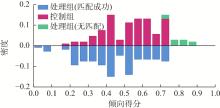
图2
倾向得分匹配法(PSM)检验示意图"
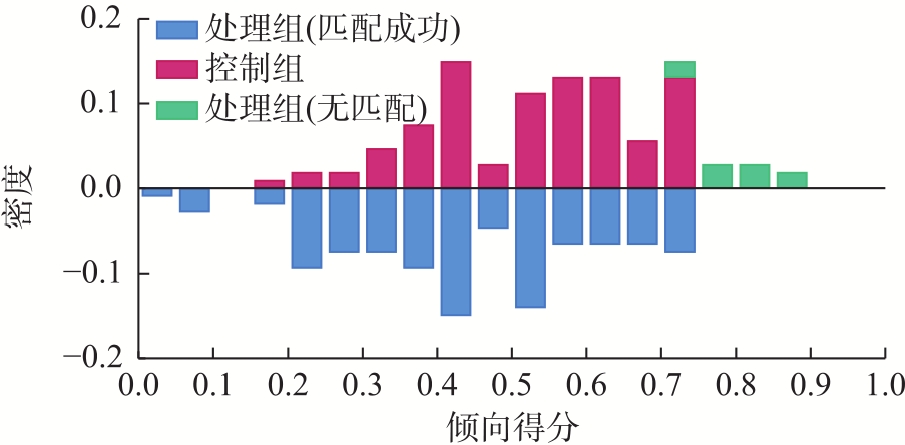
表5
PSM稳健性检验结果"
| 匹配方法 | 处理效应 | 常数项 | 观测值 | R2 |
|---|---|---|---|---|
| 1∶1匹配 | -0.053***(0.009) | 0.389*** | 310 | 0.210 |
| 1∶4匹配 | -0.059***(0.008) | 0.396*** | 386 | 0.235 |
| 半径匹配 | -0.066***(0.008) | 0.396*** | 428 | 0.242 |
| 核匹配 | -0.059***(0.008) | 0.392*** | 414 | 0.223 |
| 分层匹配 | -0.053***(0.009) | 0.389*** | 308 | 0.210 |
表6
安慰剂检验关键统计量"
| 统计量 | 系数 | P值 | t统计量 |
|---|---|---|---|
| 均值 | 0.001 | 0.504 | 0.070 |
| 标准差 | 0.016 | 0.294 | 1.012 |
| 最小值 | -0.047 | 0.000 | -2.909 |
| 最大值 | 0.055 | 0.999 | 3.917 |
| 中位数 | 0.001 | 0.498 | 0.031 |
图3
安慰剂检验估计系数示意图"
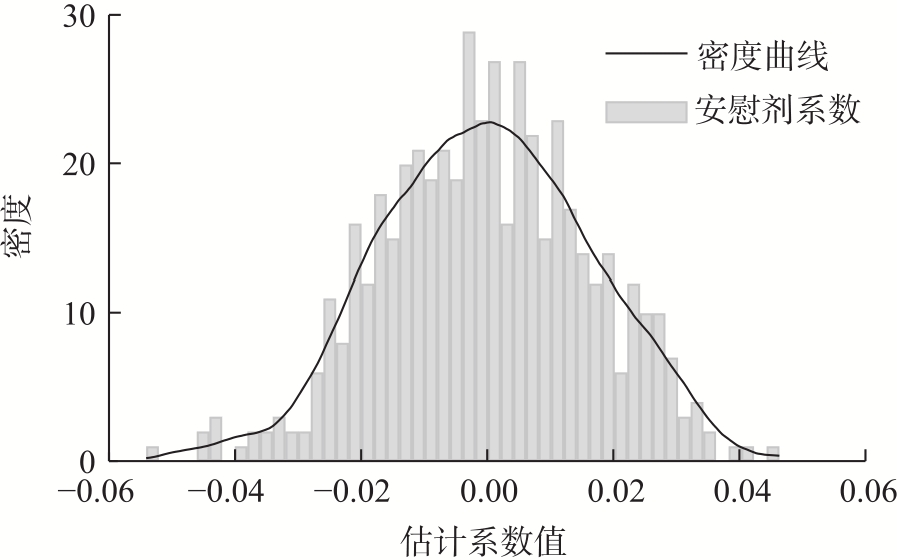
表7
分位数回归结果"
| 变量 | 生计韧性 | ||
|---|---|---|---|
| 10%分位点 | 50%分位点 | 90%分位点 | |
| 数字鸿沟 | -0.184*** | -0.178*** | -0.161*** |
| (0.039) | (0.032) | (0.061) | |
| 男性户主 | -0.006 | 0.013 | 0.042 |
| (0.024) | (0.019) | (0.026) | |
| 人口规模 | 0.006 | 0.006 | 0.017*** |
| (0.004) | (0.004) | (0.006) | |
| 海拔高度 | 0.000 | 0.000 | 0.000 |
| (0.000) | (0.000) | (0.000) | |
| 家人健康状况 | 0.007 | 0.006 | 0.022*** |
| (0.006) | (0.006) | (0.008) | |
| 常数项 | 0.331*** | 0.356*** | 0.283*** |
| (0.051) | (0.045) | (0.064) | |
表8
逐步回归法的中介效应分析结果"
| 中介维度 | 中介变量 | a路径 | b路径 | 间接效应 | c路径 | 总效应 | 中介比例/% | 显著性 |
|---|---|---|---|---|---|---|---|---|
| 经济 | 借贷可得性 | -0.516*** | 0.022*** | -0.011 | -0.023*** | -0.034*** | 32 | 显著 |
| 农牧产品销售难度 | 0.268*** | 0.004 | 0.001 | -0.035*** | -0.034*** | 3 | 不显著 | |
| 社会 | 教育投入水平 | -0.070 | -0.013*** | 0.001 | -0.035*** | -0.034*** | 2 | 不显著 |
| 就业获取难度 | 0.283*** | -0.018*** | -0.005 | -0.029*** | -0.034*** | 15 | 显著 | |
| 环境 | 土地管护能力 | -0.278*** | 0.018*** | -0.005 | -0.029*** | -0.034*** | 15 | 显著 |
| 环境保护意识 | -0.119** | 0.025*** | -0.003 | -0.031*** | -0.034*** | 9 | 显著 |
表9
中介效应的Bootstrap检验结果"
| 中介维度 | 中介变量 | a路径 | b路径 | 间接效应 | 95%置信区间 | c路径 | 显著性 |
|---|---|---|---|---|---|---|---|
| 经济 | 借贷可得性 | -0.614*** | 0.012*** | -0.017 | [-0.036, -0.010] | -0.023 | 显著 |
| 农牧产品销售难度 | 0.155 | -0.008 | -0.006 | [-0.047, -0.024] | -0.035 | 不显著 | |
| 社会 | 教育投入水平 | -0.198 | -0.021** | -0.002 | [-0.045, -0.025] | -0.035 | 不显著 |
| 就业获取难度 | 0.185*** | -0.031** | -0.009* | [-0.041, -0.017] | -0.029 | 显著 | |
| 环境 | 土地管护能力 | -0.363*** | 0.005** | -0.009* | [-0.039, -0.019] | -0.029 | 显著 |
| 环境保护意识 | -0.254 | 0.015*** | -0.007 | [-0.042, -0.021] | -0.031 | 不显著 |
表10
数字鸿沟对农户生计韧性影响的异质性分析结果"
| 变量 | 区域类型 | 代际差异 | 生计类型 | |||||||||
|---|---|---|---|---|---|---|---|---|---|---|---|---|
| 青海湖地区 | 黄河源区 | 河湟谷地 | 新生代 | 中生代 | 老一代 | 纯农业型 | 农业主导型 | 非农业主导型 | 非农型 | |||
| 数字鸿沟 | -0.251*** | -0.105 | -0.129** | -0.197*** | -0.179*** | -0.002 | -0.223*** | -0.134** | -0.132*** | -0.209*** | ||
| (-0.032) | (-0.084) | (-0.050) | (-0.032) | (-0.052) | (-0.131) | (-0.057) | (-0.064) | (-0.047) | (-0.053) | |||
| 男性户主 | 0.000 | 0.085 | 0.050 | 0.000 | 0.022 | -0.017 | 0.029 | 0.011 | 0.010 | 0.042 | ||
| (-0.021) | (-0.074) | (-0.031) | (-0.030) | (-0.026) | (-0.049) | (-0.041) | (-0.031) | (-0.051) | (-0.027) | |||
| 人口规模 | 0.009*** | -0.001 | 0.008 | 0.018*** | 0.011* | 0.020** | 0.008 | 0.005 | 0.015*** | 0.002 | ||
| (-0.003) | (-0.008) | (-0.006) | (-0.005) | (-0.006) | (-0.009) | (-0.005) | (-0.005) | (-0.005) | (-0.006) | |||
| 海拔高度 | 0.000 | 0.000 | 0.000 | 0.000** | 0.000 | 0.000 | 0.000** | 0.000 | 0.000** | 0.000 | ||
| (0.000) | (0.000) | (0.000) | (0.000) | (0.000) | (0.000) | (0.000) | (0.000) | (0.000) | (0.000) | |||
| 家人健康状况 | 0.020*** | -0.002 | -0.002 | 0.008 | 0.009 | 0.009 | 0.019** | 0.015 | -0.002 | 0.007 | ||
| (-0.006) | (-0.014) | (-0.008) | (-0.006) | (-0.009) | (-0.014) | (-0.009) | (-0.011) | (-0.007) | (-0.008) | |||
| 常数项 | 0.651* | 0.387** | 0.342*** | 0.288*** | 0.335*** | 0.348*** | 0.166* | 0.315*** | 0.297*** | 0.387*** | ||
| (-0.341) | (-0.177) | (-0.121) | (-0.050) | (-0.078) | (-0.115) | (-0.090) | (-0.098) | (-0.073) | (-0.066) | |||
| 调整R2 | 0.482 | -0.015 | 0.201 | 0.386 | 0.363 | 0.341 | 0.357 | 0.183 | 0.326 | 0.347 | ||
| [1] | 田秀娟, 李睿. 数字技术赋能实体经济转型发展--基于熊彼特内生增长理论的分析框架[J]. 管理世界, 2022, 38(5): 56-73. |
| [Tian Xiujuan, Li Rui. Digital technology empowers the transformation and development of real economy: An analysis framework based on schumpeter’s endogenous growth theory[J]. Journal of Management World, 2022, 38(5): 56-73. ] | |
| [2] | 尹志超, 蒋佳伶, 严雨. 数字鸿沟影响家庭收入吗[J]. 财贸经济, 2021, 42(9): 66-82. |
| [Yin Zhichao, Jiang Jialing, Yan Yu. Does the digital divide affect household income?[J]. Finance & Trade Economics, 2021, 42(9): 66-82. ] | |
| [3] |
Dijk V A J. Digital divide research, achievements and shortcomings[J]. Poetics, 2006, 34(4): 221-235.
doi: 10.1016/j.poetic.2006.05.004 |
| [4] | 张自强. 数字鸿沟对农户多维相对贫困的影响--基于中国家庭追踪调查的实证研究[J]. 经济体制改革, 2025(3): 164-173. |
| [Zhang Ziqiang. The impact of digital divide on multidimensional relative poverty of rural households: Empirical research based on CFPS data[J]. Reform of Economic System, 2025(3): 164-173. ] | |
| [5] |
段杰冉, 张丽君, 秦耀辰, 等. 中国城市数字鸿沟时空分异及其影响因素[J]. 世界地理研究, 2024, 33(2): 108-122.
doi: 10.3969/j.issn.1004-9479.2024.02.2021957 |
|
[Duan Jieran, Zhang Lijun, Qin Yaochen, et al. The spatiotemporal differentiation of China’s prefectural digital divide and its influencing factors[J]. World Regional Studies, 2024, 33(2): 108-122. ]
doi: 10.3969/j.issn.1004-9479.2024.02.2021957 |
|
| [6] | 田霖, 韩伟健, 田韦仑. 数字经济影响农村内部收入差距的机制研究--基于数字红利和数字鸿沟的分析[J]. 经济问题探索, 2024(5): 21-34. |
| [Tian Lin, Han Weijian, Tian Weilun. Research on the mechanism of digital economy affecting intra-rural income gap: Analyses based on the digital dividend and the digital divide[J]. Inquiry into Economic Issues, 2024(5): 21-34. ] | |
| [7] | 张瀚禹, 吴振磊. 数字创新合作、应用鸿沟与区域间共同富裕[J]. 财经研究, 2024, 50(8): 49-63. |
| [Zhang Hanyu, Wu Zhenlei. Digital innovation cooperation, application gap, and interregional common prosperity[J]. Journal of Finance and Economics, 2024, 50(8): 49-63. ] | |
| [8] | 洪俊杰, 李研, 杨曦. 数字经济与收入差距: 数字经济核心产业的视角[J]. 经济研究, 2024, 59(5): 116-131. |
| [Hong Junjie, Li Yan, Yang Xi. Digital economy and income gap: From the perspective of core industries in the digital economy[J]. Economic Research Journal, 2024, 59(5): 116-131. ] | |
| [9] | 宋嘉豪, 徐定德, 汪为. 数字技术应用对农户相对贫困的影响[J]. 改革, 2023(10): 46-59. |
| [Song Jiahao, Xu Dingde, Wang Wei. The influence of digital technology application on farmers’relative poverty[J]. Reform, 2023(10): 46-59. ] | |
| [10] | 任欣怡, 周亚虹. 我国数字鸿沟的形成因素、影响及其治理路径[J]. 经济问题, 2024(9): 50-58. |
| [Ren Xinyi, Zhou Yahong. The formation factors, impacts, and governance paths of the digital divide in China[J]. Economic Issues, 2024(9): 50-58. ] | |
| [11] |
贺星星, 阮俊杰, 卞彩杏. 人工智能应用促进了长江经济带三大城市群的绿色创新吗?--基于“数字红利”和“数字鸿沟”视角[J]. 经济地理, 2024, 44(8): 137-147.
doi: 10.15957/j.cnki.jjdl.2024.08.016 |
|
[He Xingxing, Ruan Junjie, Bian Caixing. Does artificial intelligence application promote green innovation in three major city clusters of the Yangtze River economic belt? Based on the perspectives of “digital dividend” and “digital divide”[J]. Economic Geography, 2024, 44(8): 137-147. ]
doi: 10.15957/j.cnki.jjdl.2024.08.016 |
|
| [12] | 汪樱, 唐兰云, 王卫雯, 等. 农户生计韧性驱动机理及其生计环境效应[J]. 长江流域资源与环境, 2023, 32(3): 665-677. |
| [Wang Ying, Tang Lanyun, Wang Weiwen, et al. Driving mechanism of rural households’ livelihood resilience and its environmental effects[J]. Resources and Environment in the Yangtze Basin, 2023, 32(3): 665-677. ] | |
| [13] |
翟彬, 王宇阁, 朱芳芳, 等. 生计策略下黄河流域农户生计韧性差异及其影响因素--以河南省为例[J]. 经济地理, 2024, 44(2): 156-165.
doi: 10.15957/j.cnki.jjdl.2024.02.016 |
| [Zhai Bin, Wang Yuge, Zhu Fangfang, et al. Differences in livelihood resilience of farm households in the Yellow River Basin under the background of livelihood strategies and its influencing factors: Taking Henan Province as an example[J]. Economic Geography, 2024, 44(2): 156-165. ] | |
| [14] |
Biswas B, Sharma K K. Development of infrastructure and its impact on sustainable livelihood resilience in the rural areas of the Rarh region in India[J]. Asian Geographer, 2025, 42(2): 129-157.
doi: 10.1080/10225706.2025.2453141 |
| [15] | Ningi T, Taruvinga A, Zhou L, et al. Synergies and trade-offs in the energy-water-food security nexus: Implications for household livelihood resilience in South Africa[J]. Energy for Sustainable Development, 2025, 88: 101832, doi: 10.1016/j.esd.2025.101832. |
| [16] | Galarza-Villamar J A, Leeuwis C, Cecchi F. Rice farmers and floods in Ecuador: The strategic role of social capital in disaster risk reduction and livelihood resilience[J]. International Journal of Disaster Risk Reduction, 2024, 104: 104332, doi: 10.1016/j.ijdrr.2024.104332. |
| [17] |
吕晓, 张启岚, 张学波, 等. 共同富裕目标下农地流转对农户生计韧性的影响--基于沈阳市典型农户的实证研究[J]. 自然资源学报, 2025, 40(3): 636-651.
doi: 10.31497/zrzyxb.20250305 |
|
[Lü Xiao, Zhang Qilan, Zhang Xuebo, et al. The impact of farmland transfer on farmers’ livelihood resilience under the goal of common prosperity: An empirical study of typical farmers in Shenyang[J]. Journal of Natural Resources, 2025, 40(3): 636-651. ]
doi: 10.31497/zrzyxb.20250305 |
|
| [18] | 杨婕妤, 陈强强, 崔秀娟. 农牧交错区农牧民生计韧性差异化提升对策研究--以天祝藏族自治县为例[J]. 干旱区资源与环境, 2024, 38(10): 53-62. |
| [Yang Jieyu, Chen Qiangqiang, Cui Xiujuan. Differentiated improvement of livelihood resilience of farmers and herdsmen in the agricultural-pastoral ecotone: A case of Tianzhu Tibetan Autonomous County, China[J]. Journal of Arid Land Resources and Environment, 2024, 38(10): 53-62. ] | |
| [19] | 周升强, 丁文强, 孙鹏飞, 等. 草原生态补奖实施区农牧民生计韧性动态评价及障碍因子分析[J]. 干旱区资源与环境, 2024, 38(6): 41-50. |
| [Zhou Shengqiang, Ding Wenqiang, Sun Pengfei, et al. Dynamic evaluation of livelihood resilience of farmers and herdsmen in the areas implementing grassland ecological compensation policy and analysis of the obstacle factors[J]. Journal of Arid Land Resources and Environment, 2024, 38(6): 41-50. ] | |
| [20] | 范慧文青, 李宗省, 桂娟. 青藏高原可持续发展研究进展与展望[J]. 气候变化研究进展, 2025, 21(3): 400-413. |
| [Fan Huiwenqing, Li Zongxing, Gui Juan. Progress and prospects of research on sustainable development on the Tibetan Plateau[J]. Climate Change Research, 2025, 21(3): 400-413. ] | |
| [21] | 樊杰, 周侃, 伍健雄. 中国相对贫困地区可持续发展问题典型研究与政策前瞻[J]. 中国科学院院刊, 2020, 35(10): 1249-1263. |
| [Fan Jie, Zhou Kan, Wu Jianxiong. Typical study on sustainable development in relative poverty areas and policy outlook of China[J]. Bulletin of Chinese Academy of Sciences, 2020, 35(10): 1249-1263. ] | |
| [22] |
刘庆芳, 宋金平. 青藏高原县域人口与公共服务适配性与优化策略[J]. 经济地理, 2022, 42(10): 43-51.
doi: 10.15957/j.cnki.jjdl.2022.10.006 |
|
[Liu Qingfang, Song Jinping. Adaptation and optimizing strategy between county-level population agglomeration and public services in Qinghai-Tibet Plateau[J]. Economic Geography, 2022, 42(10): 43-51. ]
doi: 10.15957/j.cnki.jjdl.2022.10.006 |
|
| [23] |
赵昕月, 董世魁, 杨明岳, 等. 基于扰沌模型的青藏高原放牧社会-生态系统分析[J]. 自然资源学报, 2021, 36(8): 2125-2138.
doi: 10.31497/zrzyxb.20210816 |
|
[Zhao Xinyue, Dong Shikui, Yang Mingyue, et al. Analysis of a pastoral social-ecological system in Qinghai-Tibet Plateau based on Panarchy[J]. Journal of Natural Resources, 2021, 36(8): 2125-2138. ]
doi: 10.31497/zrzyxb.20210816 |
|
| [24] |
胡西武, 耿强艳. 青藏高原生态空间贫困陷阱时空格局及阻滞因素--以青海省为例[J]. 经济地理, 2025, 45(2): 173-182, 212.
doi: 10.15957/j.cnki.jjdl.2025.02.017 |
|
[Hu Xiwu, Geng Qiangyan. Spatiotemporal patterns and obstacle factors of ecological spatial poverty trap in Qinghai-Xizang Plateau: Take Qinghai Province as an example[J]. Economic Geography, 2025, 45(2): 173-182, 212. ]
doi: 10.15957/j.cnki.jjdl.2025.02.017 |
|
| [25] | 沈胜意, 高原, 刘同振. 剪切波分裂揭示的青藏高原东北缘分层各向异性形态: 从海原断裂至银川地堑[J]. 地球物理学报, 2022, 65(5): 1595-1611. |
| [Shen Shengyi, Gao Yuan, Liu Tongzhen. Two-layer anisotropy revealed by shear-wave splitting beneath the NE margin of Tibetan Plateau: From Haiyuan Fault to Yinchuan Graben[J]. Chinese Journal of Geophysics, 2022, 65(5): 1595-1611. ] | |
| [26] |
North D C. Location theory and regional economic growth[J]. Journal of Political Economy, 1955, 63(3): 243-258.
doi: 10.1086/257668 |
| [27] | Udisha O, Philomina A G I. Bridging the digital divide: Empowering rural women farmers through mobile technology in Kerala[J]. Sustainability, 2024, 16(21): 9188, doi: 103390/su16219188. |
| [28] | 陆大道. 关于地理学的“人-地系统”理论研究[J]. 地理研究, 2002, 21(2): 135-145. |
| [Lu Dadao. Theoretical studies of man-land system as the core of geographical science[J]. Geographical Research, 2002, 21(2): 135-145. ] | |
| [29] | 杨梓童. 数字鸿沟对农民非农就业的影响因素及作用机制研究[D]. 郑州: 河南农业大学, 2025. |
| [Yang Zitong. Study on the influencing factors and mechanism of the digital divide’s impact on farmers’ non-agricultural employment[D]. Zhengzhou: Henan Agricultural University, 2025. ] | |
| [30] |
谢宇, 薛选登. 数字经济赋能绿色发展福利--基于黄河流域资源型城市的经验证据[J]. 干旱区地理, 2025, 48(6): 1127-1139.
doi: 10.12118/j.issn.1000-6060.2024.406 |
| [Xie Yu, Xue Xuandeng. Digital economy empowers green development welfare: Empirical evidence from resource-based cities in the Yellow River Basin[J]. Arid Land Geography, 2025, 48(6): 1127-1139. ] | |
| [31] | 熊健, 杨军. 数字化背景下的农村金融排斥: 数字机遇还是数字鸿沟[J]. 农业技术经济, 2023(12): 111-122. |
| [Xiong Jian, Yang Jun. Rural financial exclusion in the context of digitalization: Digital opportunity or digital divide?[J]. Journal of Agrotechnical Economics, 2023(12): 111-122. ] | |
| [32] | 李元豪. 数字鸿沟对山区农户农产品市场参与的影响研究[D]. 贵阳: 贵州财经大学, 2025. |
| [Li Yuanhao. Research on the impact of the digital divide on the market participation of agricultural products from farmers in mountainous areas[D]. Guiyang: Guizhou University of Finance and Economics, 2025. ] | |
| [33] | 刘伟江, 郝一哲. 数字鸿沟与劳动力再配置--动态效应与效率提升分析[J]. 当代经济科学, 2025, 47(3): 18-34. |
| [Liu Weijiang, Hao Yizhe. Digital divide and labor reallocation: Analysis of dynamic effects and efficiency improvement[J]. Modern Economic Science, 2025, 47(3): 18-34. ] | |
| [34] | 罗文文. 数字素养视角下农户生态保护研究[D]. 贵阳: 贵州财经大学, 2024. |
| [Luo Wenwen. Research on farmers’ ecological protection from the perspective of digital literacy[D]. Guiyang: Guizhou University of Finance and Economics, 2024. ] | |
| [35] | 吴郁玲, 石汇, 王梅, 等. 农村异质性资源禀赋、宅基地使用权确权与农户宅基地流转: 理论与来自湖北省的经验[J]. 中国农村经济, 2018(5): 52-67. |
| [Wu Yuling, Shi Hui, Wang Mei, et al. Different resource endowment, rural housing land registry and rural housing land circulation: A theoretical analysis and empirical observations from Hubei[J]. Chinese Rural Economy, 2018(5): 52-67. ] | |
| [36] | 张艺山, 罗永忠, 桂杰. 沙化土地封禁保护区农牧户的可持续生计资本与生计策略--以甘肃省4个封禁保护区为例[J]. 水土保持通报, 2023, 43(6): 165-173. |
| [Zhang Yishan, Luo Yongzhong, Gui Jie. Farmers’ and herdsmen’ sustainable livelihood capital and livelihood strategy in enclosed reserves of desertified land: Taking four enclosed reserves in Gansu Province[J]. Bulletin of Soil and Water Conservation, 2023, 43(6): 165-173. ] | |
| [37] |
段伟, 江怡成, 欧阳波. 社区生计与自然保护区冲突趋势--基于农户自然资源利用的代际差异[J]. 资源科学, 2022, 44(6): 1267-1279.
doi: 10.18402/resci.2022.06.13 |
| [Duan Wei, Jiang Yicheng, Ouyang Bo. Trend of conflict between community livelihoods and nature reserves: Based on the intergenerational differences of rural households’ natural resource utilization behavior[J]. Resources Science, 2022, 44(6): 1267-1279. ] | |
| [38] |
孙彦, 赵雪雁. 山区农户的生计干预效率及其影响因素--以陇南山区为例[J]. 地理研究, 2023, 42(7): 1874-1891.
doi: 10.11821/dlyj020220867 |
| [Sun Yan, Zhao Xueyan. Efficiency and influencing factors of livelihood interventions of farming households in mountainous areas: A case study of Longnan Mountainous areas[J]. Geographical Research, 2023, 42(7): 1874-1891. ] | |
| [39] | 姚予龙, 陈屹松, 陈远生, 等. 基于精准识别指标体系的西藏贫困农牧民生计入户调研--山南市8县抽样调查[J]. 中国农业资源与区划, 2018, 39(9): 1-12. |
| [Yao Yulong, Chen Yisong, Chen Yuansheng, et al. Livelihood household survey of poverty farmers and herdsmen in Tibet based on accurate identification index system: Sampling survey of 8 counties in Shannan City[J]. Chinese Journal of Agricultural Resources and Regional Planning, 2018, 39(9): 1-12. ] | |
| [40] | 张要要. 数字鸿沟影响相对贫困吗[J]. 农业技术经济, 2023(7): 4-18. |
| [Zhang Yaoyao. Does the digital divide affect relative poverty?[J]. Journal of Agrotechnical Economics, 2023(7): 4-18. ] | |
| [41] | 尹志超, 王天娇, 栗传政. 数字鸿沟对中国家庭收入差距的影响[J]. 国际金融研究, 2024(2): 16-26. |
| [Yin Zhichao, Wang Tianjiao, Li Chuanzheng. The impact of digital divide on China’s household income gap[J]. Studies of International Finance, 2024(2): 16-26. ] | |
| [42] |
温忠麟, 叶宝娟. 中介效应分析: 方法和模型发展[J]. 心理科学进展, 2014, 22(5): 731-745.
doi: 10.3724/SP.J.1042.2014.00731 |
|
[Wen Zhonglin, Ye Baojuan. Analyses of mediating effects: The development of methods and models[J]. Advances in Psychological Science, 2014, 22(5): 731-745. ]
doi: 10.3724/SP.J.1042.2014.00731 |
|
| [43] | 黄倩, 刘泽慧, 熊德. 数字金融对农户可持续生计的影响[J]. 改革, 2024(8): 98-118. |
| [Huang Qian, Liu Zehui, Xiong De. The impact of digital finance on sustainable livelihoods of farmers[J]. Reform, 2024(8): 98-118. ] | |
| [44] | 刘蓉, 王艳伟, 任飞武, 等. 农村基础设施投入对农民生计韧性的影响效应及作用机制[J]. 南方农业学报, 2025, 56(4): 1326-1340. |
| [Liu Rong, Wang Yanwei, Ren Feiwu, et al. The impact of rural infrastructure investment on farmers’ livelihood resilience: Effects and its mechanism[J]. Journal of Southern Agriculture, 2025, 56(4): 1326-1340. ] | |
| [45] | 杨红娟, 何玮珊, 林琳. 共同富裕下数字包容发展对城乡居民生计资本的异质性影响[J]. 经济问题探索, 2024(11): 107-123. |
| [Yang Hongjuan, He Weishan, Lin Lin. The heterogeneous effects of digital inclusion on the livelihood capital of urban and rural residents under common prosperity[J]. Inquiry into Economic Issues, 2024(11): 107-123. ] | |
| [46] | 郭雨, 闫小欢, 霍学喜. 电商参与能否提高苹果种植户经济韧性?--来自黄土高原地区2005份微观数据的证据[J]. 干旱区资源与环境, 2024, 38(8): 167-178. |
| [Guo Yu, Yan Xiaohuan, Huo Xuexi. Can e-commerce improve the economic resilience of apple farmers: Evidence from the micro-survey in the loess plateau region[J]. Journal of Arid Land Resources and Environment, 2024, 38(8): 167-178. ] |
| [1] | 邰秀军, 封峰. 数字金融对脱贫农户生计韧性的影响——基于乌兰察布市的调查分析[J]. 干旱区地理, 2026, 49(7): 1509-1519. |
| [2] | 郑爱文, 王丽丽. 数字乡村建设对农户生计韧性的影响机制及其效应分析[J]. 干旱区地理, 2026, 49(10): 2006-2017. |
| [3] | 雷霆, 张丽娜, 逯浩. 中国数字乡村建设水平的时空差异及驱动因素异质性[J]. 干旱区地理, 2026, 49(10): 1993-2005. |
| [4] | 侯光良,赖忠平,孙永娟,P.Jeffrey BRANTINGHAM. 全新世大暖期对青藏高原东北缘人类活动的影响[J]. 干旱区地理, 2013, 36(6): 971-978. |
|
||