干旱区地理 ›› 2025, Vol. 48 ›› Issue (9): 1600-1611.doi: 10.12118/j.issn.1000-6060.2024.565 cstr: 32274.14.ALG2024565
尚毅力( ), 李悦, 肖锋军(), 南维鸽, 张智, 王利杰
收稿日期:2024-09-22
修回日期:2025-02-08
出版日期:2025-09-25
发布日期:2025-09-17
通讯作者:
肖锋军(1984-),男,博士,副教授,主要从事风沙地貌学研究. E-mail: xiaofengjun@snnu.edu.cn作者简介:尚毅力(2001-),男,硕士研究生,主要从事风沙地貌学研究. E-mail: syl@snnu.edu.cn
基金资助:
SHANG Yili(), LI Yue, XIAO Fengjun(), NAN Weige, ZHANG Zhi, WANG Lijie
Received:2024-09-22
Revised:2025-02-08
Published:2025-09-25
Online:2025-09-17
摘要:
利用无人机激光雷达技术对共和盆地龙羊峡水库西侧的300个藏锦鸡儿(Caragana tibetica)灌丛沙堆的形态参数、沙堆底面积和体积进行测量,目的是评价文献中各种估算灌丛沙堆底面积和体积公式的适用性并分析原因。 结果表明:(1) 无人机激光雷达能够对藏锦鸡儿灌丛沙堆的形态进行精准测量,藏锦鸡儿灌丛沙堆的长轴(L)、短轴(W)和高度(H)的平均相对误差为0.70%、1.13%和-1.67%,其相应的均方根误差为0.02 m、0.03 m和0.03 m;平面精度和三维精度的均方根误差分别为0.03 m和0.04 m,均满足精度要求。(2) 藏锦鸡儿灌丛沙堆的长轴、短轴和高度等形态参数变化幅度不大,变异系数在0.26~0.33之间。各形态参数之间呈显著相关(P<0.01),表明灌丛沙堆的形态是长、宽和高协同增长的结果。此外,灌丛沙堆表面的结皮、枯死灌丛、风蚀凹坑都说明灌丛沙堆由成熟期进入衰退期。(3) 藏锦鸡儿灌丛沙堆底面积公式π[(L+W)/4]2、πLW/4和LW/2的总相对误差分别为-0.79%、-1.26%和-37.14%,其中公式π[(L+W)/4]2和πLW/4适合本研究区。体积公式3πLWH/32、πLWH/12、LWH/6、πH{[3(L+W)/4]2+H2}/6和πLWH/6的总相对误差分别为-6.15%、-16.58%、-46.89%、59.14%和66.83%;修正后的体积公式πLWH/10的总相对误差为0.10%,且离散程度低,更适合本研究区。综上,在估算灌丛沙堆底面积和体积时需要同时注意植被类型、发育阶段、生境或沙源丰富度的影响,从而因地制宜选择适合的估算方法。
尚毅力, 李悦, 肖锋军, 南维鸽, 张智, 王利杰. 基于无人机激光雷达的青海共和盆地藏锦鸡儿(Caragana tibetica)灌丛沙堆形态测算[J]. 干旱区地理, 2025, 48(9): 1600-1611.
SHANG Yili, LI Yue, XIAO Fengjun, NAN Weige, ZHANG Zhi, WANG Lijie. Morphological calculation of Caragana tibetica nebkhas based on UAV laser radar technology in Gonghe Basin, Qinghai Province[J]. Arid Land Geography, 2025, 48(9): 1600-1611.
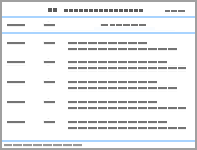
表1
灌丛沙堆几何公式汇总"
| 公式类型 | 研究者 | 公式 | 地区 | 沙堆植被类型 |
|---|---|---|---|---|
| 底面积 | 杨帆等[ 等[ | πLW/4 | 毛乌素沙地南缘、乌兰布和沙漠西北部、亚马雷克沙漠北部、巴丹吉林沙漠东缘、乌兰察布市东部化德县、内蒙古锡林郭勒盟中西部、正镶白旗、太仆寺旗、策勒绿洲-沙漠过渡带、赤峰市 西部 | 红砂(Reaumuria songarica)、白刺(Nitraria tangutorum)、小叶锦鸡儿(Caragana microphylla)、柽柳(Tamarix chinensis)、锦鸡儿属(Caragana)、油蒿(Artemisia ordosica) |
| 左合君等[ 李向洁[ | LW/2 | 乌兰布和沙漠西北部、亚马雷克沙漠北部、巴丹吉林沙漠东缘、内蒙古锡林郭勒盟中西部和赤峰市西部、宁夏盐池毛乌素沙地、厚田沙地 | 白刺、锦鸡儿属、藏锦鸡儿(Caragana tibetica)、油蒿、蔓荆(Vitex trifolia) | |
| 彭飞等[ | π[(L+W)/4]2 | 临泽县、民勤县荒漠绿洲 | 白刺 | |
| 体积 | 闫宇等[ 等[ 等[ | πLWH/6 | 毛乌素沙地南缘、乌兰布和沙漠西北部、亚马雷克沙漠北部、巴丹吉林沙漠东缘、内蒙古锡林郭勒盟中西部和赤峰市西部、盐池毛乌素沙地 | 红砂、白刺、锦鸡儿属、油蒿 |
| 左合君等[ 等[ | LWH/6 | 乌兰布和沙漠西北部、亚马雷克沙漠北部、巴 丹吉林沙漠东缘、内蒙古锡林郭勒盟中西部和赤峰市西部、宁夏盐池毛乌素沙地 | 白刺、锦鸡儿属、藏锦鸡儿、油蒿 | |
| 左合君等[ | πLWH/12 | 乌兰布和沙漠西北部、亚马雷克沙漠北部、巴 丹吉林沙漠东缘、浑善达克沙地西缘 | 白刺、小叶锦鸡儿、狭叶锦鸡儿(Caragana stenophylla) | |
| 张萍等[ | 3πLWH/32 | 乌兰察布市东部化德县、锡林郭勒盟南部正镶白旗、太仆寺旗 | 小叶锦鸡儿 | |
| 张梅[ 等[ | πH{[3(L+W)/ 4]2+H2}/6 | 毛乌素沙地北缘、乌拉特中旗和后旗北部 | 藏锦鸡儿、白刺 |

图1
研究区地理位置和藏锦鸡儿灌丛沙堆照片"


图2
无人机激光雷达点云获取方法及AeolianPeak工具工作原理"

表2
藏锦鸡儿灌丛沙堆实测与提取数据精度"
| 灌丛沙堆 | 长轴 | 短轴 | 高度 | ||||||||
|---|---|---|---|---|---|---|---|---|---|---|---|
| 实测/m | 提取/m | 相对误差/% | 实测/m | 提取/m | 相对误差/% | 实测/m | 提取/m | 相对误差/% | |||
| 1 | 2.83 | 2.81 | 0.71 | 1.76 | 1.74 | 1.14 | 0.51 | 0.46 | 9.80 | ||
| 2 | 2.46 | 2.44 | 0.81 | 1.59 | 1.60 | -0.63 | 0.38 | 0.43 | -7.89 | ||
| 3 | 2.05 | 2.02 | 1.46 | 1.22 | 1.17 | 4.10 | 0.33 | 0.33 | 0.00 | ||
| 4 | 3.61 | 3.62 | -0.28 | 1.90 | 1.88 | 1.05 | 0.44 | 0.46 | -4.55 | ||
| 5 | 2.46 | 2.44 | 0.81 | 1.31 | 1.31 | 0.00 | 0.35 | 0.37 | -5.71 | ||
表3
藏锦鸡儿灌丛沙堆形态参数相关性分析"
| 特征参数 | 长轴 | 短轴 | 高度 | 水平尺度 | 底面积 | 侧影面积 | 体积 |
|---|---|---|---|---|---|---|---|
| 长轴 | 1.000 | - | - | - | - | - | - |
| 短轴 | 0.814** | 1.000 | - | - | - | - | - |
| 高度 | 0.576** | 0.518** | 1.000 | - | - | - | - |
| 水平尺度 | 1.000** | 0.814** | 0.576** | 1.000 | - | - | - |
| 底面积 | 0.950** | 0.935** | 0.569** | 0.950** | 1.000 | - | - |
| 侧影面积 | 0.771** | 0.818** | 0.901** | 0.771** | 0.824** | 1.000 | - |
| 体积 | 0.840** | 0.800** | 0.818** | 0.840** | 0.867** | 0.934** | 1.000 |

图3
藏锦鸡儿灌丛沙堆形态参数间的关系 注:R2为决定系数。"


图4
藏锦鸡儿灌丛沙堆的底面积、体积和相对误差 注:L、W、H分别为灌丛沙堆的长轴、短轴和高度。下同。"

表4
藏锦鸡儿灌丛沙堆几何公式精度"
| 几何公式类型 | 几何公式 | 总相对误差/% | 均方差 |
|---|---|---|---|
| 底面积公式 | πLW/4 | -1.26 | 0.0772 m2 |
| LW/2 | -37.14 | 0.5263 m2 | |
| π[(L+W)/4]2 | -0.79 | 0.0762 m2 | |
| 体积公式 | πLWH/6 | 66.83 | 0.2908 m3 |
| LWH/6 | -46.89 | 0.1781 m3 | |
| πLWH/12 | -16.58 | 0.0800 m3 | |
| 3πLWH/32 | -6.15 | 0.0656 m3 | |
| πH{[3(L+W)/4]2+H2}/6 | 59.14 | 0.2745 m3 | |
| πLWH/10 | 0.10 | 0.0684 m3 |

图5
藏锦鸡儿灌丛沙堆不同几何公式的投影"

| [1] | Tengberg A. Nebkha dunes as indicators of wind erosion and land degradation in the Sahel zone of Burkina Faso[J]. Journal of Arid Environments, 1995, 30(3): 265-282. |
| [2] | Sanromualdo-Collado A, Gallego-Fernández J B, Hesp P A, et al. Environmental variables affecting an arid coastal nebkha[J]. Science of the Total Environment, 2022, 815: 152868, doi: 10.1016/j.scitotenv.2021.152868. |
| [3] | El-Bana M I, Nijs I, Kockelbergh F. Microenvironmental and vegetational heterogeneity induced by phytogenic nebkhas in an arid coastal ecosystem[J]. Plant and Soil, 2002, 247: 283-293. |
| [4] | Gao Y J, Tariq A, Zeng F J, et al. “Fertile islands” beneath three desert vegetation on soil phosphorus fractions, enzymatic activities, and microbial biomass in the desert-oasis transition zone[J]. Catena, 2022, 212: 106090, doi: 10.1016/j.catena.2022.106090. |
| [5] | Zhao Y C, Gao X, Lei J Q, et al. Effects of wind velocity and nebkha geometry on shadow dune formation[J]. Journal of Geophysical Research: Earth Surface, 2019, 124: 2579-2601. |
| [6] | 曹成有, 蒋德明, 骆永明, 等. 小叶锦鸡儿防风固沙林稳定性研究[J]. 生态学报, 2004, 24(6): 1178-1186. |
| [Cao Chengyou, Jiang Deming, Luo Yongming, et al. Stability of Caragana microphylla plantation for wind protection and sand fixation[J]. Acta Ecologica Sinica, 2004, 24(6): 1178-1186.] | |
| [7] | 汪万福, 王涛, 李最雄, 等. 敦煌莫高窟崖顶灌木林带防风固沙效应[J]. 生态学报, 2004, 24(11): 2492-2500. |
| [Wang Wanfu, Wang Tao, Li Zuixiong, et al. The effects of blown sand on the shrub belt over the top of the Mogao Grottoes[J]. Acta Ecologica Sinica, 2004, 24(11): 2492-2500.] | |
| [8] | Tengberg A, Chen D. A comparative analysis of nebkhas in central Tunisia and northern Burkina Faso[J]. Geomorphology, 1998, 22(2): 181-192. |
| [9] | 杨帆, 王雪芹, 何清, 等. 绿洲-沙漠过渡带柽柳灌丛沙堆形态特征及空间分布格局[J]. 干旱区研究, 2014, 31(3): 556-563. |
| [Yang Fan, Wang Xueqin, He Qing, et al. Morphological features and spatial distribution pattern of Tamarix ramosissima nebkhas in an oasis-desert ecotone[J]. Arid Zone Research, 2014, 31(3): 556-563.] | |
| [10] | 闫宇, 郭强, 党晓宏, 等. 西鄂尔多斯地区四合木与红砂灌丛的阻沙能力对比研究[J]. 水土保持通报, 2024, 44(2): 137-145, 154. |
| [Yan Yu, Guo Qiang, Dang Xiaohong, et al. Comparative study on sand-blocking ability of Tetraena mongolica and Reaumuria soongorica shrubs in west Ordos area[J]. Bulletin of Soil and Water Conservation, 2024, 44(2): 137-145, 154.] | |
| [11] | 左合君, 杨阳, 张宏飞, 等. 阿拉善戈壁区白刺灌丛沙堆形态特征研究[J]. 水土保持研究, 2018, 25(1): 263-269. |
| [Zuo Hejun, Yang Yang, Zhang Hongfei, et al. Morphological characters of Nitraria dune in gobi of Alxa[J]. Research of Soil and Water Conservation, 2018, 25(1): 263-269.] | |
| [12] |
谢国勋, 罗维成, 赵文智. 荒漠草原带沙源及灌丛对灌丛沙堆形态的影响[J]. 中国沙漠, 2015, 35(3): 573-581.
doi: 10.7522/j.issn.1000-694X.2014.00105 |
|
[Xie Guoxun, Luo Weicheng, Zhao Wenzhi. Effect of sand source and shrub features on nebkha morphological characteristics in desert steppe[J]. Journal of Desert Research, 2015, 35(3): 573-581.]
doi: 10.7522/j.issn.1000-694X.2014.00105 |
|
| [13] |
张萍, 哈斯额尔敦, 杨一, 等. 小叶锦鸡儿(Caragana microphylla)灌丛沙堆形态对沙源供给形式和丰富度的响应[J]. 中国沙漠, 2015, 35(6): 1453-1460.
doi: 10.7522/j.issn.1000-694X.2015.00188 |
|
[Zhang Ping, Hasi Eerdun, Yang Yi, et al. Responses of nebkhas morphology to the mode and richness of sand supply[J]. Journal of Desert Research, 2015, 35(6): 1453-1460.]
doi: 10.7522/j.issn.1000-694X.2015.00188 |
|
| [14] |
陈东, 张宇清, 吴斌, 等. 毛乌素沙地南缘油蒿(Artemisia ordosica)灌丛沙堆形态特征[J]. 中国沙漠, 2015, 35(3): 565-572.
doi: 10.7522/j.issn.1000-694X.2014.00147 |
|
[Chen Dong, Zhang Yuqing, Wu Bin, et al. The morphological characteristies of Artemisia ordosica nebkhas at different evolvement stages in southern margin of the Mu Us Desert[J]. Journal of Desert Research, 2015, 35(3): 565-572.]
doi: 10.7522/j.issn.1000-694X.2014.00147 |
|
| [15] | 张梅. 毛乌素沙地藏锦鸡儿灌丛沙堆形态特征[J]. 长春师范大学学报, 2019, 38(12): 72-78. |
| [Zhang Mei. Morphological features of Caragana tiabetica nebkhas in Mu Us Desert[J]. Journal of Changchun Normal University, 2019, 38(12): 72-78.] | |
| [16] | Zhang P J, Yang J, Zhao L Q, et al. Effect of Caragana tibetica nebkhas on sand entrapment and fertile islands in steppe-desert ecotones on the Inner Mongolia Plateau, China[J]. Plants, 2011, 347: 79-90. |
| [17] | 董雪, 郝玉光, 辛智鸣, 等. 浑善达克沙地3种典型灌丛固沙能力的比较研究[J]. 林业科学研究, 2020, 33(1): 76-83. |
| [Dong Xue, Hao Yuguang, Xin Zhiming, et al. Comparative study on sand-fixing capability of three typical shrubs in Otindag Sandy Land[J]. Forest Research, 2020, 33(1): 76-83.] | |
| [18] | 郭向东, 罗于洋, 王树森, 等. 不同干扰程度对巴音温都尔沙漠球果白刺灌丛空间格局影响的研究[J]. 内蒙古林业调查设计, 2019, 42(4): 74-78, 69. |
| [Guo Xiangdong, Luo Yuyang, Wang Shusen, et al. Effect of different disturbance degrees on spatial patterns of Nitraria Sphaerocarpa shrubs in Bayingwendur Desert[J]. Inner Mongolia Forestry Investigation and Design, 2019, 42(4): 74-78, 69.] | |
| [19] | 哈斯额尔敦, 杜会石, 孙禹. 内蒙古高原小叶锦鸡儿(Caragana microphylla)灌丛沙丘: 形态特征及表面气流[J]. 第四纪研究, 2013, 33(2): 314-324. |
| [Hasi Eerdun, Du Huishi, Sun Yu. Caragana microphylla nebkhas in Inner Mongolia Plateau: Morphology and surface airflow[J]. Quaternary Sciences, 2013, 33(2): 314-324.] | |
| [20] |
韩敏, 高永, 贺明辉, 等. 藏锦鸡儿(Caragana tibetica)灌丛沙堆的形态与沉积物特征[J]. 中国沙漠, 2024, 44(2): 185-195.
doi: 10.7522/j.issn.1000-694X.2023.00097 |
|
[Han Min, Gao Yong, He Minghui, et al. Morphology and sediment characterization of a scrub sandpile in Caragana tibetica[J]. Journal of Desert Research, 2024, 44(2): 185-195.]
doi: 10.7522/j.issn.1000-694X.2023.00097 |
|
| [21] |
李向洁, 李志文, 杜建会, 等. 南昌市厚田沙地蔓荆灌丛沙堆的形态与沉积特征[J]. 地理科学, 2021, 41(11): 2042-2051.
doi: 10.13249/j.cnki.sgs.2021.11.017 |
|
[Li Xiangjie, Li Zhiwen, Du Jianhui, et al. Morphology and sedimentary characteristics of Vitex trifolia nebkhas in the Houtian Sandy Land of Nanchang City[J]. Scientia Geographica Sinica, 2021, 41(11): 2042-2051.]
doi: 10.13249/j.cnki.sgs.2021.11.017 |
|
| [22] | 毛东雷, 雷加强, 薛杰. 新疆策勒砾质戈壁沙拐枣(Calligonum)灌丛沙堆形态特征[J]. 干旱区资源与环境, 2015, 29(5): 105-110. |
| [Mao Donglei, Lei Jiaqiang, Xue Jie. Morphological characteristics of Calligonum nebkhas on the surface of gravel gobi desert in Cele, Xinjiang[J]. Journal of Arid Land Resources and Environment, 2015, 29(5): 105-110.] | |
| [23] |
支莹, 刘树林, 康文平, 等. 浑善达克沙地锦鸡儿属(Caragana)灌丛沙堆形态特征研究[J]. 干旱区地理, 2021, 44(5): 1438-1448.
doi: 10.12118/j.issn.1000–6060.2021.05.24 |
|
[Zhi Ying, Liu Shulin, Kang Wenping, et al. Morphological characteristics of Caragana shrub-coppice dune in Otindag Sandy Land[J]. Arid Land Geography, 2021, 44(5): 1438-1448.]
doi: 10.12118/j.issn.1000–6060.2021.05.24 |
|
| [24] | 彭飞, 王涛, 刘立超, 等. 民勤荒漠绿洲过渡带白刺灌丛沙堆演化阶段及其空间格局[J]. 中国沙漠, 2012, 32(3): 593-599. |
| [Peng Fei, Wang Tao, Liu Lichao, et al. Evolution phases and spatial pattern of nebkhas in Minqin deset-oasis ectone[J]. Journal of Desert Research, 2012, 32(3): 593-599.] | |
| [25] | 孙涛, 贾志清, 刘虎俊, 等. 绿洲荒漠过渡带不同演替阶段白刺灌丛植被和沙堆形态特征相关性分析[J]. 兰州大学学报(自然科学版), 2020, 56(3): 396-403, 411. |
| [Sun Tao, Jia Zhiqing, Liu Hujun, et al. Analysis of the correlation between vegetation and morphological characteristics of Nitraria tangutorum Bobr. nebkhas at different succession stages in a desert-oasis ecotone[J]. Journal of Lanzhou University (Natural Sciences Edition), 2020, 56(3): 396-403, 411.] | |
| [26] | 张萍, 哈斯额尔敦, 岳兴玲, 等. 白刺灌丛沙堆形态与沉积特征[J]. 干旱区地理, 2008, 31(6): 926-932. |
| [Zhang Ping, Hasi Eerdun, Yue Xingling, et al. Nitaria nebkhas: Morphology and sediments[J]. Arid Land Geography, 2008, 31(6): 926-932.] | |
| [27] |
魏亚娟, 党晓宏, 汪季, 等. 吉兰泰荒漠绿洲过渡带白刺灌丛沙堆形态示量特征[J]. 干旱区研究, 2023, 40(3): 403-411.
doi: 10.13866/j.azr.2023.03.07 |
|
[Wei Yajuan, Dang Xiaohong, Wang Ji, et al. Morphological characteristics of Nitraria tangutorum nebkhas in Jilantai desert-oasis ecotone[J]. Arid Zone Research, 2023, 40(3): 403-411.]
doi: 10.13866/j.azr.2023.03.07 |
|
| [28] | 王少朴, 李志忠, 凌智永, 等. 新疆艾比湖周边灌丛沙堆地貌形态特征相关分析[J]. 咸阳师范学院学报, 2008(6): 58-62. |
| [Wang Shaopu, Li Zhizhong, Ling Zhiyong, et al. The correlation analysis of the geomorphy morphological characteristicsof nabkha in the Ebinur Lake region, Xinjiang[J]. Journal of Xianyang Normal University, 2008(6): 58-62.] | |
| [29] |
魏亚娟, 郭靖, 党晓宏, 等. 吉兰泰荒漠绿洲过渡带不同生境下白刺灌丛沙堆形态特征与影响机制[J]. 南京林业大学学报(自然科学版), 2023, 47(5): 172-180.
doi: 10.12302/j.issn.1000-2006.202108028 |
| [Wei Yajuan, Guo jing, Dang Xiaohong, et al. Morphological characteristics and influencing mechanisms of Nitraria tangutorum nebkhas at different sandy land types in desert oasis ecotone of Jilantai[J]. Journal of Nanjing Forestry University (Natural Sciences Edition), 2023, 47(5): 172-180.] | |
| [30] | Li S H, Mason J A, Xu Y H, et al. Biogeomorphology of nebkhas in the Mu Us dune field, north-central China: Chronological and morphological results[J]. Geomorphology, 2021, 394: 107979, doi: 10.1016/j.geomorph.2021.107979. |
| [31] | 李怡静, 刘小槺, 鲁瑞洁, 等. 河套地区农牧交错带灌丛沙堆消亡现象与农业活动关系初探[J]. 地球环境学报, 2022, 13(4): 437-448. |
| [Li Yijing, Liu Xiaokang, Lu Ruijie, et al. A preliminary study on relationship between the extinction of nebkhas and agricultural activity in farming-pastoral ecotone in Hetao region of China[J]. Journal of Earth Environment, 2022, 13(4): 437-448.] | |
| [32] | Hesp P A, Hernández-Calvento L, Hernández-Cordero A I, et al. Nebkha development and sediment supply[J]. Science of the Total Environment, 2021, 773: 144815, doi: 10.1016/j.scitotenv.2020.144815. |
| [33] | Zahabnazouri S, Wigand P E, Jabbari A. Biogeomorphology of mega nebkha in the Fahraj Plain, Iran: Sensitive indicators of human activity and climate change[J]. Aeolian Research, 2021, 49: 100652, doi: 10.1016/j.aeolia.2020.100652. |
| [34] |
潘凯佳, 张正偲, 梁爱民, 等. 基于倾斜摄影技术的戈壁灌丛沙丘形态反演及其对粉尘释放研究的意义[J]. 中国沙漠, 2020, 40(2): 24-32.
doi: 10.7522/j.issn.1000-694X.2019.00078 |
|
[Pan Kaijia, Zhang Zhengcai, Liang Aimin, et al. Nebkhas geomorphology in the gobi desert using the unmanned aerial vehicle and tilt camera[J]. Journal of Desert Research, 2020, 40(2): 24-32.]
doi: 10.7522/j.issn.1000-694X.2019.00078 |
|
| [35] |
钱广强, 杨转玲, 董治宝, 等. 基于多旋翼无人机倾斜摄影测量的沙丘三维形态研究[J]. 中国沙漠, 2019, 39(1): 18-25.
doi: 10.7522/j.issn.1000-694X.2019.00006 |
|
[Qian Guangqiang, Yang Zhuanling, Dong Zhibao, et al. Three-dimensional morphological characteristics of barchan dunes based on photogrammetry with a multi-rotor UAV[J]. Journal of Desert Research, 2019, 39(1): 18-25.]
doi: 10.7522/j.issn.1000-694X.2019.00006 |
|
| [36] | 屈准, 杨肃昌, 赵鹏, 等. 青藏高原东北缘大规模光伏电站对高寒沙地植被-土壤的影响研究——以青海共和盆地为例[J]. 干旱区资源与环境, 2024, 38(12): 92-106. |
| [Qu Zhun, Yang Suchang, Zhao Peng, et al. Effects of large-scale photovoltaic power stations on vegetation and soil in alpine sandy land in the northeastern margin of Qinghai-Tibet Plateau: A case study of Gonghe Basin in Qinghai Province[J]. Journal of Arid Land Resources and Environment, 2024, 38(12): 92-106.] | |
| [37] | 何凌仙子. 青海共和盆地典型固沙植物根系特征及功能研究[D]. 北京: 中国林业科学研究院, 2018. |
| [He Lingxianzi. Investigation on root characteristics and functions for typical sand-fixation plantions in Gonghe Basin, Qinghai[D]. Beijing: Chinese Academy of Forestry, 2018.] | |
| [38] |
张曼玉, 王志涛, 邓磊, 等. 共和盆地不同灌木群落生物土壤结皮理化性质差异[J]. 干旱区研究, 2023, 40(11): 1797-1805.
doi: 10.13866/j.azr.2023.11.09 |
|
[Zhang Manyu, Wang Zhitao, Deng Lei, et al. Differences in the physical and chemical properties of biological soil crusts in different shrub communities in the Gonghe Basin[J]. Arid Zone Research, 2023, 40(11): 1797-1805.]
doi: 10.13866/j.azr.2023.11.09 |
|
| [39] | 李晓英, 姚正毅, 董治宝. 青海省共和盆地沙漠化驱动机制[J]. 水土保持通报, 2018, 38(6): 337-344. |
| [Li Xiaoying, Yao Zhengyi, Dong Zhibao. Driving mechanism of desertification in Gonghe Basin of Qinghai Province[J]. Bulletin of Soil and Water Conservation, 2018, 38(6): 337-344.] | |
| [40] |
张静, 保广裕, 刘玮, 等. 青海公路沿线暴雨洪涝灾害风险指数特征与模型研究[J]. 干旱区地理, 2024, 47(1): 28-37.
doi: 10.12118/j.issn.1000-6060.2023.283 |
|
[Zhang Jing, Bao Guangyu, Liu Wei, et al. Characteristics and model of rainstorm and flood disaster risk index along Qinghai highway[J]. Arid Land Geography, 2024, 47(1): 28-37.]
doi: 10.12118/j.issn.1000-6060.2023.283 |
|
| [41] | 徐鸿雁, 王海, 李孝繁, 等. 共和沙珠玉沙区沙障植物筛选研究[J]. 青海农林科技, 2023(1): 6-12. |
| [Xu Hongyan, Wang Hai, Li Xiaofan, et al. Study on screening barrier plants in Shazhuyu sandy area of Gonghe Basin[J]. Science and Technology of Qinghai Agriculture and Forestry, 2023(1): 6-12.] | |
| [42] | 曾伟生, 唐守正. 非线性模型对数回归的偏差校正及与加权回归的对比分析[J]. 林业科学研究, 2011, 24(2): 137-143. |
| [Zeng Weisheng, Tang Shouzheng. Bias correction in logarithmic regression and comparison with weighted regression for non-linear models[J]. Forest Research, 2011, 24(2): 137-143.] | |
| [43] | 刘凯, 颜景顺, 叶达忠. 单镜头倾斜摄影测量技术的应用及精度分析[J]. 广西水利水电, 2024(1): 19-23. |
| [Liu Kai, Yan Jingshun, Ye Dazhong. Application and accuracy analysis of single lens tilt photogrammetry technology[J]. Guangxi Water Resources & Hydropower Engineering, 2024(1): 19-23.] | |
| [44] | 太浩宇, 夏永华. 多种测绘技术对同一土方量算方法研究及精度分析[J]. 城市勘测, 2022(2): 110-114. |
| [Tai Haoyu, Xia Yonghua. Research on the same earthwork measurement method and accuracy analysis by multiple surveying and mapping technologies[J]. Urban Geotechnical Investigation Surveying, 2022(2): 110-114.] | |
| [45] |
樊静, 申彦波, 常蕊. 气候变化对太阳能资源评估典型气象年选取的影响[J]. 干旱区地理, 2024, 47(6): 922-931.
doi: 10.12118/j.issn.1000-6060.2023.320 |
|
[Fan Jing, Shen Yanbo, Chang Rui. Impact of climate change on the selection of typical meteorological years in solar energy resource assessment[J]. Arid Land Geography, 2024, 47(6): 922-931.]
doi: 10.12118/j.issn.1000-6060.2023.320 |
|
| [46] |
韩磊, 张媛媛, 马成仓, 等. 狭叶锦鸡儿(Caragana stenophylla)灌丛沙堆形态发育特征及固沙能力[J]. 中国沙漠, 2013, 33(5): 1305-1309.
doi: 10.7522/j.issn.1000-694X.2013.00193 |
| [Han Lei, Zhang Yuanyuan, Ma Chengcang, et al. Nabkha morphology, development and sand-fixing capability of Caragana stenophylla in the Inner Mongolia Plateau[J]. Journal of Desert Research, 2013, 33(5): 1305-1309.] | |
| [47] | 魏亚娟, 汪季, 党晓宏, 等. 不同生境白刺(Nitraria tangutorum)灌丛沙堆形态特征[J]. 干旱区研究, 2019, 36(1): 253-261. |
| [Wei Yajuan, Wang Ji, Dang Xiaohong, et al. Morphological features of Nitraria tangutorum nebkhas in different habitats[J]. Arid Zone Research, 2019, 36(1): 253-261.] | |
| [48] | 岳兴玲, 哈斯额尔敦, 庄燕美, 等. 沙质草原灌丛沙堆研究综述[J]. 中国沙漠, 2005, 25(5): 738-743. |
| [Yue Xingling, Hasi Eerdun, Zhuang Yanmei, et al. Studies on sandy grassland nebkhas: A review[J]. Journal of Desert Research, 2005, 25(5): 738-743.] | |
| [49] | 王景瑞, 孙涛, 韩福贵, 等. 干旱荒漠区白刺灌丛沙堆土壤温度及水分养分变化特征[J]. 西北林学院学报, 2023, 38(2): 45-52. |
| [Wang Jingrui, Sun Tao, Han Fugui, et al. Variation characteristics of soil temperature, water and nutrient in Nitraria tangutorum shrub-growing sand pile in arid desert area[J]. Journal of Northwest Forestry University, 2023, 38(2): 45-52.] |
| [1] | 王佩,马倩,朱元璞,曾燚. 新疆图开沙漠灌丛沙堆和抛物线形沙丘表层沉积物粒度特征及其沉积环境[J]. 干旱区地理, 2021, 44(6): 1644-1653. |
| [2] | 支莹,刘树林,康文平,郭紫晨,冯坤. 浑善达克沙地锦鸡儿属(Caragana)灌丛沙堆形态特征研究[J]. 干旱区地理, 2021, 44(5): 1438-1448. |
| [3] | 谭凤翥, 王雪芹, 王海峰, 徐俊荣, 袁鑫鑫. 柽柳灌丛沙堆及丘间地蚀积分布随背景植被变化的风洞实验[J]. 干旱区地理, 2018, 41(1): 56-65. |
|
||