干旱区地理 ›› 2026, Vol. 49 ›› Issue (11): 2331-2345.doi: 10.12118/j.issn.1000-6060.2026.045 cstr: 32274.14.ALG2026045
周灿( ), 丁奇(), 田雨泽, 王雨洲
收稿日期:2026-01-19
修回日期:2026-02-27
出版日期:2026-11-25
发布日期:2026-11-13
通讯作者:
丁奇(1975-),男,博士,教授,主要从事城乡社区规划与治理研究. E-mail: dingqi@bucea.edu.cn作者简介:周灿(1997-),男,博士研究生,主要从事城乡发展与规划研究. E-mail: 17361607206@163.com论文构思:周灿、丁奇;数据管理:周灿、田雨泽、王雨洲;规范分析:周灿、田雨泽;获取资助:丁奇;调查研究:周灿、田雨泽、王雨洲;方法设计:周灿、丁奇;项目管理:丁奇;提供资源:丁奇;软件编程:周灿;监督指导:丁奇;验证复核:周灿、丁奇、田雨泽;可视化:周灿;初稿撰写:周灿;修订编辑:周灿、丁奇、田雨泽、王雨洲。
基金资助:
ZHOU Can(), DING Qi(), TIAN Yuze, WANG Yuzhou
Received:2026-01-19
Revised:2026-02-27
Published:2026-11-25
Online:2026-11-13
摘要:
基于2001—2023年中国280个地级及以上城市的面板数据,综合运用熵权TOPSIS、时空马尔可夫链、城市创新协作修正的引力模型及指数随机图模型(ERGM)等方法,系统分析了城市新型城镇化高质量发展空间关联网络的演化规律、微观特征与驱动机制。结果表明:(1)城市创新协作显著增强,存在专利合作关系的城市对由752对增至15626对。新型城镇化高质量发展水平稳步提升,空间格局由单点支撑转向多中心布局,且动态演进存在路径依赖,较优邻域环境对本地城市向高等级跃迁具有促进作用。(2)空间关联网络总体呈现“东密西疏”的分布特征,网络等级度上升至0.280,但整体密度仍然偏低。微观组织上,网络以互惠性模体为主导,并呈现一定的局部闭合倾向。(3)ERGM结果表明,网络形成受到内生结构、节点属性和外生网络的共同作用,其中互惠性(4.988)和高铁网络(0.253)具有显著促进作用,而地理距离(-1.856)仍是重要约束。研究结果揭示了中国城市新型城镇化高质量发展空间关联网络的演化特征及其驱动逻辑,为优化区域协同发展格局提供一定科学依据与理论参考。
周灿, 丁奇, 田雨泽, 王雨洲. 中国新型城镇化高质量发展空间关联网络特征与驱动机制[J]. 干旱区地理, 2026, 49(11): 2331-2345.
ZHOU Can, DING Qi, TIAN Yuze, WANG Yuzhou. Characteristics and driving mechanisms of the spatial association network of high-quality development of new-type urbanization in China[J]. Arid Land Geography, 2026, 49(11): 2331-2345.
图1
研究区示意图"
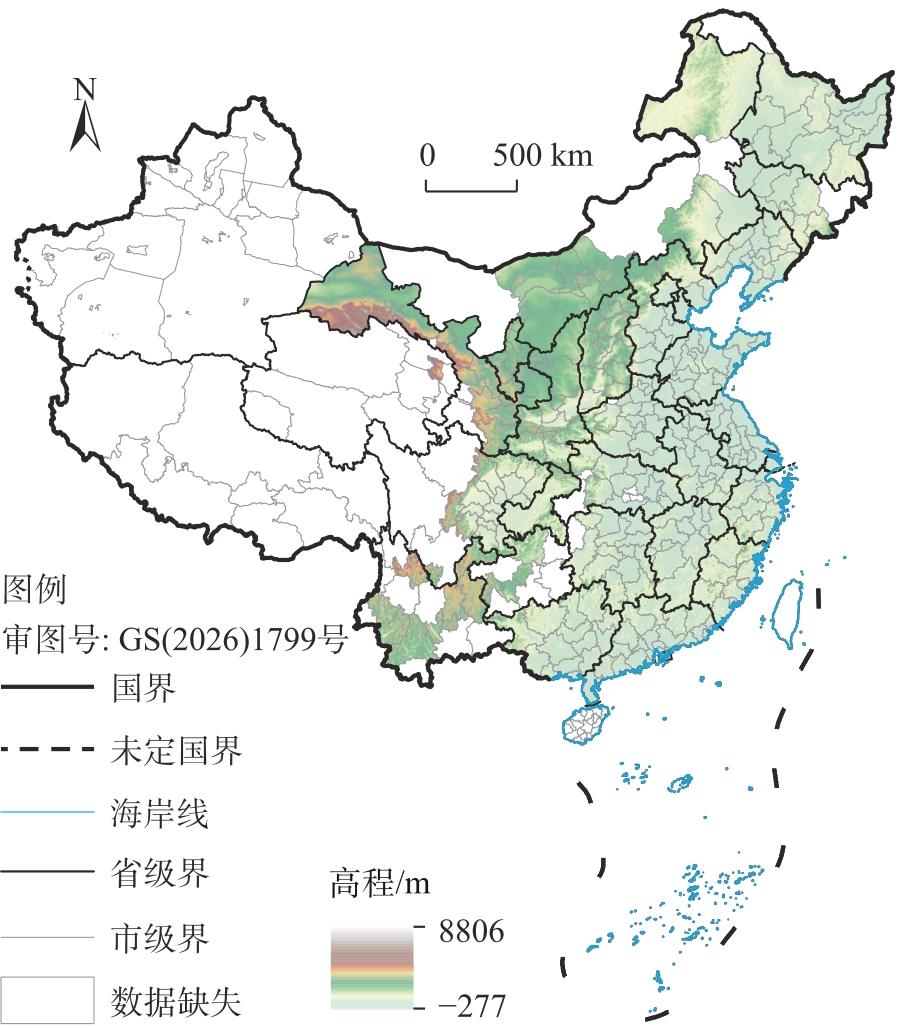

表1
新型城镇化高质量发展评价指标体系"
| 目标层 | 指标层 | 指标解释 | 属性 | 权重 |
|---|---|---|---|---|
| 人口城镇化 | 城镇化率 | 城镇常住人口/总常住人口 | + | 0.326 |
| 二、三产从业占比 | 二、三产业从业人员/总从业人员 | + | 0.468 | |
| 失业登记率 | 失业登记人数/总常住人口 | - | 0.206 | |
| 经济城镇化 | 人均GDP | 地区总GDP/总常住人口 | + | 0.416 |
| 产业升级 | 二、三产产业产值/一产产业产值 | + | 0.379 | |
| 科技财政支出 | 科技财政支出/地区财政总支出 | + | 0.205 | |
| 社会城镇化 | 教育财政支出 | 教育财政支出/地区财政总支出 | + | 0.166 |
| 每千人医护人员 | 执业医师数/总常住人口×1000 | + | 0.301 | |
| 养老保险参保率 | 养老保险参保人数/总常住人口 | + | 0.215 | |
| 图书馆藏书量 | 图书馆藏书/常住人口 | + | 0.318 | |
| 空间城镇化 | 路网密度 | 公路总里程/行政区总面积 | + | 0.260 |
| 建设用地占比 | 建成区面积/行政区总面积 | + | 0.437 | |
| 人均建设用地 | 建成区面积/总常住人口 | - | 0.302 | |
| 绿色城镇化 | 建成区绿化 | 建成区绿化面积/建成区面积 | + | 0.259 |
| 污水处理率 | 污水处理量/污水总产量 | + | 0.438 | |
| 固体利用率 | 工业固体垃圾再利用量/工业固体垃圾产生量 | + | 0.303 | |
| 城乡一体化 | 城乡可支配收入比 | 城市人均可支配收入/农村人均可支配收入 | - | 0.366 |
| 城乡消费比 | 城市人均消费/农村人均消费 | - | 0.391 | |
| 城乡恩格尔比 | 城市人均恩格尔系数/农村人均恩格尔系数 | + | 0.243 |
图2
城市创新协作演进"
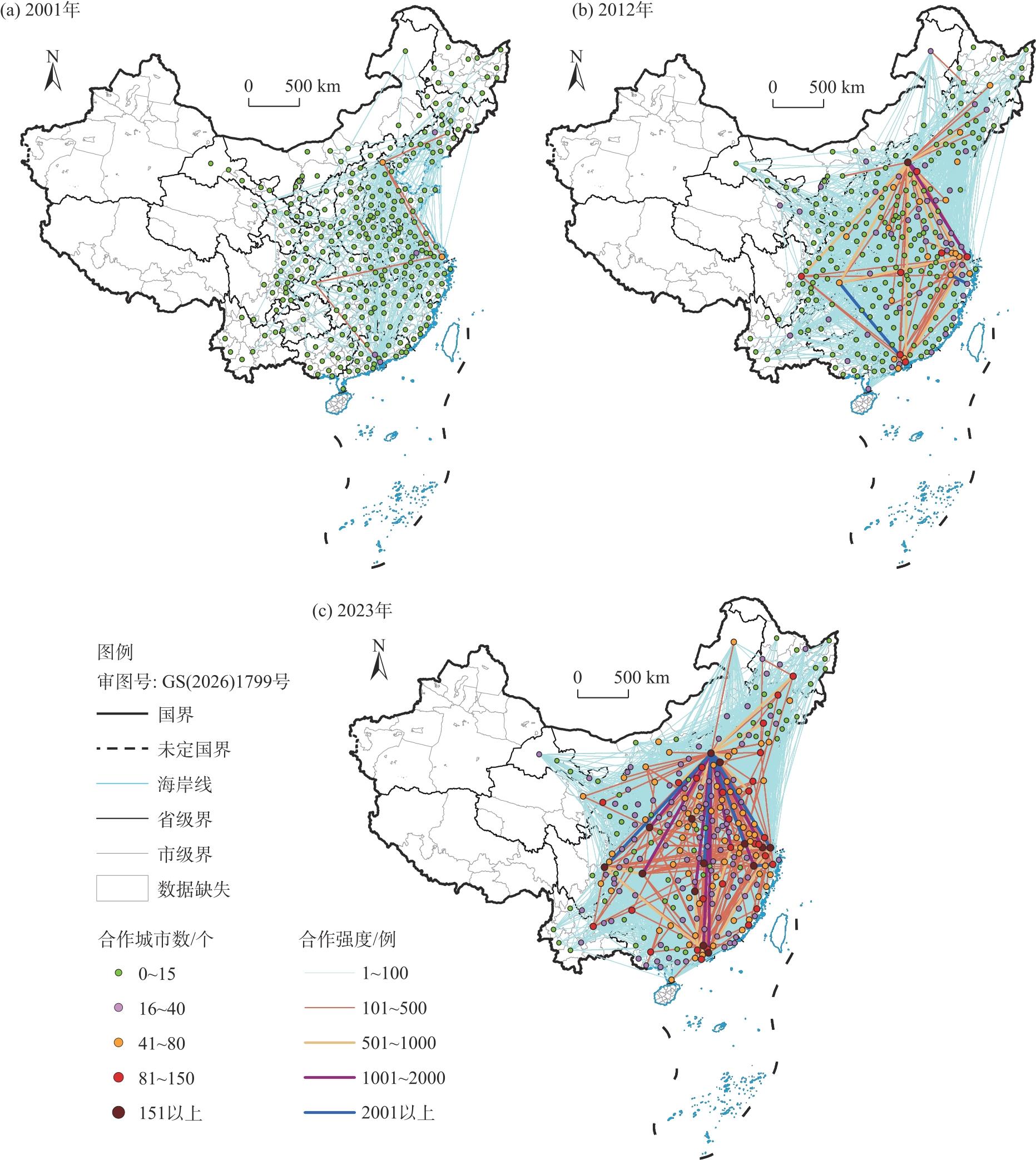
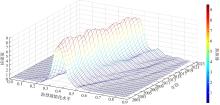
图3
新型城镇化高质量发展核密度估计演变"
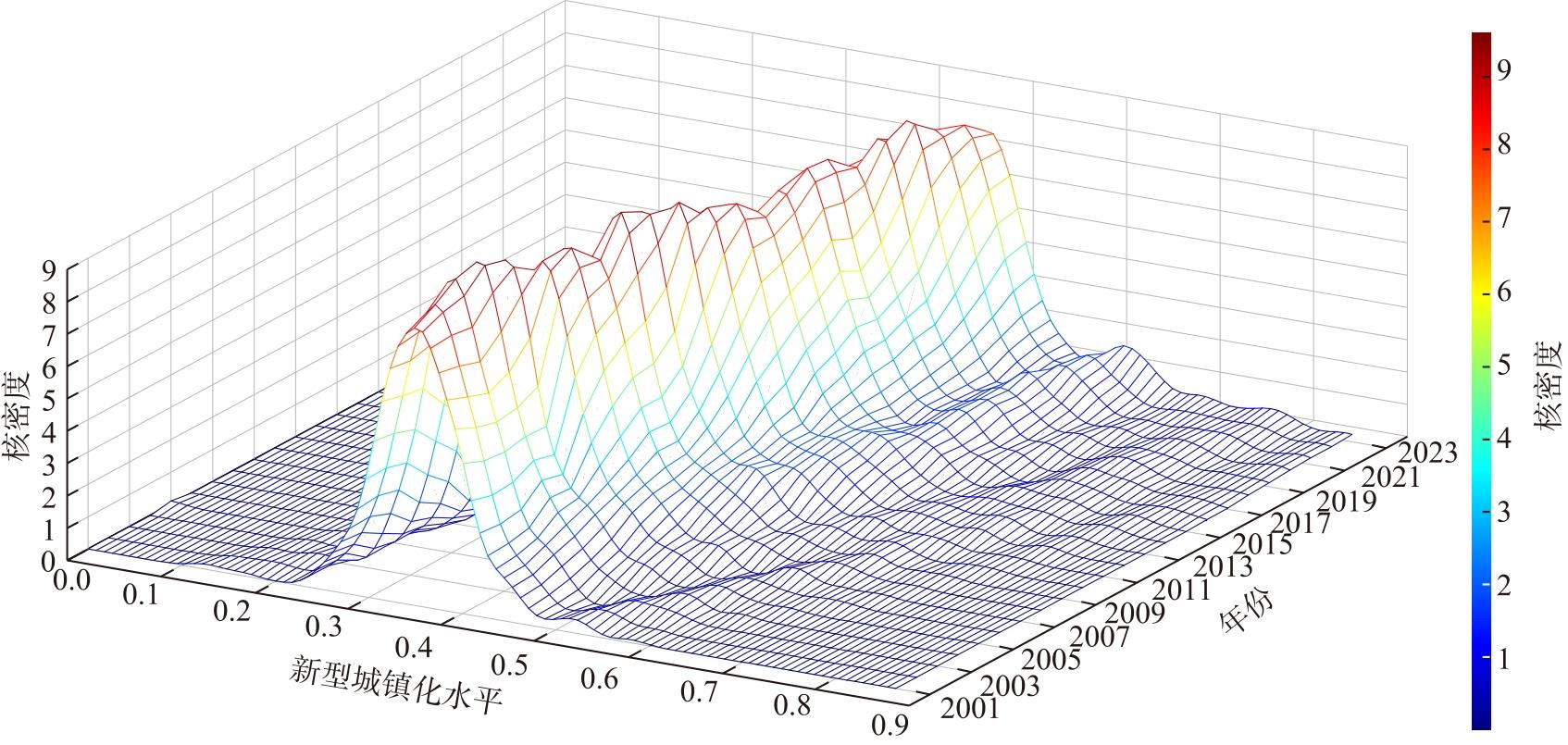
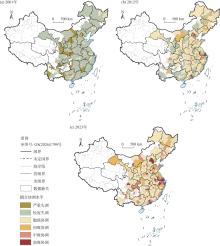
图4
新型城镇化高质量发展空间分布格局"
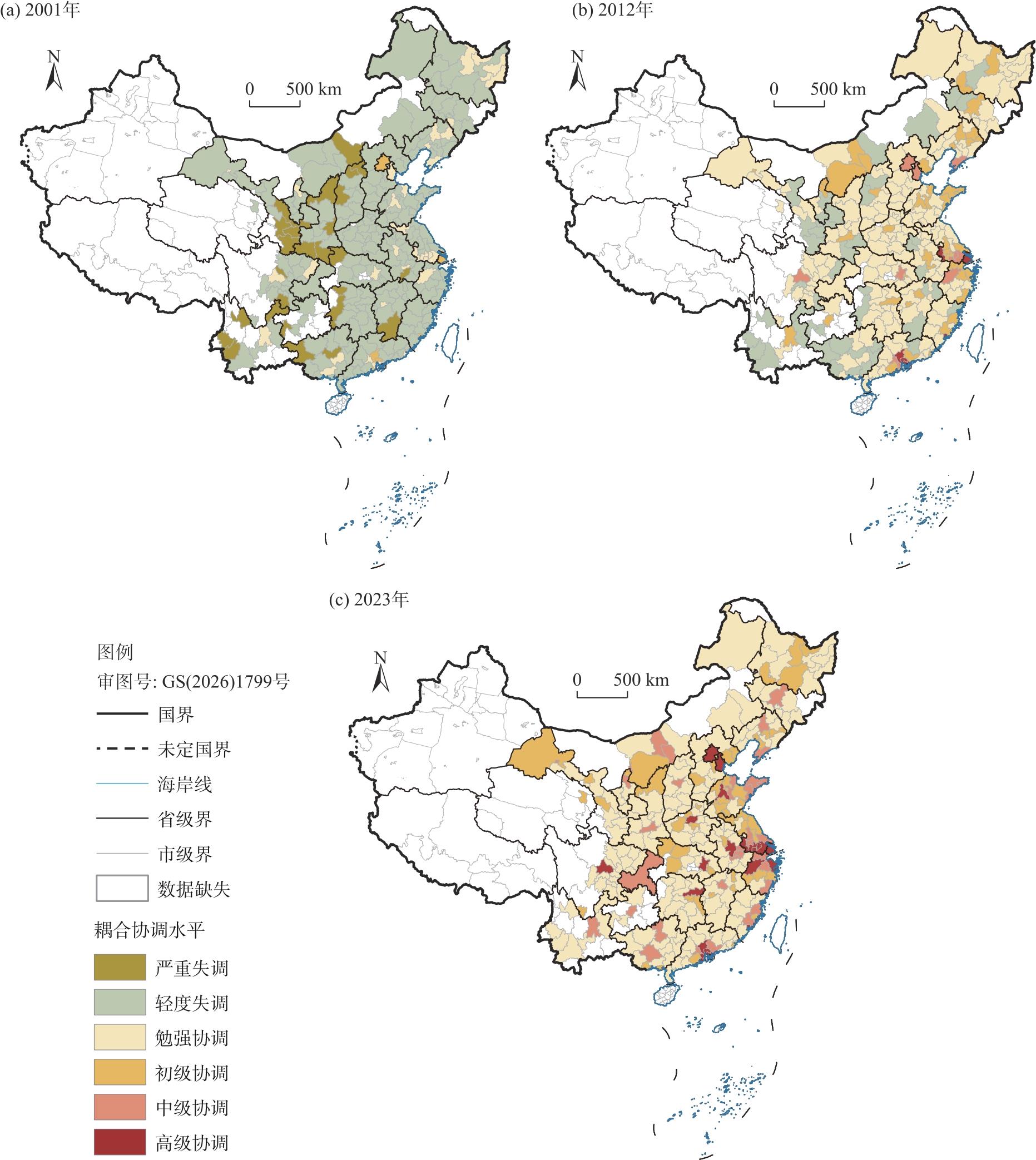
表2
全局莫兰指数"
| 年份 | 全局莫兰指数 | 方差 | Z | P |
|---|---|---|---|---|
| 2001 | 0.329 | 0.001 | 10.995 | 0.000 |
| 2012 | 0.332 | 0.001 | 11.128 | 0.000 |
| 2023 | 0.302 | 0.001 | 10.264 | 0.000 |
表3
传统马尔可夫链状态转移概率矩阵"
| 类型 | Ⅰ | Ⅱ | Ⅲ | Ⅳ | Ⅴ |
|---|---|---|---|---|---|
| Ⅰ | 0.708 | 0.285 | 0.008 | 0.000 | 0.000 |
| Ⅱ | 0.005 | 0.868 | 0.127 | 0.000 | 0.000 |
| Ⅲ | 0.000 | 0.009 | 0.948 | 0.042 | 0.000 |
| Ⅳ | 0.000 | 0.000 | 0.021 | 0.900 | 0.080 |
| Ⅴ | 0.000 | 0.000 | 0.000 | 0.006 | 0.994 |
表4
空间马尔可夫链状态转移概率矩阵"
| 空间滞后类型 | Ti时期类型 | Ti+1时期类型 | ||||
|---|---|---|---|---|---|---|
| Ⅰ | Ⅱ | Ⅲ | Ⅳ | Ⅴ | ||
| Ⅰ | Ⅰ | 0.875 | 0.125 | 0.000 | 0.000 | 0.000 |
| Ⅱ | 0.023 | 0.977 | 0.000 | 0.000 | 0.000 | |
| Ⅲ | 0.000 | 0.000 | 1.000 | 0.000 | 0.000 | |
| Ⅳ | 0.000 | 0.000 | 0.000 | 0.000 | 0.000 | |
| Ⅴ | 0.000 | 0.000 | 0.000 | 0.000 | 0.000 | |
| Ⅱ | Ⅰ | 0.702 | 0.289 | 0.008 | 0.000 | 0.000 |
| Ⅱ | 0.008 | 0.933 | 0.060 | 0.000 | 0.000 | |
| Ⅲ | 0.000 | 0.044 | 0.902 | 0.054 | 0.000 | |
| Ⅳ | 0.000 | 0.000 | 0.121 | 0.872 | 0.007 | |
| Ⅴ | 0.000 | 0.000 | 0.000 | 0.008 | 0.992 | |
| Ⅲ | Ⅰ | 0.000 | 1.000 | 0.000 | 0.000 | 0.000 |
| Ⅱ | 0.000 | 0.752 | 0.248 | 0.000 | 0.000 | |
| Ⅲ | 0.000 | 0.007 | 0.960 | 0.033 | 0.000 | |
| Ⅳ | 0.000 | 0.000 | 0.024 | 0.910 | 0.067 | |
| Ⅴ | 0.000 | 0.000 | 0.000 | 0.015 | 0.985 | |
| Ⅳ | Ⅰ | 0.000 | 0.000 | 0.000 | 0.000 | 0.000 |
| Ⅱ | 0.000 | 0.667 | 0.333 | 0.000 | 0.000 | |
| Ⅲ | 0.000 | 0.000 | 0.912 | 0.085 | 0.003 | |
| Ⅳ | 0.000 | 0.000 | 0.019 | 0.893 | 0.088 | |
| Ⅴ | 0.000 | 0.000 | 0.000 | 0.000 | 1.000 | |
| Ⅴ | Ⅰ | 0.000 | 0.000 | 0.000 | 0.000 | 0.000 |
| Ⅱ | 0.000 | 0.000 | 0.000 | 0.000 | 0.000 | |
| Ⅲ | 0.000 | 0.000 | 0.000 | 0.000 | 0.000 | |
| Ⅳ | 0.000 | 0.000 | 0.000 | 0.727 | 0.273 | |
| Ⅴ | 0.000 | 0.000 | 0.000 | 0.000 | 1.000 | |
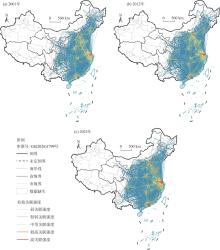
图5
空间关联网络的空间结构演变"
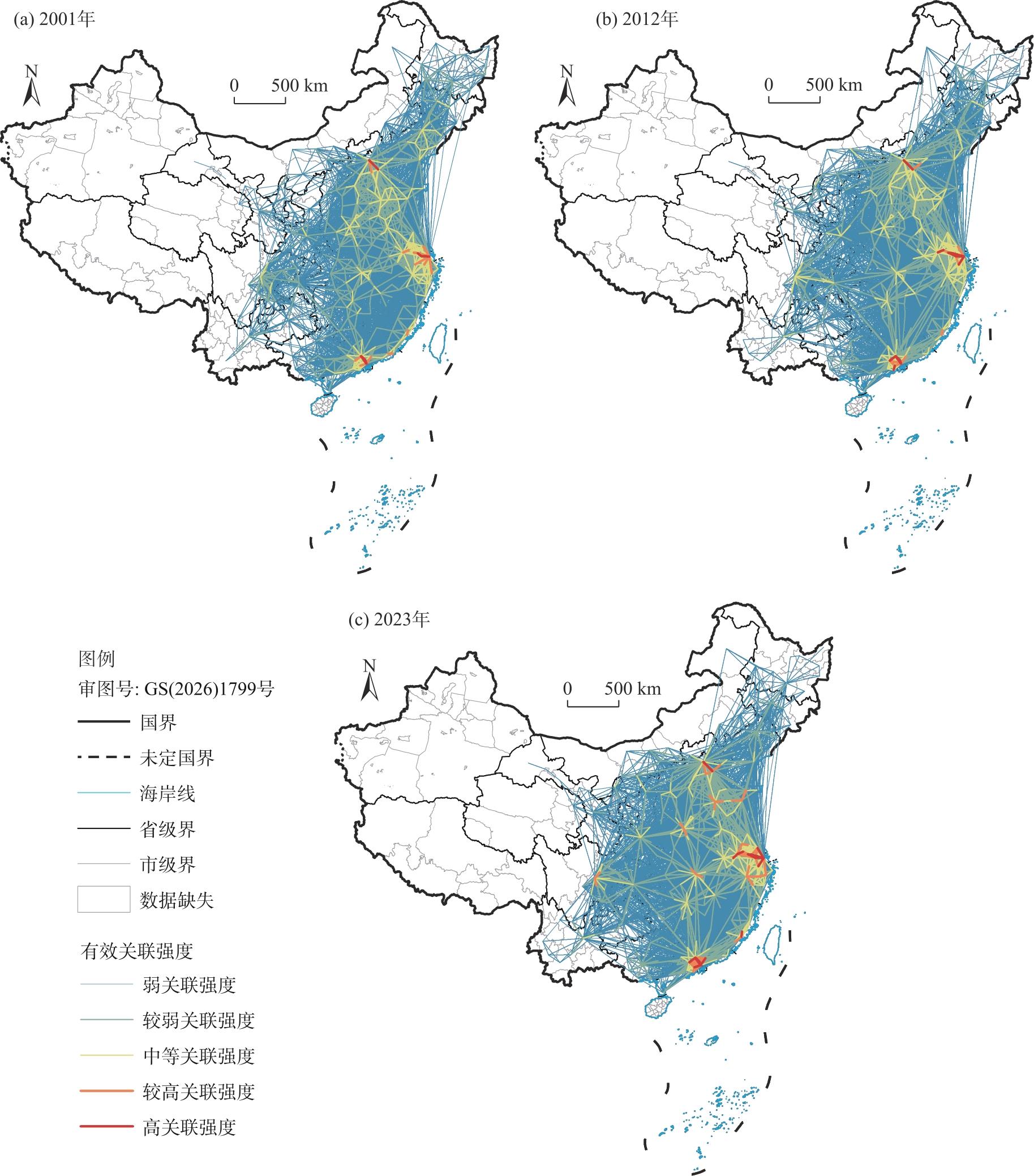
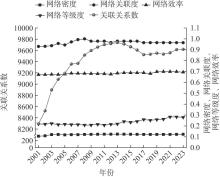
图6
整体网络结构特征演变趋势"
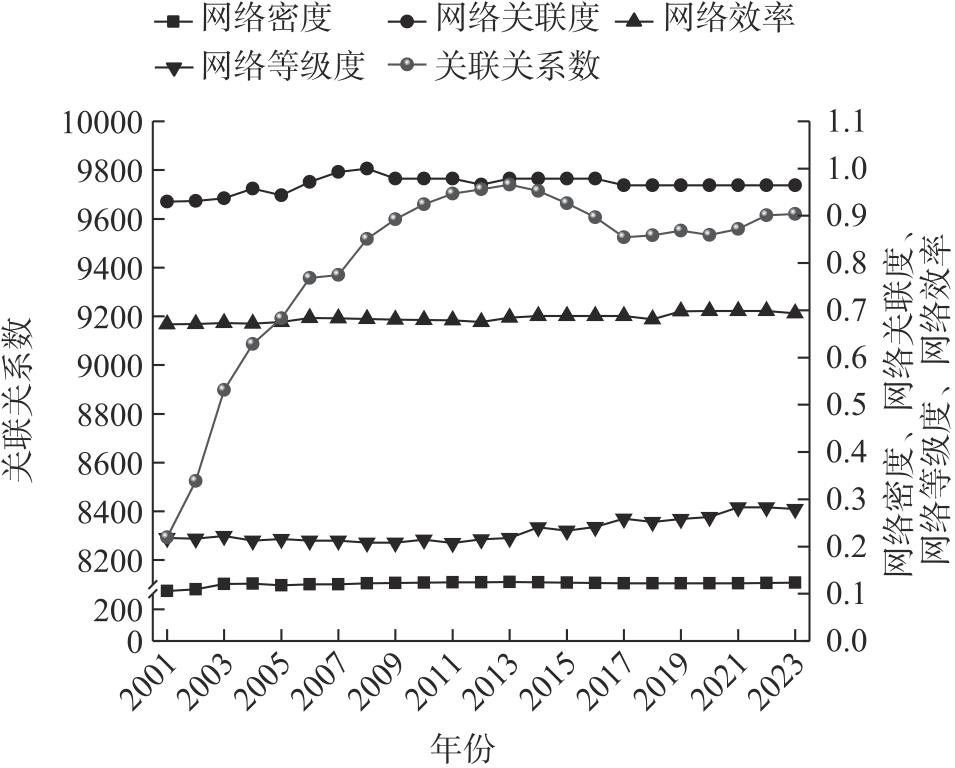
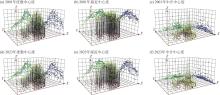
图7
网络中心度的空间趋势"
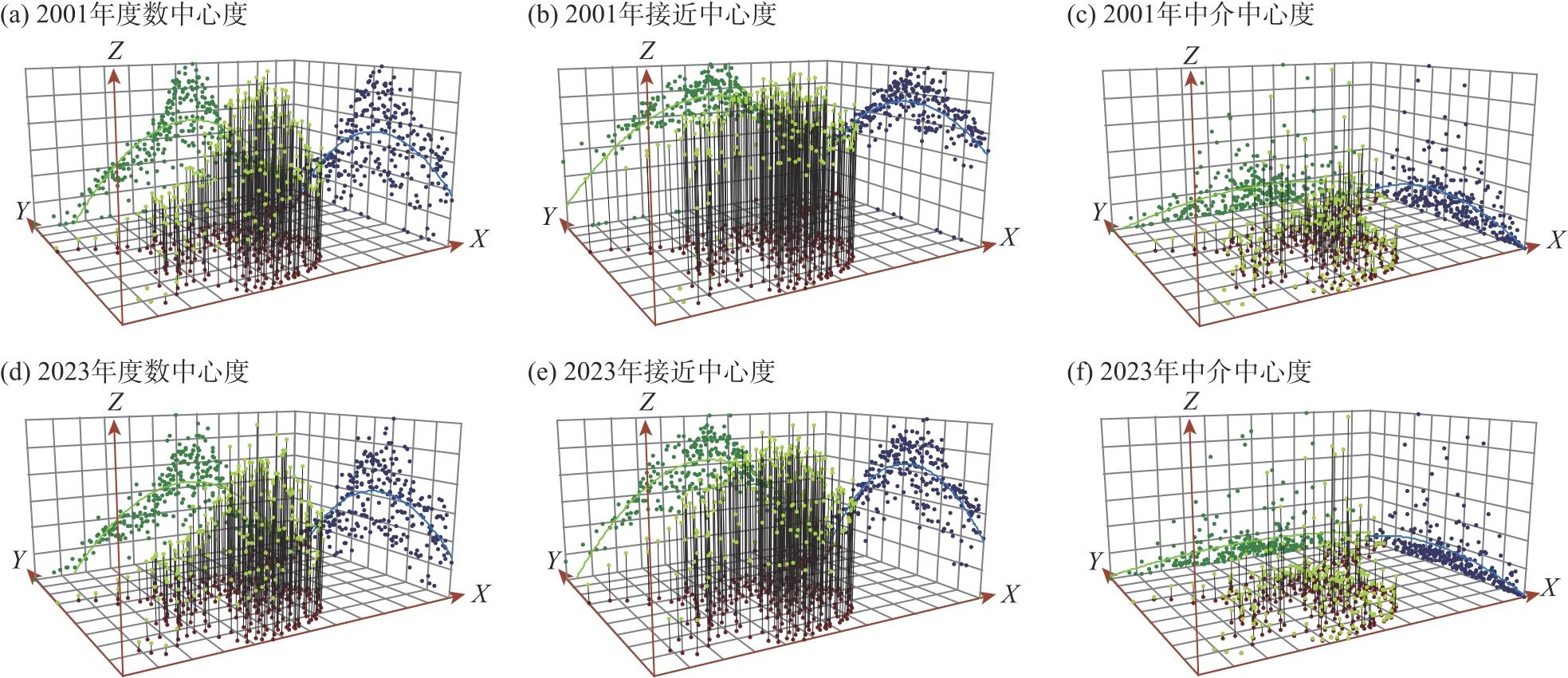
表5
网络模体结构及统计特征"
| 类型 | 结构 | 代码 | 2001年 | 2012年 | 2023年 | ||||||||
|---|---|---|---|---|---|---|---|---|---|---|---|---|---|
| 排序 | 频率 | z | 排序 | 频率 | z | 排序 | 频率 | z | |||||
| 发散 |  | 021D | 4 | 10.63 | UR | 3 | 12.73 | UR | 2 | 14.41 | UR | ||
| 汇聚 |  | 021U | 5 | 9.23 | UR | 7 | 8.03 | UR | 7 | 7.41 | UR | ||
| 链式 |  | 021C | 10 | 4.40 | UR | 10 | 4.07 | UR | 10 | 4.18 | UR | ||
| 互惠发散 |  | 111D | 1 | 15.51 | OR | 2 | 14.44 | OR | 3 | 13.43 | OR | ||
| 互惠汇聚 |  | 111U | 2 | 14.42 | OR | 1 | 15.63 | OR | 1 | 16.20 | OR | ||
| 传递三元组 |  | 030T | 11 | 3.32 | UR | 11 | 3.52 | UR | 11 | 3.69 | UR | ||
| 双互惠 |  | 201 | 9 | 6.23 | NS | 8 | 6.39 | OR | 9 | 5.97 | NS | ||
| 传递OR互惠 |  | 120D | 7 | 8.14 | OR | 5 | 8.53 | OR | 5 | 8.57 | OR | ||
| 循环OR互惠 |  | 120U | 8 | 6.41 | OR | 9 | 6.03 | OR | 8 | 6.06 | OR | ||
| 链式OR互惠 |  | 120C | 12 | 1.19 | UR | 12 | 1.23 | UR | 12 | 1.28 | UR | ||
| 强传递 |  | 210 | 3 | 11.36 | OR | 4 | 10.94 | OR | 4 | 10.68 | OR | ||
| 全互惠 |  | 300 | 6 | 8.87 | OR | 6 | 8.44 | OR | 6 | 8.11 | OR | ||
表6
影响因素变量及说明"
| 驱动要素 | 变量名称 | 机制 | 变量含义 |
|---|---|---|---|
| 内生结构 | 边数 | 基础效应 | 网络的基本密度,类似于截距项 |
| 互惠性 | 互惠性 | 检验城市间是否存在双向互动的合作机制 | |
| 节点属性 | 人口规模 | 马太效应 | 市辖区年末总人口,检验规模效应 |
| 经济水平 | 马太效应 | 人均GDP,检验经济实力的辐射带动作用 | |
| 城镇化率 | 马太效应 | 常住人口城镇化率,反映人口集聚水平 | |
| 城乡协调 | 马太效应 | 城乡居民可支配收入比,反映社会公平 | |
| 产业结构 | 马太效应 | 第三产业与第二产业产值之比,反映产业结构的同质性 | |
| 交通基础 | 马太效应 | 城市道路面积与市区面积之比,反映实体通达性 | |
| 信息联通 | 马太效应 | 互联网宽带接入用户数/移动电话数,反映信息通达性 | |
| 土地资源 | 马太效应 | 人均城市建设用地面积,反映土地要素支撑能力 | |
| 生态环境 | 马太效应 | 人均公园绿地面积,反映城市宜居品质 | |
| 外生网络 | 地理距离 | 外部网络依赖 | 两城市间球面距离标准化的对数加权矩阵,检验地理邻近效应 |
| 高铁网络 | 外部网络依赖 | 两城市间是否能通过高铁直达,检验交通技术发展对网络的影响 | |
| 行政归属 | 外部网络依赖 | 二值矩阵,两城市属于同一省份取1,否则取0 | |
| 经济差异 | 外部网络依赖 | 两城市人均GDP的绝对差值矩阵,检验势差效应 |
表7
指数随机图模型(ERGM)估计回归结果"
| 变量 | 2001年 | 2012年 | 2023年 | |||||
|---|---|---|---|---|---|---|---|---|
| 模型1 | 模型2 | 模型1 | 模型2 | 模型1 | 模型2 | |||
| 边数 | -2.534*** | 4.562*** | -4.441*** | 3.009*** | -6.938*** | 3.351*** | ||
| 互惠性 | 3.107*** | 1.628*** | 4.915*** | 3.883*** | 5.941*** | 4.988*** | ||
| 人口规模 | 6.221*** | 6.903*** | 1.386*** | 3.218*** | 0.154 | 2.103*** | ||
| 经济水平 | 0.094*** | 0.492*** | 0.083*** | 0.601*** | 0.174*** | 0.632*** | ||
| 城镇化率 | -0.141** | 0.732*** | 0.091 | 0.311*** | 1.232*** | 1.950*** | ||
| 城乡协调 | -0.431*** | 0.314* | -0.402*** | 0.691*** | -0.373*** | 1.492*** | ||
| 产业结构 | 0.154 | 1.703*** | -0.452*** | 0.431 | -0.253*** | -0.424* | ||
| 交通基础 | 0.341*** | 0.061 | 0.532*** | 0.325*** | 0.568*** | 0.441*** | ||
| 信息联通 | -0.003*** | -0.012*** | 0.001 | -0.004*** | 0.002*** | -0.003*** | ||
| 土地资源 | -1.942*** | -3.266*** | -0.763*** | -0.591*** | -0.852*** | -0.714*** | ||
| 生态环境 | 0.041*** | 0.012 | 0.023*** | -0.014 | 0.022*** | -0.101*** | ||
| 地理距离 | - | -2.413*** | - | -1.919*** | - | -1.856*** | ||
| 高铁网络 | - | - | - | 0.021 | - | 0.253*** | ||
| 行政归属 | - | -0.182** | - | -0.230*** | - | -0.184*** | ||
| 经济差异 | - | -0.081*** | - | -0.086*** | - | -0.094*** | ||
| AIC | 51016.032 | 37829.454 | 46782.802 | 32766.681 | 41146.887 | 28192.762 | ||
| BIC | 51117.721 | 37977.701 | 46903.263 | 32924.202 | 41267.351 | 28350.279 | ||
| Log Likelihood | -25497.024 | -18898.704 | -23378.401 | -16366.332 | -20560.439 | -14079.415 | ||
表8
模型2收敛性诊断"
| 变量 | 2001年 | 2012年 | 2023年 | |||||
|---|---|---|---|---|---|---|---|---|
| G | P | G | P | G | P | |||
| 边数 | 0.321 | 0.748 | -0.766 | 0.444 | -0.235 | 0.814 | ||
| 互惠性 | -0.298 | 0.766 | -0.835 | 0.404 | -0.197 | 0.844 | ||
| 人口规模 | -0.538 | 0.591 | -0.845 | 0.398 | -0.850 | 0.395 | ||
| 经济水平 | -0.411 | 0.681 | -0.310 | 0.757 | 0.149 | 0.881 | ||
| 城镇化率 | 0.106 | 0.916 | -0.583 | 0.560 | -0.244 | 0.807 | ||
| 城乡协调 | 0.685 | 0.493 | -0.901 | 0.367 | -0.268 | 0.789 | ||
| 产业结构 | -0.104 | 0.917 | -1.220 | 0.223 | -0.291 | 0.771 | ||
| 交通基础 | -0.094 | 0.925 | -0.917 | 0.359 | -0.226 | 0.821 | ||
| 信息联通 | -0.304 | 0.761 | 0.062 | 0.951 | 0.111 | 0.912 | ||
| 土地资源 | -0.926 | 0.355 | -0.277 | 0.782 | 0.387 | 0.698 | ||
| 生态环境 | -0.699 | 0.485 | 0.416 | 0.678 | 0.378 | 0.705 | ||
| 地理距离 | 0.249 | 0.803 | -0.681 | 0.496 | -0.334 | 0.739 | ||
| 高铁网络 | - | - | -1.859 | 0.063 | 0.321 | 0.748 | ||
| 行政归属 | 0.231 | 0.817 | -0.659 | 0.510 | -0.323 | 0.747 | ||
| 经济差异 | 0.066 | 0.947 | -0.151 | 0.880 | -1.631 | 0.103 | ||
| [1] | 方创琳. 中国新型城镇化高质量发展的规律性与重点方向[J]. 地理研究, 2019, 38(1): 13-22. |
| [Fang Chuanglin. Regularity and key directions of high-quality development of new-type urbanization in China[J]. Geographical Research, 2019, 38(1): 13-22.] | |
| [2] | 高志刚, 任严岩, 韩延玲. 新型城镇化推进经济高质量发展理论阐释与实证检验[J]. 区域经济评论, 2022(5): 58-69. |
| [Gao Zhigang, Ren Yanyan, Han Yanling. Theoretical interpretation and empirical test of new-type urbanization promoting high-quality economic development[J]. Regional Economic Review, 2022(5): 58-69.] | |
| [3] | 解安, 林进龙. 新型城镇化: 十年总结与远景展望[J]. 河北学刊, 2023, 43(1): 115-126. |
| [Xie An, Lin Jinlong. New-type urbanization: Ten-year review and prospect[J]. Hebei Academic Journal, 2023, 43(1): 115-126.] | |
| [4] | 于洋, 董刘洋, 周睿, 等. 成渝地区交通网络与新型城镇化协同发展分析与提升对策[J]. 现代城市研究, 2025(9): 81-89. |
| [Yu Yang, Dong Liuyang, Zhou Rui, et al. Synergistic development analysis and improvement strategies of transportation network and new-type urbanization in the Chengdu-Chongqing region[J]. Modern Urban Research, 2025(9): 81-89.] | |
| [5] | 张梦瑶. 中国特色新型城镇化高质量发展的实践路径探析——基于新发展理念视角[J]. 当代经济管理, 2021, 43(9): 75-80. |
| [Zhang Mengyao. Practical path of high-quality development of Chinese-style new-type urbanization: From the perspective of new development philosophy[J]. Contemporary Economic Management, 2021, 43(9): 75-80.] | |
| [6] | 徐雪. 新型城镇化高质量发展的多维测度、空间差异及动态演进[J]. 统计与决策, 2024, 40(10): 100-105. |
| [Xu Xue. Multidimensional measurement, spatial differences and dynamic evolution of high-quality development of new-type urbanization[J]. Statistics and Decision, 2024, 40(10): 100-105.] | |
| [7] | 于爱芝, 汪洋. 新型城镇化对扩大内需的影响机制研究——中国257个地级以上城市的数据实证[J]. 城市发展研究, 2024, 31(1): 112-120. |
| [Yu Aizhi, Wang Yang. Mechanism of the impact of new-type urbanization on expanding domestic demand: Evidence from 257 prefecture-level and above cities in China[J]. Urban Development Studies, 2024, 31(1): 112-120.] | |
| [8] | 龚雅洁. 新型城镇化高质量发展水平动态变化研究——以福建省为例[J]. 海峡科技与产业, 2023, 36(11): 60-64. |
| [Gong Yajie. Dynamic changes in the high-quality development level of new-type urbanization: A case study of Fujian Province[J]. Science and Technology and Industry Across the Straits, 2023, 36(11): 60-64.] | |
| [9] | 姜亚俊, 慈福义, 史佳璐, 等. 山东省新型城镇化与生态环境耦合协调发展研究[J]. 生态经济, 2021, 37(5): 106-112. |
| [Jiang Yajun, Ci Fuyi, Shi Jialu, et al. Coupling and coordinated development of new-type urbanization and ecological environment in Shandong Province[J]. Ecological Economy, 2021, 37(5): 106-112.] | |
| [10] |
李锦, 蒲娟, 李明亮, 等. 新型城镇化与和美乡村耦合协调发展水平测度、地区差异及动态演进[J]. 干旱区地理, 2025, 48(12): 2220-2231.
doi: 10.12118/j.issn.1000-6060.2024.788 |
|
[Li Jin, Pu Juan, Li Mingliang, et al. Measurement, regional differences and dynamic evolution of the coupling and coordinated development level of new-type urbanization and harmonious beautiful countryside[J]. Arid Land Geography, 2025, 48(12): 2220-2231.]
doi: 10.12118/j.issn.1000-6060.2024.788 |
|
| [11] |
Castells M. Toward a sociology of the network society[J]. Contemporary Sociology, 2000, 29(5): 693-699.
doi: 10.2307/2655234 |
| [12] | Cai Y C, Wu Y Z. Social-ecological network analysis of national park attractiveness: A case study of Baishanzu Mountain, China[J]. Humanities and Social Sciences Communications, 2026, 13(1): 205, doi: 10.1057/s41599-026-06505-8. |
| [13] | 饶传坤, 朱铖扬, 翟端强. 基于轨道交通客流的城市通勤特征与职住关系研究——以杭州市为例[J]. 现代城市研究, 2025(2): 16-23. |
| [Rao Chuankun, Zhu Chengyang, Zhai Duanqiang. Urban commuting characteristics and jobs-housing relationship based on rail transit passenger flow: A case study of Hangzhou[J]. Modern Urban Research, 2025(2): 16-23.] | |
| [14] |
向博文, 魏伟, 洪梦谣, 等. 长江经济带跨市就医网络结构及多维邻近性[J]. 地理科学进展, 2025, 44(4): 742-753.
doi: 10.18306/dlkxjz.2025.04.007 |
| [Xiang Bowen, Wei Wei, Hong Mengyao, et al. Intercity medical treatment network structure and multidimensional proximity in the Yangtze River Economic Belt[J]. Progress in Geography, 2025, 44(4): 742-753.] | |
| [15] | 刘俊, 李潇涵, 王胜宏. 成都市旅游“流空间”结构的短期与长期预测——基于马尔科夫链稳态方法分析[J]. 旅游学刊, 2025, 40(11): 64-80. |
| [Liu Jun, Li Xiaohan, Wang Shenghong. Short-and long-term forecasting of tourism“space of flows”structure in Chengdu: An analysis based on steady-state Markov chain method[J]. Tourism Tribune, 2025, 40(11): 64-80.] | |
| [16] |
黄杰, 陆洪阳, 刘华军. 中国新质生产力的空间关联网络结构特征及其影响因素研究[J]. 地域研究与开发, 2025, 44(1): 1-7.
doi: 10.3969/j.issn.1003-2363.2025.01.001 |
| [Huang Jie, Lu Hongyang, Liu Huajun. Structural characteristics and influencing factors of the spatial association network of China’s new quality productive forces[J]. Areal Research and Development, 2025, 44(1): 1-7.] | |
| [17] |
史玉芳, 牛玉. 关中平原城市群韧性空间关联网络及其影响因素研究[J]. 干旱区地理, 2024, 47(2): 270-280.
doi: 10.12118/j.issn.1000-6060.2023.104 |
|
[Shi Yufang, Niu Yu. Spatial association network of urban resilience in the Guanzhong Plain urban agglomeration and its influencing factors[J]. Arid Land Geography, 2024, 47(2): 270-280.]
doi: 10.12118/j.issn.1000-6060.2023.104 |
|
| [18] | 张红伟, 李佳妮, 柴季, 等. 长江经济带城市建设用地利用效率的空间关联网络及协同治理路径[J]. 长江流域资源与环境, 2025, 34(2): 331-342. |
| [Zhang Hongwei, Li Jiani, Chai Ji, et al. Spatial association network and collaborative governance path of urban construction land use efficiency in the Yangtze River Economic Belt[J]. Resources and Environment in the Yangtze Basin, 2025, 34(2): 331-342.] | |
| [19] |
Chen M X, Liu W D, Lu D D. Challenges and the way forward in China’s new-type urbanization[J]. Land Use Policy, 2016, 55: 334-339.
doi: 10.1016/j.landusepol.2015.07.025 |
| [20] | 袁晓玲, 黄涛, 李冬. 中国绿色转型绩效差异的多维分解与驱动机制——基于“降碳-减污-扩绿-增长”评估框架的再审视[J]. 干旱区资源与环境, 2025, 39(11): 33-41. |
| [Yuan Xiaoling, Huang Tao, Li Dong. Multidimensional decomposition and driving mechanism of differences in China’s green transformation performance: A re-examination based on the evaluation framework of “carbon reduction-pollution reduction-green expansion-growth”[J]. Journal of Arid Land Resources and Environment, 2025, 39(11): 33-41.] | |
| [21] |
Chen M X, Liu W D, Lu D D, et al. Progress of China’s new-type urbanization construction since 2014: A preliminary assessment[J]. Cities, 2018, 78: 180-193.
doi: 10.1016/j.cities.2018.02.012 |
| [22] | 周灿, 肖铁桥. 县域农业农村现代化与城乡融合的时空耦合及障碍因子——以皖北地区为例[J]. 云南农业大学学报(社会科学), 2024, 18(3): 14-23. |
| [Zhou Can, Xiao Tieqiao. Spatiotemporal coupling and obstacle factors of county-level agricultural and rural modernization and urban-rural integration: A case study of northern Anhui[J]. Journal of Yunnan Agricultural University (Social Science Edition), 2024, 18(3): 14-23.] | |
| [23] |
王淑佳, 孔伟, 任亮, 等. 国内耦合协调度模型的误区及修正[J]. 自然资源学报, 2021, 36(3): 793-810.
doi: 10.31497/zrzyxb.20210319 |
|
[Wang Shujia, Kong Wei, Ren Liang, et al. Misunderstandings and revisions of the coupling coordination degree model in domestic studies[J]. Journal of Natural Resources, 2021, 36(3): 793-810.]
doi: 10.31497/zrzyxb.20210319 |
|
| [24] |
Li H F, Calder C A, Cressie N. Beyond Moran’s I: Testing for spatial dependence based on the spatial autoregressive model[J]. Geographical Analysis, 2007, 39(4): 357-375.
doi: 10.1111/gean.2007.39.issue-4 |
| [25] | 刘华军, 贾文星. 不同空间网络关联情形下中国区域经济增长的收敛检验及协调发展[J]. 南开经济研究, 2019(3): 104-124. |
| [Liu Huajun, Jia Wenxing. Convergence test and coordinated development of China’s regional economic growth under different spatial network association scenarios[J]. Nankai Economic Studies, 2019(3): 104-124.] | |
| [26] |
Robins G, Pattison P, Kalish Y, et al. An introduction to exponential random graph (p*) models for social networks[J]. Social Networks, 2007, 29(2): 173-191.
doi: 10.1016/j.socnet.2006.08.002 |
| [27] | 孙国民. 新型城镇化: 路径选择、启示镜鉴与对策建议[J]. 经济社会体制比较, 2025(3): 1-9. |
| [Sun Guomin. New-type urbanization: Path selection, lessons and policy suggestions[J]. Comparative Economic and Social Systems, 2025(3): 1-9.] | |
| [28] | 高雅婕, 陈诚. 长江经济带数字经济发展与新型城镇化耦合协调格局及影响因素[J]. 统计与决策, 2025, 41(21): 116-121. |
| [Gao Yajie, Chen Cheng. Coupling coordination pattern and influencing factors of digital economy development and new-type urbanization in the Yangtze River Economic Belt[J]. Statistics and Decision, 2025, 41(21): 116-121.] | |
| [29] | 张玥, 代亚强, 柯新利. 中国新型城镇化空间关联网络及其对土地利用生态效率的影响——基于网络节点中心度视角[J]. 中国土地科学, 2023, 37(9): 117-129. |
| [Zhang Yue, Dai Yaqiang, Ke Xinli. Spatial association network of new-type urbanization in China and its impact on land-use eco-efficiency: From the perspective of network node centrality[J]. China Land Science, 2023, 37(9): 117-129.] | |
| [30] |
Faust K. Very local structure in social networks[J]. Sociological Methodology, 2007, 37(1): 209-256.
doi: 10.1111/j.1467-9531.2007.00179.x |
| [31] |
周建平, 徐维祥, 郭加新, 等. 国内大循环视角下中国城市生产网络结构演化与影响因素[J]. 经济地理, 2025, 45(7): 126-135, 147.
doi: 10.15957/j.cnki.jjdl.2025.07.013 |
|
[Zhou Jianping, Xu Weixiang, Guo Jiaxin, et al. Evolution and influencing factors of China’s urban production network from the perspective of the domestic big cycle[J]. Economic Geography, 2025, 45(7): 126-135, 147.]
doi: 10.15957/j.cnki.jjdl.2025.07.013 |
| [1] | 芦风英, 滕圣钰, 邓光耀. 中国农业韧性空间关联网络特征及驱动因素识别[J]. 干旱区地理, 2026, 49(7): 1470-1480. |
| [2] | 赵晓琴, 孙德华. 中国劳动力流动网络中的城市舒适度偏好——基于百度迁徙大数据[J]. 干旱区地理, 2026, 49(5): 1013-1025. |
| [3] | 邓光耀, 沈迎辰. 中国生态韧性关联网络的特征及影响因素研究[J]. 干旱区地理, 2025, 48(4): 704-716. |
| [4] | 刘清,蒋小荣. 关系依赖如何影响全球化城市网络的生长发育——以苹果手机供应商为例[J]. 干旱区地理, 2022, 45(1): 310-324. |
|
||