干旱区地理 ›› 2026, Vol. 49 ›› Issue (9): 1765-1776.doi: 10.12118/j.issn.1000-6060.2025.745 cstr: 32274.14.ALG2025745
孙燕( ), 南维鸽(), 胡光印, 杨林海, 胡菁菁, 郝雪萌
收稿日期:2025-11-24
修回日期:2026-01-09
出版日期:2026-09-25
发布日期:2026-09-07
通讯作者:
南维鸽(1979-),女,博士,副教授,主要从事环境变迁研究. E-mail: nanweige@snnu.edu.cn作者简介:孙燕(2002-),女,硕士研究生,主要从事环境变迁研究. E-mail: suny0723@snnu.edu.cn
基金资助:
SUN Yan(), NAN Weige(), HU Guangyin, YANG Linhai, HU Jingjing, HAO Xuemeng
Received:2025-11-24
Revised:2026-01-09
Published:2026-09-25
Online:2026-09-07
摘要:
灌丛沙丘作为一类特殊的风沙沉积地貌,记录了丰富的环境演化信息,是干旱半干旱地区古气候变化研究的有效载体。以柴达木盆地南缘6 m灌丛沙丘为研究对象,通过收集沙丘剖面5个光释光样品和61个沉积物样品,综合分析风沙沉积物粒度、地球化学元素、化学风化指标及养分等多个指标,探讨全新世晚期百年尺度的风沙环境演变特征。结果表明:研究区灌丛沙丘沉积以短距离跃移和悬移为主,受气候干湿变化、风力强弱转换和植被演替控制,经历了复杂的堆积侵蚀交替主导的沉积过程。自3.91 ka以来,研究区风沙活动与气候条件呈阶段性变化,可将其分为4个阶段:3.91 ka之前气候干冷,风沙活动相对较弱;3.91—2.85 ka气候转向相对暖湿,风沙活动增强;2.85—1.76 ka气候干湿波动频繁,风沙活动由弱转强;1.76 ka以来气候整体趋向干冷。灌丛沙丘沉积过程指示了柴达木地区全新世晚期气候环境的阶段性特征,为区域风沙环境演化提供了新的沉积证据。
孙燕, 南维鸽, 胡光印, 杨林海, 胡菁菁, 郝雪萌. 柴达木盆地灌丛沙丘风沙沉积记录的气候环境演化[J]. 干旱区地理, 2026, 49(9): 1765-1776.
SUN Yan, NAN Weige, HU Guangyin, YANG Linhai, HU Jingjing, HAO Xuemeng. Climatic and environmental evolution recorded by aeolian sediments of nebkha in the Qaidam Basin[J]. Arid Land Geography, 2026, 49(9): 1765-1776.
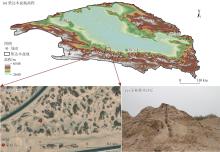
图1
研究区及采样点位置 注:柴达木盆地矢量边界数据来源于国家冰川冻土沙漠科学数据中心(https://www.ncdc.ac.cn)。"

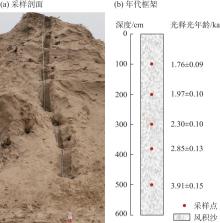
图2
沙丘采样剖面及年代框架"
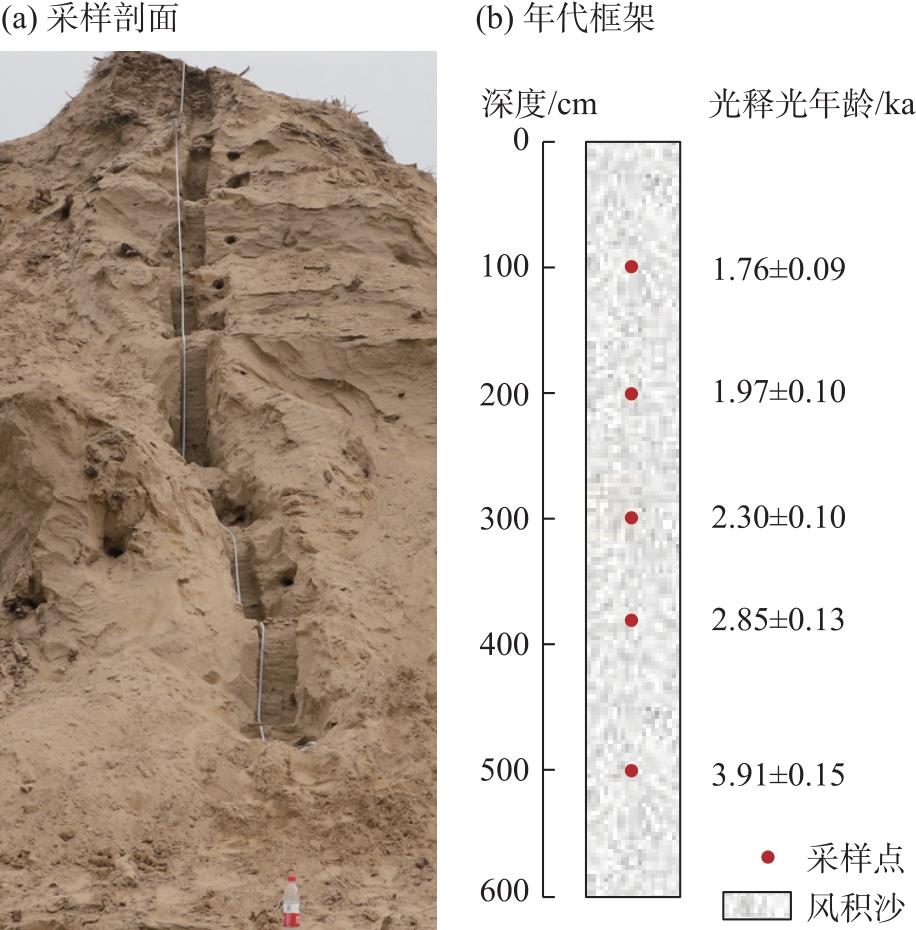
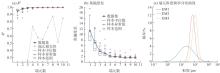
图3
粒度端元分析结果 注:R2为决定系数;EM为粒度端元。"
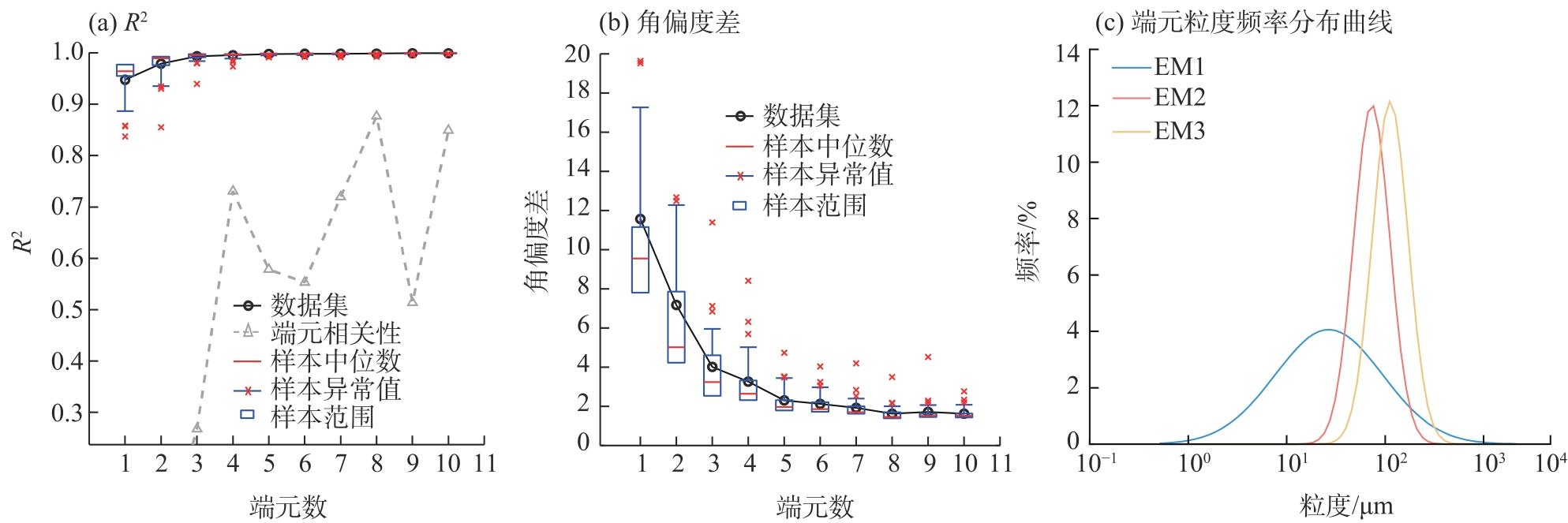
表1
沙丘剖面的光释光测年结果"
| 采样深度/cm | 测试指标 | 年龄/ka | |||||
|---|---|---|---|---|---|---|---|
| U/mg·kg-1 | Th/mg·kg-1 | K/% | 含水率/% | 剂量率/Gy·ka-1 | 等效剂量/Gy | ||
| 100 | 2.12±0.01 | 9.14±0.01 | 1.71±0.00 | 6±5 | 3.03±0.10 | 5.34±0.20 | 1.76±0.09 |
| 200 | 2.28±0.01 | 7.77±0.01 | 1.72±0.02 | 6±5 | 2.93±0.10 | 5.77±0.20 | 1.97±0.10 |
| 300 | 2.32±0.05 | 8.93±0.01 | 1.70±0.00 | 6±5 | 2.97±0.10 | 6.84±0.18 | 2.30±0.10 |
| 380 | 1.72±0.01 | 6.84±0.01 | 1.52±0.01 | 6±5 | 2.51±0.09 | 7.16±0.22 | 2.85±0.13 |
| 500 | 2.04±0.01 | 8.26±0.00 | 1.60±0.02 | 6±5 | 2.73±0.09 | 10.68±0.16 | 3.91±0.15 |
表2
沙丘剖面沉积物各粒级组分含量"
| 深度/cm | 参数 | 黏土 | 粉砂 | 极细砂 | 细砂 | 中砂 | 粗砂 |
|---|---|---|---|---|---|---|---|
| 0~100 | 均值 | 0.36 | 32.62 | 40.31 | 23.58 | 2.62 | 0.52 |
| 范围 | 0.18~0.58 | 25.03~43.77 | 31.42~47.47 | 19.87~28.19 | 0.00~8.09 | 0.00~2.14 | |
| 100~200 | 均值 | 0.35 | 32.31 | 42.68 | 23.24 | 1.32 | 0.10 |
| 范围 | 0.29~0.53 | 27.17~38.94 | 40.28~45.09 | 19.8~27.66 | 0.17~2.83 | 0.00~0.30 | |
| 200~300 | 均值 | 0.31 | 29.88 | 46.99 | 21.65 | 1.02 | 0.12 |
| 范围 | 0.18~0.55 | 23.46~40.91 | 40.49~51.79 | 6.89~25.81 | 0.00~4.30 | 0.00~0.73 | |
| 300~380 | 均值 | 0.44 | 36.46 | 40.46 | 20.99 | 1.53 | 0.12 |
| 范围 | 0.29~0.80 | 27.88~47.7 | 33.44~43.12 | 13.95~27.07 | 0.00~3.77 | 0.00~0.53 | |
| 380~500 | 均值 | 0.34 | 32.73 | 42.33 | 23.25 | 1.25 | 0.10 |
| 范围 | 0.07~0.83 | 17.24~49.06 | 37.09~49.73 | 12.75~32.36 | 0.00~4.71 | 0.00~0.94 | |
| 500~600 | 均值 | 0.99 | 41.31 | 36.99 | 18.32 | 2.06 | 0.32 |
| 范围 | 0.35~1.49 | 31.09~51.85 | 33.41~43.8 | 12.15~27.83 | 0.48~4.01 | 0.00~1.27 |
图4
沙丘剖面沉积物自然分布频率曲线和累积频率曲线"
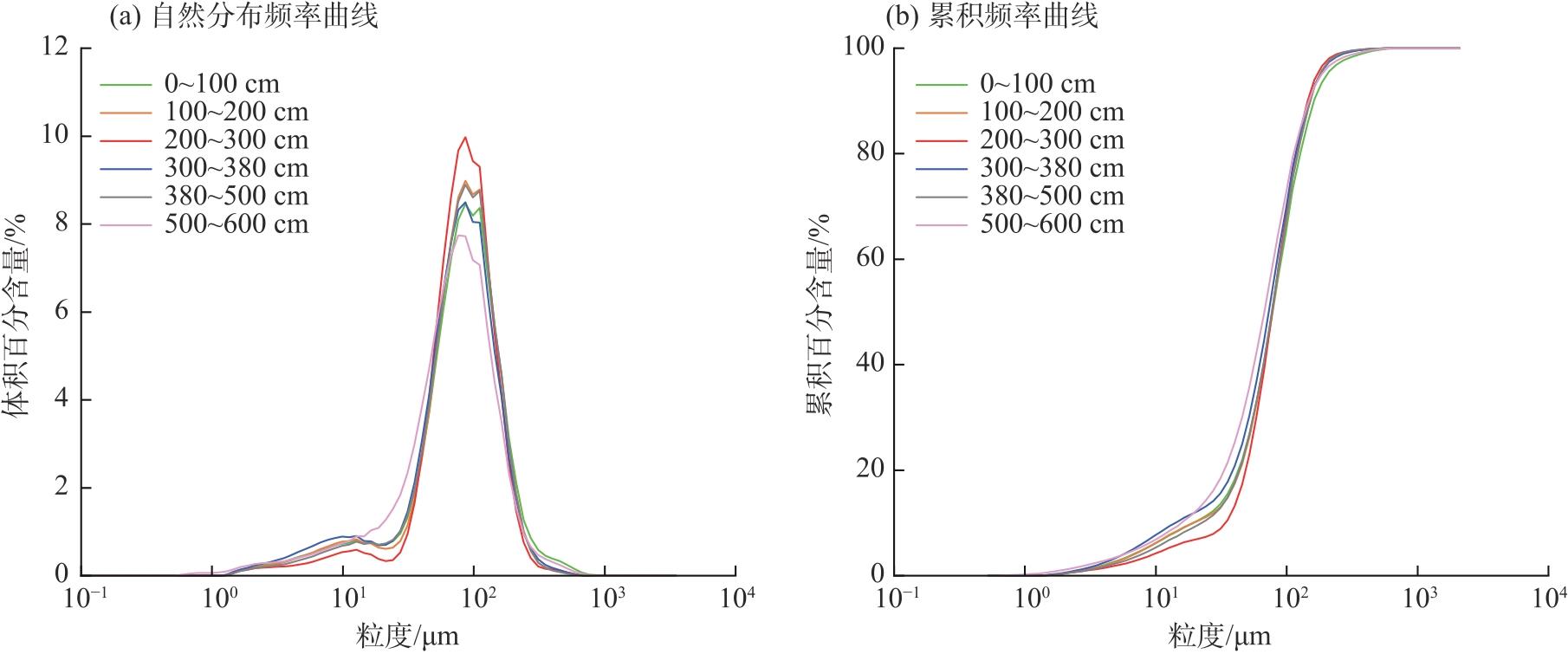
图5
沙丘剖面沉积物粒度与端元组分分布特征"
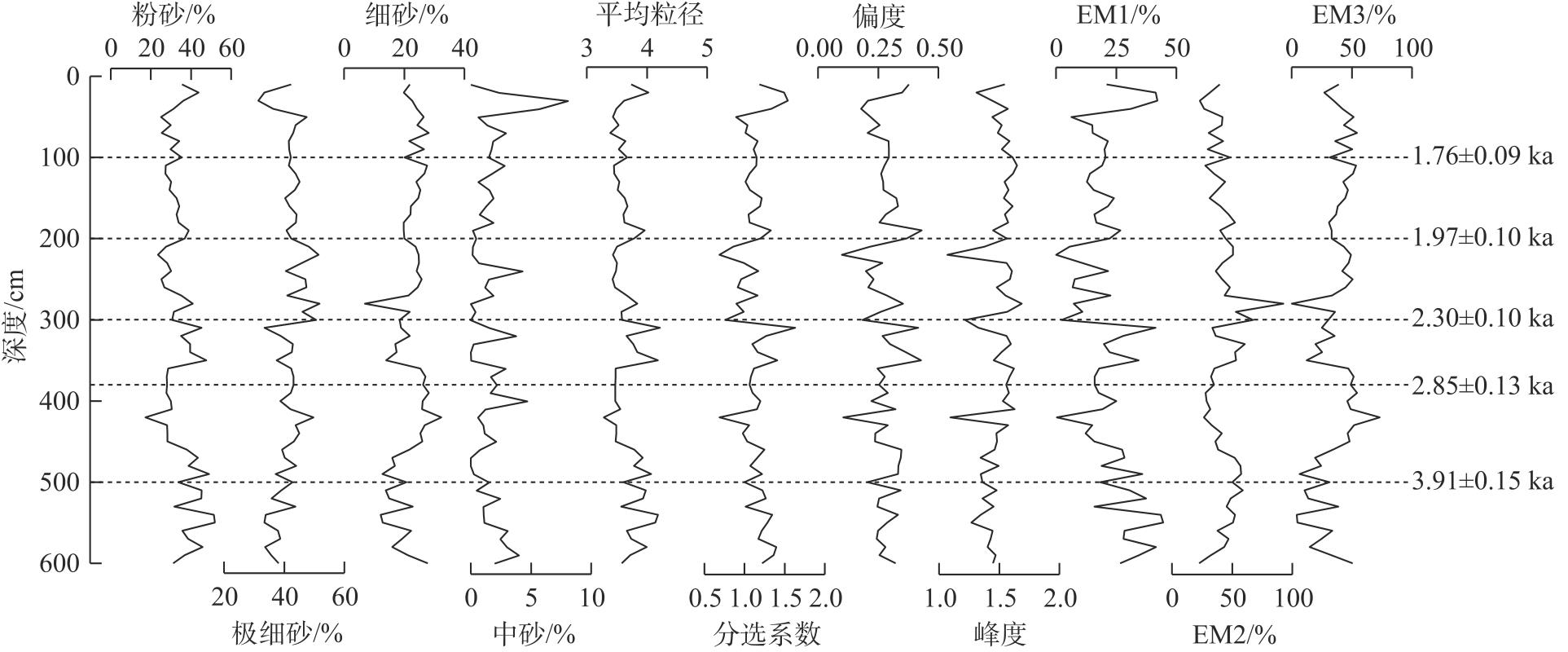
图6
沙丘剖面沉积物常量元素上陆壳(UCC)标准化值分布特征"
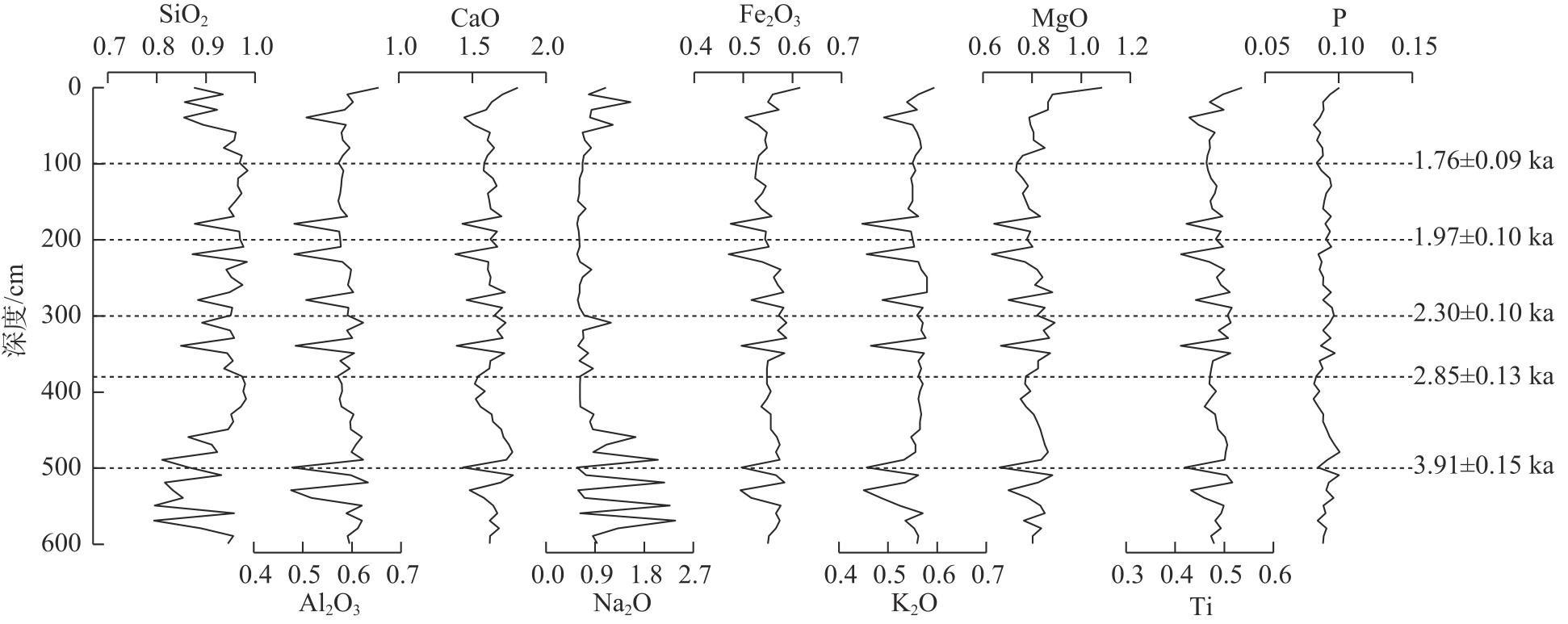
图7
沙丘剖面沉积物主要微量元素UCC标准化值及物源代用指标(Cr/Zr)分布特征"
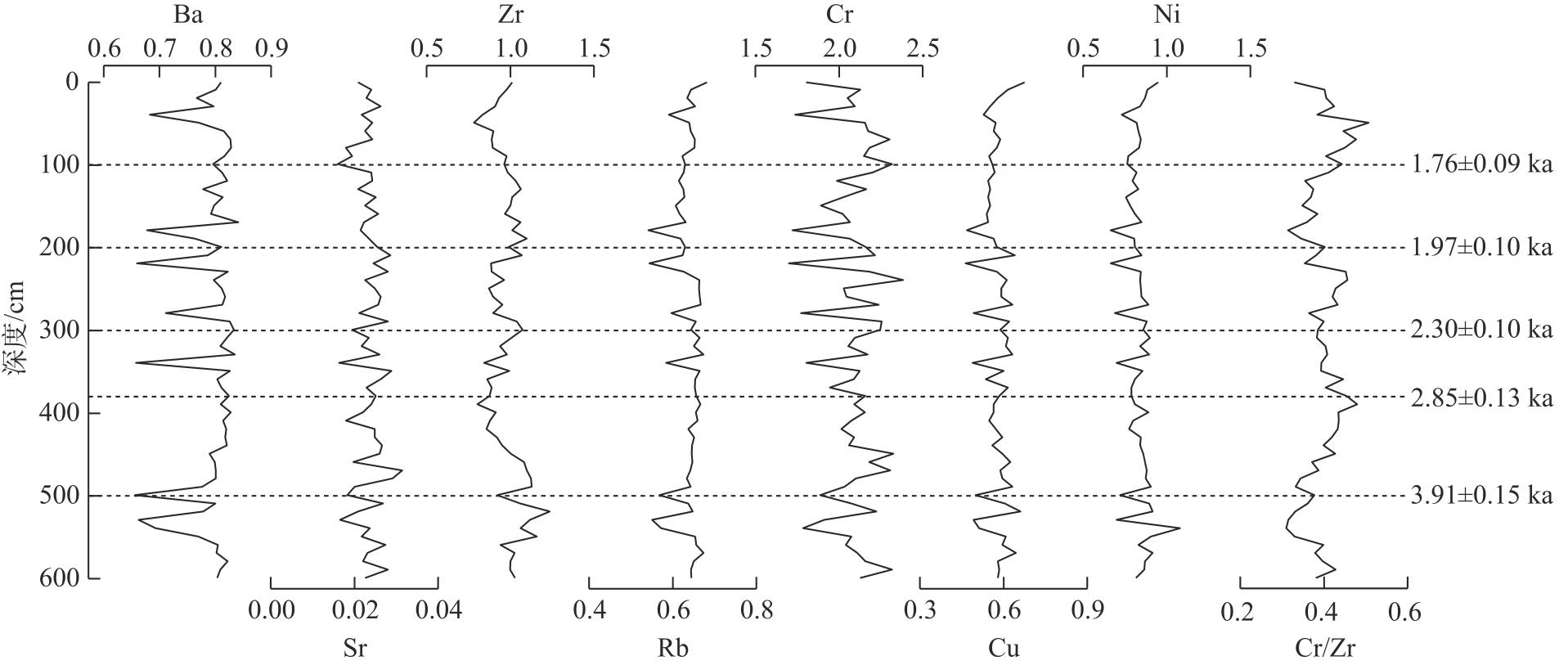
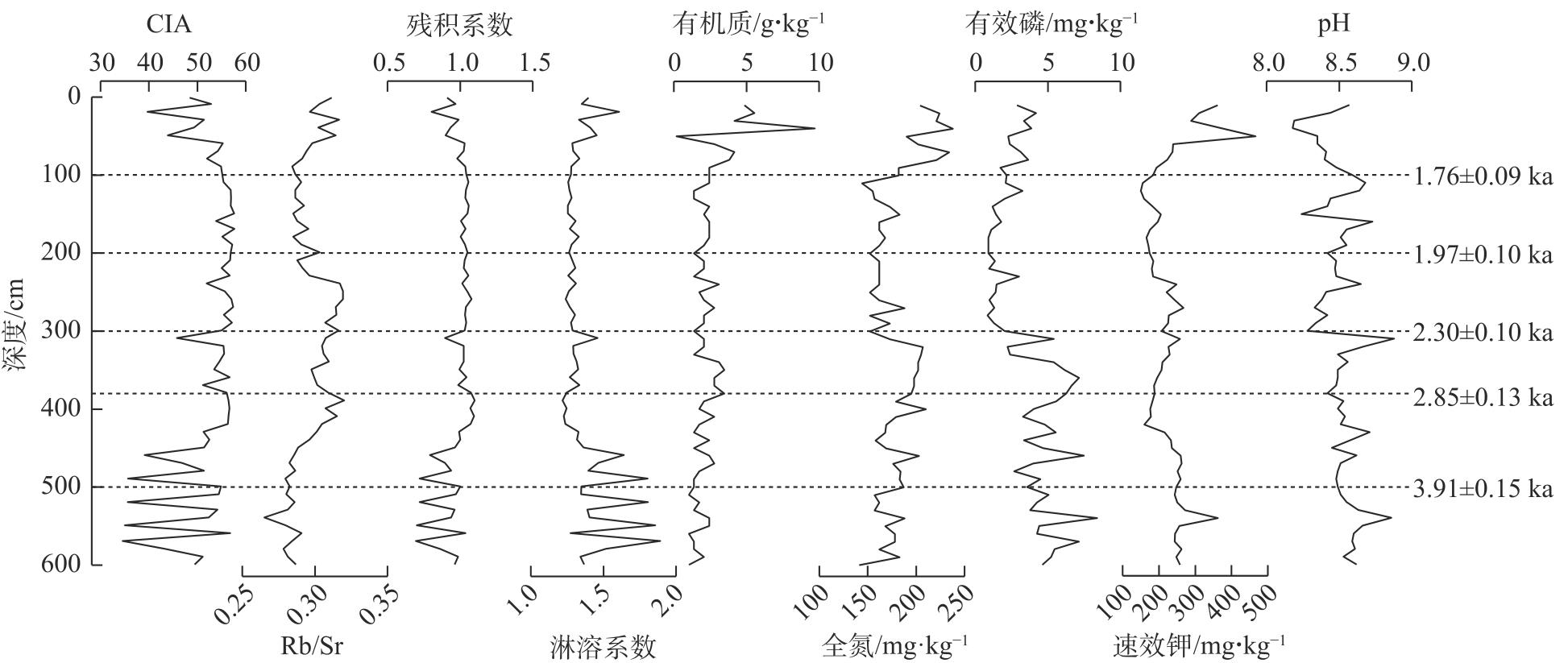
图8
沙丘剖面沉积物风化指数与养分分布特征 注:CIA为化学蚀变指数。"
| [1] | Shao Y, Klose M, Wyrwoll K H. Recent global dust trend and connections to climate forcing[J]. Journal of Geophysical Research: Atmospheres, 2013, 118(19): 11107-11118. |
| [2] | Xi X. Revisiting the recent dust trends and climate drivers using horizontal visibility and present weather observations[J]. Journal of Geophysical Research: Atmospheres, 2021, 126(9): e2021JD034687, doi: 10.1029/2021JD034687. |
| [3] | 罗磊, 凌智永, 陈亮, 等. 灌丛沙堆形成演化及年代学研究现状与进展[J]. 盐湖研究, 2017, 25(3): 67-73, 86. |
| [Luo Lei, Ling Zhiyong, Chen Liang, et al. The status and progress of formation, evolution and chronology research for nebkhas[J]. Journal of Salt Lake Research, 2017, 25(3): 67-73, 86.] | |
| [4] |
马运强, 刘瑞, 李志忠, 等. 古尔班通古特沙漠南缘沉积记录的全新世环境演变[J]. 干旱区地理, 2023, 46(10): 1663-1679.
doi: 10.12118/j.issn.1000-6060.2022.596 |
|
[Ma Yunqiang, Liu Rui, Li Zhizhong, et al. Holocene environmental evolution recorded by sedimentation on the southern edge of the Gurbantunggut Desert[J]. Arid Land Geography, 2023, 46(10): 1663-1679.]
doi: 10.12118/j.issn.1000-6060.2022.596 |
|
| [5] |
高冲, 董治宝, 南维鸽, 等. 古尔班通古特沙漠蜂窝状沙丘沉积物理化特征及沉积环境[J]. 中国沙漠, 2022, 42(2): 14-24.
doi: 10.7522/j.issn.1000-694X.2021.00106 |
|
[Gao Chong, Dong Zhibao, Nan Weige, et al. Physicochemical characteristics and sedimentary environment of honeycomb dunes in Gurbantunggut Desert[J]. Journal of Desert Research, 2022, 42(2): 14-24.]
doi: 10.7522/j.issn.1000-694X.2021.00106 |
|
| [6] | 朱文煜, 毛东雷. 植被沙障下沙丘的研究进展[J]. 生态科学, 2023, 42(2): 228-237. |
| [Zhu Wenyu, Mao Donglei. Review on vegetation sand-barrier dune[J]. Ecological Science, 2023, 42(2): 228-237.] | |
| [7] |
Lang L L, Wang X M, Hasi E, et al. Nebkha (coppice dune) formation and significance to environmental change reconstructions in arid and semiarid areas[J]. Journal of Geographical Sciences, 2013, 23(2): 344-358.
doi: 10.1007/s11442-013-1014-x |
| [8] |
Seifert C L, Cox R T, Forman S L, et al. Relict nebkhas (pimple mounds) record prolonged Late Holocene drought in the forested region of south-central United States[J]. Quaternary Research, 2009, 71(3): 329-339.
doi: 10.1016/j.yqres.2009.01.006 |
| [9] |
Gutiérrez-Elorza M, Lucha P, Gracia F J, et al. Palaeoclimatic considerations of talus flatirons and aeolian deposits in northern Fuerteventura volcanic island (Canary Islands, Spain)[J]. Geomorphology, 2013, 197: 1-9.
doi: 10.1016/j.geomorph.2011.09.020 |
| [10] |
Wang X M, Zhang C X, Zhang J W, et al. Nebkha formation: Implications for reconstructing environmental changes over the past several centuries in the Ala Shan Plateau, China[J]. Palaeogeography, Palaeoclimatology, Palaeoecology, 2010, 297(3-4): 697-706.
doi: 10.1016/j.palaeo.2010.09.020 |
| [11] | Du Y, Lu R J, Ma L, et al. A formation record of modern Nitraria tangutorum nebkhas on the Ordos Plateau of northern China based on optically stimulated luminescence dating[J]. Quaternary Geochronology, 2024, 82: 101550, doi: 10.1016/j.quageo.2024.101550. |
| [12] |
Dong Z B, Hu G Y, Qian G Q, et al. High-altitude aeolian research on the Tibetan Plateau[J]. Reviews of Geophysics, 2017, 55(4): 864-901.
doi: 10.1002/rog.v55.4 |
| [13] |
Xiang S Y, Zeng F M, Wang G C, et al. Environmental evolution of the south margin of Qaidam Basin reconstructed from the Holocene loess deposit by n-alkane and pollen records[J]. Journal of Earth Science, 2013, 24(2): 170-178.
doi: 10.1007/s12583-013-0320-7 |
| [14] | 吴桐雯, 李江海, 杨梦莲. 柴达木盆地风成地貌类型与晚全新世古风况恢复[J]. 北京大学学报(自然科学版), 2018, 54(5): 1021-1027. |
|
[Wu Tongwen, Li Jianghai, Yang Menglian. The aeolian bedforms and the reconstruction of Late Holocene wind direction in Qaidam Basin[J]. Acta Scientiarum Naturalium Universitatis Pekinensis, 2018, 54(5): 1021-1027.]
doi: 10.13209/j.0479-8023.2018.042 |
|
| [15] |
Yu L P, Lai Z P, An P. OSL chronology and paleoclimatic implications of paleodunes in the middle and southwestern Qaidam Basin, Qinghai-Tibetan Plateau[J]. Sciences in Cold and Arid Regions, 2013, 5(2): 211-219.
doi: 10.3724/SP.J.1226.2013.00211 |
| [16] | Zhang T, Wang G, Wang Y L, et al. Long-term drying trends since the mid-Holocene in the Qaidam Basin[J]. Catena, 2023, 228: 106524, doi: 10.1016/j.catena.2023.106524. |
| [17] |
Cheng A Y, Yu J Q, Li Y, et al. Late Holocene hydroclimatic variations at Lake Hurleg, northeastern Tibetan Plateau[J]. Journal of Earth Science, 2025, 36(1): 161-172.
doi: 10.1007/s12583-024-0077-1 |
| [18] |
Yang X Y, Yu L P, Chang Q F, et al. Flood activity revealed millennial-scale climatic changes during the Late Holocene in the Qaidam Basin, northeastern Tibetan Plateau[J]. Quaternary International, 2022, 637: 32-43.
doi: 10.1016/j.quaint.2022.06.011 |
| [19] | 凌智永, 靳建辉, 罗磊, 等. 柴达木盆地盐湖周边灌丛沙丘发育过程及年代初步研究[J]. 干旱区资源与环境, 2018, 32(1): 98-102. |
| [Ling Zhiyong, Jin Jianhui, Luo Lei, et al. Preliminary study of the OSL chronology and evolution of nebkhas around salt lakes in the Qaidam Basin[J]. Journal of Arid Land Resources and Environment, 2018, 32(1): 98-102.] | |
| [20] | 凌智永, 陈亮, 芦宝良, 等. 柴达木盆地盐湖周边灌丛沙丘年代, 物源与环境[J]. 第四纪研究, 2018, 38(3): 611-622. |
| [Ling Zhiyong, Chen Liang, Lu Baoliang, et al. Chronology and provenance of the nebkhas around salt lakes in the Qaidam Basin and their environmental implication[J]. Quaternary Sciences, 2018, 38(3): 611-622.] | |
| [21] |
陈宗颜, 董治宝, 汪青春, 等. 柴达木盆地风况及输沙势特征[J]. 中国沙漠, 2020, 40(1): 195-203.
doi: 10.7522/j.issn.1000-694X.2019.00090 |
|
[Chen Zongyan, Dong Zhibao, Wang Qingchun, et al. Characteristics of wind regime and sand drift potential in Qaidam Basin of China[J]. Journal of Desert Research, 2020, 40(1): 195-203.]
doi: 10.7522/j.issn.1000-694X.2019.00090 |
|
| [22] |
许瑞聪, 董治宝, 南维鸽, 等. 柴达木盆地南缘死亡蛛丝蓬(Halogeton arachnoideus)风影沙丘形态和沉积特征[J]. 中国沙漠, 2023, 43(4): 55-63.
doi: 10.7522/j.issn.1000-694X.2023.00002 |
|
[Xu Ruicong, Dong Zhibao, Nan Weige, et al. Morphology and sedimentary characteristics of shadow dunes of dead Halogeton arachnoideus in the southern margin of Qaidam Basin, China[J]. Journal of Desert Research, 2023, 43(4): 55-63.]
doi: 10.7522/j.issn.1000-694X.2023.00002 |
|
| [23] |
卢晗, 曾永年, 王盼成. 青藏高原东北部实际蒸散发时空变化特征及影响因素[J]. 干旱区地理, 2025, 48(5): 753-764.
doi: 10.12118/j.issn.1000-6060.2024.395 |
|
[Lu Han, Zeng Yongnian, Wang Pancheng. Spatiotemporal variation of actual evapotranspiration and its influencing factors in the northeast Qinghai-Xizang Plateau[J]. Arid Land Geography, 2025, 48(5): 753-764.]
doi: 10.12118/j.issn.1000-6060.2024.395 |
|
| [24] |
赖忠平, 欧先交. 光释光测年基本流程[J]. 地理科学进展, 2013, 32(5): 683-693.
doi: 10.11820/dlkxjz.2013.05.001 |
|
[Lai Zhongping, Ou Xianjiao. Basic procedures of optically stimulated luminescence (OSL) dating[J]. Progress in Geography, 2013, 32(5): 683-693.]
doi: 10.11820/dlkxjz.2013.05.001 |
|
| [25] | 张克旗, 吴中海, 吕同艳, 等. 光释光测年法——综述及进展[J]. 地质通报, 2015, 34(1): 183-203. |
| [Zhang Keqi, Wu Zhonghai, Lü Tongyan, et al. Review and progress of OSL dating[J]. Geological Bulletin of China, 2015, 34(1): 183-203.] | |
| [26] |
王颖, 弋双文, 徐志伟, 等. 腾格里沙漠两万年以来典型沉积物钾长石和石英光释光测年对比研究[J]. 中国沙漠, 2023, 43(3): 69-85.
doi: 10.7522/j.issn.1000-694X.2022.00136 |
|
[Wang Ying, Yi Shuangwen, Xu Zhiwei, et al. Quartz OSL and K-feldspar pIRIR dating of typical sediments over the past 20000 years from the Tengger Desert, northern China[J]. Journal of Desert Research, 2023, 43(3): 69-85.]
doi: 10.7522/j.issn.1000-694X.2022.00136 |
|
| [27] |
李鑫鑫, 毛东雷, 来风兵, 等. 策勒河下游风积地貌沉积物粒度特征及沙源分析[J]. 干旱区研究, 2024, 41(8): 1413-1422.
doi: 10.13866/j.azr.2024.08.15 |
|
[Li Xinxin, Mao Donglei, Lai Fengbing, et al. Grain size characteristics and sand source analysis of three aeolian landforms in the lower reaches of the Qira River floodplain[J]. Arid Zone Research, 2024, 41(8): 1413-1422.]
doi: 10.13866/j.azr.2024.08.15 |
|
| [28] | 刘铮瑶, 董治宝, 赵杰, 等. 人工固沙措施对沙丘沉积物特征及土壤养分的影响[J]. 生态学报, 2020, 40(4): 1383-1391. |
| [Liu Zhengyao, Dong Zhibao, Zhao Jie, et al. Effects of artificial sand-fixation on sediment characteristics and soil nutrients[J]. Acta Ecologica Sinica, 2020, 40(4): 1383-1391.] | |
| [29] | 胡梦珺, 许澳康, 孙文丽, 等. 青海湖湖东地区近32 ka BP以来风沙沉积的粒度端元特征及环境意义[J]. 现代地质, 2024, 38(2): 487-496. |
| [Hu Mengjun, Xu Aokang, Sun Wenli, et al. Grain size end-member characteristics of aeolian sediments in the east of Qinghai Lake and its environmental significance since 32 ka BP[J]. Geoscience, 2024, 38(2): 487-496.] | |
| [30] |
廖婉约, 介冬梅, 高桂在, 等. 中晚全新世科尔沁沙地气候变化及沙地演化研究[J]. 干旱区地理, 2024, 47(11): 1876-1886.
doi: 10.12118/j.issn.1000-6060.2024.003 |
|
[Liao Wanyue, Jie Dongmei, Gao Guizai, et al. Climate change and desert evolution of Horqin Sandy Land in the Mid-Late Holocene[J]. Arid Land Geography, 2024, 47(11): 1876-1886.]
doi: 10.12118/j.issn.1000-6060.2024.003 |
|
| [31] | Hu G Y, Hu J J, Dong Z B, et al. Seasonal ice-covered lake surface likely caused the spatial heterogeneity of aeolian sediment grain-size in the source region of Yellow River, northeastern Tibetan Plateau, China[J]. Frontiers in Earth Science, 2023, 11: 1126416, doi: 10.3389/feart.2023.1126416. |
| [32] |
邵俊杰, 陶通炼, 李志忠. 古尔班通古特沙漠南缘沉积物粒度和微量元素记录晚全新世气候变化[J]. 干旱区研究, 2025, 42(5): 788-799.
doi: 10.13866/j.azr.2025.05.02 |
|
[Shao Junjie, Tao Tonglian, Li Zhizhong. Late Holocene climate change recorded by grain size and trace elements in sediments from the southern margin of the Gurbantunggut Desert[J]. Arid Zone Research, 2025, 42(5): 788-799.]
doi: 10.13866/j.azr.2025.05.02 |
|
| [33] | 陈国祥. 毛乌素沙地风成沉积物沉积学特征[D]. 西安: 陕西师范大学, 2019. |
| [Chen Guoxiang.Sedimentological characteristics of aeolian sediments in the Mu Us Sandy Land[D]. Xi’an: Shaanxi Normal University, 2019.] | |
| [34] | 陈有桂. 西藏定结地区不同类型沙丘表层沉积物地球化学特征及环境意义[D]. 兰州: 西北师范大学, 2023. |
| [Chen Yougui. Geochemical characteristics and environmental significance of surface sediments from different types of sand dunes in the Dinggye area, Xizang[D]. Lanzhou: Northwest Normal University, 2023.] | |
| [35] | 李凡, 侯光良, 鄂崇毅, 等. 青藏高原全新世气温序列的集成重建[J]. 干旱区研究, 2015, 32(4): 716-725. |
| [Li Fan, Hou Guangliang, E Chongyi, et al. Integrated reconstruction of the holocene temperature series of Qinghai-Xizang Plateau[J]. Arid Zone Research, 2015, 32(4): 716-725.] | |
| [36] | 金孙梅, 王英, 侯光良, 等. 基于孢粉数据的全新世青藏高原降水定量重建[J]. 水土保持通报, 2018, 38(6): 169-176. |
| [Jin Sunmei, Wang Ying, Hou Guangliang, et al. Quantitative reconstruction of precipitation on Qinghai-Xizang Plateau from Holocene pollen records[J]. Bulletin of Soil and Water Conservation, 2018, 38(6): 169-176.] | |
| [37] | 汪燕, 侯光良, 金孙梅, 等. 三江源地区全新世降水序列集成重建[J]. 地球与环境, 2023, 51(2): 173-184. |
| [Wang Yan, Hou Guangliang, Jin Sunmei, et al. Synthetically reconstructed precipitation variability in the Sanjiangyuan from Holocene pollen records[J]. Earth and Environment, 2023, 51(2): 173-184.] | |
| [38] | Xu D H, An P, Li J Y, et al. Morphological characteristics and evolution processes of the blowouts on fine-grain armored paleodunes in the eastern Qaidam Basin, Tibetan Plateau[J]. Geomorphology, 2025, 480: 109752, doi: 10.1016/j.geomorph.2025.109752. |
| [39] | Pye K. Aeolian dust and dust deposits[M]. London: Academic Press, 1987. |
| [40] |
Vriend M, Prins M A, Buylaert J-P, et al. Contrasting dust supply patterns across the north-western Chinese Loess Plateau during the last glacial-interglacial cycle[J]. Quaternary International, 2011, 240(1-2): 167-180.
doi: 10.1016/j.quaint.2010.11.009 |
| [41] | 孙雪晴, 庞奖励, 黄春长, 等. 玛曲阿米欧拉北剖面粒度端元特征及其记录的全新世风沙活动变化[J]. 干旱区资源与环境, 2025, 39(8): 129-138. |
| [Sun Xueqing, Pang Jiangli, Huang Chunchang, et al. Grain-size end member characteristics of AMOL-N profile in Maqu and the records of Holocene aeolian activity changes[J]. Journal of Arid Land Resources and Environment, 2025, 39(8): 129-138.] | |
| [42] |
翟颖, 庞奖励, 黄春长, 等. 若尔盖盆地阿米欧拉-南剖面粒度端元特征及其记录的15 ka来气候变化[J]. 中国沙漠, 2025, 45(2): 111-118.
doi: 10.7522/j.issn.1000-694X.2024.00162 |
|
[Zhai Ying, Pang Jiangli, Huang Chunchang, et al. Particle endmembers characteristics of Amiola-South profile in the Zoige Basin and recorded climate change since 15 ka BP[J]. Journal of Desert Research, 2025, 45(2): 111-118.]
doi: 10.7522/j.issn.1000-694X.2024.00162 |
|
| [43] | 刘进辉, 王雪芹, 马洋. 沙漠绿洲过渡带柽柳灌丛沙堆-丘间地系统土壤养分空间异质性[J]. 生态学报, 2016, 36(4): 979-990. |
| [Liu Jinhui, Wang Xueqin, Ma Yang. Spatial variation of soil nutrients of Tamarix ramosissima nebkhas and interdune area in a desert-oasis ecotone[J]. Acta Ecologica Sinica, 2016, 36(4): 979-990.] | |
| [44] | 丁爱强, 徐先英, 张雯, 等. 不同退化程度柽柳灌丛的土壤理化和生物学特性[J]. 草业学报, 2019, 28(2): 1-11. |
| [Ding Aiqiang, Xu Xianying, Zhang Wen, et al. Soil physicochemical and biological characteristics of Tamarix ramosissima nebkhas in different degradation degree[J]. Acta Prataculturae Sinica, 2019, 28(2): 1-11.] | |
| [45] | 刘进辉, 王雪芹, 马洋, 等. 沙漠绿洲过渡带柽柳灌丛沙堆-丘间地系统土壤粒度分异规律[J]. 北京林业大学学报, 2015, 37(11): 89-99. |
| [Liu Jinhui, Wang Xueqin, Ma Yang, et al. Spatial heterogeneity of soil grain size on Tamarix ramosissima nebkhas and interdune in desert-oasis ecotone[J]. Journal of Beijing Forestry University, 2015, 37(11): 89-99.] | |
| [46] |
鲍晶, 叶程程, 栗兵帅. 黏土矿物的提取, 鉴定及其古气候意义——以柴达木盆地怀头他拉剖面为例[J]. 干旱区地理, 2022, 45(3): 814-825.
doi: 10.12118/j.issn.1000-6060.2021.384 |
|
[Bao Jing, Ye Chengcheng, Li Bingshuai. Extraction, identification and paleoclimatic significance of clay minerals: A case of the Huaitoutala section in Qaidam Basin[J]. Arid Land Geography, 2022, 45(3): 814-825.]
doi: 10.12118/j.issn.1000-6060.2021.384 |
|
| [47] | 靳建辉, 李志忠, 陈秀玲, 等. 新疆伊犁河谷晚全新世风沙沉积主量元素特征及其气候意义[J]. 古地理学报, 2010, 12(6): 675-684. |
| [Jin Jianhui, Li Zhizhong, Chen Xiuling, et al. Major elements in aeolian sediments of the Late Holocene in Yili Valley and their climatic implications[J]. Journal of Palaeogeography, 2010, 12(6): 675-684.] | |
| [48] |
靳建辉, 曹相东, 李志忠, 等. 艾比湖周边灌丛沙堆风沙沉积记录的气候环境演化[J]. 中国沙漠, 2013, 33(5): 1314-1323.
doi: 10.7522/j.issn.1000-694X.2013.00195 |
| [Jin Jianhui, Cao Xiangdong, Li Zhizhong, et al. Record for climate revolution in aeolian deposit of nebkhas around Ebinur Lake[J]. Journal of Desert Research, 2013, 33(5): 1314-1323.] | |
| [49] | 靳建辉, 李志忠, 陈秀玲, 等. 新疆伊犁塔克尔莫乎尔沙漠全新世晚期沉积微量元素反映的古气候变化[J]. 沉积学报, 2011, 29(2): 336-345. |
| [Jin Jianhui, Li Zhizhong, Chen Xiuling, et al. Paleoclimate significance of geochemical elements from Takermohur Desert, Xinjiang since Late Holocene[J]. Acta Sedimentologica Sinica, 2011, 29(2): 336-345.] | |
| [50] | 安成邦, 冯兆东, 唐领余, 等. 甘肃中部4000年前环境变化与古文化变迁[J]. 地理学报, 2003, 58(5): 743-748. |
|
[An Chengbang, Feng Zhaodong, Tang Lingyu, et al. Environmental changes and cultural transition at 4 cal. ka BP in central Gansu[J]. Acta Geographica Sinica, 2003, 58(5): 743-748.]
doi: 10.11821/xb200305013 |
|
| [51] | 吴文祥, 周扬, 胡莹. 甘青地区全新世环境变迁与新石器文化兴衰[J]. 中原文物, 2009(4): 31-37. |
| [Wu Wenxiang, Zhou Yang, Hu Ying. Holocene environmental change and the rise and fall of Neolithic cultures in Gansu-Qinghai region[J]. Cultural Relics of Central China, 2009(4): 31-37.] | |
| [52] | Wang S Z, Zhao H T, Chen G L, et al. Anthracological analysis from the Bronze Age site of Erlitou (Henan Province, China)[J]. Quaternary International, 2021, 593: 248-255. |
| [53] | 王思凯, 张玉柱, 王宁练, 等. 洛阳盆地龙山-二里头文化转变与水文气候的关系[J]. 地球科学, 2025, 50(5): 2055-2071. |
| [Wang Sikai, Zhang Yuzhu, Wang Ninglian, et al. Relationship between the transition of Longshan culture-Erlitou culture and the hydro-climate in the Luoyang Basin[J]. Earth Science, 2025, 50(5): 2055-2071.] | |
| [54] | Liu Y, Song H M, An Z S, et al. Recent centennial drought on the Tibetan Plateau is outstanding within the past 3500 years[J]. Nature Communications, 2025, 16(1): 1311, doi: 10.1038/s41467-025-56687-z. |
| [1] | 李素雲, 祝存兄, 王镜, 陈国茜, 史飞飞. SMAP升轨土壤水分产品在柴达木盆地的适用性和时空变化分析[J]. 干旱区地理, 2026, 49(6): 1203-1214. |
| [2] | 王利杰, 肖锋军, 董治宝, 马慧榕, 陈颢. 柴达木盆地巨型沙波纹条带表层沉积物粒度和地球化学元素组成特征[J]. 干旱区地理, 2023, 46(11): 1826-1835. |
| [3] | 鲍晶,叶程程,栗兵帅. 粘土矿物的提取、鉴定及其古气候意义——以柴达木盆地怀头他拉剖面为例[J]. 干旱区地理, 2022, 45(3): 814-825. |
| [4] | 黄莹,杨建玲,李欣,崔洋,马阳,张雯. 基于地温的宁夏初霜冻日期气候演变及环流异常成因[J]. 干旱区地理, 2022, 45(2): 359-369. |
| [5] | 潘佩翀,时洋,赵智丰,王佳,曹炯玮,柏文文,解宏伟,魏加华. 干旱内陆区声波干预下降雨微物理特征研究[J]. 干旱区地理, 2021, 44(4): 906-913. |
| [6] | 余平辉, 马锦龙, 廖建波, 李志勇, 邸俊. 柴达木盆地昆北地区路乐河组/下干柴沟组泥岩地层地球化学特征及古环境意义 [J]. 干旱区地理, 2020, 43(3): 679-686. |
| [7] | 王懿萱, 陈天源, 吴蝉, 赖忠平, 郭守栋, 丛禄. 柴达木盆地西台吉乃尔盐湖沉积的年代学研究[J]. 干旱区地理, 2019, 42(4): 876-884. |
| [8] | 李博, 曾彪, 杨太保. 1982-2015年柴达木盆地不同流域植被气候响应差异[J]. 干旱区地理, 2018, 41(3): 449-458. |
| [9] | 顾晓敏, 张戈, 郝奇琛, 邵景力, 崔亚莉, 张秋兰, 肖勇. 基于TOUGH2的柴达木盆地诺木洪剖面地下水流模拟[J]. 干旱区地理, 2016, 39(3): 548-554. |
| [10] | 王晗,于非,吴烨,季荣. 近50 a新疆粉红椋鸟栖息地气候演变特征[J]. 干旱区地理, 2013, 36(4): 601-608. |
| [11] | 安福元,马海州,魏海成,樊启顺,韩文霞. 柴达木盆地察尔汗湖相沉积物的粒度分布模式及其环境意义[J]. 干旱区地理, 2013, 36(2): 212-220. |
| [12] | 侯献华, 郑绵平, 杨振京, 杨庆华, 毕志伟. 柴达木盆地大浪滩130ka BP以来的孢粉组合与古气候[J]. 干旱区地理, 2011, 34(2): 243-251. |
| [13] | 李远平, 杨太保. 柴达木盆地近50年来年气温、降水的小波分析[J]. 干旱区地理, 2007, 30(5): 708-713. |
| [14] | 曾永年, 马海洲, 沙占江, 李玲琴, 李珍, 曹广超. 柴达木盆地沙漠沉积中的新仙女木事件记录[J]. 干旱区地理, 1998, 21(1): 25-28. |
| [15] | 郭武. 柴达木盆地水资源开发利用现状分析[J]. 干旱区地理, 1997, 20(3): 82-89. |
|
||